
The Race for the 2027 Championship Tour Begins: Inside the Revamped 2026 Challenger Series
As the 2026/2027 WSL Challenger Series kicks off this month in South Africa, surfers face a condensed five-event schedule and a new international points tier in the battle for Championship Tour qualification.
By Jackson Reed

Share this story
The slate is officially wiped clean. As the global surfing community pivots toward the 2026/2027 World Surf League (WSL) Challenger Series, the standings sit at a tense, unblemished zero. The grueling race for the 2027 Championship Tour (CT) kicks off on July 12 at the Ballito Pro in South Africa, initiating a high-stakes sprint that will ultimately define the next generation of elite professional surfers.
With only 10 men's and six women's CT spots up for grabs at the end of the season, the margin for error has never been thinner. Every single heat will carry massive standings implications, forcing athletes to find their rhythm immediately or risk being left behind in the qualification dust.
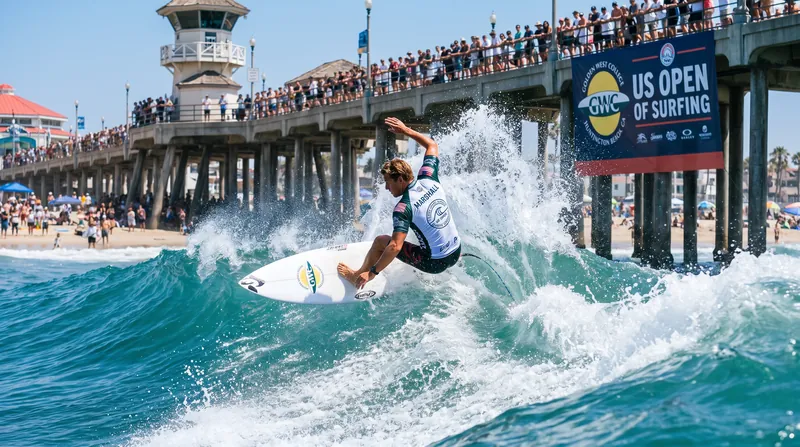
This season, the qualification landscape looks drastically different, altering how surfers will approach the leaderboard. The WSL has fundamentally condensed the Challenger Series, shrinking it from its previous six or seven stops down to a streamlined five-event gauntlet. Following the opening salvos in Ballito, the tour quickly transitions to the iconic Huntington Beach pier in California.
From there, competitors head to São Sebastião in Brazil and Ericeira in Portugal. In a scheduling quirk that has sparked intense debate among coaches and athletes, the season then takes a massive four-and-a-half-month hiatus before concluding at Newcastle, Australia, in March 2027.
"The Challenger Series is the ultimate battleground," noted WSL Senior Tour Manager Travis Logie during the schedule's official unveiling earlier this year. However, the reduced schedule means early results are absolutely paramount for anyone hoping to stay relevant in the standings. Surfers who slip up and post early exits in South Africa and California will find themselves mathematically backed into a corner before the tour even reaches its European leg. There is simply no runway left for slow starters to gradually build momentum; athletes must peak on day one.[1]
To inject a new layer of strategy into the standings race, the WSL has introduced a major structural twist: the "QS 6,000 International" tier. Three newly minted events in Saquarema (Brazil), Cloud 9 (Philippines), and Jinzun Harbor (Taiwan) will allow competitors to earn up to 6,000 points that count directly toward their Challenger Series rankings. This secondary pathway offers a vital lifeline for surfers looking to surge up the leaderboard if they stumble at the primary CS events, ensuring the standings remain volatile and unpredictable deep into the calendar year.
The influx of fresh, hungry talent is already reshaping the competitive picture before the first horn even sounds. European Qualifying Series (QS) champions Adur Amatriain and Janire González-Etxabarri are surging into the Challenger Series with massive momentum after dominant regional campaigns. Their decisive victories at the Pro Taghazout Bay secured their CS tickets and positioned them as immediate threats to disrupt the established hierarchy. These regional standouts carry the confidence of recent wins, making them dangerous wildcards capable of knocking out top seeds and scrambling the early standings.
On the other side of the draw are the battle-tested veterans desperately seeking redemption. Surfers like Australia's Jacob Willcox and America's Levi Slawson hovered near the very top of the Challenger Series standings for much of last season, only to slip agonizingly short of the CT cutline in the final events. For these competitors, the Ballito Pro represents ground zero for a massive comeback campaign. They must replace last year's late-season heartbreak with immediate consistency, knowing firsthand how quickly a promising standings position can evaporate under pressure.[2]
Adding to the intensity of the standings race is the notable absence of Pipeline from the Challenger Series schedule. The iconic Hawaiian reef break has been officially demoted to a Regional QS event to prioritize local surfers and protect the regional qualification ecosystem.
As a result, the CS standings will be decided entirely across beach breaks and point breaks. This geographic shift heavily favors versatile, small-wave technicians over pure barrel specialists, forcing athletes to adapt their quivers and competitive strategies to suit the softer, highly rippable walls of Huntington and Ballito.[1]
As the athletes descend on Willard Beach for Stop No. 1, the overarching narrative is abundantly clear: the 2026/2027 Challenger Series is a chaotic sprint, not a marathon. With the new QS 6,000 International wildcards looming in the background and a condensed primary schedule demanding perfection, the race to climb the standings will require immediate, explosive results. Every wave caught in South Africa sets the tone for the rest of the year. The battle for the 2027 Championship Tour starts right now, and the standings are waiting to be written.
Key points
- The 2026/2027 Challenger Series standings reset to zero ahead of the Ballito Pro in South Africa.
- Only the top 10 men and top 6 women at the end of the season will qualify for the 2027 Championship Tour.
- The primary schedule has been condensed to just five events, increasing the pressure to secure early results.
- A new 'QS 6,000 International' tier allows surfers to earn supplementary points in Brazil, the Philippines, and Taiwan.
How we got here
March 2026
The WSL announces the condensed five-event Challenger Series schedule and the new QS 6,000 International tier.
April 2026
Regional Qualifying Series events conclude, locking in the European and international surfers advancing to the Challenger Series.
July 12, 2026
The 2026/2027 Challenger Series officially begins with the Ballito Pro in South Africa.
October 2026
The primary schedule pauses after the Ericeira Pro in Portugal, initiating a four-and-a-half-month break.
March 2027
The season concludes at Newcastle, Australia, finalizing the 2027 Championship Tour roster.
- Challenger Series Hopefuls
- Athletes view the condensed schedule as a high-pressure sprint where early momentum is critical.
- Regional Qualifiers
- Emerging international talent welcomes the new QS 6,000 tier as a vital secondary pathway.
- Local Surfing Communities
- Hawaiian locals support the removal of Pipeline from the CS to protect regional opportunities.
Perspectives this story doesn't cover
- Current Championship Tour surfers who may be relegated next year
- Sponsors navigating the condensed event schedule
Sources
Source coverage
2 outlets
3 viewpoints surfaced


- [1]Stab MagazineChallenger Series Hopefuls
WSL Drops New 2026 Challenger Series Schedule… With A Twist
Read on Stab Magazine → - [2]World Surf League
2026 Championship Tour Qualifiers
More in Sports
See all →Standings
Challenger Series Standings: Eden Walla and Cole Houshmand Surge Following the US Open of Surfing
2 sources

Injury
British Surfing Phenom Lukas Skinner Eyes Challenger Series Following Extensive Injury Rehabilitation
2 sources

Standings
WSL Standings Watch: Sawyer Lindblad and Luana Silva Surge into the Top 5 as the 2026 Women's Title Race Intensifies
7 sources
Injury
WSL Injury Report: Italo Ferreira Defies Knee Laceration to Retain Yellow Jersey as Jordy Smith Sidelined
2 sources
Comments
Every angle. Every day.
Get Sports stories with full source coverage and perspective breakdowns, free every day.