
The Playmaking Flanks: How the Full-Back Became the World Cup's Most Complex Role
Once relegated to simple defensive duties, the full-back has evolved into the tactical engine of modern international football, dictating play from the touchline to the midfield.

Share this story
For decades, the full-back was widely considered the least glamorous position on a football pitch. Traditional wisdom dictated that the most technically gifted players were placed in the midfield, the fastest on the wings, and the most physically imposing in the center of defense.
The full-back role was often reserved for the reliable, the industrious, and the tactically rigid—players whose primary directive was simply to stop the opposing winger and clear the ball. Today, as the 2026 FIFA World Cup unfolds across North America, that historical stigma has been entirely obliterated.[2]
The modern full-back is arguably the most cognitively and physically demanding role in international football. They are expected to be hybrid athletes: possessing the defensive instincts of a center-back, the cardiovascular engine of a marathon runner, the one-on-one dribbling ability of a traditional winger, and the passing vision of a central playmaker. This transformation did not happen overnight; it is the result of a century-long tactical arms race that has fundamentally rewired how the game is played.[1]
To understand the magnitude of this shift, one must look back to the early 20th century. In the classic 2-3-5 "pyramid" formation, the full-backs were literally the only two deep defenders on the pitch. Their job was strictly destructive. It wasn't until the 1950s that the first cracks in this rigid system appeared, driven by the natural flair and improvisational genius of Brazilian football.
At the 1958 World Cup, Nilton Santos famously ignored his manager's frantic touchline screams to stay back, carrying the ball forward to score a stunning goal against Austria. He, alongside Djalma Santos on the opposite flank, proved that wide defenders could be potent attacking weapons.[2]
That Brazilian blueprint culminated in the 1970 World Cup final. Carlos Alberto's iconic goal against Italy—arriving late on the right flank to smash home Pelé's perfectly weighted pass—cemented the "overlap" as a devastating tactical maneuver. The full-back was no longer just a defender who occasionally ventured forward; they were an essential component of a team's offensive width.
By the time the 1990s and 2000s arrived, players like Cafu and Roberto Carlos had evolved the role into the "wing-back," effectively taking ownership of the entire touchline and allowing their teams to pack the center of the midfield.
However, the wing-back era created a new tactical problem: when both wide defenders bombed forward, they left massive acres of space behind them, vulnerable to counter-attacks. Teams adapted by dropping defensive midfielders between the center-backs, but the structural vulnerability remained. The solution to this problem arrived in the 2010s, heavily influenced by club football tacticians like Pep Guardiola, and it birthed the most complex iteration of the role yet: the inverted full-back.[2]
Instead of running in straight lines up and down the touchline, the inverted full-back tucks inside into the central midfield when their team has possession. This movement achieves two critical objectives. First, it creates a numerical overload in the center of the pitch, allowing teams to dominate possession and pass through the opponent's pressing lines.
Second, it creates a robust "rest defense"—a central shield that can immediately counter-press and win the ball back if possession is lost. Philipp Lahm masterfully executed this hybrid role for Germany during their triumphant 2014 World Cup campaign.
At the 2026 World Cup, the role has splintered into highly specialized archetypes, and elite nations rarely deploy two full-backs of the same profile. Managers now build asymmetrical systems designed to maximize the unique traits of their wide players. On one side, you might find a "Touchline Sprinter"—an ultra-athletic dynamo like Canada's Alphonso Davies or France's Theo Hernandez. These players possess such overwhelming pace that they can bypass entire defensive blocks on their own, turning defense into attack in a matter of seconds.[2]
On the opposite flank, teams often deploy a "Wide Playmaker." England's Trent Alexander-Arnold and Germany's Joshua Kimmich epitomize this profile. They may lack the explosive sprinting speed of a Davies, but they possess the passing range of an elite number 10. By operating in the "half-spaces"—the channels between the wing and the center—they can dictate the tempo of the game, launching pinpoint cross-field diagonals or threading through-balls behind the opposition's defensive line.
Then there is the ultimate chameleon: the fully inverted midfielder who only nominally starts as a defender. Portugal's João Cancelo is the archetype here. While listed as a right-back or left-back on the team sheet, Cancelo frequently spends the majority of his time in possession operating as an attacking midfielder. This fluidity completely disrupts traditional man-marking schemes. If an opposing winger tracks Cancelo inside, they vacate the flank; if they stay wide, Cancelo is free to orchestrate the attack centrally.[2]
The physical toll of executing these modern roles is staggering. Sports science data reveals that elite full-backs now cover an average of 11.5 kilometers per match, with a significant portion of that distance logged as high-intensity sprints. They are required to accelerate to top speed to join an attack, and then immediately sprint back to their defensive third when possession turns over. The metabolic demands are so extreme that the full-back is frequently the first position a manager will substitute to inject fresh legs into a match.[1]
Furthermore, the cognitive load is immense. A modern full-back must possess 360-degree spatial awareness. When receiving the ball on the touchline, their vision is naturally limited to 180 degrees. But when they invert into the midfield, they must instantly process pressure coming from all directions. They have to know when to overlap, when to underlap, when to hold their width to stretch the defense, and when to tuck inside to stop a counter-attack. It requires a footballing IQ that was previously only demanded of central midfielders.[1]
This evolution mirrors the broader trajectory of modern football itself. The game has moved away from rigid specialization and toward fluid universalism. The era of the one-dimensional player is over. Attackers must defend from the front, goalkeepers must initiate attacks with their feet, and full-backs must do absolutely everything. They are the tactical glue that holds complex systems together, the ultimate problem-solvers on the pitch.[2]
As the 2026 tournament progresses toward its climax, the tactical battles on the flanks will be decisive. Teams that rely on outdated, linear full-backs will find themselves overrun in midfield and outflanked in transition. Conversely, the nations that can successfully deploy these hybrid playmakers will dictate the rhythm of the tournament. The full-back has finally stepped out of the shadows of the touchline and into the spotlight of the midfield, proving that the most important space on a football pitch is often the space you create.[2]
The essentials
- The full-back role has transformed from a purely defensive position into the primary playmaking engine for many elite teams.
- Modern tacticians use 'inverted' full-backs who move into central midfield to create numerical advantages and control possession.
- The 2026 World Cup features highly specialized archetypes, including touchline sprinters and wide playmakers.
- Sports science indicates the modern full-back role is the most physically demanding position on the pitch, requiring elite endurance and sprint speed.
Timeline
1958
Brazil's Nilton Santos scores against Austria, pioneering the concept of the attacking full-back overlap.
1970
Carlos Alberto scores a definitive team goal in the World Cup final, cementing the full-back's offensive importance.
2002
Cafu and Roberto Carlos dominate the flanks as pure wing-backs, leading Brazil to their fifth World Cup title.
2014
Philipp Lahm operates as a hybrid inverted full-back and midfielder, leading Germany to the championship.
2026
The role splinters into specialized tactical archetypes, becoming the focal point of modern international systems.
- Modern System Coaches
- View the inverted full-back as essential for creating midfield overloads, dominating possession, and establishing a robust structure against counter-attacks.
- Tactical Purists
- Argue that over-complicating the role can leave defenses structurally vulnerable if the inverted player loses the ball in central areas.
- Sports Scientists
- Focus on the extreme physiological toll of the modern role, noting that the required combination of endurance and explosive sprinting is pushing human limits.
Perspectives this story doesn't cover
- Youth Academy Directors
- Traditional Wingers
Sources
Source coverage
2 outlets
3 viewpoints surfaced


- [1]Journal of Sports SciencesSports Scientists
Physical and tactical demands of modern football full-backs
Read on Journal of Sports Sciences → - [2]Factlen Editorial Team
Synthesis by Factlen editorial team
Read on Factlen Editorial Team →

More in Sports
See all →Storyline
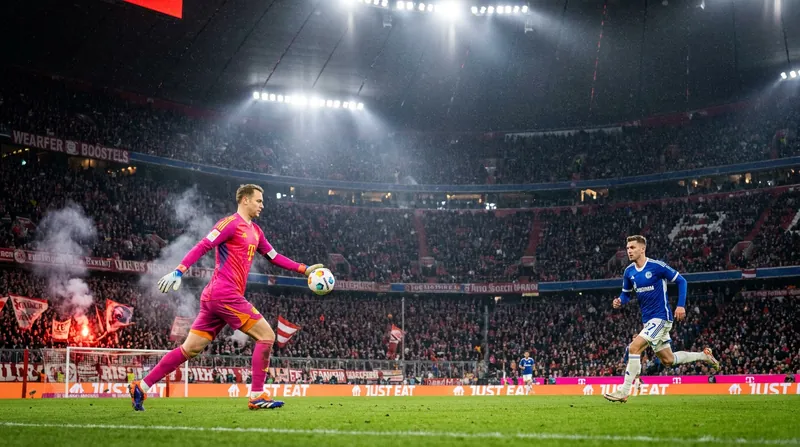
The 11th Outfield Player: How the Sweeper-Keeper Redefined World Cup Tactics
6 sources
Storyline
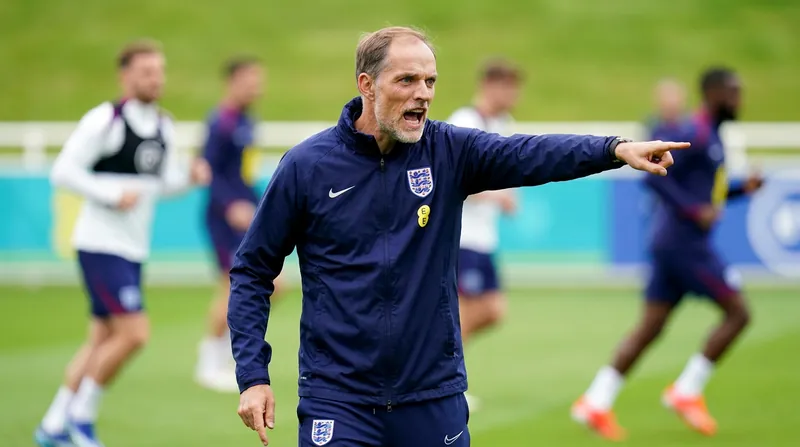
The Pragmatic Shift: How Thomas Tuchel is Rewiring England’s Golden Generation for the 2026 World Cup
8 sources
Storyline
The Maplepress: How Jesse Marsch Engineered Canada's High-Octane Tactical Identity for the 2026 World Cup
7 sources

Tactics
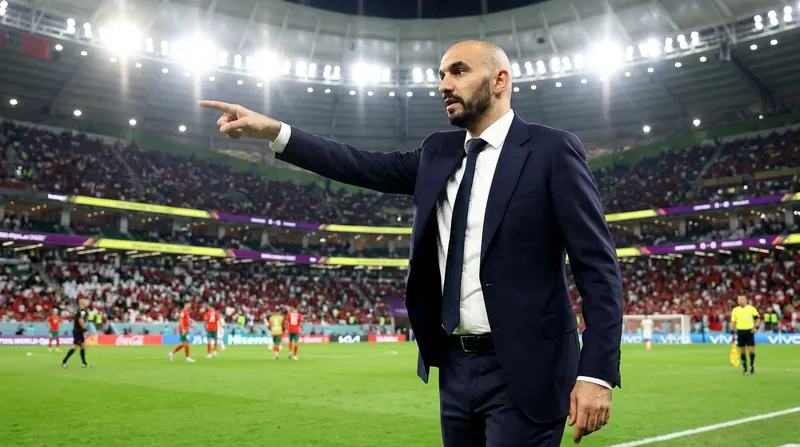
The Possession Metamorphosis: How Walid Regragui Rewrote Morocco's Tactical DNA for the 2026 World Cup
2 sources
Comments
Every angle. Every day.
Get Sports stories with full source coverage and perspective breakdowns, free every day.