
The Evolution of the World Cup Number 10: From Static Maestros to Tactical Engines
Once defined by walking visionaries who operated entirely free of defensive duties, football's most iconic role has been completely rewired for the modern high-pressing era.
By Meera Iyer

Share this story
In the iconography of global sport, few symbols carry the mystical weight of the football Number 10. It is not merely a squad number; it is an ideology. For decades at the FIFA World Cup, the player wearing the 10 was the undisputed architect of their nation's dreams. They were the mavericks, the visionaries, and the artists who operated in the pockets of space between the midfield and the defense, tasked with turning sterile possession into sudden, devastating geometry.[1][3]
The mythos of the number was born largely by accident. Ahead of the 1958 World Cup, the Brazilian federation forgot to submit squad numbers to FIFA. An official randomly assigned them, handing the number 10 to a 17-year-old prodigy named Pelé. By the time Brazil lifted the trophy, the number had been permanently infused with an aura of attacking genius, setting a standard that every subsequent generation would attempt to replicate.[1][2]
Through the 1970s and 1980s, the role crystallized into what South Americans called the 'enganche' (the hook) and Italians called the 'trequartista' (playing in the third quarter of the pitch). These players were the ultimate luxury items. Tactical systems were explicitly designed to accommodate their physical limitations. Managers deployed combative midfielders behind them whose sole job was to win the ball and immediately hand it to the playmaker.
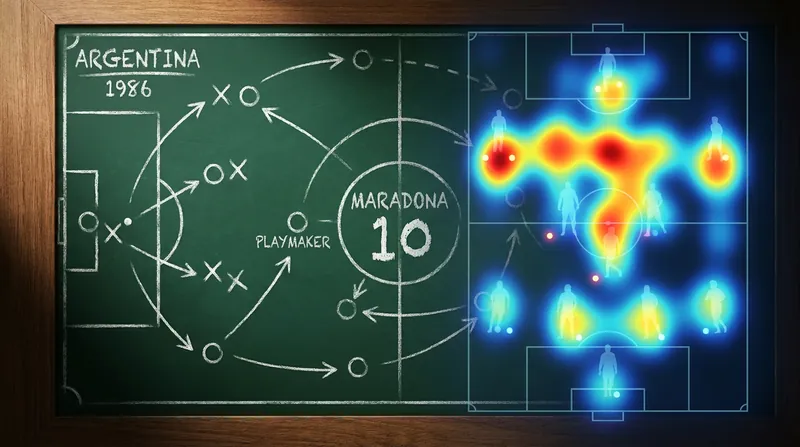
The zenith of this classic interpretation arrived at the 1986 World Cup. Diego Maradona's performance for Argentina remains the definitive blueprint of the traditional Number 10. Operating with near-total freedom and virtually zero defensive responsibilities, Maradona dictated the tempo, rhythm, and attacking output of an entire nation. He was allowed to walk when out of possession, conserving his explosive energy for the moments the ball arrived at his feet.[2]
This paradigm persisted through the 1990s, embodied by elegant orchestrators like France's Zinedine Zidane. Zidane's mastery at the 1998 World Cup proved that a team could still conquer the globe by funneling their entire creative burden through a single, central visionary. However, beneath the surface of Zidane's triumphs, the tactical tectonic plates of international football were already beginning to shift rapidly.[1]
The turn of the millennium brought a ruthless physical revolution to the sport. Sports science improved, players became faster, and the concept of team-wide defensive structure took precedence over individual brilliance. Managers began deploying dedicated defensive midfielders—specialists specifically instructed to occupy the exact pockets of space where the classic Number 10 traditionally thrived. The oxygen supply to the playmaker was systematically cut off.
By the 2010s, the rise of the high-pressing 4-3-3 formation threatened to render the classic playmaker extinct. Managers like Pep Guardiola and Jurgen Klopp popularized systems that demanded all eleven players participate in suffocating defensive traps. A player who walked out of possession was no longer a luxury; they were a fatal tactical liability. The traditional Number 10 was suddenly viewed as an anachronism, too slow for the modern transition game.
But true genius does not die; it adapts. The first major evolutionary branch was the 'False 9'. If the space behind the striker was too congested, playmakers like Lionel Messi began starting in the center-forward position and dropping deep into the midfield. This movement dragged opposing center-backs out of position, artificially recreating the pockets of space that defensive midfielders had tried to eliminate.[2]
The second adaptation pushed the playmaker out to the flanks. The 'Wide Playmaker' emerged as creative hubs were relocated to the wings, away from the brutal congestion of the center. Players who would have historically worn the 10 centrally were now operating from the touchline, cutting inside to deliver defense-splitting passes while isolated against slower full-backs.
The third, and perhaps most profound, evolution was the transformation of the Number 10 into the 'Free 8'. Visionaries like Luka Modric and Kevin De Bruyne retreated deeper into the midfield line. By operating further from the opponent's goal, they found the time and space required to orchestrate play, combining the passing range of a classic 10 with the relentless box-to-box stamina of a traditional central midfielder.[3]
Today, as we look at the landscape of the 2026 World Cup, the role has experienced a vibrant rebirth in the form of the 'Pressing 10'. The modern playmaker—exemplified by Germany's Jamal Musiala or Norway's Martin Ødegaard—possesses the velvet touch and spatial awareness of their predecessors, but paired with the cardiovascular engine of a marathon runner. They do not wait for the ball; they hunt it.[3]
The physical demands placed on this new breed are staggering. A modern elite playmaker routinely covers 11 to 13 kilometers per match. They are the tactical triggers for their team's high press, sprinting to close down opposing goalkeepers and center-backs before instantly transitioning into creative hubs the millisecond possession is won. The luxury player has become the hardest worker on the pitch.
The physical demands placed on this new breed are staggering.
This shift has fundamentally altered how academies develop talent. A young player with exceptional dribbling and vision can no longer survive on those traits alone. They are taught spatial geometry, pressing triggers, and defensive shadow-marking from the age of ten. The romanticism of the shirt remains, but the curriculum required to earn it has become ruthlessly pragmatic.[1][3]
The expanded 48-team format of the 2026 World Cup provides a fascinating canvas for this evolution. While elite European and South American nations deploy hyper-athletic pressing engines, emerging nations may still rely on the classic talismanic 10 to bridge the gap in overall squad quality. This tactical diversity ensures the World Cup remains a living museum of football's strategic history.[3]
Ultimately, the death of the Number 10 was greatly exaggerated. The role simply shed its static, aristocratic origins to survive the brutal physical realities of the 21st-century game. The modern playmaker proves that artistry and industry are not mutually exclusive, ensuring that football's most magical number will continue to define the World Cup for generations to come.[3]
Key points
- The Number 10 role originated as a luxury position entirely exempt from defensive duties.
- The rise of high-pressing systems in the 21st century made static playmakers a tactical liability.
- Playmakers adapted by moving out wide, dropping deeper as 'Free 8s', or operating as 'False 9s'.
- Modern Number 10s are now required to be the hardest-working players on the pitch, triggering defensive traps.
- The 2026 World Cup will showcase a spectrum of these tactical evolutions across its 48-team field.
How we got here
1958
Pelé is accidentally assigned the number 10 shirt, permanently associating the number with attacking genius.
1986
Diego Maradona leads Argentina to World Cup glory, defining the peak of the classic, free-roaming playmaker era.
Late 1990s
The rise of dedicated defensive midfielders begins to systematically suffocate the space traditionally occupied by the Number 10.
2010s
High-pressing 4-3-3 systems become dominant, forcing playmakers to adapt into False 9s, Wide Playmakers, or deeper Free 8s.
2020s
The emergence of the 'Pressing 10', combining elite creative vision with the cardiovascular endurance required to lead defensive traps.
- System Pragmatists
- Argue that the classic 10 was a tactical liability and celebrate the modern evolution of the hardworking, pressing playmaker.
- Football Romantics
- Mourn the loss of the static, pure artist who played entirely on instinct and imagination rather than tactical instruction.
- Tactical Historians
- View the shift not as a loss of artistry, but as a necessary cyclical adaptation to the shrinking of space on the pitch.
Perspectives this story doesn't cover
- Grassroots youth coaches who struggle to balance teaching modern pressing systems with nurturing naturally gifted, free-spirited dribblers.
Sources
Source coverage
3 outlets
3 viewpoints surfaced



- [1]FIFAFootball Romantics
The Legacy of the Number 10 at the FIFA World Cup
Read on FIFA → - [2]ESPNFootball Romantics
World Cup History: The greatest playmakers of all time
Read on ESPN → - [3]Factlen Editorial TeamTactical Historians
Synthesis by Factlen editorial team
Read on Factlen Editorial Team →
More in Sports
See all →History
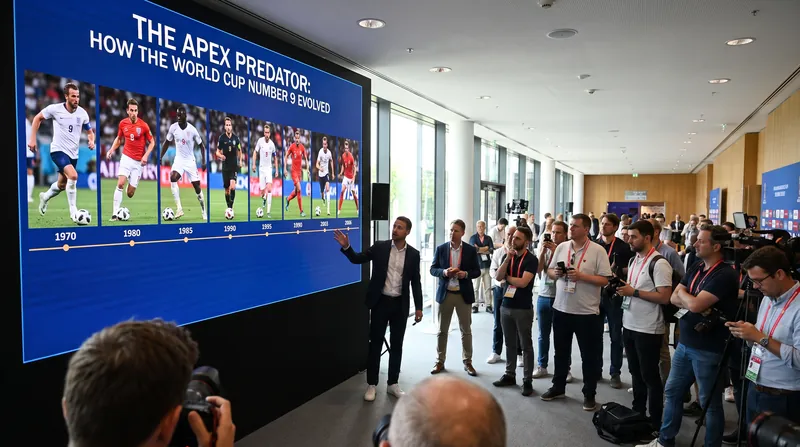
The Apex Predator: How the World Cup Number 9 Evolved from Penalty-Box Poacher to Complete Forward
3 sources
History
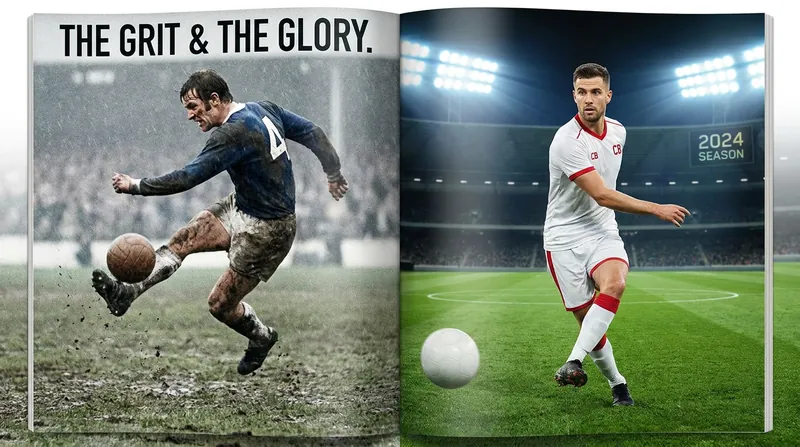
The First Attacker: How the World Cup Center-Back Evolved from Destroyer to Playmaker
2 sources
History
The Pursuit of Immortality: How the World Cup Golden Boot Evolved Across a Century of Football
4 sources

Storyline
The Wing-Back Evolution: How Defenders Became the World Cup's Primary Playmakers
7 sources
Comments
Every angle. Every day.
Get Sports stories with full source coverage and perspective breakdowns, free every day.