
Why the Quad Uses Flexible Minilateralism Rather Than a Mutual Defense Pact
The Quadrilateral Security Dialogue operates without a binding charter, mutual defense pact, or permanent secretariat. Instead, it functions as a flexible "minilateral" framework designed to align standard-setting, maritime domain awareness, and supply chain resilience across four major democracies.
By Hailey Scott

Share this story
In short
- The Quad is a non-binding diplomatic network, not a formal military alliance like NATO.
- It operates through specialized working groups focusing on technology, climate, and maritime security.
- The lack of a mutual defense treaty allows India and Japan to participate without violating domestic political constraints.
The most common misconception about the Quadrilateral Security Dialogue is that it functions as an "Asian NATO"—a formal military alliance designed to contain geopolitical rivals through collective defense. The structural reality is entirely different. The Quad operates as a non-binding diplomatic network with no mutual defense clause, no permanent headquarters, and no joint military command. It is a mechanism for policy alignment, not military integration.[3][8]
This absence of a formal treaty is a deliberate architectural feature, not a failure of negotiation. India maintains a strict, historic policy of strategic autonomy and non-alignment, while Japan operates under a pacifist constitution that heavily restricts its military posture. A binding military pact would be domestically unviable in both New Delhi and Tokyo. By stripping away the requirement for mutual defense, the Quad bypasses these domestic constraints, allowing the four nations to coordinate deeply on shared interests without triggering constitutional or political crises at home.[3][5]
Instead of a centralized bureaucracy, the Quad is a "minilateral" grouping that operates through leader-level summits, ministerial meetings, and highly specialized working groups. These groups bypass traditional diplomatic bottlenecks by focusing on functional, non-military domains: climate change mitigation, critical and emerging technologies, cyber security standards, and space cooperation. This modular approach allows the member states to generate practical outputs without requiring unanimous agreement on broader geopolitical doctrines.[1][2][4]
One of the most concrete structural outputs of this coordination is the Indo-Pacific Partnership for Maritime Domain Awareness (IPMDA). Rather than deploying joint naval patrols, the IPMDA functions as an information-sharing architecture. It provides unclassified, near-real-time commercial satellite data to regional partners across Southeast Asia and the Pacific Islands. This allows smaller nations to track "dark shipping"—vessels that have turned off their transponders—and combat illegal, unreported, and unregulated fishing in their exclusive economic zones.[2][7]
By focusing on initiatives like the IPMDA, the Quad explicitly frames itself as a provider of regional public goods. The strategic logic is straightforward: by delivering vaccines, infrastructure standards, and disaster relief, the four nations aim to offer regional states a viable alternative to coercive economic practices. This utility-first approach is designed to build influence without forcing smaller Indo-Pacific nations to explicitly choose sides in a superpower rivalry.[1][4]
While the Quad itself is strictly a diplomatic and economic forum, its members do participate in complex military coordination, most notably the Malabar naval exercises. However, these exercises are technically bilateral or trilateral arrangements that have expanded over time to include all four nations. The military track is kept legally and rhetorically distinct from the Quad's diplomatic track, preserving the forum's non-threatening posture while still building interoperability among their respective navies.[5][6]
In the realm of critical technologies, the Quad's mechanism is standard-setting. The working groups seek to establish open, transparent, and interoperable standards for 5G telecommunications, artificial intelligence, and quantum computing. This is a structural effort to ensure that authoritarian, state-backed enterprises do not monopolize the architecture of the future digital economy. By aligning their domestic regulations and funding priorities, the four nations create a market gravity that pulls other countries toward their technological standards.[2][3]
Supply chain resilience forms another core pillar of the Quad's economic mechanics. The COVID-19 pandemic exposed the severe vulnerabilities of highly concentrated global supply chains. In response, the Quad has prioritized mapping industrial capacity and coordinating investments in semiconductor manufacturing and critical mineral extraction. The goal is not autarky, but diversification—ensuring that no single nation can weaponize the supply of essential components against the others.[7][8]
The framework is also inherently modular, designed to expand and contract based on the issue at hand. During the height of the pandemic, the core four nations coordinated with South Korea, Vietnam, and New Zealand in a "Quad Plus" format to manage vaccine distribution and border policies. This demonstrates the primary advantage of minilateralism over rigid treaty structures: the ability to rapidly integrate ad-hoc partners for specific crises without requiring them to sign onto the group's entire agenda.[4][6]
However, this flexibility introduces a central structural tension: balancing the need for institutional memory with the desire for agility. Because the Quad lacks a permanent secretariat, its agenda is largely driven by the rotating host nation. This can lead to shifting priorities from year to year, making long-term, multi-decade infrastructure projects difficult to sustain compared to the output of formalized institutions like the World Bank or the European Union.[3][7]
To navigate the complex diplomatic terrain of the region, the Quad maintains a strict policy of strategic ambiguity regarding its primary geopolitical catalyst. By refusing to explicitly name China in its joint statements, the grouping advocates instead for a "free and open Indo-Pacific." This positive framing is crucial; it lowers the diplomatic cost for Southeast Asian and Pacific Island nations to engage with Quad initiatives, allowing them to accept public goods without overtly antagonizing Beijing.[1][5]
Ultimately, the mechanics of the Quad represent a structural adaptation to a multipolar era. It proves that major democracies can align their strategic, technological, and economic policies through overlapping interests rather than binding legal obligations. By prioritizing utility and flexibility over rigid defense commitments, the Quad has created a new template for international coordination in the 21st century.[2][7][8]
How we did this
- Method
- Structural comparison of the Quad's joint working group outputs against traditional binding treaty obligations to isolate the exact mechanism of coordination.
- What we found
- The Quad functions not as a nascent military alliance, but as a standard-setting and public goods provider designed specifically to bypass domestic political constraints in India and Japan regarding formal military pacts.
- What we worked from
- Non-binding diplomatic framework structure: Absence of formal charter — Australian Government Department of Foreign Affairs and Trade
- Working group deliverables in non-military domains: Focus on tech, climate, and maritime data — United States Studies Centre
- Absence of mutual defense clauses: No collective security guarantee — Lowy Institute
- Limits of this analysis
- The analysis relies on public joint statements and working group charters, which may not capture classified bilateral military coordination that occurs parallel to the Quad's diplomatic track.
Definitions
- Minilateralism
- A form of diplomacy involving a small, targeted group of countries working together on specific issues, bypassing the bureaucracy of large multilateral institutions.
- Maritime Domain Awareness
- The effective understanding of anything associated with the maritime environment that could impact security, safety, economy, or environment, often achieved through satellite and radar data sharing.
- Strategic Autonomy
- A foreign policy doctrine, heavily utilized by India, that prioritizes maintaining independence in decision-making and avoiding binding military alliances with superpowers.
- Dark Shipping
- Vessels that turn off their Automatic Identification System (AIS) transponders to hide their location, often to engage in illegal fishing, smuggling, or sanctions evasion.
Questions & answers
Is the Quad an Asian NATO?
No. The Quad has no mutual defense treaty, no joint military command, and no permanent headquarters. It is a diplomatic and economic coordination framework, not a military alliance.
Why doesn't the Quad have a formal treaty?
A binding military pact would violate India's historic policy of non-alignment and conflict with Japan's pacifist constitution. Remaining non-binding allows all four nations to cooperate without domestic political crises.
What is the Quad Plus?
The Quad Plus is an ad-hoc expansion of the core group to include other nations—such as South Korea, Vietnam, and New Zealand—for specific initiatives like pandemic response or supply chain coordination.
Does the Quad conduct joint military exercises?
The Quad itself does not. However, all four member nations participate in the Malabar naval exercises, which are organized through separate bilateral and trilateral defense agreements.
Analysis by camp
The Strategic Minilateralist View
Argues that flexible, non-binding coordination is the most effective diplomatic tool in the modern era.
Proponents of the Quad's current structure argue that the era of rigid, Cold War-style treaty alliances is over. By operating as a 'minilateral' network, the Quad can rapidly align policy on emerging threats—like supply chain shocks or critical technology standards—without the bureaucratic paralysis that plagues larger institutions like the UN or ASEAN. They view the lack of a mutual defense treaty not as a weakness, but as the exact feature that allows fiercely independent nations like India to participate fully.
The Alliance Skeptic View
Contends that without a mutual defense clause, the grouping lacks the structural teeth to deter major geopolitical aggression.
Skeptics point out that while standard-setting and vaccine diplomacy are useful, they do not alter the hard-power balance of the Indo-Pacific. Because the Quad explicitly avoids mutual defense commitments, critics argue it cannot function as a true deterrent against military coercion or territorial expansion. Furthermore, they highlight that without a permanent secretariat, the Quad's momentum is entirely dependent on the political will of its rotating leaders, making it vulnerable to domestic electoral shifts in any of the four capitals.
The Public Goods View
Focuses on the Quad's utility in providing vaccines, climate tech, and maritime data to win regional influence.
This perspective views the Quad primarily as an economic and developmental counterweight. Rather than demanding that smaller Indo-Pacific nations pick sides in a geopolitical standoff, the Quad offers tangible utility: satellite data to catch illegal fishing fleets, investments in undersea internet cables, and alternative financing for infrastructure. Advocates of this view argue that geopolitical influence in the 21st century is won by being the most reliable provider of public goods, effectively out-competing coercive economic models through better alternatives.
- Strategic Minilateralists
- Argue that flexible, non-binding coordination is more effective than rigid treaties in the modern multipolar era.
- Alliance Skeptics
- Contend that without a mutual defense clause, the grouping lacks the structural teeth to deter major geopolitical aggression.
- Public Goods Advocates
- Focus on the Quad's utility in providing vaccines, climate tech, and maritime data to win regional influence.
Perspectives this story doesn't cover
- Southeast Asian (ASEAN) nations balancing relations between the Quad and China
- Pacific Island states receiving Quad maritime data
- Chinese foreign ministry officials
Sources
Source coverage
8 outlets
3 viewpoints surfaced







- [1]Australian Government Department of Foreign Affairs and TradeStrategic Minilateralists
The Quad
Read on Australian Government Department of Foreign Affairs and Trade → - [2]United States Studies CentreStrategic Minilateralists
Meeting the moment: How the Quad can deliver in a new strategic era
Read on United States Studies Centre → - [3]Friedrich-Ebert-StiftungAlliance Skeptics
The Quadrilateral Security Dialogue between Australia, India, Japan and the United States
Read on Friedrich-Ebert-Stiftung → - [4]Council on Foreign RelationsPublic Goods Advocates
The Quad in the Indo-Pacific: What to Know
Read on Council on Foreign Relations → - [5]Lowy InstituteAlliance Skeptics
Assessing the Quad: Prospects and Limitations of Quadrilateral Cooperation for Advancing Australia's Interests
Read on Lowy Institute → - [6]Center for Strategic and International Studies (CSIS)Public Goods Advocates
Defining the Diamond: The Past, Present, and Future of the Quadrilateral Security Dialogue
Read on Center for Strategic and International Studies (CSIS) → - [7]Brookings InstitutionPublic Goods Advocates
The Quad (finally) delivers: Can it be sustained?
Read on Brookings Institution → - [8]Factlen Editorial TeamStrategic Minilateralists
Synthesis by Factlen editorial team
Read on Factlen Editorial Team →

More in World
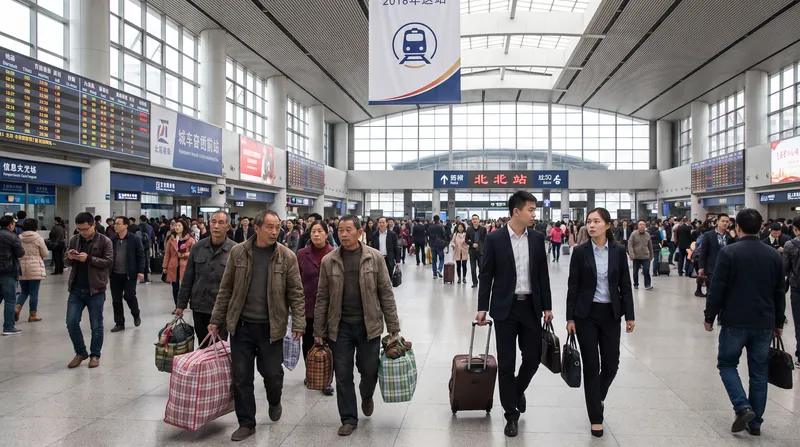
See all →Hukou System
The Agricultural vs. Non-Agricultural Registration and the Three-Tiered System: How the Hukou System Structures Social Mobility in China
9 sources
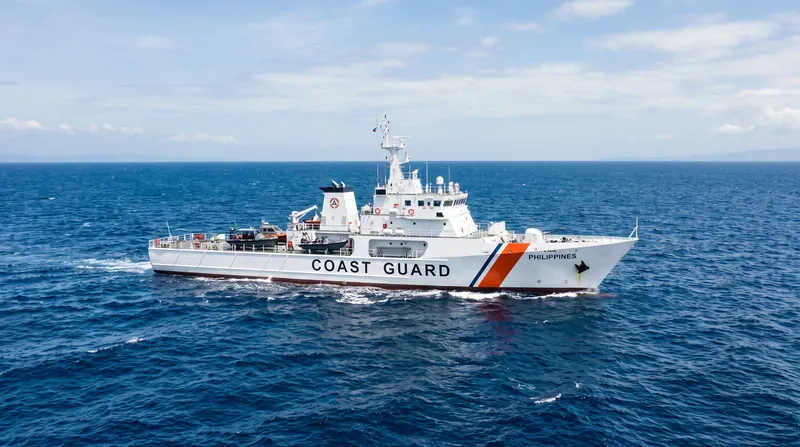
South China Sea
Chinese Coast Guard Rams Philippine Fisheries Vessel Near Sabina Shoal
6 sources
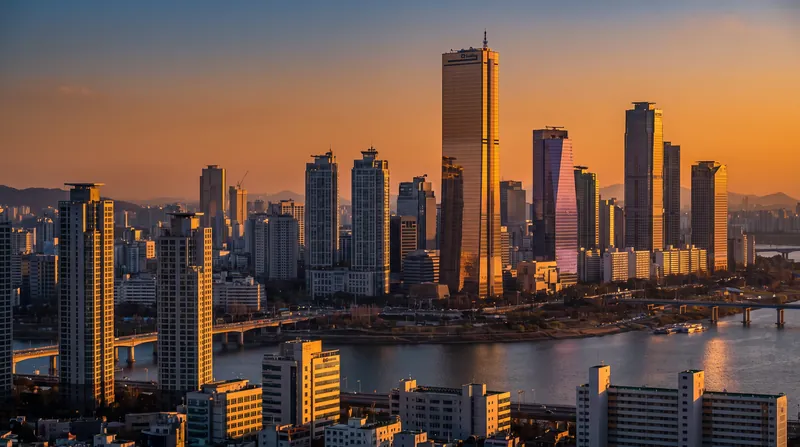
Chaebol Governance
The Cross-Shareholding and Circular Ownership That Define South Korea's Chaebol Structure
5 sources
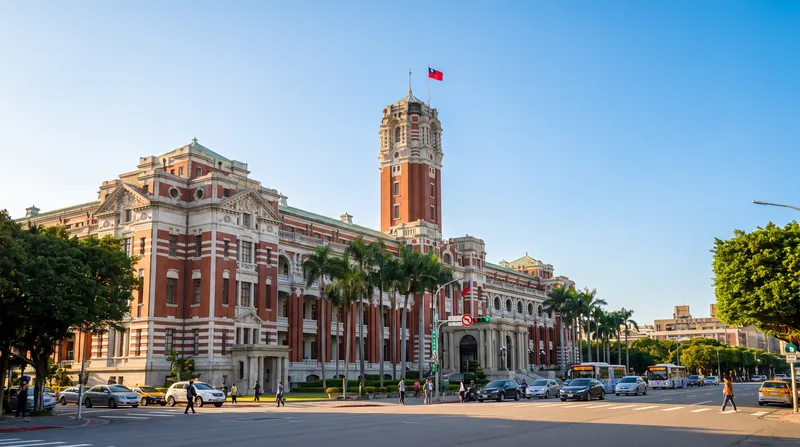
Cross-Strait Relations
The 'One China, Different Interpretations' Formula: How the 1992 Consensus Structures Cross-Strait Relations
5 sources
Comments
Every angle. Every day.
Get World stories with full source coverage and perspective breakdowns, free every day.