
Balancing Speed and Oversight: Major Capability Versus Middle Tier Acquisition
The Pentagon's shift toward the Adaptive Acquisition Framework has split defense procurement into two primary tracks: the traditional, heavily regulated Major Capability Acquisition and the accelerated Middle Tier of Acquisition. Understanding the structural differences between these pathways reveals how the military balances the demand for rapid technological fielding against the need for rigorous oversight and lifecycle sustainment.

Share this story
In short
- The Adaptive Acquisition Framework splits defense procurement into multiple tailored pathways.
- Major Capability Acquisition (MCA) is the traditional, heavily regulated route for complex systems.
- The Middle Tier of Acquisition (MTA) bypasses traditional oversight to field prototypes within five years.
The common misconception is that the Department of Defense buys everything—from fighter jets to software—through a single, monolithic, decades-long bureaucratic pipeline. The reality is that the modern defense acquisition system is a highly segmented architecture designed to route different technologies through entirely different regulatory environments.[6]
At the center of this architecture is the Adaptive Acquisition Framework (AAF), a structural overhaul that formally recognized that buying a nuclear submarine requires a different risk calculus than buying artificial intelligence algorithms. The framework is dominated by two primary pathways that represent the fundamental tension in defense procurement: the traditional Major Capability Acquisition (MCA) and the accelerated Middle Tier of Acquisition (MTA).[1][2]
The Major Capability Acquisition pathway is the historical baseline of the Pentagon's procurement apparatus, governed by Department of Defense Instruction 5000.85. It is a deliberate, sequential process designed for massive, complex hardware systems where failure is catastrophic and lifecycle costs stretch into the hundreds of billions of dollars.[1]
Under the MCA pathway, a program must navigate a rigid series of statutory milestones—designated A, B, and C—each requiring exhaustive documentation, independent cost estimates, and explicit approval from the Milestone Decision Authority. This pathway is inextricably linked to the Joint Capabilities Integration and Development System (JCIDS), which mandates that every requirement be validated by the Joint Requirements Oversight Council before a program can even begin.[1]
This rigorous oversight mechanism ensures that systems are thoroughly tested, technologically mature, and logistically supportable before they enter full-rate production. However, this deliberate pacing is also why MCA programs routinely take 10 to 15 years to move from initial concept to initial operational capability, a timeline that is increasingly misaligned with the rapid iteration of modern commercial technology.[4]
In response to this timeline misalignment, Congress established the Middle Tier of Acquisition through Section 804 of the Fiscal Year 2016 National Defense Authorization Act, which was later codified in DoDI 5000.80. The MTA pathway was explicitly designed to bypass the traditional JCIDS process and the rigid milestone structure of the MCA.[2]
The defining characteristic of the MTA pathway is its statutory time constraint: programs utilizing this route must either complete rapid prototyping or achieve rapid fielding within exactly five years. By stripping away the traditional oversight requirements, the MTA allows program managers to field capabilities to the warfighter at a pace that matches the operational need rather than the bureaucratic cycle.[2]
However, this acceleration introduces significant systemic risk. The Government Accountability Office has repeatedly warned that the MTA pathway's exemption from traditional oversight often leads to programs proceeding without foundational elements, such as formal technology readiness assessments or comprehensive sustainment strategies.[3]
A critical vulnerability in the MTA architecture is the assumption of technological maturity. The GAO's annual weapon systems assessments indicate that when programs enter the MTA pathway without mature technologies, the resulting concurrency—developing technology while simultaneously building prototypes—frequently leads to schedule delays and cost overruns that negate the pathway's intended speed advantages.[4]
Furthermore, the MTA is not a standalone lifecycle solution. Because it is capped at five years, successful MTA rapid prototyping programs must eventually transition to another pathway—usually the traditional MCA—to enter full-rate production and long-term sustainment.[2][3]
This transition point often becomes a bottleneck. Programs that optimized for speed during the MTA phase frequently find themselves lacking the rigorous documentation, lifecycle cost estimates, and logistical planning required to pass an MCA Milestone C decision, forcing them to pause fielding while they backfill years of deferred regulatory compliance.[3]
The RAND Corporation's analysis of the Adaptive Acquisition Framework highlights this tension, noting that evaluating the performance of these pathways requires metrics that go beyond simple schedule adherence. The true measure of acquisition success is not just how fast a prototype is built, but how effectively that capability is integrated into the force structure and sustained over decades.[5]
The Department of Defense is currently attempting to calibrate this balance, issuing updated guidance to ensure that MTA programs develop sustainment plans and transition strategies early in their five-year window. The goal is to retain the agility of the MTA while mitigating the risk of fielding 'orphan' systems that cannot be maintained in a contested logistics environment.[2][6]
Ultimately, the mechanics of defense acquisition are no longer about forcing every program through a single pipeline, but about portfolio management. Program executive officers must now act as risk managers, deciding whether a specific capability requires the deliberate, heavily armored oversight of the MCA, or the high-speed, high-risk maneuverability of the MTA.[1][2][6]
How we did this
- Method
- Comparative timeline and oversight normalization
- What we found
- While MTA mandates a five-year fielding timeline, the lack of mature technology prerequisites often forces these programs to transition back into the traditional MCA pathway for production, meaning the actual time-to-fielding for complex systems is rarely shortened; rather, the oversight is merely deferred during the prototyping phase.
- What we worked from
- MTA rapid fielding statutory limit: 5 years — Executive Services Directorate (DoD)
- MCA average fielding timeline: 10-15 years — GAO
- MTA oversight transition bottlenecks: Qualitative transition delays — GAO
- Limits of this analysis
- This analysis relies on GAO aggregate data and does not account for classified rapid acquisition programs that may successfully field within the five-year MTA window without transitioning to MCA.
Key terms
- Major Capability Acquisition (MCA)
- The traditional, highly regulated defense procurement pathway designed for complex, expensive hardware systems, governed by a strict milestone approval process.
- Middle Tier of Acquisition (MTA)
- An accelerated procurement pathway that bypasses traditional requirements processes to field prototypes or mature technologies within a strict five-year window.
- Milestone Decision Authority (MDA)
- The designated official who has the authority to approve a program's transition through the various phases of the traditional acquisition lifecycle.
- Joint Capabilities Integration and Development System (JCIDS)
- The formal process used by the Joint Requirements Oversight Council to validate and prioritize the capability needs of the military before acquisition begins.
- Technology Readiness Level (TRL)
- A standardized metric used to assess the maturity of a specific technology, determining whether it is ready to be integrated into a larger system or fielded.
Reader questions
What is the Adaptive Acquisition Framework (AAF)?
The AAF is the Department of Defense's overarching procurement structure that provides multiple distinct pathways—including MCA and MTA—allowing program managers to tailor oversight and timelines to the specific type of technology being acquired.
How long does a traditional Major Capability Acquisition take?
Due to rigorous statutory requirements, testing, and milestone approvals, traditional MCA programs routinely take 10 to 15 years to move from initial concept to fielding.
What is the primary restriction on the Middle Tier of Acquisition?
The MTA pathway is strictly bound by a statutory time limit, requiring programs to complete rapid prototyping or achieve rapid fielding within exactly five years.
Do MTA programs bypass all oversight?
No. While they bypass the traditional JCIDS process and specific MCA milestones, MTA programs are still subject to governance by their respective service acquisition executives and must eventually develop transition and sustainment plans.
Where opinion splits
Traditional Oversight Advocates
Argues that the deliberate pace of the MCA pathway is necessary to prevent expensive failures and ensure long-term sustainment.
This perspective, often championed by statutory oversight bodies and traditional program managers, argues that the deliberate pace of the Major Capability Acquisition pathway is a feature, not a bug. They contend that bypassing the Joint Capabilities Integration and Development System (JCIDS) and deferring lifecycle cost estimates under the MTA pathway creates unacceptable long-term risks. From this viewpoint, fielding a prototype quickly is useless if the system lacks the logistical tail, technical data rights, and mature technology required to sustain it in a decades-long conflict. They point to historical acquisition failures where concurrency—building while testing—resulted in billions of dollars wasted on unsupportable platforms.
Rapid Fielding Proponents
Views the traditional 15-year timeline as a national security vulnerability and prioritizes speed and iterative prototyping.
Driven by the urgency of great power competition, this camp views the traditional 10-to-15-year MCA timeline as an existential threat to national security. They argue that in domains like cyber, electronic warfare, and unmanned systems, technology becomes obsolete long before it clears Milestone C. This perspective values the Middle Tier of Acquisition for its ability to bypass bureaucratic inertia, accept higher upfront technical risk, and deliver minimum viable products to the warfighter within a five-year window. They maintain that the Department of Defense must adopt commercial tech-sector methodologies, iterating on hardware and software in the field rather than waiting for perfect, fully mature systems.
Acquisition Reform Analysts
Emphasizes that the debate between speed and oversight is a false dichotomy, advocating for a cohesive portfolio approach.
This analytical viewpoint, often found in think tanks and academic assessments, emphasizes that the debate between speed and oversight is a false dichotomy. They argue that the Adaptive Acquisition Framework's true value lies in portfolio management. From this perspective, the MTA and MCA are not competing philosophies but complementary tools; the MTA should be used to burn down technical risk and prove concepts, which are then smoothly transitioned into the MCA for scaled production and sustainment. They focus on the friction points between the pathways, advocating for better metrics, earlier transition planning, and a more modular approach to defense procurement.
- Traditional Oversight Advocates
- Values rigorous testing, lifecycle cost analysis, and strict adherence to JCIDS to prevent expensive failures and ensure long-term sustainment.
- Rapid Fielding Proponents
- Argues that the traditional 15-year timeline is a national security vulnerability and prioritizes speed, commercial technology integration, and iterative prototyping.
- Acquisition Reform Analysts
- Focuses on the systemic integration of the pathways, arguing that MTA and MCA must be used as a cohesive portfolio rather than competing pipelines.
Perspectives this story doesn't cover
- Defense Industrial Base Contractors
- Frontline Warfighters
Sources
Source coverage
6 outlets
3 viewpoints surfaced




- [1]Executive Services Directorate (DoD)Rapid Fielding Proponents
DoDI 5000.85, Major Capability Acquisition
Read on Executive Services Directorate (DoD) → - [2]Executive Services Directorate (DoD)Rapid Fielding Proponents
DoD Instruction 5000.80, Operation of the Middle Tier of Acquisition
Read on Executive Services Directorate (DoD) → - [3]GAOTraditional Oversight Advocates
Middle-Tier Defense Acquisitions: Rapid Prototyping and Fielding Requires Changes to Oversight and Development Approaches
Read on GAO → - [4]GAOTraditional Oversight Advocates
Weapon Systems Annual Assessment: Requiring Mature Technologies Could Enable Shift to Rapid Delivery
Read on GAO → - [5]RAND CorporationAcquisition Reform Analysts
Using Metrics to Understand the Performance of the Adaptive Acquisition Framework
Read on RAND Corporation → - [6]Factlen Editorial TeamAcquisition Reform Analysts
Synthesis by Factlen editorial team
Read on Factlen Editorial Team →
More in Defense & Security
See all →Defense Procurement
Title 10 U.S.C. § 2500: The Statutory Definition and Economic Measurement of the U.S. Defense Industrial Base
4 sources

Baltic Security
Moscow Issues Nuclear Threat to NATO Over Potential Kaliningrad Isolation
5 sources

Indo-Pacific Posture
US Deploys Typhon Missile System to Okinawa as China and Russia Condemn Move
6 sources
Grid Defense
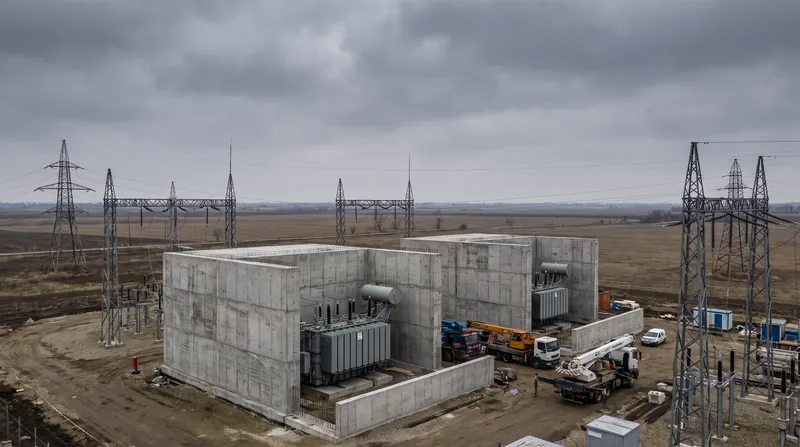
Lithuania Fortifies Key Power Substation Near Kaliningrad With Concrete 'Sarcophagi' Against Drone Attacks
7 sources
Comments
Every angle. Every day.
Get Defense & Security stories with full source coverage and perspective breakdowns, free every day.