
What the State Department's $750 Fee Buys for B-1 and B-2 Visa Applicants
A new State Department pilot program allows B-1 and B-2 visa applicants to bypass year-long wait times for a $750 fee, securing an interview within 10 days. But the premium option comes with strict limits and does not guarantee visa approval.

Share this story
The US visa backlog has been a persistent hurdle for international travelers, with wait times in countries like India, Mexico, and Brazil frequently exceeding a year. Now, the State Department is testing a premium solution.
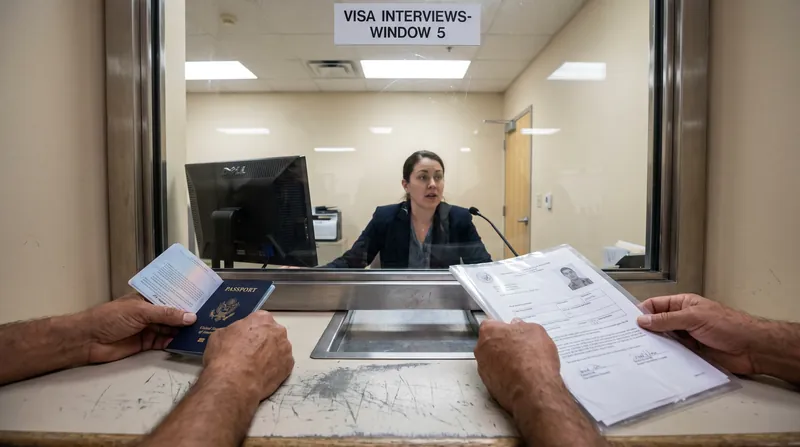
Effective July 1, 2026, a new temporary final rule allows applicants for B-1 business and B-2 tourist visas to pay a $750 fee to secure a consular interview within 10 business days.[2]
The pilot program, which runs through December 31, 2026, represents a major shift in how the US manages its consular queues, introducing a "fast-track" model previously reserved for employment-based visas.
But the system is highly specific in its mechanics. The $750 fee is strictly an "interview scheduling benefit," not an adjudication benefit.[1]
Paying the premium does not increase an applicant's chances of approval, nor does it bypass standard security vetting or administrative processing.
The booking process requires precision. Applicants cannot simply buy a fast-track slot upfront. They must first complete the standard DS-160 application and pay the baseline $185 Machine Readable Visa (MRV) fee.
Only after scheduling a standard, non-expedited appointment does the system present the option to upgrade. If expedited slots are available within the next 10 days, the applicant can select one.
At that moment, the system places a five-to-ten-minute hold on the slot. The applicant must pay the $750 fee within that narrow window, or the appointment is released back into the pool.
The financial commitment is substantial and entirely non-refundable. Between the MRV fee and the expedite charge, the total cost reaches $935—even if the visa is ultimately denied or the applicant misses the interview.
The State Department has capped the number of expedited appointments to a percentage of a consulate's overall capacity. This firewall is designed to ensure that the premium tier does not cannibalize standard interview slots or lengthen wait times for those who cannot afford the fee.
The pilot is projected to handle around 25,000 expedited requests, generating nearly $19 million in revenue. Officials state this pricing is based on a cost-recovery model to fund staffing adjustments, fraud prevention, and operational upgrades.
The timing of the rollout is not coincidental. The US is bracing for a massive influx of international visitors ahead of the 2026 FIFA World Cup and the 2028 Los Angeles Olympics, events that will severely test consular capacity.
Currently, the program is only operating at select, high-volume U.S. embassies and consulates. The State Department has not published a master list of participating locations, requiring applicants to check availability directly within the scheduling portal.[2]
Free emergency appointments for urgent humanitarian reasons or national-interest travel remain available and are unaffected by the new paid tier.
As the six-month pilot progresses, immigration professionals will be watching closely to see if the demand justifies making the $750 fast-track a permanent fixture of the American immigration system.
Viewpoints in depth
Business Travelers and Immigration Attorneys
View the fee as a necessary and valuable tool for urgent corporate travel.
For multinational corporations and foreign executives, the inability to secure a U.S. visa for a short-notice board meeting or contract negotiation has been a major operational hurdle. Immigration attorneys argue that the $750 fee is a reasonable business expense that provides much-needed predictability, mirroring the premium processing already available for H-1B and L-1 employment visas.
State Department Officials
Frame the pilot as a cost-recovery mechanism that tests demand without harming standard applicants.
Consular officials emphasize that the fast-track program is strictly capped at a percentage of a post's overall interviewing capacity. By charging a premium, the department aims to recover the costs of staffing adjustments and fraud prevention while ensuring that the standard queue is not artificially lengthened by the new tier.
Equity and Tourism Advocates
Express concern over a two-tiered system that prices out ordinary families.
Critics warn that a $935 total price tag effectively creates a "pay-to-play" immigration system. For families hoping to attend a graduation or tourists planning a vacation, the fee is often prohibitively expensive. Advocates worry that as demand for the premium slots grows, the State Department may be incentivized to allocate more resources to the paid tier at the expense of the free queue.
Key points
- The US State Department launched a pilot program allowing B-1/B-2 visa applicants to pay $750 for an interview within 10 business days.
- The fee is an interview scheduling benefit only and does not guarantee visa approval or speed up background checks.
- Applicants must first pay the standard $185 application fee and book a regular appointment before upgrading.
- The program runs through December 31, 2026, and is limited to select U.S. consulates to prevent delays in the standard queue.
What we don’t know
- Which specific U.S. embassies and consulates are participating in the pilot program, as the State Department has not released a master list.
- Whether the pilot program will be extended or made permanent after its scheduled expiration on December 31, 2026.
How we got here
June 9, 2026
The State Department publishes the temporary final rule outlining the $750 fee.
July 1, 2026
The pilot program officially launches at select U.S. embassies and consulates.
December 31, 2026
The scheduled end date for the pilot program, after which it may be extended, modified, or terminated.
- Business and Corporate Travelers
- View the fee as a necessary and valuable tool for urgent corporate travel.
- Consular Administration
- Frame the pilot as a cost-recovery mechanism that tests demand without harming standard applicants.
- General Applicants and Critics
- Express concern over a two-tiered system that prices out ordinary families.
Perspectives this story doesn't cover
- Travel agencies managing large group bookings for international tours
- Applicants from countries with low visa demand who are excluded from the pilot
Sources
Source coverage
2 outlets
3 viewpoints surfaced


- [1]FirstpostGeneral Applicants and Critics
US Visa: New $750 fast track interview fee
- [2]Ogletree DeakinsBusiness and Corporate Travelers
Need a U.S. Visa Faster? New $750 Expedited Interview Option Launches on July 1
Read on Ogletree Deakins →
More in Travel
See all →Visa Policy
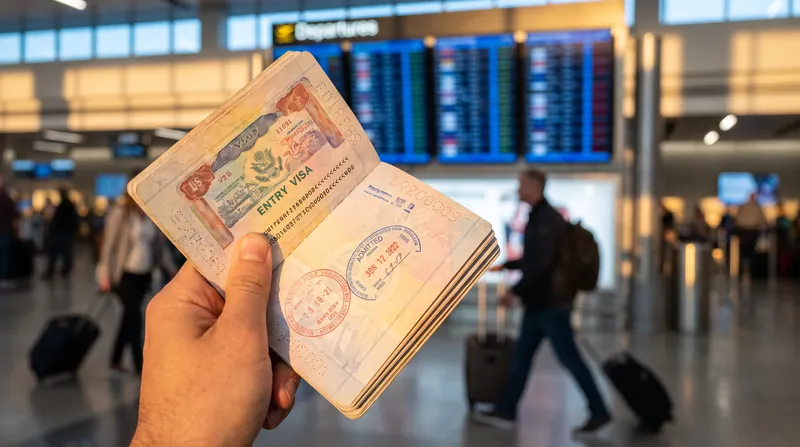
Legal Differences in Stay Limits and Appeal Rights Between US ESTA and a B-2 Visa
6 sources
Visa Policy
USCIS Memo Treats Domestic Green Card Processing as Extraordinary Relief
6 sources
Immigration Tech
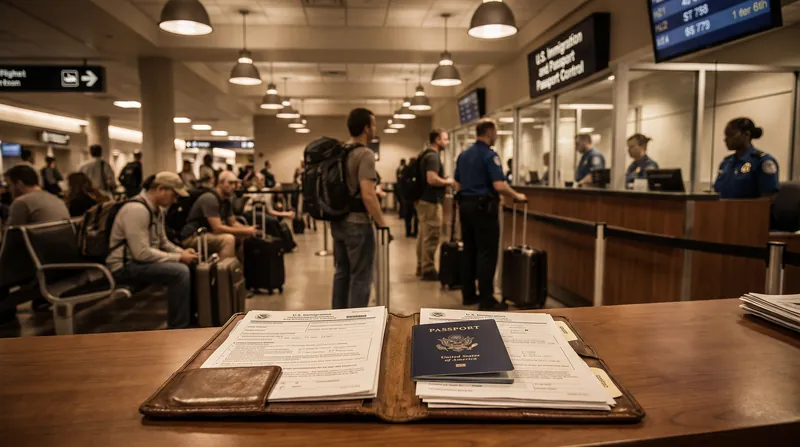
USCIS's Rule for Phasing Out Paper Immigration Forms Through Mandatory E-Filing
6 sources

Immigration Policy
USCIS Allows Officers to Deny Incomplete Applications Without Requesting Evidence
6 sources

Comments
Every angle. Every day.
Get Travel stories with full source coverage and perspective breakdowns, free every day.