
Federal Land Mandates Determine What Visitors Can Do in Parks, Forests, and Monuments
While they all offer stunning landscapes, America's public lands operate under vastly different legal mandates that dictate what visitors can actually do. Understanding the distinction between preservation, multiple-use, and executive designation is the key to planning the right outdoor adventure.

Share this story
In short
- National Parks are managed for strict preservation, heavily restricting where visitors can go and what they can do.
- National Forests operate under a multiple-use mandate, allowing for dispersed camping, hunting, and unrestricted trail access for dogs.
- National Monuments are created by Presidential proclamation and can be managed by any of the major land agencies.
The short version is this: National Parks are outdoor museums designed for strict preservation, National Forests are working lands mandated to balance recreation with resource extraction, and National Monuments are executive designations protecting specific historic or scientific objects. If you want to see a world-famous geyser from a paved boardwalk, you go to a park. If you want to pull your truck down a dirt road, pitch a tent for free, and let your dog off the leash, you go to a forest.[5][9][11]
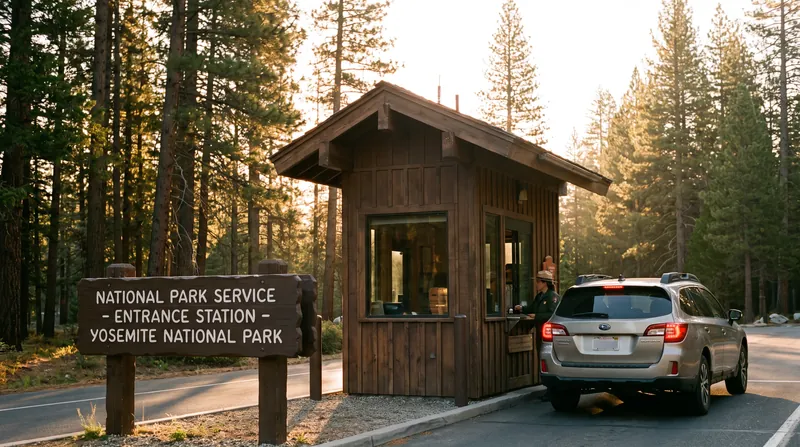
For millions of travelers planning their summer road trips, the green blobs on the map all look the same. But the name on the entrance sign dictates entirely different rules of engagement. The distinction between a park, a forest, and a monument isn't just bureaucratic trivia; it is the fundamental blueprint for what you are legally allowed to do when you step out of your vehicle.[11]
To understand the mechanics of federal land, you have to look at the foundational laws that created them. The United States federal government owns roughly 640 million acres of land, primarily in the West. This vast portfolio is divided among four major land management agencies, each operating under a distinct congressional mandate that shapes the visitor experience from the ground up.[1]
The National Park Service (NPS), housed within the Department of the Interior, manages the "crown jewels" of the American landscape. Created by the Organic Act of 1916, the NPS has a dual, often conflicting mandate: to conserve the scenery, natural and historic objects, and wildlife, and to provide for their enjoyment in a way that leaves them unimpaired for future generations.[6]
Because preservation is the overriding goal, National Parks are the most restrictive federal lands. Visitors are generally confined to established trails, boardwalks, and designated campgrounds. Dogs are almost universally banned from dirt trails to protect local wildlife and fragile ecosystems. Hunting is strictly prohibited, and resource gathering—even picking wildflowers or collecting rocks—is a federal offense.[5][9]
In stark contrast, the U.S. Forest Service (USFS) operates under the Department of Agriculture. This departmental home is the first clue to its philosophy: forests are viewed, in part, as a renewable crop. Guided by the Multiple-Use Sustained-Yield Act of 1960, the USFS is legally required to balance outdoor recreation with timber harvesting, livestock grazing, watershed protection, and wildlife habitat.[3][4][7]
For the outdoor adventurer, this multiple-use mandate translates to unparalleled freedom. National Forests are the domain of "dispersed camping"—the legal right to pull off a forest service dirt road and set up camp for free, outside of a designated campground, for up to 14 days. Dogs are welcome on almost all trails, mountain biking and off-roading are widely permitted on designated routes, and hunting is a standard, legally protected use of the land.[5][9][11]
Then there is the wildcard of federal lands: the National Monument. Unlike parks and forests, which are typically created by acts of Congress, National Monuments can be unilaterally established by the President of the United States under the Antiquities Act of 1906.[2][8]
The Antiquities Act was originally designed to quickly protect Indigenous ruins and artifacts in the Southwest from looters. Today, it is used to protect "objects of historic or scientific interest," which has been interpreted by successive administrations to include massive landscapes, marine trenches, and fossil beds.[2][8]
The most confusing aspect of National Monuments is their management. There is no single "National Monument Agency." A monument can be managed by the NPS (like Muir Woods), the Forest Service (like Mount St. Helens), the Bureau of Land Management (like Grand Staircase-Escalante), or even jointly. The rules for visiting a monument depend entirely on which agency holds the keys, meaning a Forest Service monument will generally allow hunting and dogs, while an NPS monument will not.[2][10][11]
This jurisdictional patchwork directly impacts trip planning. A traveler moving from Yellowstone National Park into the adjacent Custer Gallatin National Forest crosses an invisible boundary where the legal framework instantly shifts from preservation to multiple-use. Suddenly, the dog can get out of the car, the drone might be legal to fly, and the campsite doesn't require a six-month advance reservation on a crowded federal portal.[5][9][11]
Understanding these mechanics allows travelers to tailor their itineraries to their actual needs. Families seeking accessible infrastructure, interpretive visitor centers, and iconic vistas are best served by the National Park system. Those seeking solitude, self-reliance, and fewer restrictions will find their sanctuary in the vast, working landscapes of the National Forests.[11]
How we did this
- Method
- Cross-agency mandate comparison and recreational freedom mapping.
- What we found
- While National Parks are perceived as the highest tier of public land, National Forests actually offer significantly more recreational freedom for visitors (dispersed camping, hunting, unrestricted pet access) because their 'multiple-use' mandate legally prioritizes active utilization alongside conservation, whereas the NPS 'preservation' mandate legally restricts visitor freedom to protect the resource.
- What we worked from
- NPS Preservation Mandate: Strict conservation, limited recreation — U.S. National Park Service
- USFS Multiple-Use Mandate: Balanced extraction and recreation — Rangelands Gateway
- Monument Designation Rules: Presidential proclamation, variable management — Congressional Research Service
- Limits of this analysis
- Local superintendent compendiums can occasionally restrict specific forest areas or open specific park areas, creating localized exceptions to the general agency rules.
Definitions
- Organic Act of 1916
- The foundational law that created the National Park Service, mandating the strict preservation of scenery and wildlife for future generations.
- Multiple-Use Sustained-Yield Act
- A 1960 law requiring the Forest Service to balance outdoor recreation with timber, grazing, and watershed protection.
- Antiquities Act of 1906
- A law granting the President the authority to unilaterally create National Monuments to protect objects of historic or scientific interest.
- Dispersed Camping
- The practice of camping outside of a designated campground, typically for free, on Forest Service or BLM land.
- Bureau of Land Management (BLM)
- An agency within the Department of the Interior that manages 244 million acres of public land, primarily in the desert West, under a multiple-use mandate similar to the Forest Service.
Questions & answers
Can I camp anywhere in a National Forest?
Yes, in most areas. This is called dispersed camping. You can generally pull off a forest service road and camp for free for up to 14 days, provided you follow Leave No Trace principles and local fire restrictions.
Why aren't dogs allowed on National Park trails?
The National Park Service prioritizes wildlife preservation. Dogs leave predator scents that disrupt local fauna, can introduce diseases, and may provoke dangerous encounters with bears or moose.
Who manages National Monuments?
It varies. A National Monument can be managed by the National Park Service, the Forest Service, the Bureau of Land Management, or the Fish and Wildlife Service, depending on the specific proclamation that created it.
Is hunting allowed on federal land?
Hunting is strictly prohibited in almost all National Parks. However, it is a legally protected and standard use of land in National Forests and on Bureau of Land Management properties, subject to state wildlife regulations.
Analysis by camp
The Preservationists
Advocates for the National Park Service model of strict conservation.
This camp argues that the restrictive rules of the National Park Service are the only thing standing between America's most iconic landscapes and total ecological collapse. By confining visitors to boardwalks, banning dogs, and requiring permits, the NPS ensures that delicate thermal features, ancient groves, and apex predators remain undisturbed. They view the 'loved to death' phenomenon of modern tourism as an existential threat that requires heavy-handed management.
The Multi-Use Advocates
Supporters of the Forest Service and BLM model of working lands.
Recreation advocates and resource managers argue that public lands belong to the public and should be actively utilized. They champion the Multiple-Use Sustained-Yield Act because it democratizes access, allowing hunters, off-roaders, and dispersed campers to enjoy the outdoors without the friction of reservation systems and strict policing. This camp believes that conservation and active human use are not mutually exclusive, provided the land is managed responsibly.
The Monument Defenders
Proponents of the Antiquities Act as a vital conservation tool.
Environmental groups and legal scholars in this camp view the Antiquities Act as a necessary bypass to congressional gridlock. When a landscape is threatened by imminent development or resource extraction, they argue the President must have the authority to unilaterally protect it as a National Monument. They accept the resulting patchwork of agency management as a worthwhile trade-off for immediate, sweeping landscape protection.
- Preservation Advocates
- Argue that strict rules and limited access are necessary to protect fragile ecosystems from being loved to death by surging crowds.
- Multi-Use Proponents
- Value the working-land model that allows for dispersed recreation, hunting, and resource extraction to coexist on the same acreage.
- Executive Conservationists
- Support the use of the Antiquities Act to quickly protect vulnerable landscapes as National Monuments when congressional action stalls.
Perspectives this story doesn't cover
- Indigenous Tribal Co-Managers
- Gateway Community Businesses
Sources
Source coverage
11 outlets
3 viewpoints surfaced








- [1]Congressional Research ServiceExecutive Conservationists
The Federal Land Management Agencies
Read on Congressional Research Service → - [2]Congressional Research ServiceExecutive Conservationists
Federal Land Designations: A Brief Guide
Read on Congressional Research Service → - [3]U.S. Forest ServiceMulti-Use Proponents
What We Believe
Read on U.S. Forest Service → - [4]U.S. Forest ServiceMulti-Use Proponents
Laws and Regulations
Read on U.S. Forest Service → - [5]U.S. National Park ServicePreservation Advocates
National Park or National Forest? - Great Smoky Mountains National Park
Read on U.S. National Park Service → - [6]U.S. National Park ServicePreservation Advocates
What's In a Name? Discover National Park System Designations
Read on U.S. National Park Service → - [7]Rangelands GatewayMulti-Use Proponents
Multiple Use, Sustained Yield
Read on Rangelands Gateway → - [8]Center for Large Landscape ConservationExecutive Conservationists
Ecological and sociopolitical assessment of congressional and presidential designation of federal protected areas
Read on Center for Large Landscape Conservation → - [9]onX MapsMulti-Use Proponents
Types of Public Land: Understanding Federal Land Designations
Read on onX Maps → - [10]U.S. National Park ServicePreservation Advocates
Designations of National Park System Units - Golden Gate National Recreation Area
Read on U.S. National Park Service → - [11]Factlen Editorial Team
Synthesis by Factlen editorial team
Read on Factlen Editorial Team →
More in Travel
See all →Public Lands
Using the 1906 Antiquities Act to Shrink Bears Ears and Grand Staircase-Escalante
1 sources
Protected Lands
The IUCN Category II Standard: How the Global Community Actually Defines a 'National Park'
6 sources
Grand Canyon Recovery
Grand Canyon National Park Sets Tentative Thanksgiving Date for South Rim Water Restoration
5 sources
Park Permits
The 7:00 AM Release: How the National Park Service Actually Allocates Timed-Entry Permits
6 sources
Comments
Every angle. Every day.
Get Travel stories with full source coverage and perspective breakdowns, free every day.