
The Inverted Revolution: How the World Cup Winger Transformed from Touchline Crosser to Primary Goalscorer
Once tasked purely with hugging the touchline and delivering crosses, the modern winger has evolved into the focal point of the attack. As the 2026 FIFA World Cup showcases a new generation of wide forwards, tactical systems have entirely rewired themselves to unleash these inverted goalscorers.
By Ryder James

Share this story
For decades, the geometry of football was largely unquestioned. The center of the pitch was a congested battleground of towering center-backs and combative midfielders, meaning the primary mechanism for stretching a defense was width. The touchline was a boundary, and the traditional winger was its custodian. Players with chalk on their boots were tasked with a singular, repetitive objective: beat a fullback on the outside and float a cross into the penalty area for a waiting number nine.
This was the era of the out-and-out winger, a role defined by blistering straight-line speed and precise delivery. Yet, as defensive structures became more sophisticated and the offside trap evolved, the traditional cross became statistically inefficient. Data analysts and progressive coaches began to realize that launching an aerial ball into a penalty box packed with elite defenders yielded a remarkably low conversion rate.[3]
The tactical solution was the "inverted winger." By placing a left-footed player on the right flank, or a right-footed player on the left, coaches fundamentally altered the geometry of the attack. Instead of driving toward the corner flag, these players were naturally inclined to cut inside, driving directly toward the penalty box and the goal. It was a subtle shift in personnel that triggered a revolution in how the sport is played.
Historical World Cup performances provided the global proof of concept for this evolution. When a left-footed winger received the ball on the right wing, everyone in the stadium knew they intended to cut inside onto their stronger foot. Yet, the sheer biomechanical advantage of facing the goal while the defender was forced to backpedal made the maneuver nearly impossible to stop without committing a foul.[2]
Fast forward to the 2026 FIFA World Cup, and the inverted winger is no longer a tactical novelty; it is the foundational building block of elite international football. The wide forward is now the primary goalscoring threat for many of the world's top nations, entirely eclipsing the traditional center-forward in terms of attacking output and tactical importance.[1][3]
Consider the tactical setup of the Brazilian national team. The entire structure of the Seleção is meticulously designed to isolate their most devastating attackers on the flanks. By drawing the opposition's defensive block toward the center or overloading the opposite side of the pitch, Brazil creates isolated one-on-one scenarios for their wingers to exploit the half-spaces.[1]
Egypt operates on a similar principle, utilizing a hardworking midfield trio and a selfless center-forward whose primary directive is to drag defenders out of position. This movement acts as a decoy, opening the crucial vertical corridors for their star winger to make trademark diagonal runs from the right flank directly into the penalty area.[1][2]
This evolution has triggered a domino effect across the pitch, most notably altering the role of the traditional striker. The classic "target man" has largely been replaced by the "false nine" or the facilitating forward. These are players who deliberately drop deep into the midfield to link play, dragging center-backs with them and creating vast expanses of space for the wingers rushing past them into the box.[3]
The full-back position has also been entirely rewired to accommodate this shift. When an inverted winger cuts inside, they vacate the wide channel. This space must be immediately filled by an overlapping full-back to maintain the team's attacking width. Without this overlap, the defense could simply condense the center of the pitch and suffocate the attack.
Spain's approach heading into the 2026 tournament highlights a fascinating hybrid of these concepts. La Roja possesses a new generation of wingers who are comfortable both cutting inside to shoot and driving to the byline to cross. This dual threat creates a cognitive overload for opposing full-backs, who can no longer simply overplay the inside shoulder to force the attacker wide.[1][2]
Defending against this modern archetype requires immense tactical discipline and structural fluidity. Teams can no longer rely on a single full-back to manage an elite inverted winger. The standard response involves "zonal trapping," where a defensive midfielder drops into the half-space to provide cover, effectively turning a back four into a back five during defensive transitions.
Statistically, the shift is undeniable. Tracking data from recent World Cups shows a massive decline in traditional high crosses compared to tournaments from two decades ago. Conversely, the volume of shots taken by players classified as wide forwards has surged dramatically, reflecting their new status as primary finishers rather than peripheral creators.[3]
The geometry of the penalty area has permanently changed. The most dangerous zone is no longer the six-yard box where headers are contested, but "Zone 14" at the edge of the penalty area, where inverted wingers arrive at speed to curl shots into the far corner of the net.
Youth academies worldwide have adapted their curriculums to reflect this reality. The fastest, most technically gifted young players are no longer automatically placed centrally as strikers or number tens. Instead, they are pushed out wide, taught to receive the ball on the half-turn, and trained relentlessly on cutting inside to finish.[1]
As the 2026 World Cup unfolds across North America, the defining images of the tournament will likely not be towering headers from floated crosses. Instead, the matches will be decided by the explosive, diagonal drives of wide forwards, cutting inside and bending the geometry of the sport to their absolute will.[2][3]
Key points
- The traditional winger role of hugging the touchline and crossing has largely disappeared from elite football.
- Modern tactical systems place left-footed players on the right and right-footed players on the left to encourage cutting inside.
- This shift has made wide forwards the primary goalscoring threat for many top national teams.
- Center-forwards have adapted by dropping deeper to facilitate play and create space for wingers.
- Defenses have been forced to adopt complex zonal trapping systems to neutralize inverted attackers.
How we got here
1950s-1980s
The era of the traditional winger, defined by players hugging the touchline to deliver crosses.
Early 2000s
Initial tactical experiments with inverted wingers seek to disrupt rigid defensive lines.
2010-2014
Dominant World Cup performances popularize the inverted winger on the global stage.
2018-2022
Wide forwards consistently outscore traditional center-forwards in major international tournaments.
2026
The World Cup showcases tactical systems entirely built around facilitating inverted wide forwards.
- Tactical Analysts
- Focus on the statistical and geometric efficiency of the inverted role.
- Player Development Experts
- Emphasize how academies now train wide players primarily as goalscorers.
- Football Traditionalists
- Mourn the loss of crossing and the classic number 9 dynamic.
Perspectives this story doesn't cover
- Youth academy directors adapting curriculums
- Traditional center-forwards losing their primary role
Sources
Source coverage
3 outlets
3 viewpoints surfaced



- [1]The AthleticPlayer Development Experts
Cape Verde Will Count on Vozinha Against Uruguay at the World Cup
Read on The Athletic → - [2]ESPNFootball Traditionalists
From creators to finishers: How the winger role was permanently altered
Read on ESPN → - [3]Factlen Editorial TeamTactical Analysts
Synthesis by Factlen editorial team
Read on Factlen Editorial Team →

More in Sports
See all →Storyline
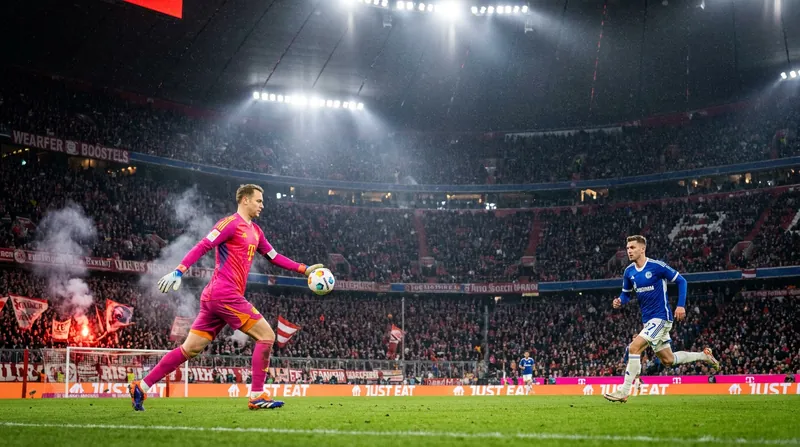
The 11th Outfield Player: How the Sweeper-Keeper Redefined World Cup Tactics
6 sources
Storyline
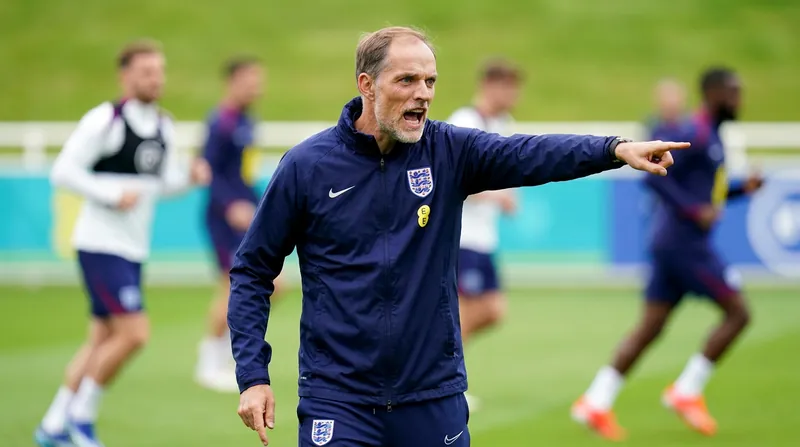
The Pragmatic Shift: How Thomas Tuchel is Rewiring England’s Golden Generation for the 2026 World Cup
8 sources
Storyline
The Maplepress: How Jesse Marsch Engineered Canada's High-Octane Tactical Identity for the 2026 World Cup
7 sources

Tactics
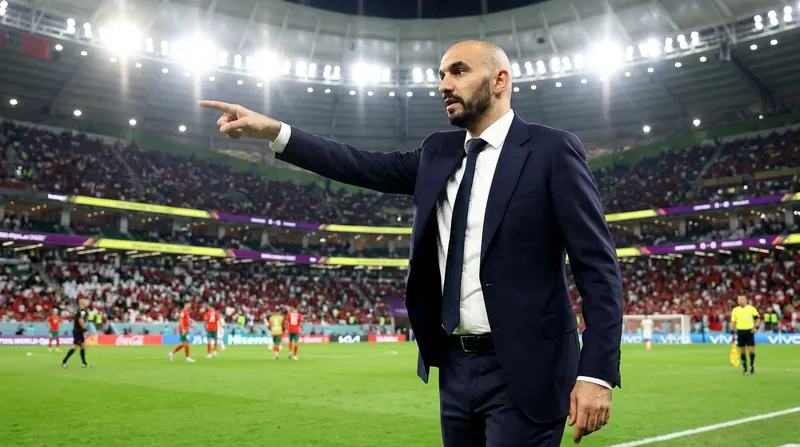
The Possession Metamorphosis: How Walid Regragui Rewrote Morocco's Tactical DNA for the 2026 World Cup
2 sources
Comments
Every angle. Every day.
Get Sports stories with full source coverage and perspective breakdowns, free every day.