
The High Press vs. The Mid-Block: Quantifying the Trade-Offs in Modern Soccer Defending
The high press wins the ball closer to goal but requires an elite wage bill to sustain, while the mid-block sacrifices possession for structural stability and stamina conservation.
By Meera Iyer

Share this story
In short
- The high press maximizes attacking-third turnovers but demands elite stamina and top-tier wage bills to sustain.
- The mid-block conserves energy and protects the penalty area, relying on specific triggers to launch counter-attacks.
- Real Madrid generated 2.91 expected goals on just 36% possession to defeat Inter Milan using a disciplined mid-block.
The high press maximizes turnovers in dangerous areas but demands an elite wage bill and flawless athletic conditioning, while the mid-block trades possession for structural stability, stamina conservation, and lethal counter-attacks. The debate between suffocating opponents high up the pitch and trapping them in the middle third defines modern tactical planning. On Tuesday night, the mid-block delivered a masterclass, as Real Madrid defeated Inter Milan 2-1 in their 2026–27 Champions League opener.[3]
Under returning manager José Mourinho, Madrid deployed a disciplined 4-2-3-1 mid-block that perfectly illustrated the trade-offs of passive positioning. "I want to win. I could tell you I want to play well, but I don't want to play well like we did against Betis and lose; I want to win," Mourinho stated before the match. Madrid conceded 64% possession to Inter and allowed 21 total shots. Yet, by keeping their defensive shape compact and relying on selective pressing triggers, Madrid generated 2.91 expected goals (xG) to Inter's 1.78.[3]
The tactical execution relied heavily on targeted individual efforts rather than a relentless team-wide press. According to match analysis, Federico Valverde led Madrid in total pressures, acting as the primary trigger when Inter's midfield hesitated on the ball.[1]
This selective approach also demanded unprecedented defensive work from Madrid's forwards. Kylian Mbappé and Vinicius Junior recorded half as many defensive actions in this single Champions League match as they did across large stretches of the previous season, dropping deep to maintain the mid-block's integrity.[1]
The high press, by contrast, is the dominant meta of elite European football. Teams utilizing a high press actively hunt the ball in the attacking third, using cover shadows and aggressive angles to force turnovers near the opponent's penalty area.[2]
The statistical evidence for the high press is overwhelming at the top of the table. According to 2026 tactical data, six of the top seven teams in the Premier League rely on a high-pressing, vertical build-up system. It has become the tactical signature of the modern super-club.[3]
But that dominance is heavily correlated with financial power. Those six high-pressing sides also account for six of the eight highest wage bills in the division. Executing a relentless high press requires elite stamina, rapid center-backs to cover a high defensive line, and deep squads to rotate exhausted players.[3]
When a team lacks that financial muscle, attempting a high press often leads to structural collapse. If the initial wave of pressure is bypassed by a third-man run or a quick switch of play, the defense is left exposed, with vast tracts of space behind a high line.[2]
This is where the mid-block serves as the great tactical equalizer. By dropping the engagement line into the middle third of the pitch, teams reduce the physical toll on their players and eliminate the space behind their defense.
The mid-block does not mean passive defending; it means conditional defending. Teams wait for specific pressing triggers—a poor touch, a predictable pass to the sideline, or a slow back-pass—before collapsing on the ball carrier with sudden intensity.[2]
The mid-block also allows smaller clubs to punch above their financial weight. In early 2026, Bournemouth utilized an aggressive mid-block to climb to sixth in expected points (xPts) in the Premier League, despite operating with the fourth-lowest wage bill in the league.[3]
By conserving energy in a compact shape, mid-block teams can explode into attacking transitions. When a midfielder is caught in possession within the midfield trap, the defending team can immediately launch counter-attacks into the space vacated by the opponent's advanced fullbacks.[3]
The trade-off for the mid-block is a heavy reliance on defensive concentration. Inviting pressure means spending long periods without the ball, which can lead to fatigue-induced errors late in matches if the screening midfielders lose their discipline.
The chosen defensive system dictates a club's entire recruitment strategy. A high-pressing system requires a sweeper-keeper and forwards who excel in out-of-possession tracking, while a mid-block demands robust holding midfielders and wingers capable of explosive 50-yard sprints on the counter.[3]
Competing readings
The High Press
An aggressive, high-risk defensive structure designed to win the ball in the attacking third.
FOR: Maximizes turnovers in dangerous areas, suffocates opposition build-up, and keeps the ball far from the defensive goal. AGAINST: Leaves vast spaces behind a high defensive line and requires elite athletic conditioning. EVIDENCE: Six of the top seven Premier League teams in 2026 utilize this system, but they also carry the league's highest wage bills. FITS WELL WHEN: A squad possesses rapid center-backs, a sweeper-keeper, and the financial depth to rotate exhausted forwards. DOES NOT FIT WHEN: Defenders lack recovery pace or the midfield lacks the stamina to sustain 90 minutes of coordinated cover shadows.
The Mid-Block
A compact, stamina-conserving structure that invites possession in harmless areas before trapping the opponent.
FOR: Conserves energy, protects the penalty area, and creates massive spaces for counter-attacks by drawing the opponent forward. AGAINST: Concedes possession, invites sustained pressure, and requires flawless concentration from screening midfielders. EVIDENCE: Real Madrid generated 2.91 xG on just 36% possession against Inter Milan, while Bournemouth used it to reach sixth in Premier League expected points on a bottom-four budget. FITS WELL WHEN: A team has explosive transition attackers, disciplined holding midfielders, and a tactical need to mask slow defenders. DOES NOT FIT WHEN: A team lacks a reliable target forward to relieve pressure or struggles to defend set-pieces.
- High-Press Advocates
- Argue that controlling territory and suffocating the opponent is the only reliable path to elite dominance.
- Mid-Block Pragmatists
- Value structural stability and transition efficiency, arguing that possession without penetration is a vulnerability.
Perspectives this story doesn't cover
- Sports Scientists analyzing the injury rates associated with relentless high-pressing systems.
- Youth Academy Directors balancing which defensive system to teach developing players.
Sources
Source coverage
3 outlets
2 viewpoints surfaced



- [1]Yahoo SportsMid-Block Pragmatists
Analysis: How Real Madrid’s Press Looked Against Inter Milan
Read on Yahoo Sports → - [2]WikipediaHigh-Press Advocates
Pressing (association football)
Read on Wikipedia → - [3]Factlen Editorial TeamMid-Block Pragmatists
Synthesis by Factlen editorial team
Read on Factlen Editorial Team →

More in Sports
See all →Nations League
Can Turkey Finally Break Their Winless Curse Against Italy in Nations League Clash?
6 sources

Nations League
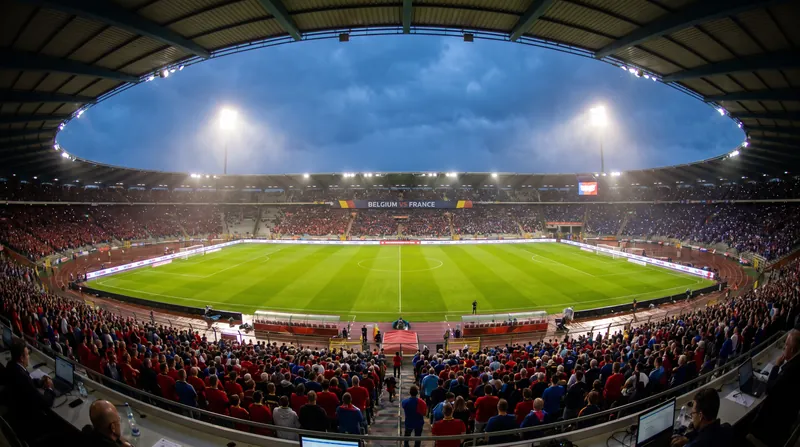
France and Belgium Face Early Nations League Test Without Mbappé and Courtois
5 sources
Group A4
Ramos and Félix Strike as Portugal Snaps Norway's Home Streak in Oslo
2 sources

MLS Playoff Race
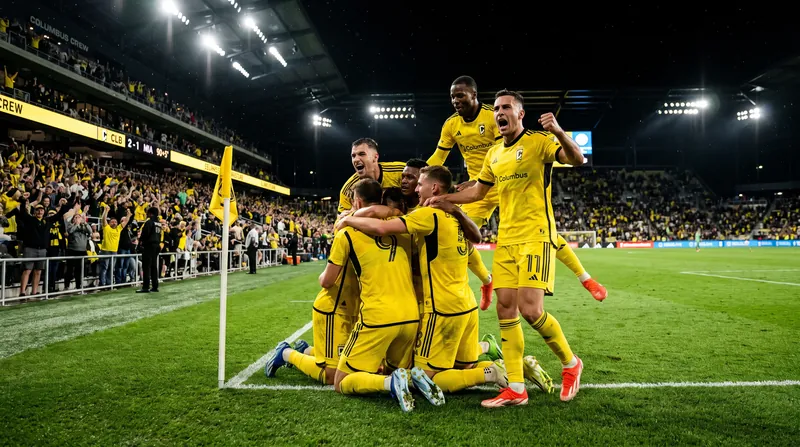
Columbus Crew Stun Inter Miami 2-1 With 98th-Minute Winner
6 sources
Comments
Every angle. Every day.
Get Sports stories with full source coverage and perspective breakdowns, free every day.