
The Global Icon vs. The Prime-Age Investment: Quantifying MLS's Dual Transfer Strategy
As the 2026 MLS summer transfer window closes, clubs are splitting into two distinct roster-building camps: signing late-career global superstars or investing record fees in prime-age international talent.

Share this story
Major League Soccer clubs committed tens of millions of dollars to 49 new international signings before the league's secondary transfer window slammed shut on September 2, 2026—a volume of mid-season turnover that effectively rebuilds two entire starting rosters from scratch. The sheer scale of the influx was enabled by a structural shift: for the first time in two decades, MLS extended its summer window into September to align exactly with the European market.
That calendar alignment, combined with the elimination of limits on cash-for-player trades, triggered a high-stakes spending spree that has split the league's front offices into two distinct roster-building camps. Teams are now forced to choose between leveraging their Designated Player slots on late-career global superstars or investing record eight-figure transfer fees into prime-age international talent.[4][5]
On one side of the divide is the traditional blockbuster approach, anchored this summer by the arrivals of 35-year-old Antoine Griezmann at Orlando City SC and 37-year-old Robert Lewandowski at Chicago Fire FC. These are the global icons—players with UEFA Champions League pedigrees, World Cup medals, and massive commercial footprints who arrive on free transfers but command top-tier Designated Player salaries. They bring immediate global relevance to their respective franchises, driving merchandise sales and international broadcast interest the moment their contracts are announced.[1][3]
On the other side is a rapidly accelerating trend toward prime-age international investments. The Colorado Rapids exemplified this strategy on deadline day, paying a club-record $10.7 million transfer fee to English Championship side Middlesbrough for 25-year-old winger Morgan Whittaker. Atlanta United executed a similar maneuver earlier in the window, spending a reported $18 million to acquire 29-year-old Swiss international Breel Embolo. Rather than paying exorbitant wages to players in their mid-thirties, these clubs are directing their capital toward massive upfront transfer fees to secure players entering their physical peaks.[1][7]
The demographic data from the 2026 summer window heavily favors the prime-age approach. Of the 49 players signed across the league before the deadline, 36 are under the age of 30, dragging the average age of an incoming MLS transfer down to exactly 25. Yet the league is not sacrificing pedigree for youth; 16 of those new arrivals have previously played in the UEFA Champions League, and 10 have appeared at a FIFA World Cup.
Colorado's acquisition perfectly mirrors this shift. "Morgan is entering the prime years of his career, and we believe he can make an immediate and significant impact in MLS," Rapids president Pádraig Smith said upon finalizing the deal. "His ability to both create and score goals from wide areas, combined with his vision, technical quality and decision-making, makes him an excellent fit."[2][7]
The dual strategies present a stark contrast in financial mechanics and risk tolerance. The global icon model requires minimal upfront transfer fees but consumes a massive percentage of a club's salary budget, offering zero potential for future resale.
The prime-age model requires ownership to authorize eight-figure transfer fees—like Colorado's $10.7 million outlay—but secures players on long-term contracts, such as Whittaker's deal through the 2029-30 season. Crucially, this leaves the door open for clubs to eventually sell these players back to European leagues at a profit, transforming the roster into a sustainable financial asset rather than a sunk cost.[2][7]
On the pitch, the immediate returns of the global icons remain undeniably potent. Griezmann has already registered four goals and three assists in his first seven starts for Orlando, lifting the club above the Audi MLS Cup Playoffs line.
Lewandowski has been similarly efficient in Chicago, scoring four times in his first 456 minutes of action. "I saw that already the team has developed a lot over the last few months," Lewandowski said of his arrival. "I hope that I can help my teammates, my new colleagues, and play better to win more games."[1][3]
However, integrating late-career stars requires significant tactical compromises that can unbalance a starting eleven. Inter Miami CF acquired 34-year-old Brazilian midfielder Casemiro from Manchester United to anchor their midfield, but the physical demands of the league have exposed the team defensively. In the nine matches since Casemiro's integration, Miami has conceded 18 goals, highlighting the structural risks of building around aging legs in a transition-heavy league. When a team's highest-paid player cannot cover ground at an elite level, the surrounding roster must be perfectly calibrated to hide those physical deficiencies.[1]
Conversely, prime-age signings like Whittaker and Embolo are targeted specifically for their physical alignment with the modern MLS game. Embolo provides Atlanta United with a physically imposing No. 9 capable of high-intensity pressing, while Whittaker brings the individual stamina required to dominate wide areas over a grueling 34-game regular season.
As the regular season enters its final stretch, these divergent philosophies will be tested directly against one another. The clubs that opted for immediate superstar impact are betting that elite finishing will navigate the postseason pressure, while those investing record fees in 25-year-olds are wagering that physical longevity will ultimately dictate who lifts the MLS Cup.[1][4][7]
What we don’t know
- Whether the prime-age investments will generate the massive outbound transfer fees to Europe that clubs are projecting.
- How the physical toll of the MLS postseason will affect the late-career global icons compared to their younger counterparts.
- Prime-Age Investors
- Focus on physical longevity, tactical flexibility, and building sustainable rosters with future resale value.
- Global Icon Advocates
- Prioritize immediate commercial relevance, proven elite finishing, and global broadcast interest.
Sources
Source coverage
7 outlets
2 viewpoints surfaced







- [1]Yahoo SportsGlobal Icon Advocates
Griezmann, Lewandowski & more: 11 biggest MLS newcomers this summer
Read on Yahoo Sports → - [2]AS USAPrime-Age Investors
The MLS changes strategy: Lewandowski and Griezmann are only part of MLS's surprising new approach
Read on AS USA → - [3]AP NewsGlobal Icon Advocates
MLS emerges from its World Cup break with new high-profile stars
Read on AP News → - [4]Fox SportsPrime-Age Investors
Major League Soccer Announces Updated 2026 Transfer Window Dates
Read on Fox Sports → - [5]Goal.comPrime-Age Investors
Major League Soccer Announces Updated 2026 Transfer Window Dates
Read on Goal.com → - [6]Sports IllustratedPrime-Age Investors
MLS summer transfer window superlatives: Best signing, worst window
Read on Sports Illustrated → - [7]Field Level MediaPrime-Age Investors
Rapids acquire F Morgan Whittaker in club-record inbound transfer
Read on Field Level Media →

More in Sports
See all →Transfer Market
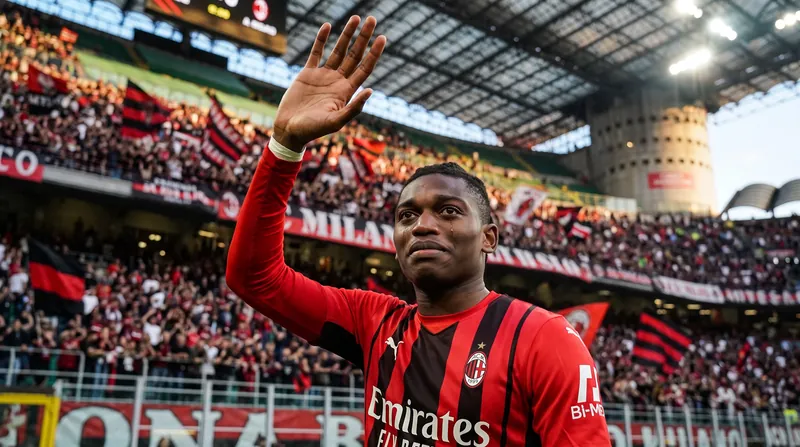
Galatasaray Secures €45 Million Transfer of AC Milan Star Rafael Leão
6 sources
Newcastle United
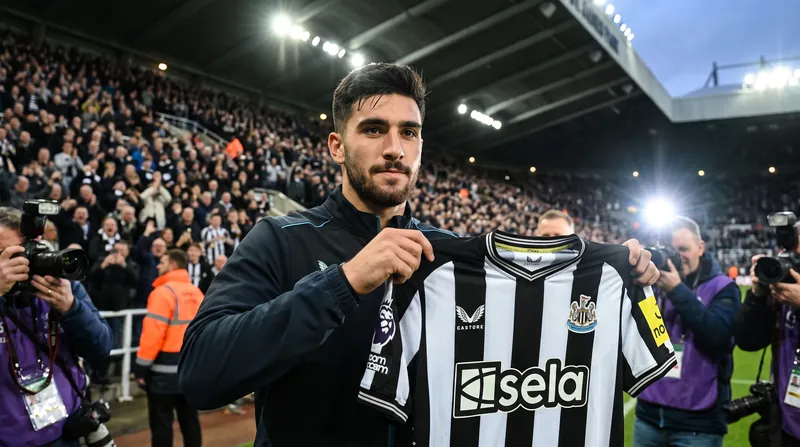
Newcastle United Confirms €56 Million Signing of Midfielder Nico Gonzalez From Manchester City
6 sources
Transfer Market
Aston Villa Agrees £65 Million Deal for Chelsea Striker Nicolas Jackson
6 sources

Transfer Market
Man City Shatters Record for Teenager with $117M Ayyoub Bouaddi Signing
7 sources

Comments
Every angle. Every day.
Get Sports stories with full source coverage and perspective breakdowns, free every day.