
The Functional Hypertrophy Shift: How Odd-Object Lifting and Isometric Bracing Are Redefining Muscle Growth
Traditional bodybuilding isolates muscles for aesthetic growth, but a new wave of athletic training is using sandbags, yokes, and isometric holds to build functional mass. By forcing the body to stabilize unpredictable loads, these methods trigger hypertrophy while reinforcing joint integrity.
By Maya Khalil

Share this story
In June 2026, the inaugural Open Lane Experience training camp in Guthrie, Oklahoma, looked less like a traditional bodybuilding retreat and more like a chaotic physics experiment. Hosted by 325-pound Philadelphia Eagles offensive tackle Lane Johnson, the three-day crucible brought together elite NFL linemen and strongmen like 2026 World's Strongest Man Mitchell Hooper.
The athletes were not isolating their biceps on padded machines; they were hauling 705-pound yokes across 50 yards of turf and bear-hugging massive sandbags. The objective was not merely to build power, but to drive a specific kind of muscle growth that traditional gym equipment often fails to produce: functional hypertrophy.[1][2]
Historically, the standard prescription for building muscle mass has relied on stable, predictable resistance. Barbells, dumbbells, and selectorized machines are designed to be balanced. While this allows lifters to isolate specific muscle groups and control the eccentric lowering phase, it also allows the body's deep stabilizing muscles to remain relatively dormant. The new wave of athletic muscle building, heavily adopted by professional football players during the 2026 offseason, deliberately introduces chaos into the lifting equation.[3]
The primary mechanism driving this shift is unpredictable load distribution. Unlike a barbell, a heavy sandbag is a living, shifting mass. When an athlete picks it up, the center of gravity constantly moves, forcing the body to react in real time. This instability requires the external obliques, thoracic erectors, and hip stabilizers to fire continuously just to maintain posture. The result is a comprehensive muscle engagement that stimulates growth across the entire kinetic chain, rather than just in the primary movers.[1][3]
"Every lift should take less than 1.5 seconds," noted performance coach Gabe Rangel during the Oklahoma camp, emphasizing the need for explosive intent even with heavy, awkward weights. "Plenty of guys move heavy weights with control. While this can help you pack on muscle, it doesn't build power." By forcing the body to accelerate an unpredictable load, athletes recruit a higher threshold of fast-twitch muscle fibers, which possess the greatest potential for hypertrophy.[1]
Beyond the shifting weight, odd-object lifting relies heavily on high-intensity isometric bracing. When a lifter bear-hugs a heavy sandbag against their sternum, their thoracic spine is subjected to a massive forward-tilting force. To prevent the spine from rounding, the back muscles must hold a near-maximal isometric contraction. While the joint angle does not change, the muscle fibers are subjected to extreme mechanical tension and metabolic stress—two of the primary drivers of cellular muscle growth.[2]
This prolonged time-under-tension creates a unique hypertrophic stimulus without the joint wear associated with heavy barbell lifting. Traditional bodybuilding relies heavily on the eccentric phase—lowering the weight—to create micro-tears in the muscle tissue. While effective for size, this approach can leave athletes feeling battered.
Isometric holds and loaded carries allow lifters to accumulate massive amounts of muscular fatigue and metabolic byproducts while keeping the actual joint structures relatively stable. For the everyday lifter, this means that swapping one machine-based exercise for a heavy sandbag carry can provide a potent new stimulus for growth without requiring professional-level weights.[3]
The structural integrity built through this style of training serves as a foundation for all other athletic endeavors. Just as consistent base mileage builds the durability and recovery habits needed for a 26.2-mile marathon build, mastering unpredictable loads fortifies the connective tissues required to handle heavier traditional lifts later. It bridges the gap between the aesthetic size built in a commercial gym and the resilient strength required on a playing field.[4]
Fueling this demanding style of training requires precise nutritional support. Because odd-object lifting engages so many muscle groups simultaneously, the caloric and recovery demands are immense. Athletes rely on dense, prep-friendly meals—such as a make-ahead breakfast frittata packing 22 grams of protein and 8 grams of fiber per serving—to ensure their bodies have the necessary amino acids to repair the tissue damage induced by the metabolic stress of heavy carries.[5]
The integration of strongman principles into mainstream hypertrophy programming represents a shift in how we define a well-built physique. The goal is no longer just to look strong in a mirror, but to possess the neuromuscular coordination and core rigidity to express that strength under chaotic conditions. As the 300-plus-pound athletes in Oklahoma demonstrated, the most effective way to build resilient muscle is to stop lifting polite weights and start carrying awkward ones.[1][2]
Viewpoints in depth
Functional Strength Coaches
Focus on movement quality, durability, and the ability to manage unpredictable loads.
This camp, heavily populated by athletic performance coaches and strongman competitors, believes that traditional machine-based bodybuilding creates "polite" muscle that fails under real-world conditions. They advocate for odd-object lifting because it forces the nervous system to manage unpredictable loads, building a resilient physique where the stabilizing muscles are just as developed as the primary movers.
Traditional Bodybuilders
Focus on isolation, symmetry, and controlled eccentric phases for maximum aesthetic growth.
Proponents of classic bodybuilding emphasize that muscle hypertrophy is a product of mechanical tension and controlled eccentric damage. By using stable machines and barbells, a lifter can safely push a specific muscle to absolute failure without being limited by their core strength or grip. They view odd-object lifting as an excellent tool for conditioning and power, but a less efficient primary driver for pure aesthetic size.
Key points
- Elite athletes are increasingly using odd-object lifting, like sandbags and yokes, to build functional muscle mass.
- Unpredictable loads force stabilizing muscles to fire continuously, creating a comprehensive full-body growth stimulus.
- Holding heavy weights in a bear hug induces high-intensity isometric bracing, driving metabolic stress without excessive joint wear.
- This style of training builds structural integrity that translates to better performance in traditional lifts and on the field.
What we don’t know
- Whether odd-object lifting can match the absolute peak aesthetic hypertrophy of isolated machine training.
- Long-term data comparing joint health outcomes between traditional bodybuilders and functional hypertrophy athletes.
- Because coverage is thin across major outlets, we lack broad consensus on the optimal weekly volume for sandbag training.
- Functional Performance Advocates
- Argue that muscle mass should be built through movements that demand balance, coordination, and core stability.
- Nutritional Support & Recovery
- Emphasize that the extreme metabolic demands of full-body isometric training require precise, high-protein fueling strategies.
Perspectives this story doesn't cover
- Traditional Physique Competitors
- Clinical Rehabilitation Specialists
Sources
Source coverage
5 outlets
2 viewpoints surfaced



- [1]Men's HealthFunctional Performance Advocates
Training Secrets of the Strongest Men On Earth
Read on Men's Health → - [2]Men's HealthFunctional Performance Advocates
The Next Wave of NFL Muscle Is Here
Read on Men's Health → - [3]Men's HealthFunctional Performance Advocates
We Studied the NFL’s Viral Offseason Workouts. These 5 Training Lessons Actually Translate.
Read on Men's Health → - [4]Runner's WorldFunctional Performance Advocates
The Key Base Training Benchmark That Can Set You Up for a Strong Marathon Build
Read on Runner's World → - [5]Women's HealthNutritional Support & Recovery
This Make-Ahead Breakfast Frittata Packs 22 Grams of Protein and 8 Grams of Fiber Into Every Serving
Read on Women's Health →
More in Fitness
See all →Ms. Olympia
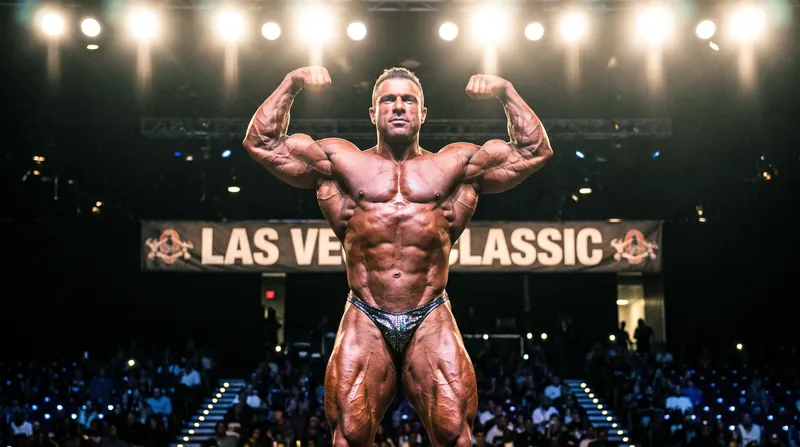
Andrea Shaw Secures Historic Seventh Consecutive Ms. Olympia Title
6 sources
Olympia Results
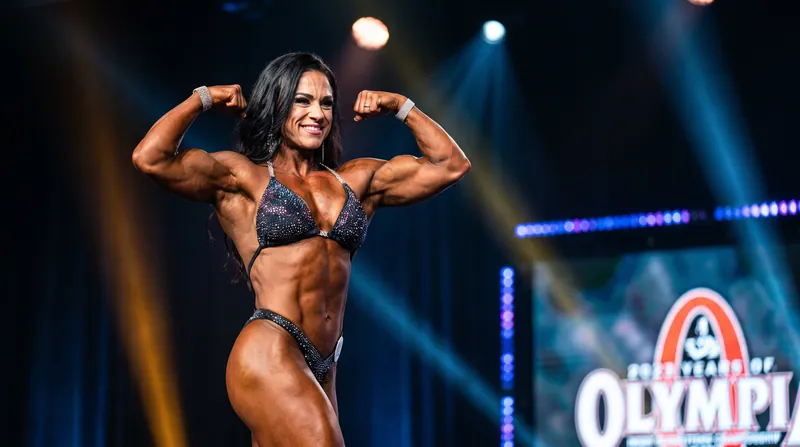
Niall Darwen Pulls Off Major Upset to Win 2026 Classic Physique Olympia Title
5 sources
Anti-Doping
Thai Badminton Player Pitchamon Opatniputh Provisionally Suspended at Asian Games After Positive Furosemide Test
7 sources
Strength Mechanics
The 3-to-5 Repetition Range: How Mechanical Tension and Motor Unit Recruitment Drive Strength Gains Independent of Hypertrophy
9 sources
Comments
Every angle. Every day.
Get Fitness stories with full source coverage and perspective breakdowns, free every day.