
Dedicated NPUs Cut AI Power Drain by Up to 80% to Extend Laptop Battery Life
Neural Processing Units have transitioned from premium add-ons to mandatory baseline components. We review the benchmark evidence on how NPUs actually impact battery life, privacy, and daily device performance.
By Paige Carter

Share this story
In short
- Dedicated NPUs are now standard in 80% of new laptops and smartphones in 2026.
- The primary consumer benefit is massive power efficiency, extending battery life during complex background tasks.
- NPUs enable advanced privacy features by processing sensitive data locally instead of in the cloud.
The landscape of consumer electronics has fundamentally shifted in 2026, moving away from the traditional metrics of CPU clock speeds and RAM capacities. Today, the defining characteristic of a modern laptop or smartphone is the inclusion of a dedicated Neural Processing Unit, or NPU. Industry analysts project that devices equipped with these specialized chips will capture 80% of the market share this year, transitioning from a premium novelty to a mandatory baseline component for all new hardware.
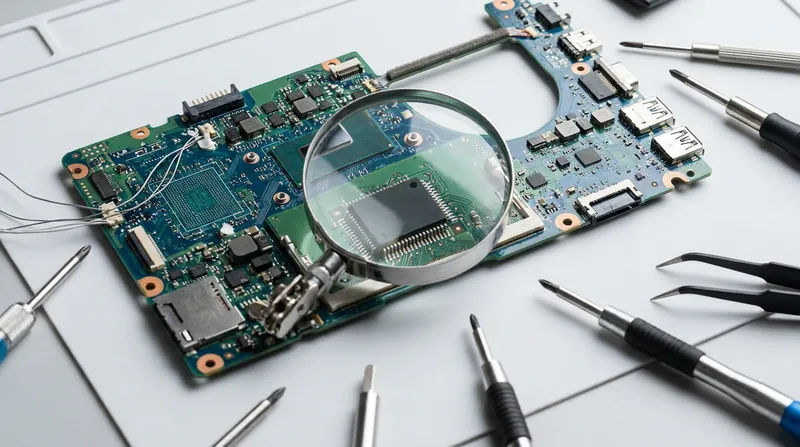
To understand why this shift is happening, it is essential to look at what an NPU actually does. Unlike a Central Processing Unit (CPU) which handles general tasks sequentially, or a Graphics Processing Unit (GPU) which renders complex visuals, an NPU is purpose-built for the specific mathematical operations required by machine learning models. It excels at processing massive arrays of data simultaneously while drawing a fraction of the electrical power required by traditional processors.[1]
The strongest evidence supporting the necessity of an NPU for everyday shoppers does not revolve around generating text or images, but rather raw power efficiency. As operating systems increasingly integrate background AI tasks, relying on a CPU or GPU to handle them drains batteries rapidly. Engineering benchmarks demonstrate that offloading these continuous matrix math operations to a dedicated NPU can reduce power consumption for those specific tasks by up to 80%.
This efficiency translates into highly tangible benefits for the average user, particularly during video conferencing. Independent hardware testing reveals that laptops utilizing an NPU for background blur, dynamic lighting correction, and active noise cancellation consistently achieve three to four hours of additional battery life compared to legacy machines attempting the same tasks using their primary processors. For mobile professionals, this difference is often the deciding factor in a purchase.
Beyond battery life, the second major pillar of evidence supporting the NPU transition is data privacy. Over the past two years, consumer sentiment has shifted heavily against sending personal data, documents, and photos to cloud servers for processing. The integration of high-performance NPUs allows devices to run complex language and vision models entirely locally, meaning sensitive information never leaves the physical hardware.
This local processing capability is now deeply embedded into the core functionality of modern operating systems. Features like semantic search, which allows users to find files by describing their contents rather than remembering exact filenames, require constant background indexing. Privacy advocates note that executing this indexing locally via an NPU is the only way to provide advanced functionality while complying with increasingly strict global data protection standards.[1]
For shoppers evaluating specifications, the critical threshold to look for in 2026 is 40 TOPS, or Trillions of Operations Per Second. This metric has become the industry standard baseline required to unlock the full suite of advanced operating system features, including Windows Copilot+ and Apple Intelligence. Purchasing a device that falls below this threshold significantly limits its functional lifespan and future software compatibility.
However, the evidence pack also highlights areas where marketing claims outpace reality. While NPUs are transformative for battery life and local privacy, they do not universally accelerate all computing tasks. Benchmarks show that for traditional workflows like basic web browsing, spreadsheet data entry, or legacy gaming, the presence of an NPU offers virtually no performance improvement over a standard CPU.[1]
This discrepancy between marketing hype and benchmark reality is crucial for consumers to navigate. Retailers often advertise NPU-equipped devices as being universally 'faster,' which can mislead buyers expecting a dramatic speed increase in legacy applications. The true value proposition of the NPU lies in efficiency and enabling new categories of software, rather than brute-forcing older programs to run quicker.[1]
The smartphone market mirrors this laptop evolution, albeit with even tighter thermal and battery constraints. Mobile processors have integrated rudimentary neural engines for years, primarily for computational photography. However, the 2026 generation of mobile NPUs represents a massive leap in capability, allowing smartphones to run localized digital assistants that can parse on-screen context and execute complex multi-app workflows without requiring an internet connection.
Fortunately for consumers, the cost of this technology has rapidly democratized. While early NPU-equipped devices commanded significant price premiums, economies of scale have driven manufacturing costs down. Market analysis indicates that the inclusion of an NPU no longer inflates the base price of mid-range laptops and smartphones, making the technology accessible to the average shopper without requiring a luxury budget.[1]
The final verdict for 2026 shoppers is definitive: purchasing a new laptop or smartphone without a dedicated, high-capacity NPU is akin to buying a computer with a spinning hard drive instead of a solid-state drive a decade ago. The NPU has firmly established itself as the new baseline, offering proven, evidence-backed improvements to battery life, privacy, and device longevity that cannot be ignored.[1]
Jargon, explained
- NPU (Neural Processing Unit)
- A specialized hardware chip designed specifically to accelerate machine learning algorithms and matrix math with high energy efficiency.
- TOPS
- Trillions of Operations Per Second; the standard measurement used to quantify the processing speed of an NPU.
- Local Processing
- Executing software tasks directly on the device's own hardware rather than sending data over the internet to be processed on a remote cloud server.
Common questions
Can I upgrade my current laptop to add an NPU?
No. NPUs are physically integrated directly into the main processor die (System-on-Chip) alongside the CPU and GPU, meaning they cannot be added aftermarket.
Does an NPU make video games run faster?
Generally, no. While some games use AI for resolution upscaling, traditional gaming performance still relies overwhelmingly on the GPU. The NPU is designed for different types of mathematical workloads.
What does TOPS mean when shopping for a PC?
TOPS stands for Trillions of Operations Per Second. It is the standard metric used to measure an NPU's speed. In 2026, 40 TOPS is considered the minimum baseline for full modern OS feature support.
Competing readings
Hardware Analysts' View
Focuses on the architectural shift and raw benchmark data regarding power efficiency.
Hardware analysts view the NPU transition as the most significant architectural shift since the adoption of solid-state drives. They emphasize that the CPU is no longer the sole bottleneck for device performance. By analyzing benchmark data, this camp highlights how offloading continuous matrix math to the NPU drastically reduces thermal throttling and power draw, fundamentally changing how manufacturers design laptop cooling systems and battery capacities.
Privacy Advocates' View
Values the NPU primarily as a tool to keep sensitive data processing on-device.
For privacy advocates, the NPU is less about speed and entirely about data sovereignty. They argue that the previous era of relying on cloud servers for voice recognition, image sorting, and text analysis created unacceptable security vulnerabilities. This camp champions high-capacity NPUs because they enable 'air-gapped' AI functionality, ensuring that a user's personal documents, biometric data, and daily habits can be analyzed for convenience without ever being transmitted to a corporate server.
Consumer Advocates' View
Cautions against marketing hype while acknowledging tangible hardware benefits.
Consumer protection groups and independent reviewers take a pragmatic approach to the NPU trend. While they acknowledge the undeniable battery life improvements for specific tasks like video conferencing, they actively push back against manufacturer marketing that implies an NPU makes a computer universally 'faster.' This camp focuses on educating shoppers to understand that an NPU is a specialized tool, not a magic bullet, and advises against overspending on premium NPU tiers if the user's primary workflow consists of basic web browsing and word processing.
- Hardware Analysts
- Focuses on the raw benchmark data, emphasizing power efficiency and the architectural shift away from pure CPU reliance.
- Privacy Advocates
- Values the NPU primarily as a tool to keep sensitive data processing on-device rather than relying on cloud servers.
- Consumer Advocates
- Cautions against marketing hype, focusing on tangible benefits like battery life while warning that NPUs don't speed up legacy tasks.
Perspectives this story doesn't cover
- Cloud computing providers losing consumer compute share
Sources
Source coverage
1 outlets
3 viewpoints surfaced

- [1]Factlen Editorial TeamConsumer Advocates
Synthesis by Factlen editorial team
Read on Factlen Editorial Team →

More in Shopping & Reviews
See all →Supply Chain Transparency
The Compliance Cost: How California's Mandatory Corporate Climate Risk Reporting Will Reshape Retail Prices and Supply Chains
2 sources

Tech Hardware
The Electronic Shrinkflation: Why Your New Laptop or Phone Has Less RAM and a Cheaper Screen Than Last Year's Model
2 sources
Supply Chain
Mexico's New Tariffs on Asian Goods Reshape Apparel and Electronics Sourcing
4 sources
PFAS Ban
The PFAS Patchwork: Comparing Cookware, Cosmetics, and Apparel Under New State Bans vs. Legacy Products
2 sources

Comments
Every angle. Every day.
Get Shopping & Reviews stories with full source coverage and perspective breakdowns, free every day.