
The Digital Product Passport: How the EU's New 'Birth Certificate' for Goods Will Reshape Supply Chain Transparency and Repairability
Starting in 2027, the European Union will require physical goods to carry a machine-readable digital passport detailing their material origins, carbon footprint, and repair instructions. The sweeping regulation aims to eliminate greenwashing and mandate circular economy practices across global supply chains.
By Kavya Nair

Share this story
In short
- The EU's Ecodesign for Sustainable Products Regulation mandates a Digital Product Passport for physical goods.
- Passports will be accessed via QR code or NFC tag, containing up to 110 data points on materials and repairability.
- Enforcement begins with batteries in February 2027, followed by textiles, electronics, and furniture.
For decades, the journey of a consumer product from raw material extraction to the retail shelf has functioned as a black box. A shopper buying a cotton sweater or a new smartphone has largely had to rely on vague marketing claims about sustainability, with no verifiable way to know where the internal components originated or how to responsibly dispose of them.
That era of opaque global manufacturing is about to end. Under a sweeping new European Union framework, physical goods will soon be required to carry a comprehensive 'birth certificate' that tracks their entire lifecycle.[5]
The initiative, known as the Digital Product Passport (DPP), serves as the primary enforcement mechanism of the EU's Ecodesign for Sustainable Products Regulation (ESPR). It mandates that products placed on the European market carry a persistent, machine-readable digital identity. Accessed via a QR code or NFC tag physically attached to the item or its packaging, this passport will act as a dynamic data layer detailing everything from material composition to carbon footprint.[2]
This system is fundamentally different from a static webpage linking to a brand's corporate sustainability report. The DPP is a structured, unit-level digital record that must be continuously updated throughout the product's life. According to supply chain compliance experts, a single passport could require up to 110 distinct data points. This extensive ledger includes the country of origin for specific components, the exact percentage of recycled content, and the presence of any chemical substances of concern.[2][3]
The regulatory timeline is aggressive, rapidly moving the framework from policy discussion to active implementation. The European Commission is scheduled to launch the DPP Central Registry on July 19, 2026. This centralized database will store unique product identifiers and support lookup functions for national authorities, ensuring that the digital infrastructure is fully operational before the first wave of mandatory compliance hits the market.[5]
Industrial and electric vehicle batteries will serve as the trailblazers, with mandatory passports required by February 2027. Because advanced batteries involve critical raw materials and highly complex chemical supply chains, they represent the ultimate stress test for the new system. Manufacturers will be legally required to provide verifiable data on carbon footprints, the ratio of recycled cobalt and lithium, and exact performance and degradation metrics.[1]
Textiles and apparel are the next major target, driven by the fashion industry's massive global waste footprint. The EU has already banned large companies from destroying unsold clothing as of July 2026, and the specific DPP data requirements for garments are expected to be finalized by mid-2027. Brands will be forced to declare fiber composition for any material making up more than 1% of the garment's weight, alongside specific end-of-life recycling instructions.
The rollout will then cascade across other high-impact consumer sectors. Electrical and electronic equipment are slated for enforcement in 2028, followed by furniture in 2029, with the ultimate goal of covering nearly all physical goods—excluding food, feed, and medicine—by 2030. For global brands, the implications extend far beyond Europe's borders. Because the regulation applies to any product sold in the EU, manufacturers in the United States, Asia, and Latin America must overhaul their data systems to maintain market access.[1]
Gathering this granular information represents a monumental logistical challenge. Historically, global supply chains have been highly fragmented, with brands often lacking direct visibility past their tier-one or tier-two suppliers. To populate a compliant passport, a brand must now trace materials all the way back to the raw commodity level, requiring unprecedented collaboration, auditing, and data-sharing across competing international suppliers.[3][5]
To protect intellectual property and trade secrets, the DPP operates on a multi-tiered access system. It segments proprietary supply chain data so that different stakeholders see only what they explicitly need. Consumers will access care instructions, repair guides, and recycling protocols. Supply chain partners will see material origins and handling requirements, while regulators and customs authorities will have access to the full suite of compliance and conformity data to monitor the market and prevent fraud.[2][5]
Beyond supply chain transparency, the Digital Product Passport is fundamentally designed to shift the global economy away from a 'take-make-dispose' model. By mandating that durability and repairability metrics be disclosed clearly at the point of sale, the EU hopes to steer consumer behavior toward longer-lasting goods. The European Commission estimates that over 80% of a product's total environmental impact is determined during the initial design phase, making upfront transparency critical.[5]
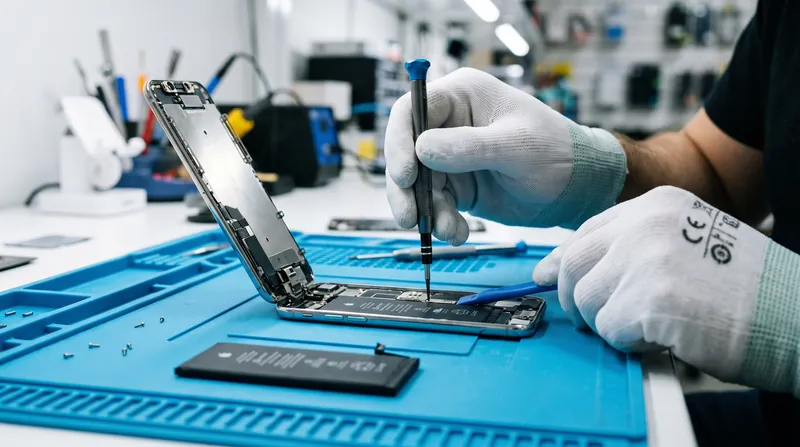
For the repair industry, the DPP represents a watershed moment. Consumer rights advocates have long criticized manufacturers for monopolizing repairs by withholding technical schematics and restricting access to proprietary spare parts. The passport will require brands to provide clear disassembly guidelines and guarantee the availability of replacement components for a set number of years, empowering independent repair shops and DIY consumers.[4]
This unprecedented transparency will also supercharge the secondary market. When a consumer wants to resell a piece of furniture or a high-end jacket, the digital passport will authenticate the item, verify its original materials, and provide a documented history of its lifecycle. This eliminates the friction of counterfeits and allows brands to potentially capture new revenue streams through official take-back and refurbishment programs.[5]
Despite the clear environmental and consumer benefits, the transition will be undeniably costly. Implementing blockchain verification, API integrations, and entirely new data governance systems requires significant upfront investment. Smaller brands and independent designers have expressed concern about the administrative burden, fearing that the sheer cost of software compliance and supply chain auditing could price them out of the European market.[1][5]
There are also lingering technical questions regarding global interoperability. While the EU sets the strict data requirements, it is leaving the exact software implementation to the private sector. Ensuring that a QR code generated by a textile mill in Bangladesh can be seamlessly read and updated by a municipal recycling facility in Germany will require robust, globally accepted data standards that are still being finalized.[2][5]
Nevertheless, the momentum behind the Digital Product Passport is irreversible. It represents a structural transformation in how the world values, tracks, and maintains physical goods. By treating lifecycle data as an essential component of the product itself, the framework ensures that sustainability is no longer just a marketing claim, but a verifiable, legally binding reality for the global supply chain.[5]
Terms to know
- Digital Product Passport (DPP)
- A structured, machine-readable digital record that travels with a physical product, detailing its material composition, environmental impact, and repair instructions.
- Ecodesign for Sustainable Products Regulation (ESPR)
- The overarching European Union legislative framework that mandates the DPP and sets strict sustainability and circularity rules for physical goods.
- Circular Economy
- An economic model focused on minimizing waste by keeping materials and products in circulation for as long as possible through repair, reuse, and recycling.
- Machine-Readable Data
- Information structured in a standardized digital format that can be automatically processed by computers and software systems across different supply chains.
- Tier-One Supplier
- A direct supplier that provides parts or materials directly to the final manufacturer, as opposed to tier-two or tier-three suppliers further down the chain.
Questions readers ask
What happens if a product doesn't have a Digital Product Passport?
Under the ESPR, products without a compliant Digital Product Passport will be legally barred from being placed on the European Union market.
Does this regulation apply to companies based outside the EU?
Yes. The requirement applies to any product sold within the EU, meaning manufacturers in the US, Asia, and elsewhere must comply to maintain market access.
How will consumers actually access this information?
Consumers will be able to scan a QR code or NFC tag physically attached to the product or its packaging using a standard smartphone.
Will competitors be able to steal a brand's trade secrets?
No. The DPP uses a multi-tiered access system, ensuring that highly sensitive supply chain data is only visible to regulators, while consumers see relevant repair and recycling information.
Different angles
Supply Chain Transparency Advocates
Argue that verifiable digital records are the only way to eliminate greenwashing and enforce sustainable sourcing.
Environmental groups and sustainability platforms view the DPP as the ultimate antidote to corporate greenwashing. By forcing brands to publish immutable data on carbon footprints and material origins, advocates believe the regulation will expose companies that rely on exploitative labor or highly polluting tier-three suppliers. They argue that making this data public will naturally steer capital and consumer spending toward genuinely sustainable enterprises.
Global Manufacturers
Focused on the immense logistical and financial challenge of gathering granular data across opaque global supply chains.
For multinational brands, the DPP represents a monumental operational hurdle. Industry groups point out that modern supply chains are deeply fragmented, with brands often lacking direct visibility beyond their immediate suppliers. Gathering up to 110 data points per product requires unprecedented collaboration and expensive new software infrastructure. Manufacturers warn that the sheer cost of compliance could disrupt trade and price smaller brands out of the European market entirely.
Consumer Rights & Repair Advocates
Value the passport for forcing brands to provide disassembly instructions and spare parts, breaking manufacturer monopolies on repair.
'Right to repair' organizations see the DPP as a critical victory against planned obsolescence. For years, consumer advocates have criticized tech and appliance companies for restricting access to schematics and proprietary parts, forcing consumers into expensive official repair channels or premature replacements. By mandating that repair guides and spare part guarantees be embedded in the product's digital identity, advocates argue the DPP will democratize maintenance and significantly extend product lifespans.
- Supply Chain Transparency Advocates
- Argue that verifiable digital records are the only way to eliminate greenwashing and enforce sustainable sourcing.
- Global Manufacturers
- Focused on the immense logistical and financial challenge of gathering granular data across opaque global supply chains.
- Consumer Rights & Repair Advocates
- Value the passport for forcing brands to provide disassembly instructions and spare parts, breaking manufacturer monopolies on repair.
Perspectives this story doesn't cover
- Small Business Owners
- Non-EU Trade Negotiators
Sources
Source coverage
5 outlets
3 viewpoints surfaced





- [1]KPMGGlobal Manufacturers
Digital Product Passport (DPP) - Driving compliance and transparency
Read on KPMG → - [2]CarumaConsumer Rights & Repair Advocates
What is a Digital Product Passport – EU ESPR guide 2026
Read on Caruma → - [3]KrusoGlobal Manufacturers
The Digital Product Passport: A Data Transformation on a Global Scale
Read on Kruso → - [4]EuroconsumersConsumer Rights & Repair Advocates
Digital product passports help close the information gap
Read on Euroconsumers → - [5]Factlen Editorial Team
Synthesis by Factlen editorial team
Read on Factlen Editorial Team →
More in Shopping & Reviews
See all →Digital Fairness
The Digital Fairness Trade-Off: How the EU's Proposed Digital Fairness Act Will Regulate AI Shopping Agents and Personalized Pricing
7 sources

Marketplace Regulation
The Marketplace Reckoning: How the EU's Digital Services Act is Forcing Amazon and Temu to Verify Sellers and Ban Unsafe Products
6 sources

Supply Chain Standards
The China RoHS 2.0 Explainer: How the New Two-Tiered Environmental Code Will Reshape Global Electronics
2 sources

Food Regulation
The UK's HFSS Advertising Ban: How New Restrictions on High Fat, Salt, and Sugar Foods Will Reshape Grocery Shopping and Marketing
1 sources

Comments
Every angle. Every day.
Get Shopping & Reviews stories with full source coverage and perspective breakdowns, free every day.