
The Beach Sprint Championship Picture: Global Powerhouses Jockey for Position Ahead of the 2026 Qingdao Finals
As the Los Angeles 2028 Olympics approach, traditional rowing nations and coastal specialists are battling for dominance in the global Beach Sprint standings ahead of the October World Finals in China.

Share this story
As the summer 2026 rowing season shifts into high gear, the global standings for the sport's newest Olympic discipline are rapidly taking shape. The road to the Los Angeles 2028 Games runs directly through the upcoming 2026 World Rowing Beach Sprint Finals, scheduled for October in Qingdao, China. With national federations finalizing their rosters, the current championship picture reveals a fierce battle between traditional flatwater powerhouses and emerging coastal specialists.[1]
The stakes have never been higher for the coastal format. Following the International Olympic Committee's 2023 decision to include Beach Sprint Rowing in the LA 2028 programme, the discipline has transformed from a niche pursuit into a heavily funded global priority. Qingdao will serve as a critical proving ground, offering one of the final major international benchmarks before the official Olympic qualification window narrows in 2027.[1][3]
In the Coastal Men's Solo division, the United States currently sets the global standard. Christopher Bak sits atop the standings as the most decorated beach sprint rower in history, having secured his fourth career gold medal at the most recent World Finals in Antalya. Bak's dominance in the surf has made him the target for a growing field of European challengers who are rapidly adapting to the chaotic nature of wave navigation.
The Coastal Women's Solo picture is currently headlined by elite flatwater crossovers. New Zealand's Emma Twigg, a flatwater Olympic champion, holds the top spot after a commanding victory over Austria's Magdalena Lobnig. Twigg's success underscores a broader trend in the 2026 standings: traditional 2000-meter specialists are successfully translating their immense physiological engines to the 250-meter coastal slalom course.
The marquee event for LA 2028 will be the Coastal Mixed Double Sculls, and the current standings reflect a razor-thin margin between the top nations. Lithuania's Dominykas Jancionis and Martyna Kazlauskaite are the reigning world champions, having narrowly edged out the American duo of Bak and Sera Busse in a dramatic sprint up the beach. Both crews are slated for a highly anticipated rematch in Qingdao.[1]
Beyond the solo and double events, the global depth of the discipline is expanding. Australia recently surged into the senior medal standings with a breakthrough performance in the mixed quadruple sculls, signaling the arrival of a new generation of coastal athletes. Meanwhile, Great Britain's Colin Wallace and Megan Hewison lead the standings in the Inclusion Mixed Double, a newly official event pairing para-rowers with able-bodied athletes.
To help athletes prepare for the unique demands of the Qingdao finals and the eventual LA 2028 course, traditional rowing institutions are making unprecedented adaptations. In a historic move, the Henley Royal Regatta introduced "The Beach Challenge Trophy" for its 2026 summer programme. Organizers imported tons of sand to the iconic English course to simulate the beach start and finish, providing potential Olympians with a crucial high-pressure racing opportunity.
National federations are also overhauling their selection processes to identify athletes who can handle the discipline's dual demands of explosive rowing and beach sprinting. British Rowing and Rowing Canada have both launched dedicated coastal talent identification academies this year, explicitly targeting athletes who can navigate unpredictable surf and execute the mandatory handbrake turns around the final buoy.[2][3]
The appeal of the coastal format lies in its accessibility, which is actively reshaping the global rowing hierarchy. Because the discipline requires no protected flatwater infrastructure—only a coastline and standardized boats—nations that have historically been shut out of traditional rowing are now climbing the Beach Sprint standings. This democratization of the sport is exactly what the IOC envisioned when adding the 64-athlete quota for Los Angeles.[3]
As the October showdown in Qingdao approaches, the world's elite coastal rowers are entering their final training blocks. The standings established in China will not only dictate international seeding for the crucial 2027 qualification year but will also determine which national federations secure the funding necessary to chase Olympic history in California.[1][2]
Key points
- The 2026 World Rowing Beach Sprint Finals in Qingdao will serve as a crucial benchmark ahead of the LA 2028 Olympics.
- USA's Christopher Bak and New Zealand's Emma Twigg currently lead the men's and women's solo standings.
- Lithuania defends the top spot in the marquee Coastal Mixed Double Sculls event.
- Traditional flatwater federations are heavily investing in coastal talent academies to capture the new Olympic medals.
- Henley Royal Regatta introduced a sand-based Beach Sprint event in 2026 to help elite crews prepare.
How we got here
October 2023
The IOC officially adds Beach Sprint Rowing to the LA 2028 Olympic programme, featuring three medal events.
November 2025
The USA, Lithuania, and New Zealand capture senior titles at the World Rowing Beach Sprint Finals in Antalya.
April 2026
Henley Royal Regatta announces the unprecedented addition of a Beach Sprint event to its historic summer schedule.
October 2026
The 2026 World Rowing Beach Sprint Finals will take place in Qingdao, China, serving as a primary pre-Olympic benchmark.
- Traditional Flatwater Federations
- Established rowing nations adapting their elite programs and infrastructure to capture new coastal medals.
- Coastal Specialists
- Athletes and analysts who emphasize that wave navigation and beach running require a distinct skill set from flatwater racing.
- Emerging Rowing Nations
- Countries leveraging the lower-barrier coastal format to compete with historically dominant, well-funded powerhouses.
Perspectives this story doesn't cover
- Local organizing committees in Qingdao preparing the venue for the World Finals
- Athletes from landlocked nations navigating the logistical challenges of coastal training
Sources
Source coverage
3 outlets
3 viewpoints surfaced



- [1]World RowingCoastal Specialists
2026 World Rowing Beach Sprint Finals Qingdao, CHN
- [2]British RowingTraditional Flatwater Federations
Trial for the GB Beach Sprint and Coastal Team
Read on British Rowing → - [3]Rowing Canada AvironTraditional Flatwater Federations
RCA Releases 2026 World Beach Sprint Selection Overview
Read on Rowing Canada Aviron →
More in Sports
See all →Injury
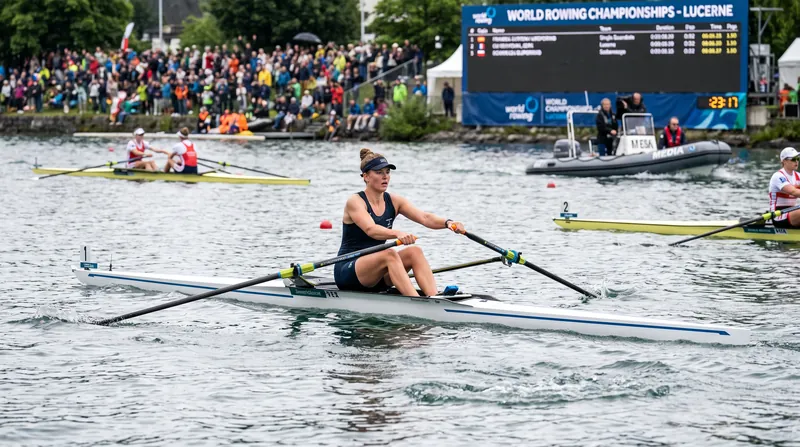
2026 Rowing Injury Report: Key Scullers Manage Back and Rib Setbacks Ahead of World Championships
6 sources
Standings
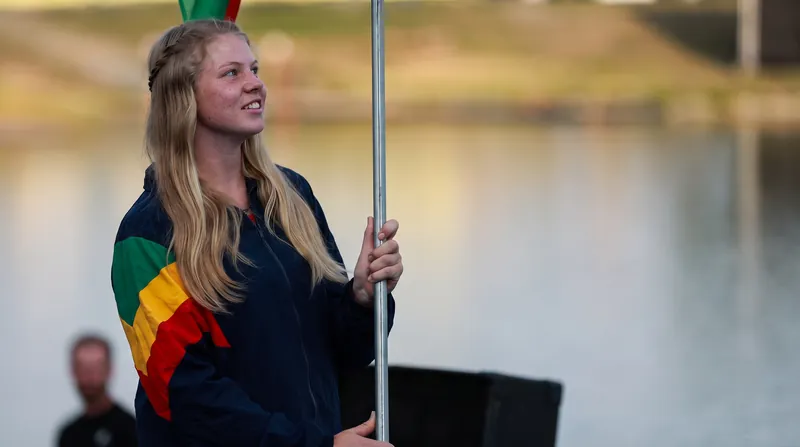
The Women's Eight Championship Picture: Four-Way Clash Looms for Amsterdam Worlds
6 sources
Injury
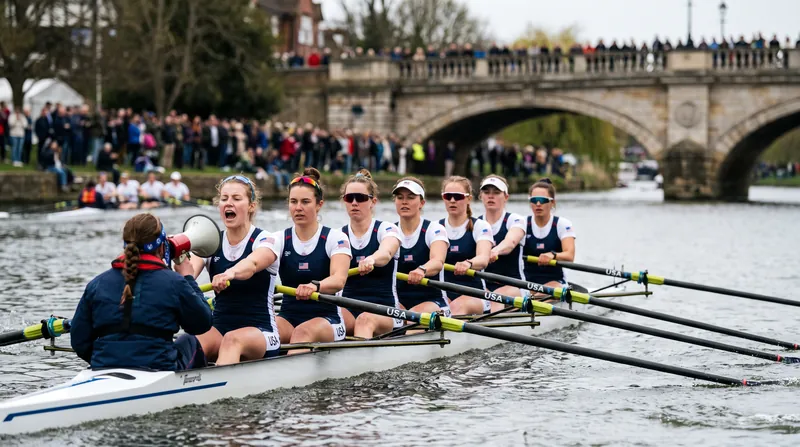
Irish Para-Rower Katie O'Brien Makes Triumphant Return in New Classification After Spinal Surgery
6 sources
Injury
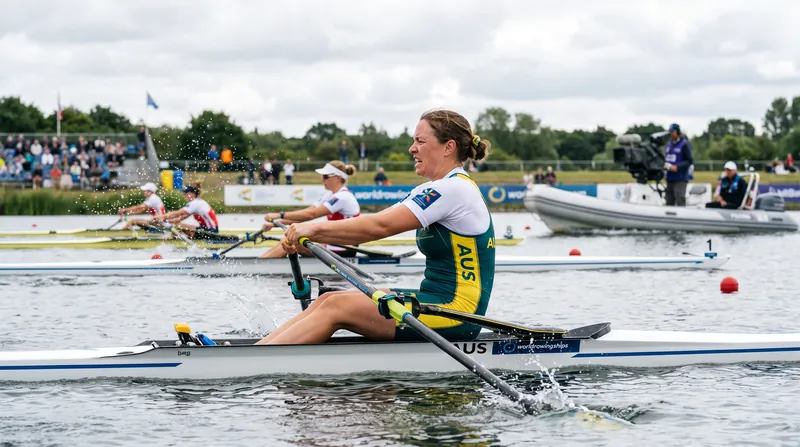
Former Rugby Pro Sam Blythe Completes Remarkable Comeback From Spinal Surgery to Claim Silver at British Rowing Indoor Championships
4 sources

Comments
Every angle. Every day.
Get Sports stories with full source coverage and perspective breakdowns, free every day.