
Tech Giants Warn GSA Procurement Rule Could Exclude Open-Source AI from Federal Contracts
Major technology companies have warned that the General Services Administration's revised AI procurement rules could inadvertently exclude open-source models from federal contracts.

Share this story
When the federal government buys software, the rules it sets inevitably shape the commercial market. If an agency demands a specific security standard, that standard often becomes the default for everyone. Now, as the General Services Administration (GSA) attempts to write the first comprehensive procurement rules for artificial intelligence, the stakes extend to the foundation of the AI ecosystem: open-source models.
For contractors and developers alike, the new framework represents a fundamental shift in how the government intends to govern the technology it deploys, setting a precedent that could ripple through the entire tech industry.[7]
In August 2026, a coalition of major technology companies—including Nvidia, Microsoft, and Palantir—warned that the GSA's revised AI procurement clause could inadvertently lock open-source AI out of federal contracts. Despite the agency revising an earlier draft to address industry pushback, the latest comments reveal a fundamental mismatch between traditional government contracting and how modern, open-weight AI models are actually built and distributed. The tech sector argues that the proposed rules fail to account for the decentralized nature of open-source development, potentially creating a chilling effect on federal AI adoption.[1][2]
The tension centers on a concept known as "flowdown requirements." In federal procurement, a prime contractor is typically held responsible for ensuring that its subcontractors and suppliers comply with government rules.
The GSA's proposed clause, GSAR 552.239-7001, applies this logic to AI systems, requiring contractors to exercise due diligence over the developers, system operators, and service providers of the large language models (LLMs) they use. If a contractor integrates an AI model into a government service, they must ensure the model's creators adhere to the GSA's strict data and security standards.[3][5]
For proprietary, closed-source models, this chain of responsibility is relatively straightforward. A contractor can sign a direct agreement with the model developer to guarantee compliance with data handling and security standards. However, open-source models—which anyone can download, modify, and run on their own infrastructure—operate entirely differently. An open-source publisher releasing model weights to the public has no direct relationship with the government and cannot fulfill contractual obligations for how a downstream contractor uses those weights in a specific federal deployment.[1][7]
Nvidia and other tech leaders argue that the rule's flowdown requirements place the regulatory burden on the wrong entity entirely. As Nvidia's chief external affairs officer noted in the company's comments, the requirements would put the onus on open publishers who might never receive or process government data in the first place. Conversely, a platform provider hosting an open-source model has no control over the model's original development or the specific government data processed through it, making compliance practically impossible.[1]
The revised clause, released in June 2026, attempted to narrow the scope by applying the rules only to LLMs that process "Government Data" and providing safe harbors for compliance. It also replaced a strict prohibition on foreign-made AI components with a more flexible standard, allowing for incidental open-source components developed globally. Furthermore, the revision limited the government's license to use the LLM to the specific purposes defined in the contract, rather than demanding access for "any lawful Government purpose."[5][6]
Despite these targeted changes, the core mechanical problem remains unresolved for the tech industry. Palantir argued that holding a commercial platform provider contractually responsible for every aspect of a third-party's probabilistic AI system is irrational and contrary to established procurement law.
The Coalition for Common Sense in Government Procurement echoed this sentiment, warning that contractors operating as platform providers cannot guarantee model neutrality or compel the level of intermediate-step disclosure the clause currently requires from developers. This creates a scenario where companies are asked to assume liability for systems they do not own.[1]
Another major point of friction involves the GSA's mandate for "Unbiased AI Principles." The clause requires that AI outputs prioritize historical accuracy, objectivity, and truthfulness, while refraining from ideological dogmas. While the goal is to ensure reliable government tools, the mechanism for enforcing this neutrality is highly contested. Contractors argue that they cannot easily enforce these behavioral constraints on open-source models that they did not train from scratch, especially when they act merely as the hosting infrastructure.[4][6]
The potential consequences extend beyond federal agencies. In a joint letter, over 230 companies cautioned that relying solely on closed models is not inherently safe, as they can fail in ways outsiders cannot detect. They argued that open-weight models are crucial for building a strong, accessible AI ecosystem that diffuses into every sector. If the government inadvertently bans these models through unworkable compliance rules, it risks cutting itself off from a massive engine of global innovation.[1][2]
If the GSA's rule is finalized without further adjustments, some companies warn they may have to pursue government contracting outside of the GSA schedule or re-engineer their commercial offerings entirely.
The outcome of this policy debate will likely determine whether the federal government can seamlessly adopt the open-source innovations driving the broader AI industry, or whether it will be restricted to a narrower pool of bespoke, closed-system vendors that can afford to build parallel, government-only infrastructure. Industry groups stress that such fragmentation would ultimately raise costs and delay the deployment of cutting-edge tools for federal workers.[1][3]
Key points
- The GSA is finalizing a major procurement clause (GSAR 552.239-7001) to govern how federal agencies acquire and use AI systems.
- Tech giants warn that the rule's "flowdown requirements" are incompatible with the decentralized nature of open-source AI models.
- The clause holds prime contractors responsible for the compliance of third-party AI developers and platform providers.
- Industry leaders argue that open-source publishers cannot fulfill these contractual obligations because they have no direct relationship with the government.
- Tech Industry & Open-Source Advocates
- Argue that traditional flowdown requirements are incompatible with open-weight models and will lock the government out of crucial innovations.
- Legal & Procurement Analysts
- Focus on the compliance risks, liability issues, and the government's goal of establishing uniform security standards across all federal AI usage.
- Editorial Synthesis
- Provides context on how federal procurement rules shape the broader commercial software market.
Perspectives this story doesn't cover
- Open-source independent developers
- Federal agency IT directors
Sources
Source coverage
7 outlets
3 viewpoints surfaced





- [1]FedScoopTech Industry & Open-Source Advocates
Revised GSA AI clause hasn't fully calmed industry concerns, comments show
Read on FedScoop → - [2]MeriTalkTech Industry & Open-Source Advocates
Industry groups speak out against proposed language to govern AI acquisition
Read on MeriTalk → - [3]Baker BottsLegal & Procurement Analysts
The federal government's proposed AI procurement clause could force every company on a GSA Schedule to choose between its commercial AI terms and its government contracts
Read on Baker Botts → - [4]Gibson DunnLegal & Procurement Analysts
GSA's draft AI clause would mark a significant shift in federal procurement practices
Read on Gibson Dunn → - [5]PilieroMazzaLegal & Procurement Analysts
GSA Releases Revised AI Clause for Public Comment
Read on PilieroMazza → - [6]Crowell & MoringLegal & Procurement Analysts
GSA Issues Proposed AI Contract Clause, Seeks Feedback
Read on Crowell & Moring → - [7]Factlen Editorial TeamEditorial Synthesis
Synthesis by Factlen editorial team
Read on Factlen Editorial Team →

More in Artificial Intelligence
See all →Open-Weights Models
DeepSeek Releases V4.1 Flash Model, Bringing Near-Frontier Performance to Open-Source Ecosystem
6 sources

PyTorch Ecosystem
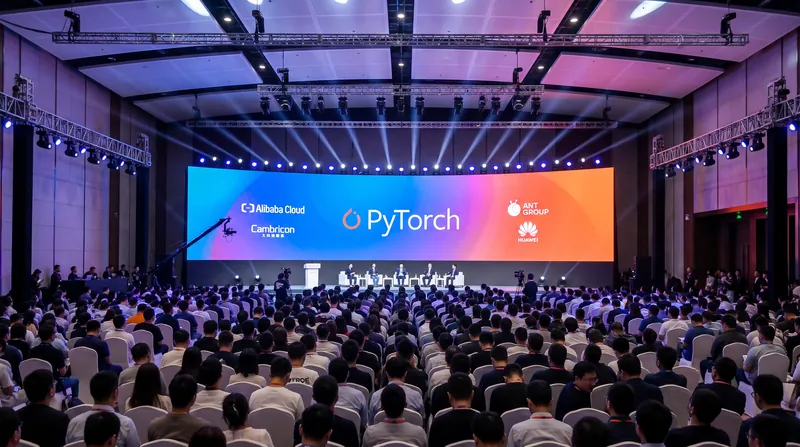
Alibaba Cloud, Cambricon, and Ant Group Join PyTorch Foundation Governing Board
3 sources
AI Alignment
Bypassing the Reward Model: How Direct Preference Optimization Aligns Open-Source AI
3 sources

Open-Weight Models
Tencent Open-Sources 770-Billion Parameter Hy4 Preview Model for Enterprise AI
5 sources

Comments
Every angle. Every day.
Get Artificial Intelligence stories with full source coverage and perspective breakdowns, free every day.