
Specialized Medical AI Models Reach Breakthrough Diagnostic and Research Milestones
A new wave of healthcare-focused artificial intelligence models has achieved unprecedented clinical accuracy, matching human physicians in diagnostics and accelerating cancer drug discovery.

Share this story
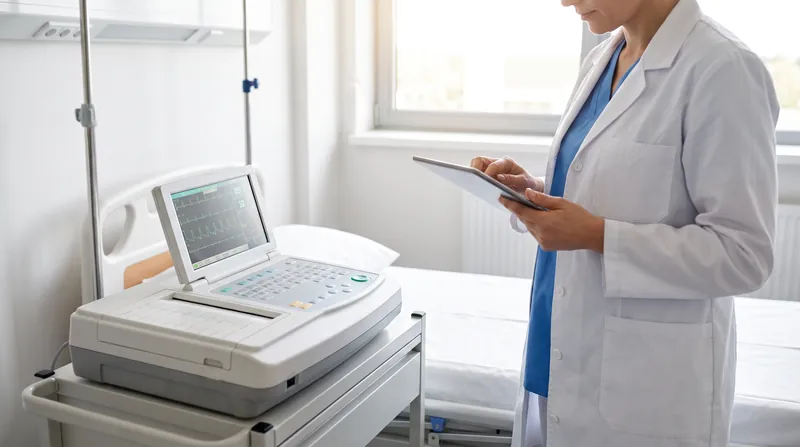
Artificial intelligence is rapidly transitioning from a general-purpose novelty into a clinical-grade medical instrument. In June 2026, a wave of specialized, healthcare-focused AI models achieved unprecedented milestones, demonstrating reasoning capabilities that match or surpass human physicians in complex diagnostic scenarios. Rather than relying on broad, internet-trained knowledge, these new systems are purpose-built for the rigorous demands of medicine, signaling a structural shift in how diseases are identified and treated.[3]
The leap in performance is driven by a move toward highly specialized architectures. OpenAI recently expanded its healthcare efforts, revealing that its latest medical AI models have achieved strong performance on clinical benchmarks. These systems are designed to support healthcare professionals with personalized medical insights, outperforming general models by reducing inaccurate responses through specialized training for clinical decision support.
The real-world applications are already materializing in top-tier hospitals. At Boston Children's Hospital, AI is actively being used to help physicians diagnose rare genetic diseases affecting children, parsing through complex genetic markers and patient histories in a fraction of the time it would take a human specialist. Concurrently, OpenAI has integrated improved health intelligence directly into its enterprise tools, allowing healthcare organizations to deploy these capabilities securely.
To measure this rapid progress, the industry has established far more rigorous testing standards. The newly released Medmarks v1.0 benchmark suite now covers 30 distinct medical evaluations, testing 61 different models on research-level reasoning rather than basic medical trivia. These benchmarks reveal that specialized models are not just retrieving facts, but actively synthesizing patient data to recommend guideline-adherent treatments.[3]
But the most transformative shift may be happening outside of proprietary corporate labs. In early June, researchers released a powerful new open-source AI model designed specifically to assist in medical diagnostics. The model has demonstrated remarkable accuracy in identifying early signs of rare diseases from standard medical imaging.[1]
By releasing the model under an open-source license, developers are aiming to democratize access to cutting-edge healthcare. For under-resourced hospitals worldwide, the ability to run clinical-grade diagnostic AI locally—without paying exorbitant cloud API fees or risking patient data privacy over external networks—could revolutionize patient care in developing regions.[1]
Beyond diagnostics, artificial intelligence is fundamentally rewriting the timeline for drug discovery. At the University of Oxford, a team of researchers in collaboration with The Alan Turing Institute has developed a breakthrough AI system known as "PhenoSeq." The framework uses conditional diffusion models to generate transcriptomic profiles directly from high-content cellular images.[4]
Traditionally, extracting this level of molecular insight required extensive, costly, and time-consuming sequencing technologies. PhenoSeq allows scientists to uncover hidden biological information from existing routine laboratory experiments, effectively generating single-cell molecular data from visual images alone. Researchers believe this approach will drastically accelerate the search for new cancer treatments by streamlining drug-screening pipelines.[4]
The push to replace slow, traditional laboratory methods with AI simulation is gaining momentum across the biopharma sector. GATC Health recently detailed its "Operon" platform, which utilizes a biological intelligence layer to achieve true biological reasoning. By simulating complex human biology, the system aims to predict how experimental drugs will perform in the body before they ever reach a human trial.[2]
This predictive capability is already showing remarkable precision, achieving 91% specificity in assessing drug candidate safety and non-obvious side effects. By replacing slow animal testing with rapid, human-biology-driven results, these platforms can reduce costly late-stage clinical trial failures, which have historically been a massive bottleneck in bringing new therapies to market.[2]
Regulatory bodies are actively adapting to this new paradigm. The U.S. Food and Drug Administration (FDA) has recently begun evaluating AI-powered tools designed to predict drug-induced liver injury—one of the leading causes of drug development failures. By identifying safety risks earlier in the development process, pharmaceutical companies can pivot away from toxic compounds months or years sooner.
Despite the rapid advancements, the medical community emphasizes that AI is not a replacement for human physicians. Instead, it functions as a highly capable co-pilot. By automating the synthesis of complex data and highlighting potential edge cases, AI allows doctors to focus on what they do best: patient communication, empathetic care, and final clinical judgment.[3]
Looking ahead, the integration of multimodal data promises to deepen this human-machine collaboration. Future AI systems are being designed to seamlessly analyze data from wearables, health apps, digital pathology, and electronic patient records simultaneously. As these specialized models continue to evolve, the gap between cutting-edge medical research and everyday patient care is poised to close faster than ever before.
Key points
- Specialized medical AI models are now matching or surpassing human physicians on complex clinical diagnostic benchmarks.
- The University of Oxford introduced PhenoSeq, an AI framework that generates molecular data directly from cellular images to accelerate cancer research.
- A new open-source medical AI model was released, aiming to democratize advanced diagnostics for under-resourced hospitals globally.
- Biopharma companies are increasingly using AI to simulate human biology, bypassing animal testing and predicting drug toxicity earlier.
What we don’t know
- How quickly regulatory bodies like the FDA will approve fully autonomous AI diagnostic tools for commercial clinical use.
- The long-term financial impact these open-source models will have on the business models of proprietary medical AI providers.
- Whether AI-generated molecular profiles will be universally accepted as substitutes for physical sequencing in late-stage clinical trials.
How we got here
Early 2026
General-purpose AI models begin showing limitations in specialized clinical reasoning and guideline adherence.
June 10, 2026
Researchers release a powerful open-source AI model specifically designed for medical diagnostics.
June 18, 2026
Oxford University researchers unveil PhenoSeq, demonstrating AI's ability to generate transcriptomic data from images.
June 19, 2026
OpenAI announces significant expansions to its healthcare-focused AI models, achieving strong performance on clinical benchmarks.
- Clinical Practitioners
- View AI as a powerful diagnostic co-pilot that requires human oversight and rigorous clinical validation.
- Biopharma Researchers
- Focus on AI's potential to simulate human biology, bypass animal testing, and accelerate drug discovery.
- Open-Source Advocates
- Believe medical AI must be freely accessible to democratize healthcare and protect patient privacy through local hosting.
Perspectives this story doesn't cover
- Patient Advocacy Groups
- Medical Ethicists
Sources
Source coverage
4 outlets
3 viewpoints surfaced




- [1]The Guardian ChronicleOpen-Source Advocates
New Open-Source AI Model Revolutionizes Medical Research
Read on The Guardian Chronicle → - [2]GATC HealthBiopharma Researchers
CTO Jayson Uffens Explains GATC Health's AI Breakthrough
Read on GATC Health → - [3]ReutersClinical Practitioners
AI Medical Tools Match and Surpass Doctors in Clinical Studies
Read on Reuters → - [4]Nature CommunicationsBiopharma Researchers
Connecting single-cell transcriptomes to projectomes in the mouse visual cortex
Read on Nature Communications →
More in Artificial Intelligence
See all →Custom Silicon
OpenAI Claims Custom 'Jalapeño' Chip Outperforms Nvidia GB300 in Inference Efficiency
7 sources

Agentic Finance
European Bank Becomes First to Allow External AI Agents to Trade Live Brokerage Accounts
3 sources

AI Leadership
DeepMind CEO Demis Hassabis Steps Down to Focus on 'Big Picture' AGI Strategy
3 sources

AI Search
Publishers Push Back Against Google's AI-Generated Headlines Over Misinformation and Control
5 sources

Comments
Every angle. Every day.
Get Artificial Intelligence stories with full source coverage and perspective breakdowns, free every day.