
Shakur Stevenson Signs Multifight Deal With Zuffa Boxing to Launch Dana White's Promotional Venture
Three-division world champion Shakur Stevenson has signed a groundbreaking multifight contract with Zuffa Boxing, officially launching UFC CEO Dana White's long-awaited entry into the sport.
By Jackson Reed

Share this story
Shakur Stevenson is now the face of Zuffa Boxing. The three-division world champion has signed a multifight promotional agreement with UFC CEO Dana White's long-gestating boxing venture, officially bringing the most powerful executive in combat sports into the squared circle.
It is a massive financial win for Stevenson and a structural earthquake for a sport historically paralyzed by promotional gridlock. The short version is simple: the UFC model has finally arrived in boxing, and it has secured one of the most talented pound-for-pound fighters on the planet to prove it works.[1]
For years, boxing fans have endured a landscape where the best fighters rarely face each other in their primes, blocked by rival promoters, competing broadcast networks, and endless ego-driven negotiations. White's entry promises to shatter that paradigm. By securing a prime talent like Stevenson, Zuffa Boxing isn't just dipping a toe into the water; it is launching a direct assault on the traditional boxing business model. The stakes are existential for legacy promoters who have long relied on protecting their undefeated stars against overmatched opponents.
The mechanism behind Zuffa Boxing mirrors the UFC's approach: centralized control, mandatory title defenses against top contenders, and a unified broadcast strategy. Zuffa's stated mandate is to force high-stakes matchups without the years of public posturing that usually precede a mega-fight. Stevenson, known for his peerless defensive wizardry and ring IQ, has actively sought this exact environment after growing frustrated with the sport's slow-moving politics and the reluctance of rival champions to share the ring with him.[1]
Industry insiders point to Stevenson's recent free agency as the catalyst for this industry shift. After his previous promotional contracts expired, he fielded lucrative offers from traditional powerhouses like Top Rank and Matchroom Boxing. However, Zuffa offered a unique hybrid structure: guaranteed high-eight-figure purses coupled with a contractual guarantee that he will only face top-five ranked opponents in his division. This evidence suggests Zuffa is willing to operate as a loss leader initially to establish a premium, high-quality product.[2]
Stevenson is the crown jewel, but he is not expected to be the only acquisition. Zuffa Boxing is reportedly targeting a stable of 15 to 20 elite fighters across three weight classes to create a closed-ecosystem league, similar to the UFC's roster. This allows the promotion to make fights internally without negotiating across the aisle with rival promoters, effectively bypassing the sport's biggest historical hurdle. If White can sign just a handful of Stevenson's peers, he can guarantee a schedule of elite matchups that traditional promoters simply cannot match.
Yet, the transition will not be seamless, and significant uncertainty remains. Boxing's regulatory environment is governed by the Ali Act, a federal law that prevents promoters from acting as managers and mandates certain ranking structures—protections that do not exist in mixed martial arts. Zuffa will have to navigate these strict federal regulations while attempting to enforce its centralized model. Furthermore, traditional promoters still control the majority of the lightweight and super lightweight divisions, meaning Zuffa will eventually have to co-promote if it wants to unify world titles.[2]
For now, the sport's attention shifts to Stevenson's debut under the Zuffa banner, slated for late 2026 in Las Vegas. The opponent is yet to be named, but the promotional machine is already in motion. If White can deliver on his promise of high-stakes, highly produced boxing events free from the sport's traditional red tape, Stevenson's signature will be remembered as the moment boxing finally modernized.[1]
The broader implications for fighter pay and leverage are equally massive. While the UFC has historically faced criticism over its revenue split with athletes, Zuffa Boxing is entering a market where top fighters are accustomed to taking the lion's share of event revenues. To lure a star of Stevenson's caliber, White had to adapt his financial model, offering guarantees that rival the biggest paydays in the sport. This hybrid approach—UFC-style matchmaking combined with boxing-tier compensation—could force legacy promoters to dramatically alter how they do business.[1]
Viewpoints in depth
Zuffa Optimists
Supporters believe a centralized league is the only way to fix boxing's matchmaking gridlock.
Proponents of the move argue that boxing's traditional model is fundamentally broken, relying on promoters who actively avoid matching their best fighters against dangerous opponents to protect their undefeated records. By applying the UFC's mandate that the best must fight the best, optimists believe Zuffa Boxing will force a cultural shift. They point to Stevenson's signing as proof that elite fighters are hungry for a platform that guarantees high-stakes legacy fights without the years of exhausting public negotiations.
Boxing Traditionalists
Skeptics question if a closed-ecosystem model can legally and practically succeed in boxing.
Traditionalists warn that Dana White is underestimating the legal and structural realities of professional boxing. Unlike MMA, boxing is governed by the federal Ali Act, which mandates independent ranking systems and prevents promoters from acting as managers. Furthermore, legacy promoters like Top Rank and Matchroom still control the vast majority of the talent pool. Skeptics argue that unless Zuffa is willing to co-promote—something White has historically loathed doing in the UFC—Stevenson could find himself isolated on an island, unable to fight champions signed to rival networks.
MMA Crossover Fans
Combat sports fans are eager to see UFC-level production values applied to the sweet science.
For the MMA audience, the appeal lies in the presentation and pacing. Boxing broadcasts are notoriously bloated, often featuring hours of filler between fights and inconsistent production quality. Crossover fans expect Zuffa Boxing to bring the UFC's slick, fast-paced, and highly produced event structure to the sport. They view Stevenson's signing not just as a talent acquisition, but as the first step in modernizing how boxing is packaged and sold to a younger demographic.
Key points
- Shakur Stevenson has signed a multifight deal to become the flagship athlete for Zuffa Boxing.
- The move officially launches UFC CEO Dana White's long-anticipated entry into professional boxing.
- Zuffa Boxing aims to implement a centralized, UFC-style matchmaking model to ensure top-tier fights.
- The promotion will need to navigate the federal Ali Act, which governs boxing differently than MMA.
What we don’t know
- Who Shakur Stevenson's first opponent under the Zuffa Boxing banner will be.
- How Zuffa will handle co-promotions when trying to unify titles against fighters signed to rival companies.
- Which other high-profile boxers are currently in negotiations to join the Zuffa roster.
How we got here
2017
Dana White first trademarks the 'Zuffa Boxing' name, sparking years of industry speculation about a UFC crossover.
Mid-2024
Shakur Stevenson becomes a promotional free agent, exploring options across the boxing landscape.
Early 2026
Rumors intensify regarding White actively meeting with top-tier boxing free agents in Las Vegas.
August 2026
Stevenson officially signs with Zuffa Boxing, formally launching the new promotional entity.
- Zuffa Optimists
- Believe the UFC's centralized matchmaking model is exactly what boxing needs to force the best fighters to face each other.
- Boxing Traditionalists
- Question whether a closed-league model can succeed given federal regulations and the entrenched power of legacy promoters.
- MMA Crossover Fans
- Excited to see Dana White's high-end production value and promotional muscle applied to pure boxing events.
Perspectives this story doesn't cover
- Legacy Boxing Promoters
- Rival Lightweight Contenders
Sources
Source coverage
2 outlets
3 viewpoints surfaced


- [1]ESPNZuffa Optimists
Shakur Stevenson signs landmark deal to become face of Dana White's Zuffa Boxing
Read on ESPN → - [2]The RingBoxing Traditionalists
What Stevenson's move to Zuffa means for the lightweight division
Read on The Ring →

More in Sports
See all →Injury
Undefeated Welterweight Shavkat Rakhmonov Returns to Pad Work Following Second Knee Surgery
3 sources
Standings
Lightweight Boxing Standings: Abdullah Mason Defends WBO Crown as Muratalla Surges in 2026 Title Race
2 sources

Boxing Negotiations
Joe Cordina Agrees to Terms to Fight Manny Pacquiao on Fury-Joshua Undercard
3 sources

Heavyweight Title
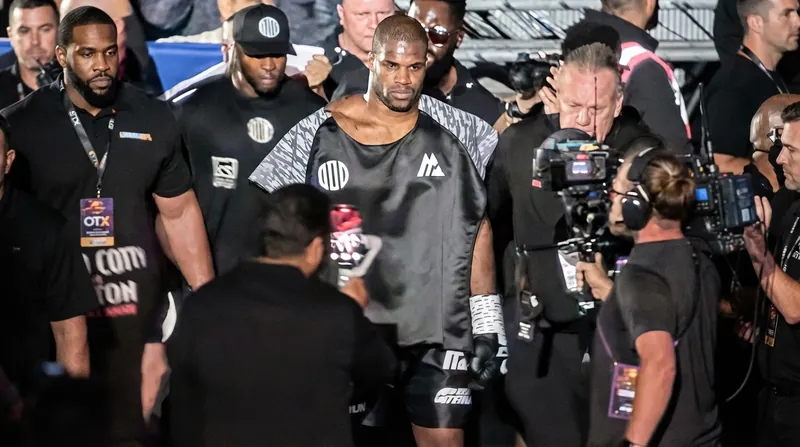
Daniel Dubois Stops Fabio Wardley in Second Round to Retain WBO Heavyweight Title
5 sources
Comments
Every angle. Every day.
Get Sports stories with full source coverage and perspective breakdowns, free every day.