
Scientists Unveil First Optical Detection Framework to Guard Against Synthetic 'Mirror Life'
Researchers have developed a circularly polarized luminescence assay to identify hypothetical organisms built from reversed molecular structures. The proactive biosecurity tool ensures that environmental monitors can detect asymmetric biological hazards before they are ever created.
By Ishani Patel

Share this story
On October 21, 2026, researchers from the University of Strathclyde and Durham University published the first optical detection framework designed to identify "mirror life." The contingency assay, detailed in Royal Society Open Science, uses circularly polarized luminescence to spot synthetic organisms built from reversed molecular structures.[1][4]
The breakthrough addresses a specific biosecurity gap that has troubled geneticists for years. If a laboratory were to successfully engineer a self-replicating organism using mirror-image molecules, current analytical techniques would struggle to identify it in the wild. The new framework provides a working detection method before the hazard exists.[3]
"We don't expect mirror life to appear tomorrow, but if it did arise, the consequences could be severe," said Dr. Lewis MacKenzie, the lead researcher from Strathclyde's Department of Pure and Applied Chemistry. "It makes sense to develop detection methods before they are needed."[4]
To understand the detection mechanism, it helps to look at the fundamental geometry of biological building blocks. Life on Earth is overwhelmingly based on a single set of chiral orientations, meaning its molecules have a specific structural handedness. Naturally occurring amino acids are almost exclusively left-handed.[1]
Engineering a reversed biology
A mirror organism would flip this entire architecture, utilizing right-handed amino acids and left-handed DNA. Because these reversed molecules possess the exact same atoms in the exact same sequence, they are chemically identical to their natural counterparts. Their inverted three-dimensional shape, however, alters how they interact.[1][2]
This structural inversion is what makes hypothetical mirror life a high-severity ecological hazard. Natural enzymes, antibodies, and cellular receptors are shaped to bind with conventional molecules, much like a right hand fitting into a right-handed glove. A mirror-image pathogen could potentially slip past these defenses entirely.[3]
Without effective predators or immune responses to keep them in check, mirror bacteria could multiply unchecked in natural ecosystems. A 2024 global warning signed by 38 scientists highlighted this exact scenario, noting that mirror populations could reach extraordinarily high densities. Such an outbreak would carry devastating agricultural consequences.[3]
The newly proposed assay circumvents this evasion by targeting the physical geometry of the cells rather than their chemical signatures. The research team designed a panel of specialized fluorescent probes that bind to specific subcellular targets, such as membranes, organelles, and nucleic acids.[1][4]
Reading the optical fingerprint
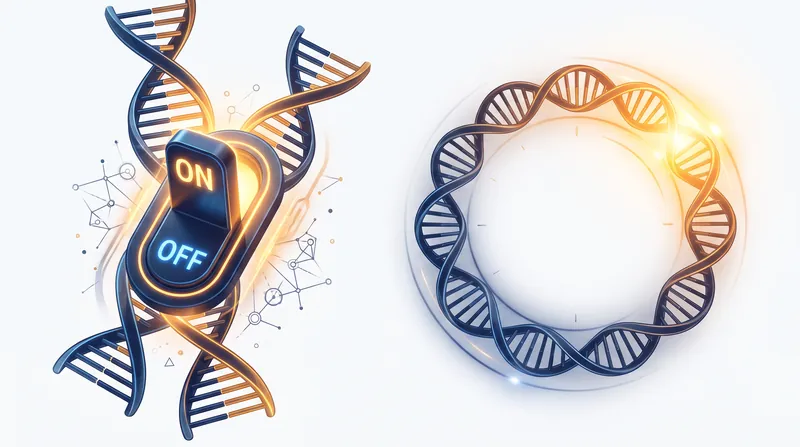
One of the most obvious targets for this screening approach is the helical structure of DNA itself. In conventional terrestrial life, the DNA double helix twists in a right-handed direction. A mirror organism would rely on left-handed DNA, forcing the fluorescent dyes to bind in a reversed orientation.[1]
The detection process relies on a phenomenon known as circularly polarized luminescence. As the fluorescent probes emit light, the photons exhibit different polarization patterns that rotate in opposite directions depending on the handedness of the molecule they are bound to. Researchers can then read the sample's three-dimensional arrangement.[1][2]
"Professor Pal and I had been working on CPL technologies before recent concerns became prominent, and guarding against mirror life was a clear fit for our research," MacKenzie explained. The resulting optical signature acts as a definitive molecular fingerprint, instantly revealing whether a biological sample represents a mirrored alternative.[4]
To prevent false positives, the framework requires a multi-probe reporter panel rather than a single measurement. By targeting several different biological structures simultaneously, the assay builds a comprehensive chiral profile of the organism. The distinct signals can then be read using rapid spectroscopy or specialized microscopes.[1]
Securing the synthetic frontier
Because the underlying optical principles are already well understood, the hardware required for this surveillance is highly scalable. The technology is fundamentally similar to the lenses used in 3D cinema glasses. The research team envisions a future where the detection equipment is miniaturized into portable enantioselective cameras.[1][4]
Crucially, the Strathclyde and Durham teams can test and refine their detection equipment using conventional biological samples. Because the probes are designed to read chirality in either direction, researchers can validate the assay's accuracy on natural left-handed proteins. This allows them to perfect the system safely.[1][2]
The development of this assay arrives as the synthetic biology sector experiences rapid acceleration. While a fully functional, self-replicating mirror organism remains beyond current technical capabilities, steady progress in mirror-molecule engineering has shortened the projected timelines. Some experts estimate the first synthetic mirror organism could emerge within ten years.
International security organizations and bioethics committees have increasingly focused on the risks associated with this emerging field. A 2025 report by the UNESCO International Bioethics Committee explicitly mentioned the hazards of mirror life. The new optical assay provides a tangible tool to enforce future international legislation.[1]
A template for proactive science
The research team is currently seeking additional funding to optimize the assay's spatial resolution and ensure it can reliably distinguish between cells in mixed environmental samples. Over the next twelve months, they plan to conduct extensive laboratory demonstrations using safe, non-mirror life forms to establish baseline sensitivity.[1]
Beyond its immediate biosecurity applications, the project represents a shift in how the scientific community approaches existential risks. Rather than waiting for a hazardous technology to mature before developing countermeasures, the researchers have built the safeguard first. This proactive model could manage other low-likelihood, high-severity threats.[3]
The success of the circularly polarized luminescence framework ultimately depends on its widespread adoption by environmental monitoring agencies. If the technology can be integrated into standard water and soil testing protocols, it will create an invisible net across vulnerable ecosystems, triggering an immediate optical alarm upon contamination.[1]
Key points
- Researchers have published the first optical detection framework designed to identify hypothetical 'mirror life' built from reversed molecular structures.
- The system uses circularly polarized luminescence to read the three-dimensional handedness of cellular targets like DNA and membranes.
- Mirror organisms pose a severe biosecurity threat because their inverted biology could allow them to evade natural immune systems and predators.
- The detection equipment can be tested safely on conventional terrestrial biology and miniaturized for portable, in-the-field environmental surveillance.
Open questions
- Whether the circularly polarized luminescence assay can maintain its accuracy in highly turbid, complex environmental samples like soil or wastewater.
- Exactly how long it will take for synthetic biology to advance to the point where a fully functional, self-replicating mirror organism can be created.
- Whether international regulatory bodies will mandate the use of this detection framework in laboratories conducting advanced genetic engineering.
- Synthetic Biologists
- Focuses on the technical elegance of using existing optical principles to solve a complex molecular identification problem.
- Global Biosecurity Monitors
- Prioritizes the assay's potential to enforce international treaties and prevent the unchecked proliferation of synthetic pathogens.
- Ecological Risk Analysts
- Highlights the catastrophic potential of asymmetric biology interacting with natural ecosystems that lack evolutionary defenses.
Perspectives this story doesn't cover
- Agricultural policymakers
- Commercial synthetic biology startups
Sources
Source coverage
4 outlets
3 viewpoints surfaced




- [1]Royal Society Open ScienceSynthetic Biologists
Circularly polarized luminescence as a contingency assay for 'mirror life' bio-hazards
Read on Royal Society Open Science → - [2]Phys.orgSynthetic Biologists
Light-based method could offer first way to detect hypothetical 'mirror life'
Read on Phys.org → - [3]The DebriefEcological Risk Analysts
Scientists Are Racing to Detect a Potentially Dangerous Form of Synthetic Life Before It Exists
Read on The Debrief → - [4]Science DailyEcological Risk Analysts
Scientists propose a way to detect dangerous “mirror life” before it exists
Read on Science Daily →
More in Science
See all →Developmental Biology
Scientists Trace Complete Mouse Embryo Cell Lineage Using DNA Typewriter Recording Device
7 sources
Genetic Recombination
How Inverted Palindromic Repeats Allow the Human Y Chromosome to Arrest Its Own Genetic Decay
5 sources
Reproductive Biology
The Material Fatigue of Human Eggs: How Decades of Dictyate Arrest Deplete Irreplaceable Cohesin
10 sources
Genetic Inheritance
Penetrance vs. Expressivity: How Genes Determine Probability and Severity
5 sources
Comments
Every angle. Every day.
Get Science stories with full source coverage and perspective breakdowns, free every day.