
Saudi Arabia Forms 14-Nation Red Sea Defense Alliance to Counter Maritime Threats
Saudi Arabia has launched a 14-nation maritime defense coalition to secure the Red Sea and Bab al-Mandab Strait, signaling a strategic pivot toward regional ownership of global trade routes. The alliance, which includes Turkey, Pakistan, and Egypt, aims to deter asymmetric threats without relying on Western naval task forces.
By Anaya Sharma

Share this story
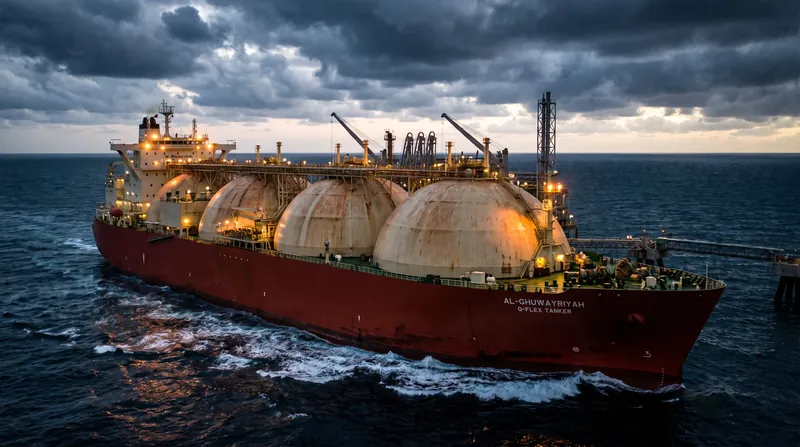
The global economy relies on a maritime corridor that its primary beneficiaries cannot secure. The Red Sea and the Bab al-Mandab Strait carry roughly 12 percent of global seaborne trade, serving as a critical route for oil, liquefied natural gas, and container shipments between Europe, Asia, and Africa. Yet the burden of protecting this artery has largely fallen to Western naval task forces.
These United States- and United Kingdom-led operations possess overwhelming technological superiority, but their presence is politically toxic in the Middle East and financially unsustainable against cheap, asymmetric drone warfare. The tension at the heart of Red Sea security is a mismatch of incentives: the nations most affected by shipping disruptions lack the unified military architecture to stop them, while the nations with the military architecture lack the regional legitimacy to operate without fueling further resistance.[2]
On July 30, 2026, Saudi Arabia moved to resolve that structural deficit. The Kingdom announced the formation of the "Multinational Maritime Defence Alliance," a 14-nation coalition designed to indigenize the security of the Red Sea, the Gulf of Aden, and the Bab al-Mandab Strait.
Hosted in Riyadh, the initiative secured signatures from a sweeping geographic and political bloc: Saudi Arabia, Egypt, Turkey, Pakistan, Jordan, Qatar, Kuwait, Bahrain, Bangladesh, Nigeria, Sudan, Djibouti, Somalia, and the internationally recognized government of Yemen. By assembling this specific roster from the 43 countries that attended the initial summit, Riyadh is attempting to build a security architecture that relies on regional ownership and diplomatic breadth rather than Western kinetic strikes.[1][6]
The immediate catalyst for the alliance was a sharp escalation in asymmetric threats directed specifically at the Saudi state. On July 20, Yemen's Houthi movement declared a maritime blockade on the Kingdom, a move that successfully disrupted oil shipments and forced diversions away from the Red Sea.
This direct challenge to Saudi sovereignty accelerated diplomatic efforts that had been quietly underway for months. The resulting July 30 declaration goes further than previous regional attempts by immediately establishing the institutional plumbing required for military coordination: a permanent headquarters, a joint command, a command-and-control center, and a combined maritime operations center, all located on Saudi territory.[3][4]
The composition of the alliance reflects a deliberate strategic calculus by Riyadh to encircle the threat. By bringing in major Muslim-majority military powers like Turkey and Pakistan, Saudi Arabia adds conventional heft and international diplomatic weight.
Turkey's participation, confirmed by its Ministry of National Defence, represents the first operational deployment of a new trilateral defense pact signed between Ankara, Riyadh, and Islamabad in Mecca just weeks prior. For Pakistan, joining the coalition requires a delicate balancing act; Islamabad recently mediated between the United States and Iran, and must now participate in a Saudi-led force without alienating Tehran, which backs the Houthi forces.[3]
Equally critical is the inclusion of five African nations, which secures the western flank of the maritime corridor. Djibouti, Sudan, and Somalia sit along the continent's most strategically vital chokepoints. Somalia's inclusion is particularly notable as it signals a regional realignment, with Mogadishu pivoting toward Riyadh after cutting key military and port ties with the United Arab Emirates.
Egypt's participation is driven by stark economic necessity; the diversion of global shipping around the Cape of Good Hope has devastated Suez Canal transit revenues, forcing Cairo to abandon its traditional reluctance to join Saudi-led military frameworks in order to prevent its own strategic marginalization.[2]
Despite the impressive diplomatic roster, the alliance's credibility is immediately tested by the structural gaps in its membership. The United Arab Emirates, Saudi Arabia's primary geopolitical rival in the Gulf and a highly capable maritime actor, is notably absent. This omission reflects ongoing friction between Riyadh and Abu Dhabi over regional primacy and influence in the Horn of Africa.
Furthermore, Ethiopia—a major landlocked power with a population of 120 million that is aggressively seeking its own naval access via a controversial deal with Somaliland—is structurally excluded. These absences guarantee that the alliance will not have a monopoly on regional security arrangements.[4]
The central security challenge facing the new coalition is not a conventional naval confrontation, but an entrenched asymmetric threat emanating from the Yemeni coast. The Houthi movement controls the decisive western stretches of Yemen's Red Sea coastline, including the critical port of Hodeidah and the maritime approaches to the Bab al-Mandab Strait.
The group has repeatedly demonstrated the ability to strike commercial and military vessels using a sophisticated arsenal of anti-ship ballistic missiles, explosive-laden drone boats, and aerial drones. Any security structure that cannot meaningfully degrade or deter this specific capability risks becoming fundamentally ornamental.[4][5]
Intelligence assessments indicate that the threat matrix is evolving from sporadic harassment to institutionalized extortion. Reports suggest the Houthis are preparing to formalize their geographic leverage by imposing transit tolls on vessels passing through the Bab al-Mandab Strait.
This model explicitly mirrors Iranian practices in the Strait of Hormuz and reportedly benefits from the advisory support of the Islamic Revolutionary Guard Corps. If the Houthis successfully implement a toll system, it would represent a massive transfer of wealth and legitimacy to a non-state actor, effectively taxing a significant portion of global trade.[4]
The presence of the internationally recognized Yemeni government in the Saudi-led coalition provides vital diplomatic cover and the symbolic continuity of state sovereignty. However, its actual contribution to maritime security is extremely limited where it matters most. The recognized government does not control the western coastline and lacks the naval capacity to physically contest Houthi dominance of the littoral waters. Its inclusion ensures that the alliance's actions are legally framed as supporting the legitimate government of Yemen, but it does not alter the tactical balance of power on the water.[4]
Commercial shipping markets have responded to the Riyadh initiative with cautious skepticism. Tanker markets and marine insurance providers view the announcement as a positive diplomatic development, but expect the immediate impact on freight rates and war-risk premiums to be negligible. Shipowners require clear, empirical evidence of reduced regional tensions and a sustained improvement in physical security conditions before they will abandon the longer, costlier, but safer route around the southern tip of Africa. Until the alliance proves it can intercept missiles or deter launches, commercial traffic will remain depressed.[1]
The historical precedent for regional maritime coalitions in the Red Sea offers little comfort. During the 1970s, littoral states attempted to forge collective security agreements that ultimately foundered amid the Cold War and regional conflicts.
More recently, the Council of Arab and African States Bordering the Red Sea and Gulf of Aden, established in 2020, existed largely on paper without an executive arm or command-and-control arrangements. The new Multinational Maritime Defence Alliance has learned from this by establishing joint command structures immediately, but institutional plumbing does not automatically translate into operational effectiveness against a hardened, asymmetric adversary.[6]
Ultimately, the Saudi-led alliance represents a profound test of the region's ability to manage its own security without Western intervention. If the coalition can successfully pool intelligence, coordinate escorts, and leverage its diplomatic ties to Tehran to restrain Houthi aggression, it will fundamentally reshape the geopolitical architecture of the Middle East.
Key points
- Saudi Arabia announced a 14-nation Multinational Maritime Defence Alliance to secure the Red Sea and Gulf of Aden.
- The coalition includes major Muslim-majority powers like Turkey and Pakistan, alongside five African littoral states.
- The initiative follows a July 20 maritime blockade declared by Yemen's Houthi movement against the Kingdom.
- The alliance establishes a permanent headquarters and joint command in Riyadh, signaling a shift away from Western-led task forces.
What we don’t know
- Whether the new alliance will deploy its own naval assets to actively escort commercial vessels or limit itself to intelligence sharing.
- How the Houthis will respond to the formalization of a unified regional bloc operating off the Yemeni coast.
- Whether the exclusion of the UAE will lead to competing maritime security initiatives in the Horn of Africa.
- Regional Security Advocates
- Argues that a Saudi-led, Muslim-majority coalition provides the necessary diplomatic legitimacy to secure the Red Sea without Western intervention.
- Geopolitical Realists
- Highlights the strategic omissions in the alliance, such as the UAE and Ethiopia, and questions its ability to project hard power.
- Asymmetric Warfare Analysts
- Contends that conventional naval coalitions cannot effectively deter the low-cost, high-impact asymmetric tactics employed by the Houthis.
Perspectives this story doesn't cover
- The United Arab Emirates' strategic calculus
- Ethiopian naval ambitions
- Commercial shipmasters and crew unions
Sources
Source coverage
6 outlets
3 viewpoints surfaced






- [1]Argus MediaRegional Security Advocates
Saudi Arabia unveils maritime defence alliance
Read on Argus Media → - [2]Business InsiderGeopolitical Realists
Saudi Arabia forms Red Sea security bloc with five African countries amid rising maritime tensions
Read on Business Insider → - [3]Middle East EyeGeopolitical Realists
Turkey backs Saudi-led maritime defence coalition in Red Sea
Read on Middle East Eye → - [4]Horn ReviewAsymmetric Warfare Analysts
The announcement of a Saudi led multinational maritime defence alliance
Read on Horn Review → - [5]Democracy Now!Asymmetric Warfare Analysts
Saudi Arabia is forming a new military alliance with 13 other countries to protect shipping in the Red Sea
Read on Democracy Now! → - [6]MajallaRegional Security Advocates
On 30 July 2026, the declaration establishing the Multinational Maritime Defence Alliance was signed in Riyadh
Read on Majalla →
More in World
See all →Lebanon Border
Why Renewed Fighting Postponed the Rome Talks on Southern Lebanon's Security Future
6 sources

Nuclear Nonproliferation
What the IAEA's Security Council Referral Means for Snapback Sanctions on Iran
3 sources
Mecca Pact
Why Pakistan Declined to Invoke the Mecca Pact After Houthi Strikes on Saudi Arabia
3 sources

Security Architecture
How a New Secretariat Could Let the Mecca Joint Defense Agreement Replace the US Security Umbrella
6 sources

Comments
Every angle. Every day.
Get World stories with full source coverage and perspective breakdowns, free every day.