
Maracanã Confirmed to Host Final as FIFA Unveils Full 2027 Women's World Cup Match Schedule
FIFA has released the 64-match schedule for the 2027 Women's World Cup in Brazil, confirming that Rio de Janeiro's iconic Maracanã Stadium will host both the opening match and the final.
By Ryder James

Share this story
When a nation hosts a World Cup, the assumption is often that the logistical footprint will be a sprawling, chaotic scramble to build new infrastructure. But for the 2027 FIFA Women's World Cup, Brazil is flipping that script entirely.
By leveraging the massive stadiums already modernized for the 2014 men's tournament, the host nation is walking into the 2027 cycle with its foundation already poured. On Thursday, FIFA proved just how ready Brazil is, unveiling the complete 64-match schedule for the 32-team tournament and confirming that Rio de Janeiro's legendary Estádio do Maracanã will serve as the crown jewel.[1][2]
The Maracanã, boasting a capacity of nearly 79,000, will host both the tournament's opening match on June 24, 2027, and the final exactly one month later on July 25. It is a monumental designation that elevates the venue into an exclusive historical tier. The Maracanã will become only the third stadium in history to host both a men's and women's World Cup final, joining Sweden's now-demolished Råsunda Stadium and California's Rose Bowl.[1][2][3]
For the Brazilian women's national team, the stakes are already crystallizing. As the host nation and top seed in Group A, Brazil will step onto the Maracanã pitch for the opener against a yet-to-be-determined opponent. From there, the squad will embark on a highly strategic domestic tour, playing their second group-stage match at the Arena Itaquera in São Paulo on June 29, before heading to the Estádio Nacional in Brasília on July 4.[2][3]
The broader tournament footprint is equally deliberate, utilizing eight host cities that all saw action during the 2014 men's World Cup. Alongside Rio de Janeiro, São Paulo, and Brasília, matches will be distributed across Belo Horizonte, Fortaleza, Porto Alegre, Recife, and Salvador. Each of the eight cities is guaranteed at least seven matches, ensuring that the economic and cultural impact of the tournament is spread across the vast South American nation.[3][4][5]
The knockout stage routing reveals a clear geographical funnel toward the southeast coast. Brasília, Porto Alegre, Recife, and Salvador will host matches through the Round of 16. As the stakes heighten, Belo Horizonte and Fortaleza will join Rio and São Paulo in hosting the quarter-finals. Ultimately, the tournament will culminate in the country's footballing epicenters, with São Paulo hosting one semi-final and the third-place match, while Rio takes the other semi-final and the grand finale.[4][5][6]
FIFA executives are already leaning into the cultural weight of the first Women's World Cup to be held on South American soil. President Gianni Infantino emphasized the unparalleled passion, color, and vitality that Brazilian fans will bring to the stands, framing the 2027 edition as a new chapter for the global women's game. The sentiment is echoed by local organizers who view the tournament as a transformative moment for a country where women's football was legally banned for decades until 1979.[5][6]
Aline Pellegrino, the former captain of the Brazilian women's national team and the tournament's Executive Director of Legacy and Stakeholder Affairs, noted the surreal nature of the announcement. For a generation of Brazilian players who grew up playing on concrete streets without institutional support, seeing the Maracanã officially locked in as the centerpiece of a Women's World Cup represents a paradigm shift in how the sport is valued domestically.[2][3]
While the venues and dates are now set in stone, the actual matchups remain a blank canvas. The global qualification process is currently underway and will run through early 2027. The final tournament draw, which will populate the eight groups of four, is expected to take place once the qualification playoffs conclude, setting the stage for defending champions Spain and 30 other nations to plot their paths to Rio.[2][4]
For now, the release of the schedule serves as a starting gun for global fans and broadcasters. With the logistical framework locked in, the focus shifts entirely to the pitch. The 2027 tournament will be the second consecutive edition to feature a 32-team field, following the highly successful 2023 iteration in Australia and New Zealand, before the competition expands to 48 teams in 2031.[2][3]
Key points
- The 2027 Women's World Cup will run from June 24 to July 25 across eight Brazilian cities.
- Rio de Janeiro's Maracanã Stadium will host both the opening match and the tournament final.
- The Maracanã becomes only the third venue to host both a men's and women's World Cup final.
- Host nation Brazil will play its group-stage matches in Rio, São Paulo, and Brasília.
- All eight host cities previously staged matches during the 2014 men's World Cup.
- Brazilian Football Community
- Viewing the tournament as a cultural milestone and legacy-builder for domestic women's football.
- FIFA Organizers
- Focused on the commercial scale and historic parity of using the Maracanã.
- International Observers
- Analyzing the logistical demands and historical context of the South American venues.
Perspectives this story doesn't cover
- Local residents near host stadiums
- Domestic league clubs navigating the schedule pause
Sources
Source coverage
6 outlets
3 viewpoints surfaced






- [1]Associated PressFIFA Organizers
Rio de Janeiro's Maracana Stadium to host opening game and final of 2027 Women's World Cup
Read on Associated Press → - [2]The GuardianBrazilian Football Community
Maracanã to host opening game and final of 2027 Women's World Cup
Read on The Guardian → - [3]Canadian Soccer DailyInternational Observers
Iconic Estadio do Maracana to host 2027 Women's World Cup final
Read on Canadian Soccer Daily → - [4]SportsiNBrazilian Football Community
2027 women's world cup: Maracanã to host opening match and final
Read on SportsiN → - [5]Morocco World NewsFIFA Organizers
FIFA Unveils Match Schedule for 2027 Women's World Cup in Brazil
Read on Morocco World News → - [6]PunchFIFA Organizers
FIFA confirms Maracanã for 2027 Women's World Cup final
Read on Punch →

More in Sports
See all →NWSL Injuries
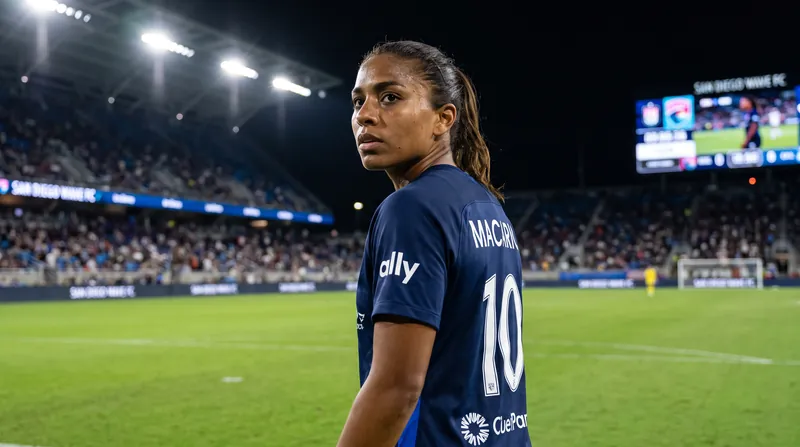
San Diego Wave Place Forward Catarina Macario on Season-Ending Injury List
4 sources
Franchise Reset
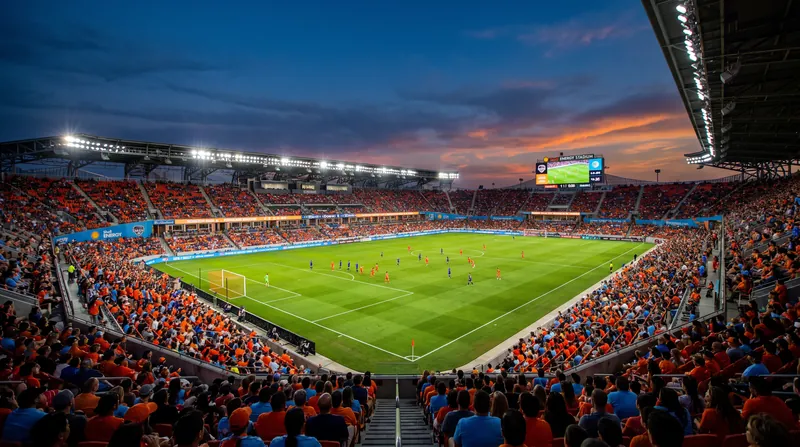
Houston Dash Fire Head Coach Fabrice Gautrat and Technical Director Twila Kilgore Amid Poor Run
5 sources
Football Governance
European Leagues Accuse FIFA of 'Abusive Conduct' Over Women's International Calendar
5 sources

Ballon d'Or
Barbra Banda and Temwa Chawinga Lead NWSL Contingent in Ballon d'Or Féminin Nominations
3 sources

Comments
Every angle. Every day.
Get Sports stories with full source coverage and perspective breakdowns, free every day.