
Mandatory Digital Product Passports: How New EU Rules Are Rewiring the Global Fashion Supply Chain
The European Union is rolling out mandatory Digital Product Passports for all apparel, forcing global fashion brands to replace vague sustainability marketing with auditable, scannable supply chain data.
By Baran Demir

Share this story
In short
- The EU is mandating Digital Product Passports (DPPs) for all apparel sold within its borders.
- Passports will be accessible via QR codes or NFC tags embedded directly into garments.
- Brands must disclose verifiable data on material origins, chemical use, and carbon footprints.
For decades, the fashion industry has relied heavily on storytelling to sell its sustainability efforts. A brand might market a t-shirt as 'eco-friendly' or 'sustainably sourced' based on a single organic cotton certification, while simultaneously obscuring the carbon-intensive dyeing process or the exploitative labor conditions deep within its supply chain. That era of voluntary, fragmented, and often unverifiable claims is rapidly drawing to a close.
As of mid-2026, the European Union is actively laying the technical and regulatory groundwork for a system that will permanently alter how apparel is manufactured, tracked, and sold globally. The mechanism driving this transformation is the Digital Product Passport (DPP), a mandatory digital identity that will soon be attached to every garment entering the European market.[4][7]
The Digital Product Passport is exactly what its name implies: a comprehensive, scannable dossier that travels with a physical product throughout its entire lifecycle. Embedded in a garment via a QR code, NFC tag, or RFID chip, the passport serves as a digital twin.
When scanned by a consumer, a customs official, or a textile recycler, the interface reveals a standardized, machine-readable breakdown of the item's history. This includes its precise material composition, the country of origin for its raw fibers, the chemical compliance of its dyes, its overall carbon and water footprint, and specific instructions for repair and end-of-life recycling.[1][4]
This sweeping transparency mandate is born from the EU's Ecodesign for Sustainable Products Regulation (ESPR), a cornerstone of the European Green Deal that officially entered into force in July 2024. While the ESPR applies to nearly all physical goods sold in the EU, textiles and apparel have been singled out as a top-priority product group in the Commission's 2025–2030 working plan.
The urgency is driven by stark environmental realities: the global fashion industry is currently responsible for an estimated 10 percent of global carbon emissions and generates a staggering 92 million tons of textile waste annually.[6][7]
Furthermore, clothing consumption is projected to jump by 63 percent by 2030, threatening to overwhelm global waste management systems and planetary climate targets. European regulators recognized that without a standardized, data-driven intervention, the industry's ecological footprint would continue to expand unchecked. By mandating the DPP, the EU aims to shift the industry from a linear 'take-make-dispose' model to a circular economy, where products are designed from the outset for durability, reuse, and high-quality recycling.[1][6]
What makes the Digital Product Passport revolutionary is not just the technology, but the regulatory teeth behind it. Unlike traditional environmental, social, and governance (ESG) reporting, which often lives in annual corporate reports and voluntary disclosures, the DPP is directly linked to market-access requirements.
In practical terms, once the enforcement period begins, a product without a compliant, verified digital passport simply cannot be legally sold or cleared through customs in the European Union. This elevates supply chain transparency from a soft marketing commitment to a hard, non-negotiable legal barrier to entry.[3][5]
The implications of this market-access rule extend far beyond Europe's borders. Because approximately two-thirds of all apparel sold in the EU is imported from outside the bloc, the DPP effectively functions as a global regulatory mechanism.
A factory in Bangladesh, a cotton farm in India, and a corporate headquarters in New York will all need to adapt to European data standards if they wish to retain access to one of the world's largest and most lucrative consumer markets. The regulation forces a global harmonization of supply chain data, compelling brands worldwide to overhaul their tracking systems.[6][7]
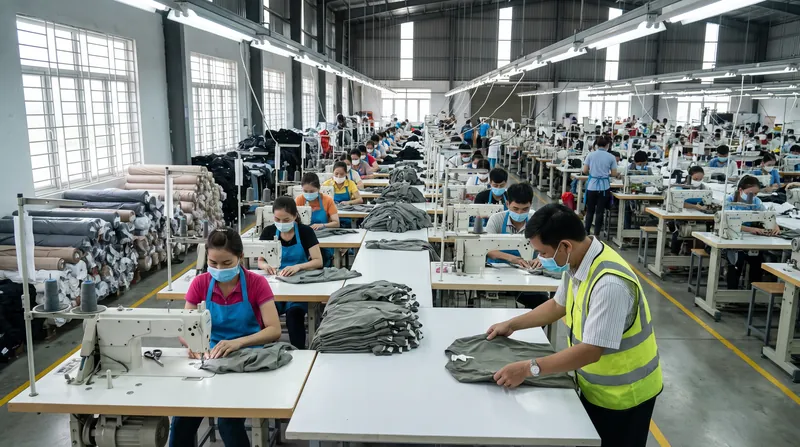
For fashion brands, preparing for the DPP is proving to be a monumental logistical challenge. The modern apparel supply chain is notoriously opaque and fragmented. A single jacket might feature zippers from China, wool from Australia, lining from Vietnam, and final assembly in Turkey.
Historically, brands have only had direct visibility into their Tier 1 suppliers—the factories that cut and sew the final garment. The DPP requires brands to map their networks down to Tier 4, capturing verifiable data from the raw material extractors and yarn spinners that have traditionally operated in the shadows.[4][5]
To meet these requirements, companies are currently racing to audit their product data, engage their deeper supplier networks, and invest in specialized Product Relationship Management platforms. The technological hurdle is less about creating the QR codes and more about ensuring the underlying data is accurate, standardized, and interoperable across different software systems. Brands must ensure that a fabric mill's environmental data can seamlessly flow into the brand's central database and ultimately into the consumer-facing passport without losing fidelity or risking regulatory non-compliance.[4][7]
The timeline for this transition is aggressive but structured. Following the ESPR's adoption in 2024, the European Commission is currently finalizing the technical infrastructure, including a central EU registry of product identifiers planned for launch in June 2026. The specific delegated acts detailing the exact data requirements for textiles are expected to be formally adopted by late 2026 or 2027. Once these acts are published, fashion brands will typically have an 18-month transition period, meaning mandatory enforcement at European borders is widely anticipated to begin around 2028.[3][4]
Despite the clear trajectory, significant uncertainties remain as the industry navigates this transition. One major point of contention is the balance between transparency and corporate confidentiality. Brands are seeking clarity on how to disclose their supply chain networks to regulators without exposing proprietary manufacturing partnerships and trade secrets to their competitors. The technical design of the DPP will likely feature tiered access, where consumers see a simplified environmental summary, while customs authorities and auditors can access the granular, sensitive data.[1][7]
Another pressing concern is the financial and administrative burden on small and medium-sized enterprises (SMEs). While massive luxury conglomerates and fast-fashion giants have the capital to invest in sophisticated blockchain tracing and lifecycle assessment software, smaller independent labels fear they may be priced out of the EU market by the sheer cost of compliance. Regulators are under pressure to provide support frameworks and open-source tools to ensure the DPP does not inadvertently crush independent designers.[1][3]
Beyond compliance, forward-thinking brands are beginning to view the Digital Product Passport not as a regulatory burden, but as a strategic asset. By digitizing every garment, brands unlock new avenues for customer engagement and post-sale revenue. A scanned passport can authenticate a luxury handbag, instantly increasing its resale value on the secondhand market. It can also provide consumers with localized repair services, fostering brand loyalty and extending the product's lifespan in alignment with circular economy principles.[4][5]
The implementation of the DPP also signals the definitive end of greenwashing. With the concurrent rollout of the EU's Green Claims Directive, companies will no longer be able to use vague terms like 'eco-friendly' without backing them up with the hard, third-party-verified data housed within the product's passport. This shift promises to level the playing field, rewarding brands that have genuinely invested in sustainable practices while exposing those that have relied on superficial marketing.[2][5]
Ultimately, the Digital Product Passport represents a fundamental rewiring of how value is constructed in the fashion industry. A garment is no longer just a physical arrangement of textiles; it is an information-rich asset whose credibility hinges on its digital twin. As the 2028 enforcement horizon approaches, the fashion industry is being forced to confront what it produces, how it is made, and what happens when it is discarded, ushering in an era where transparency is the ultimate prerequisite for trade.[4][7]
Definitions
- Digital Product Passport (DPP)
- A mandatory digital dossier attached to a physical product that tracks its materials, environmental impact, and supply chain history.
- Ecodesign for Sustainable Products Regulation (ESPR)
- The overarching European Union law that mandates digital passports and sets minimum sustainability standards for physical goods.
- Circular Economy
- An economic model designed to minimize waste by ensuring products are built to be repaired, reused, and fully recycled rather than thrown away.
- Tier 1 to Tier 4 Suppliers
- The different levels of a supply chain, ranging from the factory that sews the final garment (Tier 1) down to the farms or chemical plants producing the raw materials (Tier 4).
- Greenwashing
- The deceptive practice of marketing a product or company as environmentally friendly without verifiable data to support the claims.
Questions & answers
What exactly is a Digital Product Passport?
It is a digital record, accessible via a QR code or NFC tag on a product, that contains verified data about the item's materials, origin, environmental footprint, and recycling instructions.
When will fashion brands be forced to use them?
While the overarching regulation entered into force in 2024, the specific rules for textiles are expected to be finalized by 2027, making the passports mandatory for EU market access around 2028.
Does this apply to clothing brands outside of Europe?
Yes. Any brand that wishes to sell its products within the European Union must comply with the passport requirements, meaning it will impact global supply chains from the US to Asia.
Will consumers be able to see all of a brand's secrets?
No. The passport system is expected to have tiered access. Consumers will see a simplified sustainability summary, while sensitive supply chain data will only be accessible to regulators and auditors.
Analysis by camp
EU Regulators' View
Policymakers view the DPP as a necessary market barrier to enforce planetary boundaries.
For European regulators, the era of voluntary corporate sustainability has failed to curb the fashion industry's accelerating waste crisis. They argue that the only way to transition to a circular economy is to make comprehensive environmental data a hard prerequisite for market access. By tying the Digital Product Passport to customs clearance, regulators aim to force a global harmonization of standards, ensuring that any brand wishing to sell to European consumers must internalize the environmental costs of their supply chains.
Fashion Brands' View
Manufacturers and brands are focused on the immense logistical and financial hurdles of compliance.
While many brands publicly support the push for transparency, internally, they are grappling with the sheer scale of the data-gathering mandate. Industry leaders point out that mapping a supply chain down to Tier 4—raw material extractors and yarn spinners—requires unprecedented cooperation across international borders. They express concern over the technological costs of implementing interoperable data systems and the risk of exposing proprietary trade secrets and supplier relationships to competitors through the mandated disclosures.
Sustainability Advocates' View
Environmental watchdogs see the DPP as the ultimate weapon against industry greenwashing.
For years, sustainability advocates have criticized the fashion industry for relying on fragmented, self-reported certifications that obscure the true ecological cost of garment production. They champion the Digital Product Passport because it replaces vague marketing terms like 'eco-friendly' with standardized, machine-readable data. Advocates argue that by giving consumers, recyclers, and auditors direct access to a product's carbon footprint and chemical makeup, the DPP will finally allow the market to financially reward genuinely sustainable practices while penalizing polluters.
- EU Regulators and Policymakers
- Argue that mandatory, standardized data is the only way to curb the fashion industry's massive environmental footprint and enforce a circular economy.
- Global Fashion Brands
- Acknowledge the necessity of transparency but emphasize the immense logistical challenge and cost of mapping complex, multi-tiered global supply chains.
- Sustainability Advocates
- View the passport as a vital tool to permanently end corporate greenwashing by forcing brands to back up their marketing claims with auditable data.
Perspectives this story doesn't cover
- Independent designers facing compliance costs
- Textile workers in developing nations
Sources
Source coverage
7 outlets
3 viewpoints surfaced







- [1]European Parliament SecretariatEU Regulators and Policymakers
A European digital product passport (DPP) could enhance textile industry traceability
- [2]SGSSustainability Advocates
The textile and apparel industry is on the cusp of transformation
- [3]KinstellarEU Regulators and Policymakers
DPPs as a new regulatory standard for fashion
- [4]CarbonfactGlobal Fashion Brands
Overview: Digital Product Passport for Textiles
- [5]TraceX TechGlobal Fashion Brands
DPPs Will Redefine Textile Market Access
- [6]FluxySustainability Advocates
The digital product passport EU legislation comes at a pivotal time
- [7]Factlen Editorial TeamSustainability Advocates
Synthesis by Factlen editorial team
Read on Factlen Editorial Team →

More in Lifestyle
See all →Supply Chain
US-China Tariffs Force 'Great Supply Chain Reset,' Redrawing Global Apparel Map
8 sources
Counterfeit Economy
LVMH Wins Landmark £213K Counterfeiting Suit Against Influencer Selling Fake Designer Goods
4 sources

Circular Fashion
Luxury Resale Outpaces Primary Sales 3-to-1, Prompting Brands to Launch In-House 'Pre-Loved' Platforms
8 sources

Luxury Retail
Luxury Market Normalizes as Kering Profits Drop 50% Amid Shift to 'Quiet Luxury'
8 sources

Comments
Every angle. Every day.
Get Lifestyle stories with full source coverage and perspective breakdowns, free every day.