
M20 EHF EURO 2026 Standings: Germany and Spain Set the Pace as the Race for the Main Round Intensifies
As the preliminary round unfolds in Romania, Europe's top under-20 handball teams are navigating a high-stakes group stage to secure Main Round berths and tickets to the 2027 World Championship.
By Omar Haddad

Share this story
The Men's 20 EHF EURO 2026 has officially thrown off in the Romanian cities of Cluj-Napoca and Turda, instantly plunging 24 of the continent's premier youth teams into a high-stakes race for the Main Round. With the tournament expanded to two dozen nations for the second consecutive edition, the preliminary group stage offers virtually zero margin for error. Only the top two teams from each of the six groups will survive the initial cut to advance to the Main Round, transforming every opening match into a high-pressure elimination scenario.
Beyond the immediate pursuit of the European trophy, the standings carry massive global implications: the top 15 teams at the conclusion of the tournament will automatically punch their tickets to the 2027 IHF Men's Junior World Championship. This dual-layered incentive structure has injected a palpable intensity into the opening days of competition, as traditional powerhouses and emerging programs alike scramble to secure their footing in the continental hierarchy.[1][2]
The focal point of the early standings is undeniably Group A, widely dubbed the "Group of Death" by analysts and coaches alike. Reigning 2025 U19 World Champions Germany find themselves navigating a treacherous gauntlet against 2024 M20 runners-up Portugal, a historically dominant French squad, and a resilient Greek side. Germany has relied on their deep, physically imposing roster to set an early tone, but both France and Portugal possess the tactical pedigree to exploit any defensive lapses.
The race in Group A is rapidly evolving into a three-way bottleneck, where goal differential and head-to-head tiebreakers are highly likely to dictate which two nations escape to the Main Round. For France, who finished a disappointing 10th in the previous edition, the opening matches represent a critical opportunity to reassert their status among Europe's elite, while Portugal aims to prove that their recent string of silver medals is the prelude to a championship breakthrough.[1][3][5][7]
In Group C, defending M20 champions Spain have quickly validated their status as tournament favorites, methodically dismantling their early opposition to take control of the standings. Spearheaded by the sensational Marcos Fis Ballester—who captured MVP honors at the 2025 U19 World Championship in Egypt—the Spanish side operates with a level of technical precision that few age-group teams can match. Their fluid ball movement and suffocating defensive transitions have put them firmly in the driver's seat ahead of Iceland, Austria, and Latvia.
While Iceland's current generation narrowly missed the podium at the M18 level in 2024, they are finding it difficult to disrupt Spain's rhythmic attacking sequences. If Spain maintains their current trajectory and secures the top spot in Group C, they will enter the Main Round with maximum carry-over points, positioning themselves perfectly to pursue a record-breaking fifth M20 EHF EURO title.[1][2][4]
Group D features a brutal clash of handball philosophies, with Denmark—bronze medalists at the 2025 U19 World Championship—headlining a volatile bracket that includes Norway, Croatia, and North Macedonia. The Danish squad's fast-paced, transition-heavy attacking system is being severely tested by the physical, defensive-minded approaches of their Nordic and Balkan rivals. Denmark last raised the M20 trophy in 2010, and their current crop of talent is under immense pressure to end that drought.
However, Croatia's aggressive 5-1 defensive schemes and Norway's disciplined positional play have turned Group D into an unpredictable slugfest. The standings here are expected to remain fluid until the final whistle of the preliminary round, as all four teams possess the tactical acumen to steal points from one another. For North Macedonia, surviving this group would mark a monumental achievement, while anything less than a Main Round berth would be viewed as a catastrophic failure for the Danes.[1][6][8]
Meanwhile, the race in Group F is being defined by individual brilliance, largely courtesy of Slovenia's prodigious left back, Aljuš Anžic. The 18-year-old phenom, who led all scorers at the 2025 U19 World Championship, is powering Slovenia's bid to top a highly balanced group featuring Hungary, Czechia, and Poland. Anžic's ability to score from nine meters and create space for his line players has made Slovenia one of the most entertaining teams to watch in Cluj-Napoca.
Hungary, fresh off a stellar summer across all Younger Age Category events, presents the stiffest challenge to Slovenia's supremacy. The Hungarians are determined to erase the memory of their 12th-place finish at the 2024 M20 EHF EURO, and their disciplined 6-0 defense is specifically tailored to neutralize isolation scorers like Anžic. The winner of their head-to-head matchup will likely secure the group's top seed, ensuring a smoother path through the grueling Main Round.[2][8]
The host nation, Romania, finds itself locked in a fiercely competitive race in Group E. Playing in front of passionate, vocal home crowds, the Romanians are battling Sweden, Israel, and Bosnia Herzegovina for survival. Sweden's traditional defensive solidity and elite goalkeeping make them the heavy favorites to win the group, leaving Romania to fight a multi-front war for the crucial second spot.
The home-court advantage has undeniably energized the Romanian squad, transforming their matches into raucous, high-decibel affairs that test the nerves of their opponents. However, Israel and Bosnia Herzegovina have both demonstrated a willingness to embrace the role of spoiler, utilizing methodical, clock-draining offensive possessions to frustrate the hosts. For Romania, advancing to the Main Round on home soil would not only galvanize the local fanbase but also guarantee their participation in the 2027 World Championship—a vital milestone for the nation's long-term handball development.[1][2]
Group B presents a fascinating tactical puzzle, with Serbia, Switzerland, the Faroe Islands, and Türkiye vying for advancement. The Faroe Islands continue to be the most captivating story in international youth handball, consistently punching far above their demographic weight. Their lightning-fast, highly technical style of play—honed in a nation of just 54,000 people—has disrupted the traditional power dynamics of the group.
Switzerland, who previously edged the Faroese in the 2024 placement matches, represents a significant hurdle, while Serbia is desperate to reclaim the form that earned them a bronze medal in 2022. As the standings tighten, the Faroe Islands are proving that their recent youth handball renaissance is a sustainable, structural trend rather than a fleeting anomaly, making Group B one of the most closely monitored races of the preliminary round.[1][3]
As the preliminary round concludes this week, the pressure across all six groups will only amplify. Teams that fail to secure a top-two finish will be relegated to the placement matches, where the fight for the remaining 2027 World Championship tickets will devolve into a desperate, high-stakes scramble. For the surging favorites like Spain, Germany, and Sweden, the opening matches have largely validated their championship aspirations and tactical preparations.
For the rest of the field, the next 48 hours will dictate whether their summer in Romania culminates in a prestigious Main Round campaign or a bitter fight for global qualification. The European handball hierarchy is actively being rewritten on the courts of Cluj-Napoca and Turda, setting the stage for a dramatic and unpredictable knockout phase.[1][2][8]
Once the dust settles on the preliminary stage, the 12 surviving teams will carry their head-to-head points into the Main Round, where they will be divided into two groups of six. This format heavily penalizes any early slip-ups, as dropping a single point in the preliminary phase can mathematically eliminate a team from semifinal contention before the Main Round even begins.
Coaches are acutely aware of this unforgiving arithmetic, forcing them to balance player rotation and fatigue management against the absolute necessity of winning every group stage fixture. As the M20 EHF EURO 2026 transitions into its next phase, the physical endurance and psychological resilience of these young athletes will be tested just as rigorously as their tactical execution, ensuring that only the most complete teams will ultimately vie for the trophy on July 19.[1][2]
Key points
- The Men's 20 EHF EURO 2026 preliminary round is underway in Romania, featuring 24 nations competing for 12 Main Round spots.
- Group A has emerged as the tournament's 'Group of Death,' featuring a tight race between Germany, Portugal, and France.
- Defending champions Spain have asserted early dominance in Group C, led by 2025 U19 World Championship MVP Marcos Fis Ballester.
- Beyond the European title, the top 15 teams will secure qualification for the 2027 IHF Men's Junior World Championship.
How we got here
February 2026
The European Handball Federation conducts the group stage draw in Vienna, setting the 24-team field.
July 8, 2026
The M20 EHF EURO 2026 officially throws off in Cluj-Napoca and Turda, Romania.
July 11, 2026
The preliminary round concludes, finalizing the 12 teams advancing to the Main Round.
- Tournament Favorites
- Established powerhouses view the preliminary round as a necessary hurdle to build momentum and secure maximum carry-over points.
- Emerging Programs
- Nations like the Faroe Islands and Greece see the group stage as an opportunity to disrupt the traditional hierarchy and secure vital World Championship qualification.
- Nordic & Balkan Contenders
- Teams from traditional handball hotbeds focus on surviving grueling, physical group matchups to keep their medal hopes alive.
Perspectives this story doesn't cover
- Club managers monitoring player fatigue and injury risks
- Scouts evaluating under-20 talent for senior national team call-ups
Sources
Source coverage
8 outlets
3 viewpoints surfaced








- [1]European Handball FederationEmerging Programs
Rising stars prepare for M20 EHF EURO 2026 showdown in Romania
Read on European Handball Federation → - [2]International Handball FederationNordic & Balkan Contenders
Top European talents gather in Romania for M20 EHF EURO 2026
Read on International Handball Federation → - [3]Handball PlanetEmerging Programs
M20 EHF EURO 2026: Group Stage Battles Heat Up in Cluj-Napoca
- [4]MarcaTournament Favorites
España arranca con fuerza la defensa de su corona en el Europeo Sub-20
- [5]KickerTournament Favorites
U20-EM: Deutsche Junioren bestehen erste Tests in der Todesgruppe
Read on Kicker → - [6]TV2 SportNordic & Balkan Contenders
Dansk U20-landshold i tæt kamp om overlevelse ved EM
- [7]L'EquipeTournament Favorites
Euro U20: Les Bleuets face à un défi majuscule dans le groupe A
- [8]Balkan HandballNordic & Balkan Contenders
M20 EHF EURO: Balkanski derbiji kroje put ka Glavnoj rundi
More in Sports
See all →Standings
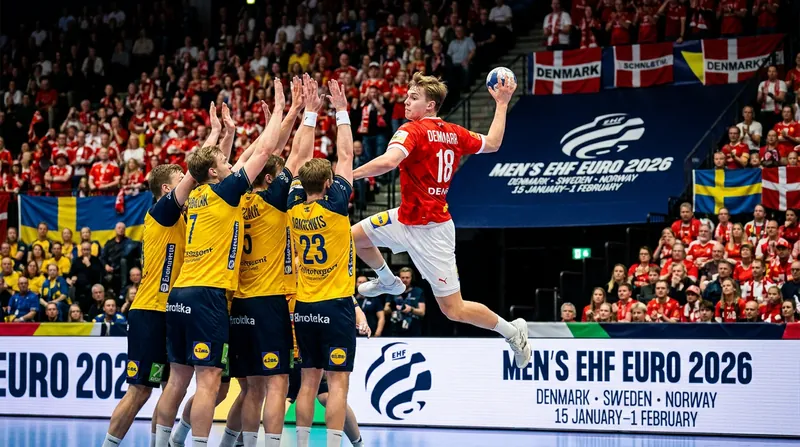
European Handball Hierarchy on the Line as 24 Nations Converge for Men's 20 EHF EURO 2026
5 sources
Standings
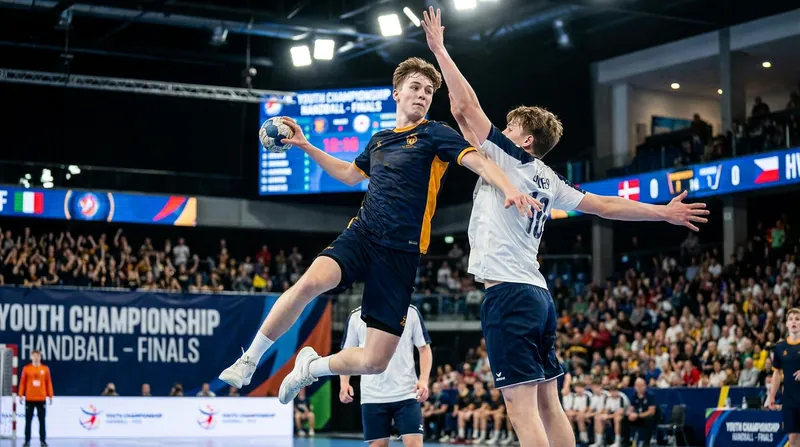
Four Teams Remain in Title Race as Men's 18 EHF EURO 2026 Semi-Finals Are Set
7 sources
Injury
Global Handball Injury Desk: Simić’s Triumphant Return and Gilme’s Non-Surgical Comeback Highlight a Summer of Resilience
6 sources
Standings
Las Vegas Mega Event Standings: Füchse Berlin and Győri ETO Surge in Race for Inaugural US Crown
3 sources
Comments
Every angle. Every day.
Get Sports stories with full source coverage and perspective breakdowns, free every day.