
ISU Congress Unveils Major Safety Reforms and Global Expansion for Short Track Speed Skating
Following the 60th ISU Congress, short track speed skating is introducing groundbreaking concussion research and a unified 2028 mega-event to elevate the sport. The reforms aim to balance the discipline's high-speed thrills with unprecedented investments in athlete welfare and prize money.
By Omar Haddad
Share this story
The 60th Ordinary ISU Congress in Tenerife, Spain, concluded this week, setting a transformative agenda for short track speed skating. Coming off the heels of the highly successful Milano Cortina 2026 Winter Olympics, the sport is navigating a critical juncture between rapid global expansion and the urgent need for enhanced athlete safety.[1]
Short track speed skating is inherently chaotic. Athletes race in tight packs on a 111-meter oval, reaching speeds of up to 50 kilometers per hour. Unlike traditional long track speed skating where competitors race against the clock in separate lanes, short track is a tactical battle of drafting, blocking, and high-speed overtakes.[2]
Because of these dynamics, collisions are not just a possibility—they are a statistical certainty. When a skater loses an edge or gets clipped during a tight corner, the resulting crash often sends multiple athletes sliding into the padded boards at highway speeds.[3]
For decades, the sport has mitigated these risks primarily through cut-resistant suits designed to prevent blade injuries. However, the ISU Medical Commission has now pivoted its focus to a more insidious threat: traumatic brain injuries and concussions.
At the Tenerife congress, Medical Commission Chair Dr. Jane Moran announced a landmark collaboration with the Podium Institute at the University of Oxford. The initiative will conduct a comprehensive study of head impacts specifically in short track speed skating, utilizing advanced sensor technology and biomechanical modeling.
The mechanics of a short track crash present unique challenges for helmet design. When a skater falls, their head can strike the solid ice, another competitor's knee, or the perimeter padding. Furthermore, the rotational forces generated when a sliding body abruptly decelerates against the boards can cause severe whiplash, leading to concussions even without direct head trauma.[3]
Current short track helmets are primarily designed to prevent skull fractures from blunt force and blade strikes. The Oxford study aims to gather empirical data on the exact G-forces and rotational vectors experienced during elite-level crashes. This data will inform the next generation of helmet safety standards, potentially introducing multi-directional impact protection systems (MIPS) tailored specifically for the ice.[3]
Beyond physical safety, the ISU is also addressing the psychological toll of elite competition. The congress reported the successful implementation of "Calm Zones" at 14 ISU events during the 2025/26 season, which saw over 1,000 athlete visits. A new Mental Health Action Plan for event organizers was also ratified, signaling a holistic approach to athlete welfare.
While safety protocols are being overhauled, the sport is simultaneously executing an aggressive growth strategy. The most ambitious announcement from the congress was the unveiling of "BEIJING28."[1]
Scheduled for 2028, BEIJING28 will be a mega-event that brings together the World Championships for short track, speed skating, figure skating, and synchronized skating into a single host city for the first time in the organization's history.[1]
ISU President Jae Youl Kim described the initiative as a "bold vision for the future of skating," designed to maximize broadcast value and fan engagement. By consolidating the disciplines, the ISU hopes to create a festival atmosphere akin to the Olympics, drawing larger global audiences and lucrative sponsorship deals.[1]
To support this expansion, the ISU is injecting unprecedented capital into the sport. Thanks to a revised investment strategy that grew the organization's portfolio to $348 million, prize money across skating disciplines will more than double by the 2027/28 season, reaching $12 million. Travel contributions for athletes and national federations are also set to nearly double.[1]
For short track specifically, the ISU Short Track World Tour is slated for continued expansion. The tour format, which emphasizes cumulative points and a "Crystal Globe" trophy, has proven highly successful in maintaining fan interest between Olympic cycles.
Governance of these new initiatives will fall to the newly elected Short Track Technical Committee. Wim de Deyne of Belgium was elected as the new chairperson, serving alongside members from South Korea, Germany, and Canada.
The new committee faces the immediate task of refining competition formats. While the core distances of 500m, 1000m, and 1500m remain untouched, the ISU is heavily promoting the Mixed Team Relay. This 2,000-meter event is designed to create more participation opportunities for smaller skating nations that might struggle to field full four-person single-gender relay teams.[2]
Officiating transparency is another major focus for the new committee. Short track is notorious for controversial disqualifications, as referees must make split-second decisions on whether contact was incidental or an intentional block. The ISU is investing in enhanced video review systems and standardized referee training programs to ensure consistency across the World Tour.[3]
The combination of these reforms—cutting-edge safety research, massive financial investment, and streamlined governance—paints a picture of a sport rapidly maturing on the global stage.[3]
As short track speed skating looks toward the 2030 French Alps Winter Olympics, the decisions made in Tenerife will serve as the foundation. The ultimate goal is to preserve the high-octane, unpredictable racing that fans love, while ensuring the athletes who provide that thrill are protected by the best science and support systems available.[3]
Key points
- The ISU has partnered with Oxford University to study head impacts and rotational forces in short track crashes.
- A new mega-event, BEIJING28, will combine all four ice skating World Championships into a single host city for the first time.
- Total ISU prize money across skating disciplines is set to more than double to $12 million by the 2027/28 season.
- The newly elected Short Track Technical Committee is prioritizing refereeing transparency and the expansion of the Mixed Team Relay.
- "Calm Zones" and mental health protocols are being standardized across the ISU World Tour to support athlete well-being.
How we got here
Feb 2026
The Milano Cortina Winter Olympics concludes, with 17 countries winning skating medals.
Apr 2026
The ISU investment portfolio reaches $348 million, enabling future prize money increases.
Jun 2026
The 60th ISU Congress convenes in Tenerife, Spain, to elect new leadership and approve rule changes.
2027/28 Season
ISU prize money is scheduled to double to a historic $12 million across disciplines.
2028
Beijing will host the first-ever combined World Championships for all four skating disciplines.
- Sport Growth Strategists
- Focusing on maximizing broadcast value, fan engagement, and commercial revenue.
- Athlete Safety Advocates
- Prioritizing long-term neurological health and mental well-being over traditional equipment norms.
- Technical Officials
- Dedicated to preserving the tactical integrity and fairness of the racing format.
Perspectives this story doesn't cover
- Helmet Manufacturers
- Grassroots Skating Clubs
Sources
Source coverage
3 outlets
3 viewpoints surfaced



- [1]Inside The GamesSport Growth Strategists
ISU launches BEIJING28 and approves historic prize money increase
Read on Inside The Games → - [2]Olympics.comTechnical Officials
Short track speed skating at Milano Cortina 2026 Winter Olympics
Read on Olympics.com → - [3]Factlen Editorial TeamTechnical Officials
Synthesis by Factlen editorial team
Read on Factlen Editorial Team →
More in Sports
See all →UCI World Championships
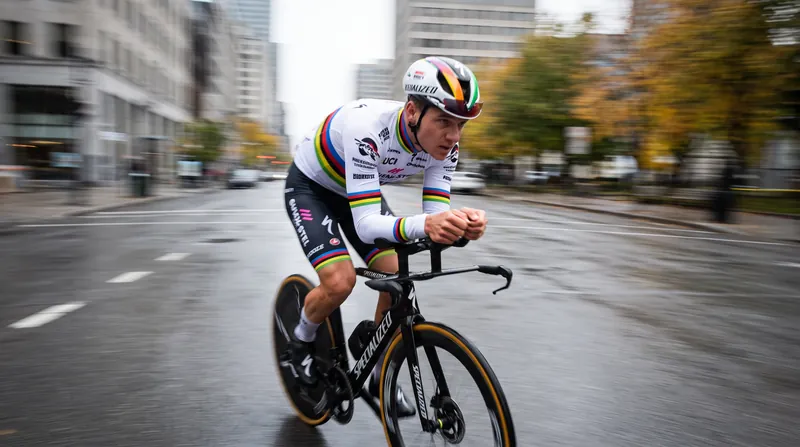
Remco Evenepoel Claims Historic Fourth Consecutive Time Trial World Title in Montréal
6 sources
Scoring Mathematics
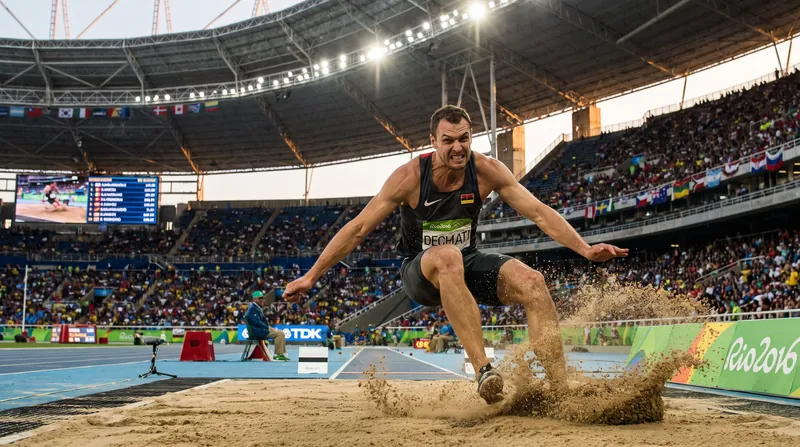
The Three-Formula System and the Base Performance Values: How Decathlon and Heptathlon Scores are Calculated
5 sources
Anti-Doping Rules
The 60-Minute Window and Three-Strike Rule: How WADA's 'Whereabouts' System Actually Works
4 sources
Anti-Doping Law
Strict Liability: Why the WADA Code Holds Athletes Responsible for Prohibited Substances Regardless of Intent
6 sources
Comments
Every angle. Every day.
Get Sports stories with full source coverage and perspective breakdowns, free every day.