
IOC Approves Universal $10,000 Grant for All Olympians, Overhauls Charter
The International Olympic Committee has broken with a 130-year amateur tradition, establishing a $140 million fund to pay every eligible Olympian a $10,000 grant starting with the 2026 Milano Cortina Games.
By Ryder James
Share this story
For 130 years, the fundamental economic premise of the Olympic Games was that athletes competed for glory, not for direct compensation from the organizers. That era officially ended on Wednesday in Lausanne, Switzerland, when the International Olympic Committee announced a sweeping new financial model that will pay a $10,000 grant to every eligible competitor.
Unveiled during the 146th IOC Session, the "Fit for the Future Olympian Grant" represents a seismic shift in how the organization distributes its multi-billion-dollar revenues. The IOC has earmarked a $140 million fund for each four-year Olympic cycle, ensuring that approximately 14,000 athletes across the Summer and Winter Games will receive direct financial support.[2]
The program is retroactive, meaning the first wave of payments will go to the roughly 2,900 athletes who competed at the Milano Cortina 2026 Winter Games earlier this year. Applications for that cohort will open in late 2026, with the first $10,000 transfers scheduled to arrive in athletes' bank accounts in 2027.[1][2]
The mechanics of the grant are designed to be universally accessible but strictly regulated. To qualify, an athlete must hold an "Aa accreditation" and actually compete in the Games. The money will not flow directly from Lausanne to the athletes; instead, the IOC will disburse the funds to National Olympic Committees (NOCs), which are then mandated to prove the money was successfully transferred to the individuals.[1]
However, the IOC has attached rigid integrity clauses to the cash. Any athlete who commits an anti-doping rule violation, breaches the IOC Code of Ethics, or violates the Olympic Charter will be permanently disqualified from receiving the grant. Additionally, competitors at the Youth Olympic Games are excluded from the program.
IOC leadership has been careful to frame the initiative as career support rather than a performance bonus. Pau Gasol, the former NBA star and current chair of the IOC Athletes' Commission, stressed that the money is "not prize money." Instead, it is intended to help athletes fund their ongoing training or manage the notoriously difficult financial transition into a post-sports career.
"This grant will be available to every Olympian. Not just medal winners. Not just athletes from certain countries," Gasol told reporters. "Because while every athlete's journey is different, every Olympian has made sacrifices to reach the Olympic stage. Years of dedication. Years of hard work. Years of believing in a dream."
The distinction between a "grant" and "prize money" is highly intentional. The IOC has faced mounting pressure to share its massive commercial revenues—which totaled $7.7 billion between 2021 and 2024—directly with the athletes who generate the spectacle. This pressure reached a boiling point ahead of the 2024 Paris Olympics when World Athletics unilaterally announced it would pay $50,000 to track and field gold medalists, a move that frustrated IOC traditionalists.[2]
Kirsty Coventry, the five-time Olympian who took over as IOC President last year, has consistently opposed a pure prize-money model, arguing it disproportionately rewards a tiny fraction of competitors. The universal grant is the signature compromise of her "Fit for the Future" strategic framework, ensuring that the athlete who finishes last in the marathon receives the exact same financial recognition as the gold medalist.[2]
The universality of the program means that highly paid professional athletes, including NBA superstars and Grand Slam tennis champions, are technically eligible to claim the $10,000. Gasol acknowledged this dynamic, suggesting that wealthy professionals might choose to accept the grant and redirect it to fund developmental programs or support struggling athletes in their home countries.
Crucially, the $140 million fund is being drawn entirely from the IOC's own Olympic Foundation. Coventry assured national federations that the new grants will not cannibalize the existing financial distributions that keep many smaller sports bodies afloat.
The grant is designed to complement, rather than replace, the IOC's "Olympic Solidarity" program. That existing initiative, which boasts a $650 million budget for the current cycle, directs funding to athletes and coaches from less-wealthy nations to help them qualify for the Games. The new $10,000 grant acts as a guaranteed baseline on top of any Solidarity funding an athlete might receive.[2]
If an athlete chooses not to apply for the grant, their $10,000 allocation will remain in the central fund to support future generations of Olympians. This opt-in mechanism ensures that the IOC only pays athletes who actively seek the support, while preserving capital for the long term.
While the announcement has been widely praised as a historic breakthrough, some athlete advocates note the limitations of the figure. In the context of elite sports, $10,000 may only cover a few months of specialized coaching, travel, and equipment expenses. Yet, as a precedent, the move shatters a century-old barrier, officially establishing the principle that simply stepping onto the Olympic stage entitles an athlete to a share of the Olympic wealth.[1]
The Lausanne session also saw the IOC approve several broader amendments to the Olympic Charter, streamlining the process for evaluating potential host cities and codifying new protections for various sporting categories. But the financial overhaul remains the defining legacy of the gathering, setting a new economic baseline as the Olympic movement looks ahead to the 2028 Los Angeles Games, where roughly 11,000 athletes will be waiting to claim their share.[2]
The essentials
- The IOC will pay a $10,000 grant to every eligible Olympian, starting retroactively with the 2026 Milano Cortina Winter Games.
- The $140 million fund covers approximately 14,000 athletes per four-year Olympic cycle.
- The money is framed as a "career transition" grant, not prize money, meaning all competitors receive the same amount regardless of placement.
- Athletes who commit doping violations or breach the Olympic Charter are permanently disqualified from the funds.
- The payments will not reduce the IOC's existing $650 million Olympic Solidarity budget for developing nations.
Timeline
1896–2023
The IOC strictly adheres to an amateur ethos, refusing to pay direct prize money or appearance fees to Olympic competitors.
April 2024
World Athletics breaks ranks, announcing it will pay $50,000 to track and field gold medalists at the Paris Olympics.
June 2025
Kirsty Coventry takes over as IOC President, launching the 'Fit for the Future' strategic review to address athlete compensation.
February 2026
The Milano Cortina Winter Games take place; competitors will become the first retroactive recipients of the new grant.
June 24, 2026
The IOC officially approves the $140 million 'Fit for the Future Olympian Grant' at its 146th Session in Lausanne.
Late 2026
The application portal for Milano Cortina athletes is scheduled to open.
2027
The first $10,000 payments are expected to be disbursed to eligible Winter Olympians.
- IOC Leadership
- Views the grant as universal career support that honors the Olympic journey without turning the Games into a purely commercial prize fight.
- Athlete Advocates
- Celebrates the historic precedent of direct payment while noting that the actual dollar amount remains modest relative to the costs of elite training.
- National Olympic Committees
- Relieved that the new direct-to-athlete payments will not cannibalize the institutional funding they rely on to operate.
Perspectives this story doesn't cover
- Tax Authorities in athletes' home countries, who will have to determine how these international grants are classified and taxed.
- Paralympic Athletes, as the International Paralympic Committee (IPC) operates a separate budget and it is unclear if they will match the IOC's $10,000 grant.
Sources
Source coverage
2 outlets
3 viewpoints surfaced


- [1]Swimming World MagazineAthlete Advocates
International Olympic Committee Announces $10,000 Grants for All Future Olympians
Read on Swimming World Magazine → - [2]Al JazeeraIOC Leadership
Olympic athletes to get cash grants from new $100m fund created by IOC
Read on Al Jazeera →
More in Sports
See all →UCI World Championships
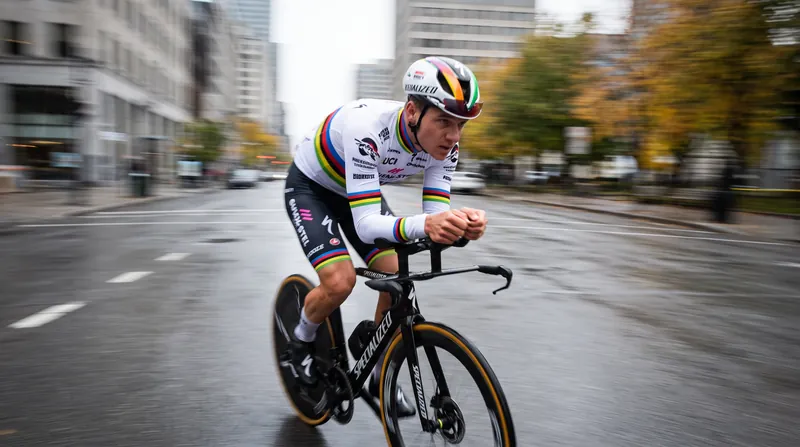
Remco Evenepoel Claims Historic Fourth Consecutive Time Trial World Title in Montréal
6 sources
Scoring Mathematics
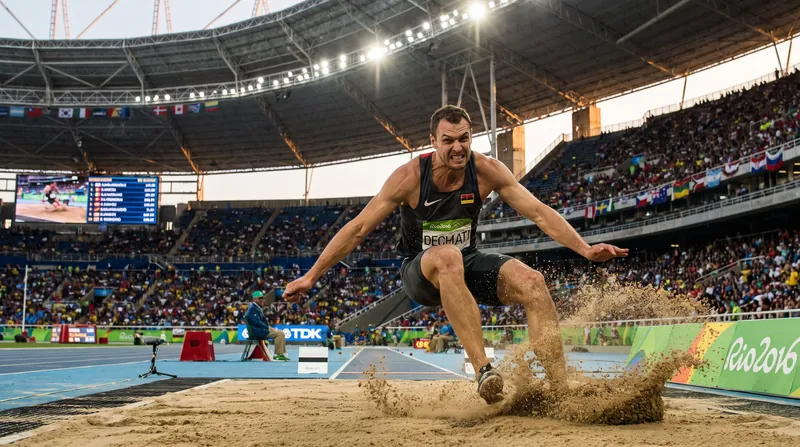
The Three-Formula System and the Base Performance Values: How Decathlon and Heptathlon Scores are Calculated
5 sources
Anti-Doping Rules
The 60-Minute Window and Three-Strike Rule: How WADA's 'Whereabouts' System Actually Works
4 sources

Anti-Doping Law
Strict Liability: Why the WADA Code Holds Athletes Responsible for Prohibited Substances Regardless of Intent
6 sources
Comments
Every angle. Every day.
Get Sports stories with full source coverage and perspective breakdowns, free every day.