
How the U.S. 'Board of Peace' Proposal Rewrites Global Governance
The launch of a new U.S.-led international organization introduces a transactional, donor-driven model of diplomacy that challenges the traditional authority of the United Nations.

Share this story
In short
- The U.S. formally launched the Board of Peace in early 2026, shifting from a Gaza ceasefire mechanism to a permanent global organization.
- The Board operates on a transactional model, requiring member states to commit $1 billion to secure a permanent seat and voting rights.
- The charter designates the U.S. President as Chairman for life, centralizing executive authority and bypassing traditional UN consensus models.
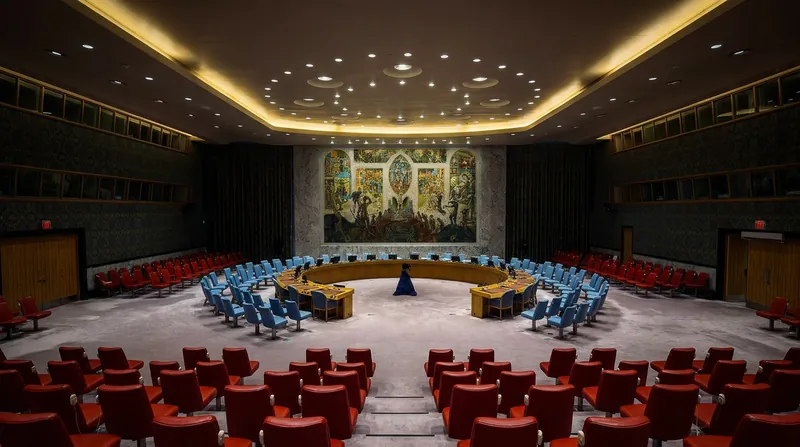
For nearly eighty years, the United Nations has served as the undisputed center of global governance, anchored by a foundational charter that prioritizes universal membership, egalitarian debate, and consensus-building. Throughout the Cold War and the unipolar moment that followed, the UN system remained the primary venue for international diplomacy and conflict resolution. However, in early 2026, that legacy architecture faces its most significant structural challenge since the end of the Second World War, driven by a fundamental shift in United States foreign policy.[1]
At the World Economic Forum in Davos this January, U.S. President Donald Trump formally launched the "Board of Peace," a new international organization explicitly designed to bypass traditional UN gridlock. What began merely months ago as a targeted, temporary mechanism to oversee the Gaza ceasefire has rapidly evolved into a permanent, parallel institution. By leveraging the diplomatic momentum of the Middle East peace process, the architects of the Board have introduced a fundamentally new model for how nations coordinate, fund, and execute global stabilization efforts.[2]
By mid-February, the Board held its highly anticipated inaugural meeting in Washington, D.C., drawing representatives and envoys from over forty countries. The gathering marked the operational debut of a body that explicitly trades the UN's egalitarian framework for a transactional, donor-led model of international diplomacy. As delegates convened at the newly renamed United States Institute of Peace headquarters, the scale of the ambition became clear: this was not just a regional task force, but a blueprint for a new era of international relations.
The Board's genesis lies in the 20-point "Comprehensive Plan to End the Gaza Conflict," brokered by the U.S. administration in late 2025. To manage the immense complexities of post-conflict reconstruction and local governance, the plan called for a dedicated oversight board.
This concept was initially viewed as a standard transitional administration and was formally endorsed by the United Nations Security Council via Resolution 2803 in November 2025, with both Russia and China abstaining from the vote. At the time, international observers largely interpreted the board as a complementary entity that would operate under the broad umbrella of established international law.[2]
However, the official charter signed by founding members in Davos dramatically expanded this initial mandate. Rather than dissolving after the Gaza stabilization mandate expires in 2027, the charter establishes a permanent international body authorized to "promote stability, restore dependable and lawful governance, and secure enduring peace in areas affected or threatened by conflict" on a global scale. This sweeping language effectively positions the Board of Peace as a proactive, standing organization capable of intervening in future geopolitical crises far beyond the borders of the Middle East.[1]
The governance structure of the Board of Peace breaks sharply from United Nations precedent, centralizing authority to an unprecedented degree. The charter designates the U.S. President as the Chairman for life, granting him unilateral authority over the organization's agenda and a definitive veto over all major policy determinations. Unlike the UN Secretary-General, who serves as a chief administrative officer beholden to the Security Council, the Chairman of the Board wields direct executive control, effectively consolidating international peace-building authority within a single executive office.[1][2]
Beneath the Chairman sits a powerful seven-member Executive Board tasked with implementing the organization's mission and managing its day-to-day operations. Initial appointees to this inner circle include high-profile figures from the worlds of finance, real estate, and diplomacy, such as World Bank President Ajay Banga, former British Prime Minister Tony Blair, and U.S. envoys Jared Kushner and Steve Witkoff. This corporate-style leadership structure reflects the Board's underlying philosophy: treating international conflict resolution less as a diplomatic negotiation and more as a large-scale infrastructure and investment project.
The most controversial and defining feature of the new architecture is its tiered, transactional membership system. Unlike the UN General Assembly, where every recognized state holds a seat regardless of its economic output, the Board of Peace operates strictly by invitation only, creating an exclusive club of willing participants. This approach intentionally sidelines less-resourced nations and neutral institutions, favoring a "coalition of the willing" model where participation is contingent upon a nation's alignment with the Board's strategic objectives and its capacity to contribute materially to its missions.
To secure a permanent seat and voting rights on the Board, member states are required to make a minimum financial commitment of $1 billion to the organization's coffers. This explicit "pay-to-play" mechanism aligns geopolitical influence directly with financial contribution, a model proponents argue is necessary to ensure that members have tangible skin in the game. By requiring massive upfront investments, the Board aims to eliminate the perpetual funding shortfalls that plague UN agencies, ensuring that approved stabilization missions have the immediate capital required to execute their mandates.[1]
At the inaugural Washington summit, the financial viability of this transactional model was put to its first major test. The United States pledged $10 billion to the Board's initial efforts, while a coalition of other member states—including Kuwait and the United Arab Emirates—committed an additional $7 billion. These funds are primarily earmarked for the staggering costs of Gaza reconstruction, which the World Bank previously estimated could exceed $70 billion. The rapid mobilization of $17 billion demonstrates the Board's capacity to aggregate capital quickly outside traditional donor frameworks.[2]
The Board's rapid ascent cannot be viewed in isolation from broader, systemic shifts in U.S. foreign policy. In January 2026, just days before the Davos charter signing, the White House issued a sweeping executive order withdrawing the United States from 66 international organizations, including 31 specific UN bodies. This deliberate pivot away from legacy multilateralism creates a vacuum in global governance that the Board of Peace is explicitly designed to fill, forcing other nations to choose between a financially starved UN system and a well-capitalized, U.S.-led alternative.
The international response to the Board has fractured sharply along geopolitical and economic lines. Twenty-seven nations signed the founding charter in Davos, including Turkey, Saudi Arabia, Indonesia, and several Eastern European states such as Hungary, Albania, and Bulgaria. For these governments, the Board offers the promise of streamlined decision-making, direct alignment with U.S. strategic policy, and a prime position to secure lucrative contracts in upcoming global reconstruction efforts. Their participation signals a pragmatic willingness to adapt to the new realities of American diplomatic leverage.[2]
Conversely, traditional U.S. allies in Western Europe and the broader NATO alliance have largely declined their invitations to join the Board. Diplomats and foreign ministries from these nations have expressed deep, structural reservations about the Board's hierarchical nature and its potential to fatally undermine the universalist principles of international law. By centralizing control and bypassing established human rights and justice frameworks—such as the International Criminal Court—critics argue the Board risks normalizing a might-makes-right approach to global governance that prioritizes economic stabilization over legal accountability.
Proponents of the Board counter these criticisms by arguing that the UN's consensus-driven model has effectively institutionalized global crises. They point to decades of gridlock in the UN Security Council, where adversarial vetoes routinely block meaningful intervention in the world's most devastating conflicts. The Board of Peace, they contend, offers a nimble, highly effective alternative, empowering motivated coalitions to execute complex stabilization efforts without being paralyzed by diplomatic grandstanding. In this view, the Board trades theoretical universality for practical, measurable results on the ground.[3]
The immediate and most critical proving ground for this new model is the Gaza Strip. The Board is officially tasked with overseeing the National Committee for the Administration of Gaza (NCAG) and coordinating an International Stabilization Force (ISF) comprising tens of thousands of troops and police drawn from member nations like Morocco, Kazakhstan, and Albania. This massive logistical undertaking requires the Board to transition rapidly from a conceptual framework into a functional governing authority capable of maintaining security, distributing aid, and rebuilding shattered infrastructure.[2]
Executing this mandate remains fraught with immense logistical, political, and security hurdles. While the initial phases of the ceasefire have largely held, the Board must now navigate the incredibly complex realities of militant disarmament, equitable reconstruction, and the establishment of legitimate, functioning local governance. These are generational challenges that have historically confounded even the most experienced and well-resourced United Nations missions, and the Board's corporate-style leadership will be severely tested by the volatile realities of on-the-ground peacebuilding in the Middle East.[3]
As the Board of Peace begins its formal operations, the global community faces a bifurcated and uncertain future. The emergence of a well-funded, U.S.-led parallel institution forces nations to navigate a fractured diplomatic landscape where the traditional UN system must compete directly with a transactional, results-oriented alternative. Whether the Board ultimately replaces the United Nations or simply operates alongside it as a specialized stabilization tool, its creation marks a definitive end to the post-war consensus, rewriting the rules of global governance for the twenty-first century.[3]
Key terms
- Board of Peace
- A U.S.-led international organization established in 2026 to oversee conflict stabilization and reconstruction through a donor-led model.
- UN Security Council Resolution 2803
- A November 2025 resolution that formally endorsed the creation of an oversight board for the Gaza ceasefire plan.
- Coalition of the Willing
- A diplomatic model where a specific group of nations collaborates on an initiative outside of traditional, universal international organizations.
- National Committee for the Administration of Gaza (NCAG)
- The specific subsidiary body overseen by the Board of Peace tasked with managing local governance and reconstruction in Gaza.
Frequently asked
What is the Board of Peace?
It is a new international organization launched by the U.S. in January 2026, originally designed to oversee the Gaza ceasefire but expanded to address global conflicts.
How does membership in the Board work?
Membership is by invitation only. To secure a permanent seat and voting rights, nations must commit a minimum of $1 billion to the organization.
Who is in charge of the Board?
The charter designates the U.S. President as the Chairman for life, granting him significant authority over the agenda and a veto over major decisions.
How does this affect the United Nations?
While operating parallel to the UN, critics argue the Board is designed to rival and eventually bypass the UN system, especially following the U.S. withdrawal from 31 UN bodies in early 2026.
Viewpoints in depth
Proponents of the Board
Argue that the UN is paralyzed by gridlock and a transactional model ensures accountability.
Supporters emphasize that the UN Security Council's consensus model has institutionalized crisis, allowing adversarial vetoes to block meaningful stabilization efforts. By requiring a $1 billion buy-in, the Board of Peace ensures that member states have tangible financial stakes in the outcomes, shifting global governance from rhetorical debates to a results-oriented "coalition of the willing."
Defenders of the UN System
Warn that the Board undermines universal international law in favor of a pay-to-play hierarchy.
Critics, including many Western European diplomats and international relations scholars, argue that the Board of Peace replaces the egalitarian principles of the UN Charter with a transactional, donor-led model. They warn that centralizing unchecked authority in a single Chairman and excluding less-resourced nations risks normalizing parallel structures that weaken multilateral legitimacy and bypass established human rights frameworks.
Pragmatic Participants
View membership as a necessary geopolitical calculation regardless of institutional concerns.
For several participating nations, joining the Board is less about endorsing a new global architecture and more about maintaining crucial bilateral relations with the United States. Policy analysts note that for these states, securing a seat at the table—and a voice in major reconstruction contracts—is the safer strategic course, ensuring they are not sidelined in the new U.S.-led diplomatic order.
- Geopolitical Analysts
- Focus on the structural mechanics of the Board and its pragmatic implications for global diplomacy.
- Institutional Skeptics
- Warn that the Board undermines the UN Charter and replaces universal law with a transactional hierarchy.
Perspectives this story doesn't cover
- Palestinian civil society leaders who will be directly governed by the Board's Gaza initiatives.
- Officials from the United Nations agencies facing sudden funding and mandate crises.
Sources
Source coverage
3 outlets
2 viewpoints surfaced



- [1]International Crisis GroupInstitutional Skeptics
The Implications of U.S. President Donald Trump's Proposed Expansion of the 'Board of Peace'
Read on International Crisis Group → - [2]WikipediaGeopolitical Analysts
Board of Peace
Read on Wikipedia → - [3]Factlen Editorial TeamGeopolitical Analysts
Synthesis by Factlen editorial team
Read on Factlen Editorial Team →

More in Content Types
See all →Systemic Risk
The End of Financial Isolation: How Crypto's Integration Rewrites the Global Systemic Risk Landscape
4 sources

Quantum Physics
The End of Static Reality: How a New Discovery Rewrites the Fundamental Laws of Matter
5 sources

Global Security
How the Contested UN 'Snapback' and Lost IAEA Oversight Are Rewriting Global Nuclear Security
8 sources
Global Trade
The End of Free Trade Consensus: How the U.S.'s 17% Average Tariff Rewrites Global Commerce
5 sources
Comments
Every angle. Every day.
Get Content Types stories with full source coverage and perspective breakdowns, free every day.