
How Parallel Self-Attention Overcame the Sequential Bottleneck of Recurrent Neural Networks
The shift from processing text one word at a time to analyzing entire sequences simultaneously allowed artificial intelligence models to scale exponentially. By replacing recurrent neural networks with self-attention mechanisms, researchers removed the fundamental computational bottleneck that previously limited model size and training speed.
By Sofia Matos

- Parallelization Advocates
- Argue that removing sequential bottlenecks is the primary driver of modern AI capabilities.
- Efficiency Skeptics
- Focus on the unsustainable quadratic memory costs of standard self-attention at extreme context lengths.
- Hardware Developers
- View the shift to self-attention as a necessary alignment between software algorithms and GPU matrix-multiplication strengths.
Perspectives this story doesn't cover
- Biological Plausibility Researchers
- Edge Computing Developers
Key points
- Recurrent Neural Networks (RNNs) process data sequentially, creating a hard computational bottleneck.
- Self-attention mechanisms calculate relationships between all words simultaneously, enabling massive parallelization.
- This architectural shift reduced sequential operations from O(n) to O(1).
- The trade-off is a quadratic increase in memory requirements as sequence length grows.
The physical limit on artificial intelligence training speed is no longer the length of the text being read, but the memory capacity of the hardware reading it. When Google researchers published "Attention Is All You Need" in 2017, they did not just introduce a new algorithm; they fundamentally decoupled sequence length from processing time. Before this shift, language models read text exactly as humans do: one word at a time, strictly in order. Today, a transformer model ingests an entire book simultaneously, analyzing the relationships between every word in parallel.[2][5]
To understand the magnitude of this shift, one must examine the architecture it replaced. Recurrent Neural Networks (RNNs) dominated sequence modeling prior to 2017. An RNN processes a sequence by maintaining a hidden state—a mathematical memory of what it has read so far. When reading a 1,000-word document, the network must process word 1 to update the state for word 2, and word 999 to update the state for word 1,000.[1]
This sequential dependency creates a hard computational bottleneck. The number of sequential operations required by an RNN scales linearly with the sequence length, denoted mathematically as O(n). If a sequence is 10,000 tokens long, the network must wait through 10,000 sequential processing steps. "This inherent sequential nature precludes parallelization within training examples," the original transformer researchers noted, pointing out that memory constraints severely limited batching across examples.[1][5]
The sequential requirement meant that adding more graphics processing units (GPUs) yielded diminishing returns. A cluster of 1,000 GPUs cannot process word 500 until a single GPU finishes processing word 499. Consequently, training models on the trillions of words required for modern AI capabilities would have taken decades or centuries under the RNN architecture, regardless of hardware investments.[2]
The self-attention mechanism bypassed this bottleneck entirely. Instead of reading sequentially, a self-attention layer computes a mathematical relationship score between every token in a sequence and every other token, simultaneously. In a 1,000-word sequence, the network calculates 1,000,000 relationship pairs at once, mapping the contextual relevance of each word to its neighbors.[4]
The self-attention mechanism bypassed this bottleneck entirely.
Because calculating the relationship between word 1 and word 10 does not depend on calculating the relationship between word 2 and word 3, these operations can be distributed across thousands of GPU cores. The number of sequential operations drops from O(n) to O(1). The time it takes to process the sequence is limited only by the number of parallel compute cores available, not the length of the text.[3][5]
This parallelization comes with a specific mathematical cost. While self-attention reduces sequential operations to a constant, its total computational complexity scales quadratically with sequence length, or O(n² · d), where d is the representation dimension. Processing a sequence twice as long requires four times the computational work, and four times the memory footprint.[5]
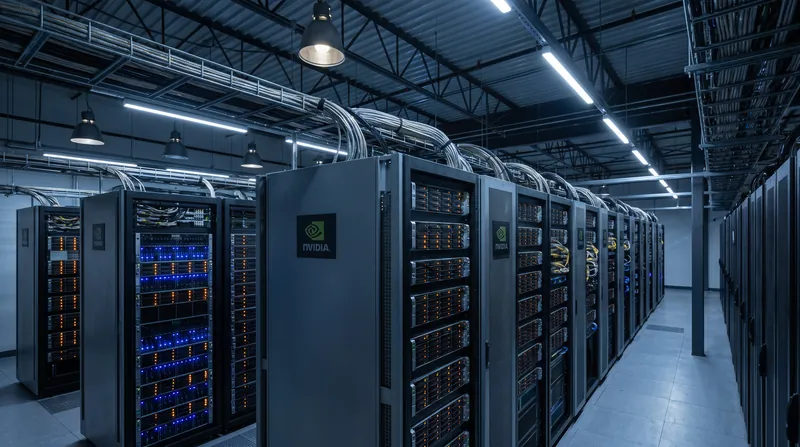
The quadratic cost of self-attention perfectly matched the trajectory of hardware development. Modern GPUs are explicitly designed to perform massive matrix multiplications in parallel. By converting a sequential bottleneck into a parallel matrix multiplication problem, self-attention allowed AI researchers to fully utilize the massive compute clusters being built by hardware manufacturers.[3]
The impact of this architectural shift extends beyond natural language processing. In August 2018, researchers applied self-attention to sequential recommendation systems, replacing the Markov chains and RNNs that previously powered user behavior prediction. The resulting models could process entire user histories simultaneously, identifying long-term dependencies that sequential models missed or forgot.[6]
The parallel nature of self-attention is what enables the massive context windows seen in modern models. An RNN attempting to process a 100,000-token sequence would suffer from catastrophic forgetting, as the hidden state struggles to retain information from the beginning of the sequence. Self-attention, by contrast, maintains a direct mathematical connection between the first token and the last, with a maximum path length of O(1).[1][4]
However, the quadratic memory scaling of standard self-attention presents its own physical limits. As sequence lengths push past 1 million tokens, the O(n²) memory requirement exceeds the capacity of even the largest GPU clusters. This has forced researchers to develop approximate attention mechanisms, such as sparse attention or sliding window attention, which trade some of the parallelization benefits for reduced memory footprints.[7]
The transition from sequential to parallel processing remains the single most consequential architectural decision in modern artificial intelligence. By aligning the software architecture of neural networks with the parallel hardware architecture of modern GPUs, self-attention transformed language modeling from a sequential logic puzzle into a brute-force matrix multiplication task—one that scales predictably with capital investment.[2][7]
How we got here
Pre-2017
Recurrent Neural Networks and LSTMs dominate sequence modeling, constrained by sequential processing.
June 2017
Google researchers publish 'Attention Is All You Need,' introducing the Transformer architecture.
August 2018
Self-attention mechanisms are successfully adapted for sequential recommendation systems.
2020-Present
Parallelization enables the scaling of models to hundreds of billions of parameters.
What we don’t know
- Whether exact self-attention can be maintained for infinite context windows without hitting hard hardware limits.
- If biological neural networks utilize any mechanisms analogous to parallel self-attention.
Sources
Source coverage
7 outlets
3 viewpoints surfaced







- [1]ApX Machine LearningEfficiency Skeptics
Parallelization Constraints in Recurrent Models
Read on ApX Machine Learning → - [2]MediumParallelization Advocates
Attention Is All You Need: The Paper That Sparked a Trillion-Dollar Industry
Read on Medium → - [3]ScalerParallelization Advocates
Transformer Architecture Explained How Attention Powers Modern Ai
Read on Scaler → - [4]CodecademyHardware Developers
Transformer Architecture Explained With Self-Attention Mechanism
Read on Codecademy → - [5]Michał Chromiak's blogParallelization Advocates
The Transformer – Attention is all you need.
Read on Michał Chromiak's blog → - [6]alphaXivHardware Developers
Self-Attentive Sequential Recommendation
Read on alphaXiv → - [7]Factlen Editorial TeamEfficiency Skeptics
Synthesis by Factlen editorial team
Read on Factlen Editorial Team →
Comments
More in Artificial Intelligence
See all →Tokenization
How Byte Pair Encoding Translates Raw Text into Model Input Tokens
6 sources

AI Regulation
US Lawmakers Draft New AI Regulations Following Researcher Resignations Over Extinction Risks
6 sources

AI Regulation
Mapping the Compliance Burden of the EU AI Act's Four-Tiered Risk Framework
6 sources

AI Governance
US House Proposes 'Great American AI Act' to Create Federal Framework, Preempt State Laws for Three Years
3 sources

Every angle. Every day.
Get Artificial Intelligence stories with full source coverage and perspective breakdowns delivered to your inbox.