
HIDIVE Secures Exclusive Global Simulcast Rights for MBS Anime Slate in Multi-Year Deal
AMC Global Media's HIDIVE has signed its largest content programming deal to date, securing exclusive multi-year rights to simulcast Mainichi Broadcasting System's upcoming anime slate outside of Asia. The expanded partnership kicks off with the Fall 2026 premiere of 'Nia Liston: The Merciless Maiden'.
By Joao Marques

Share this story
Everyone assumes the anime streaming wars are already over, with Sony's Crunchyroll standing over the conquered landscape like a victorious shonen protagonist. The conventional wisdom dictates that scale is the only surviving metric, and that smaller platforms are just waiting to be absorbed. But that narrative completely misses the quiet, structural shift happening in how Japanese broadcasters are actually selling their content. The evidence points to a different reality: targeted, multi-year output deals are becoming the weapon of choice for platforms that want to survive without spending Netflix money.[1]
AMC Global Media’s HIDIVE just proved this point by locking down the largest content programming deal in its history. The streamer has secured an exclusive, multi-year global output agreement with Japan’s Mainichi Broadcasting System (MBS), effectively swallowing the broadcaster's upcoming anime slate for all territories outside of Asia. Instead of fighting in the bloody, title-by-title bidding wars that drive licensing fees into the stratosphere, HIDIVE simply bought the whole pipeline.[2][4][6]
This isn't a blind date; it's an escalation of a courtship that began in March 2023. That initial pact gave HIDIVE a taste of MBS's catalog, yielding reliable performers like 'My Gift Lvl 9999 Unlimited Gacha' and the delightfully absurd 'HELL MODE: The Hardcore Gamer Dominates in Another World with Garbage Balancing'—a title that practically demands to be read aloud. Now, the two companies have bypassed the appetizer and ordered the entire menu, ensuring that whatever MBS produces next will bypass the larger aggregators entirely.[3][4][5]
The inaugural title of this new era is 'Nia Liston: The Merciless Maiden', a fantasy action adaptation slated for the Fall 2026 simulcast season. To plant their flag, HIDIVE is bypassing the usual digital drop and hosting the North American premiere at Anime NYC on August 21, weeks before its October Japanese broadcast. It’s a flex, signaling to both fans and rival executives that HIDIVE isn't just a repository for niche titles, but a primary launchpad for global premieres.[1][2][6]
What makes this maneuver fascinating is how it reflects the changing economics of anime distribution. When a platform like HIDIVE secures an output deal, they trade the flexibility of cherry-picking hits for the security of a guaranteed content flow. For MBS, it removes the friction of shopping every single show to international buyers, providing a stable revenue floor before a single frame is animated. It’s a marriage of convenience that effectively walls off a chunk of the anime ecosystem from the industry's apex predators.[1][2][4][6]
This shift forces a reevaluation of how streaming platforms compete. You don't necessarily need to outbid Crunchyroll for the next 'Jujutsu Kaisen' if you can quietly monopolize the tier of shows that keep subscribers paying month after month. The MBS deal guarantees HIDIVE a steady stream of the exact kind of genre-spanning content—isekai, fantasy, and action—that fuels the core anime fandom.[3][4][5]
Ultimately, this is a story about leverage. By locking up MBS's slate, HIDIVE has ensured its own relevance in a consolidating market, proving that a well-placed output deal can be just as effective as a massive checkbook. The streaming wars aren't over; the combatants have just changed their tactics, trading open-market brawls for long-term sieges.[1][2][6]
The ripple effects of this deal will likely be felt across the licensing landscape. If the MBS-HIDIVE pipeline proves lucrative, other Japanese broadcasters might look to bypass the open market in favor of similar exclusive, multi-year pacts. It creates a fragmented but highly stable ecosystem where fans might need multiple subscriptions, but platforms can actually forecast their content costs.[3][4][5]
As the ink dries on this agreement, the industry is watching closely. 'Nia Liston' is just the first test case of this expanded alliance, but the real victory for HIDIVE is the sheer volume of guaranteed future content. In a market obsessed with the biggest possible hits, there is a distinct, undeniable power in simply owning the pipeline.[1][2][4][6]
Viewpoints in depth
The Targeted Output Deal (The HIDIVE/MBS Model)
Securing a multi-year, exclusive pipeline from a single broadcaster rather than bidding title-by-title.
FOR: Secures a guaranteed, predictable content pipeline at a fixed structural cost, avoiding the hyper-inflation of open-market bidding wars. It builds deep institutional relationships with Japanese broadcasters. AGAINST: The platform assumes the risk of the broadcaster's entire slate; if a season's output underperforms or lacks a breakout hit, the streamer is still locked into the costs. EVIDENCE: HIDIVE's expansion of the 2023 MBS pact into a multi-year slate deal, securing titles like 'Nia Liston' and 'HELL MODE' without fighting Crunchyroll for each individual license. FITS WELL WHEN: A platform needs a stable baseline of genre content to reduce churn and has a dedicated niche audience willing to watch mid-tier hits. DOES NOT FIT WHEN: A platform relies entirely on mainstream, viral mega-hits to drive subscriber acquisition.
The Volume Aggregator (The Crunchyroll/Netflix Model)
Leveraging massive capital to outbid competitors on a title-by-title basis for the industry's biggest guaranteed hits.
FOR: Captures the cultural zeitgeist by securing the highest-performing, viral anime properties that drive massive subscriber spikes and mainstream media coverage. AGAINST: Unsustainable licensing inflation as platforms continually outbid each other, leading to a hit-driven model where mid-tier shows are ignored or buried by the algorithm. EVIDENCE: The escalating costs of top-tier shonen properties and Netflix's aggressive, high-dollar acquisitions of global rights for specific blockbuster adaptations. FITS WELL WHEN: A platform has the capital to absorb massive upfront costs and needs undeniable, mainstream cultural events to satisfy a broad, general-audience subscriber base. DOES NOT FIT WHEN: Operating on a strict content budget where overpaying for a single underperforming 'hit' could jeopardize the quarter's financials.
Key points
- HIDIVE has secured its largest content programming deal ever, locking down exclusive global rights (outside Asia) to MBS's upcoming anime slate.
- The multi-year agreement expands a previous March 2023 partnership that brought titles like HELL MODE to the platform.
- Nia Liston: The Merciless Maiden will serve as the inaugural title, premiering at Anime NYC before its October 2026 broadcast.
- The deal signals a shift toward pipeline-based output agreements rather than title-by-title bidding wars.
What we don’t know
- The exact financial terms and total duration of the multi-year agreement between AMC Global Media and MBS.
- Which specific unannounced titles will be included in the upcoming MBS slate beyond 'Nia Liston'.
- Whether other major Japanese broadcasters will seek similar exclusive output deals with competing streaming platforms.
- Niche Streaming Platforms
- Focus on sustainable pipelines and dedicated fanbases over expensive bidding wars.
- Japanese Broadcasters
- Seeking stable, long-term international revenue floors to offset production risks.
- General Anime Consumers
- Navigating a fragmented streaming landscape where content is siloed across multiple subscriptions.
Perspectives this story doesn't cover
- Independent Anime Studios
- Rival Aggregator Platforms
Sources
Source coverage
6 outlets
3 viewpoints surfaced






- [1]Anime News NetworkJapanese Broadcasters
HIDIVE Expands MBS Partnership, Licenses Nia Liston: The Merciless Maiden Anime
Read on Anime News Network → - [2]Animation MagazineJapanese Broadcasters
HIDIVE and Mainichi Broadcasting System Extend Partnership Into Next Phase
Read on Animation Magazine → - [3]Anime CornerGeneral Anime Consumers
HIDIVE and Mainichi Broadcasting System (MBS) Expand Anime Distribution Partnership
Read on Anime Corner → - [4]HIDIVENiche Streaming Platforms
AMC Global Media's HIDIVE And Mainichi Broadcasting System Extend Partnership
Read on HIDIVE → - [5]The Outer HavenGeneral Anime Consumers
HIDIVE Announces Largest Content Programming Deal to Date with MBS
Read on The Outer Haven → - [6]Geek OutpostNiche Streaming Platforms
HIDIVE Signs Largest Content Programming Deal in Streaming Service's History
Read on Geek Outpost →

More in Entertainment
See all →Anime Production
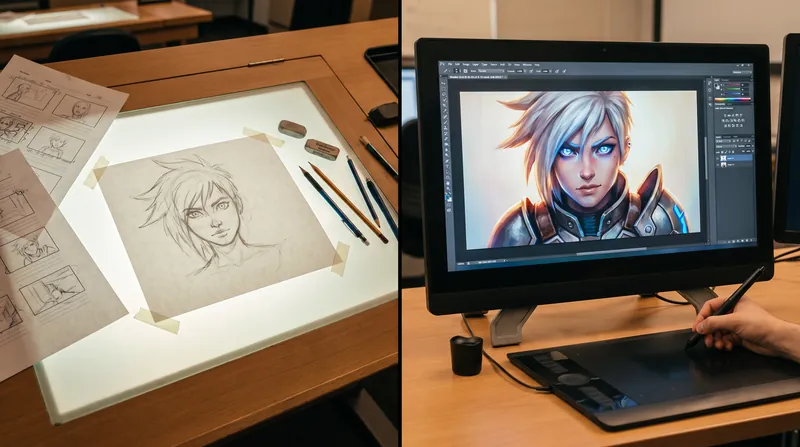
The Key Animation, the In-Between, and the Digital Paint: How the Three-Stage Pipeline Creates a Single Anime Episode
6 sources
Animation Tech
The 8, 12, and 24 Frames Per Second Trade-Off: How Anime Production Balances Motion Quality and Budget
5 sources

Manga Publishing
The Ankete System: How Weekly Shonen Jump's Reader Survey Dictates Which Manga Are Canceled
8 sources

Seiyuu Economics
The Japanese Voice Actor Rank System: How the 15,000 Yen Per Episode Minimum is Calculated
5 sources
Comments
Every angle. Every day.
Get Entertainment stories with full source coverage and perspective breakdowns, free every day.