
Gymnastics Injury Report: Esponda's Resilience and Andrade's Strategic Return Headline Global Comebacks
As the gymnastics world prepares for the road to Rotterdam, resilient recoveries are reshaping the competitive landscape, highlighted by Reese Esponda's triumphant return from a torn foot ligament and Rebeca Andrade's calculated comeback.

Share this story
The grueling nature of elite gymnastics means the medical report is often as consequential as the start list. As the sport gears up for the 2026 World Artistic Gymnastics Championships in Rotterdam, the narrative is defined not just by who is sidelined, but by the athletes mounting extraordinary comebacks. Across the globe, gymnasts are navigating complex recoveries, balancing the immediate pressure of world team selection against the long-term horizon of the LA28 Olympic Games.
This season's injury landscape highlights a shifting culture in the sport, where strategic rest and meticulous rehabilitation are increasingly prioritized over rushing back to the podium. From acute ligament tears to chronic joint degradation, the physical toll of the sport requires a level of resilience that rivals the difficulty of the routines themselves.[1]
In the United States, 17-year-old Reese Esponda has authored the season's most remarkable recovery story. Competing at the City of Jesolo Trophy in Italy this past March, Esponda landed awkwardly on a vault and suffered a Grade 2 Lisfranc injury—a severe ligament tear in the midfoot that often requires season-ending surgery.
Opting for a conservative rehabilitation approach to avoid the operating table, Esponda spent eight weeks immobilized in a walking boot and on crutches. During that frustrating period, she maintained her conditioning through a specialized out-of-gym program, uncertain if she would be able to salvage her 2026 season or if the lingering pain would derail her elite trajectory entirely.[1][2][6]
Just five weeks after being medically cleared to resume full training, Esponda returned to the competition floor at the U.S. Classic in Hartford, Connecticut. Defying all external expectations, the teenager stunned the field to win the all-around title with a career-best score of 54.900, edging out Olympic floor champion Jade Carey.
Esponda's rapid return to form was bolstered by a supportive text message from gymnastics icon Simone Biles, who advised the young athlete that "controlled power is everything." Now fully healthy and armed with upgraded skills, Esponda enters the U.S. Gymnastics Championships in Phoenix as a top contender for the national team, proving that her abbreviated preparation window was no obstacle to success.[1][4][6]
While Esponda's trajectory points sharply upward, the U.S. Championships will be without one of its most decorated and consistent veterans. Two-time world all-around silver medalist Leanne Wong was forced to withdraw from the competition just days before the opening rotations.
During podium training in Phoenix on Tuesday, Wong hyperextended her knee, abruptly halting her national title campaign and sending ripples through the selection landscape. The setback compounds a deeply frustrating summer for the former Florida Gator, who was already managing a lingering wrist issue that had limited her to competing solely on the balance beam at the U.S. Classic.[4][5]
Wong's sudden withdrawal removes a major obstacle for the rest of the domestic field, but her 2026 season is not necessarily over. USA Gymnastics procedures allow athletes to petition for entry into the world team selection camp scheduled for late September. If Wong's knee heals sufficiently over the next six weeks, she could still earn a spot on the five-woman roster bound for Rotterdam.
For now, however, she is relegated to the sidelines, trusting a rehabilitation process that has suddenly become a high-stakes race against the calendar. Her absence leaves a significant leadership void on the floor, opening the door for rising stars to stake their claim.[3][4][5]
Also navigating a complex and frustrating recovery in Phoenix is 2025 Pan American all-around champion Jayla Hang. The Washington native is making a highly measured return to competition following a bizarre and protracted wrist saga that kept her out of the gym for months.
Hang originally underwent surgery in October 2025 to repair a stubborn fracture. While the bone eventually healed, she continued to experience severe symptoms and localized pain, leading doctors to discover a rare allergic reaction to the surgical screw used in the initial procedure—a complication that neither she nor her medical team could have anticipated.[3][5]
The allergic complication required a second surgery in March 2026 to remove the hardware and perform a bone graft, effectively resetting Hang's recovery clock to zero. After ten months away from full training, Hang is returning exclusively on the balance beam at the U.S. Championships.
Her coaches at Pacific Reign have prioritized a gradual, highly controlled ramp-up, modifying her routine to swap her usual back handspring for a side aerial layout series. This strategic adjustment minimizes the weight-bearing impact on the healing joint, allowing her to regain her competitive rhythm without risking a catastrophic regression.[1][5]
Hang's long-term vision extends far beyond this week's national championships or even the upcoming World Championships. Recognizing the physical toll of her back-to-back surgeries, she recently announced her decision to defer her collegiate enrollment at the University of Florida.
Instead, Hang will remain with her elite coaches in Washington for the next two years, dedicating herself entirely to a healthy, sustainable push for the LA28 Olympic Games. It is a calculated gamble that underscores a growing emphasis on athlete longevity, prioritizing a multi-year physical peak over the immediate gratification of collegiate competition.[3][5]
Internationally, the concept of injury management is evolving into proactive preservation, a strategy championed by some of the sport's biggest names. Brazil's two-time Olympic gold medalist Rebeca Andrade provided a masterclass in strategic rest by taking a deliberate hiatus from the 2025 season.
After a grueling Paris 2024 cycle that culminated in historic success, Andrade recognized that her body was accumulating unsustainable stress. Rather than pushing through the pain and risking a major injury that could derail her career, she stepped away from the competition floor to heal her mind and body.[1]
Andrade's decision to prioritize her physical and mental health allowed her to avoid major surgical interventions and the grueling rehabilitation that follows. Now, she is ramping up her training for a full return in 2026, aiming to lead Brazil's squad in Rotterdam with a rejuvenated physique.
Her approach reflects a broader cultural shift within elite gymnastics, where federations and athletes are increasingly willing to sacrifice short-term medals to ensure peak performance during the critical Olympic qualification windows. It is a mature approach to a sport that has historically demanded athletes compete through severe pain.[1]
The absolute necessity of such caution was starkly highlighted by the severe injury suffered by Italian gymnast Lorenzo Bonicelli. Competing at the World University Games in Germany, the 23-year-old suffered a terrifying fall on his neck while attempting a highly complex triple back dismount from the still rings.
The incident required emergency surgery and a stint in intensive care, sending shockwaves through the international community. The fall sparked renewed debates over the International Gymnastics Federation's (FIG) Code of Points, with critics arguing that the current scoring system dangerously incentivizes athletes to attempt dismounts that push the limits of human biomechanics.[2]
As Bonicelli continues his long and arduous road to recovery, his ordeal serves as a sobering reminder of the sport's inherent risks. Whether it is a catastrophic fall, an acute ligament tear, or the slow accumulation of joint stress, the physical cost of elite gymnastics remains extraordinarily high.
For athletes like Esponda, Hang, and Andrade, the path to the podium in Rotterdam is paved not just with upgraded skills and flawless execution, but with the quiet, grueling triumphs achieved in the physical therapy room. Their resilience ensures that the sport's most compelling narratives are often written long before the athletes salute the judges.[1][2][5]
The essentials
- 17-year-old Reese Esponda won the U.S. Classic all-around title just weeks after recovering from a Grade 2 Lisfranc foot injury.
- Two-time world silver medalist Leanne Wong withdrew from the U.S. Championships after hyperextending her knee during podium training.
- Jayla Hang is returning to competition on balance beam following two wrist surgeries caused by a rare allergic reaction to a surgical screw.
- Brazil's Rebeca Andrade is ramping up for a 2026 return after taking a strategic year off to heal her body.
- Italian gymnast Lorenzo Bonicelli continues his recovery from a severe neck injury suffered on a rings dismount in 2025.
Timeline
July 2025
Italian gymnast Lorenzo Bonicelli suffers a severe neck injury on a rings dismount at the World University Games.
October 2025
Jayla Hang undergoes her first wrist surgery to repair a stubborn fracture.
March 2026
Reese Esponda suffers a Grade 2 Lisfranc injury in Italy; Hang undergoes a second wrist surgery to remove a surgical screw.
July 18, 2026
Esponda returns from her foot injury to win the all-around title at the U.S. Classic.
August 4, 2026
Leanne Wong hyperextends her knee during podium training, forcing her withdrawal from the U.S. Championships.
- Medical & Rehab Specialists
- Focusing on the physical toll of elite gymnastics and the necessity of proactive rest.
- National Team Management
- Focused on fielding the healthiest, most competitive rosters for the World Championships.
- The Athletes
- Prioritizing mental health, sustainable pacing, and personal resilience.
Perspectives this story doesn't cover
- Collegiate Coaches
- FIG Technical Committee
Sources
Source coverage
6 outlets
3 viewpoints surfaced






- [1]Olympics.comNational Team Management
Gymnastics: The Simone Biles text behind Reese Esponda's breakout before U.S. Championships
Read on Olympics.com → - [2]Gymnastics NowMedical & Rehab Specialists
Fresh off her first elite all-around title, Reese Esponda talks her Classic win, a recent injury
- [3]Inside GymnasticsMedical & Rehab Specialists
Jayla Hang on LA28, Injury, return to competition, and more!
- [4]Just Women's SportsThe Athletes
Leanne Wong Exits 2026 US Gymnastics Championships with Knee Injury
Read on Just Women's Sports → - [5]WRUFThe Athletes
Leanne Wong Withdraws from U.S. Gymnastics Championships with Knee Injury
Read on WRUF → - [6]EssentiallySportsThe Athletes
Reese Esponda Overcomes Injury to Claim U.S. Classic All-Around Title
Read on EssentiallySports →
More in Sports
See all →Trade
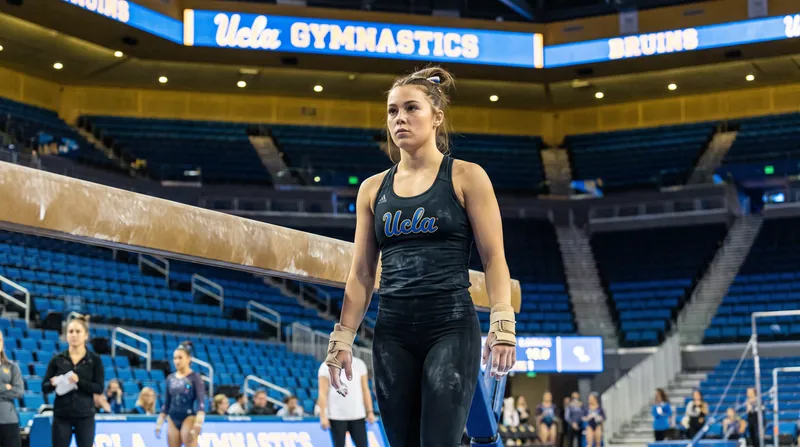
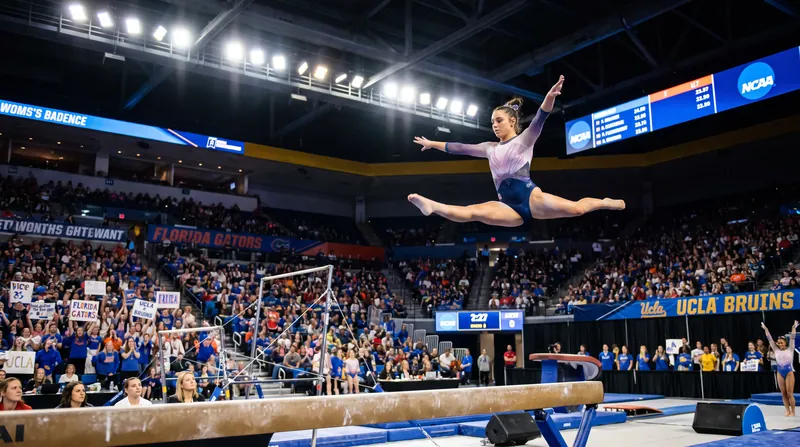
NCAA Gymnastics Offseason Reaches Finish Line: The Biggest Roster and Coaching Moves Ahead of 2027
6 sources
Storyline
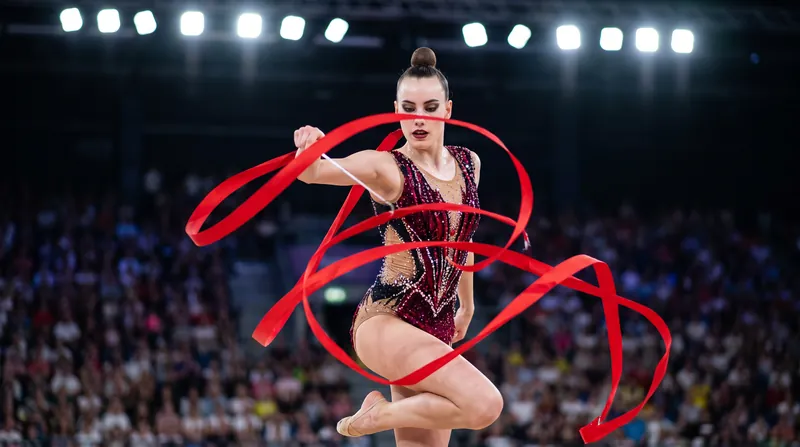
Darja Varfolomeev Captures Historic Third Consecutive All-Around Title at 2026 Rhythmic Gymnastics World Championships
6 sources
Standings
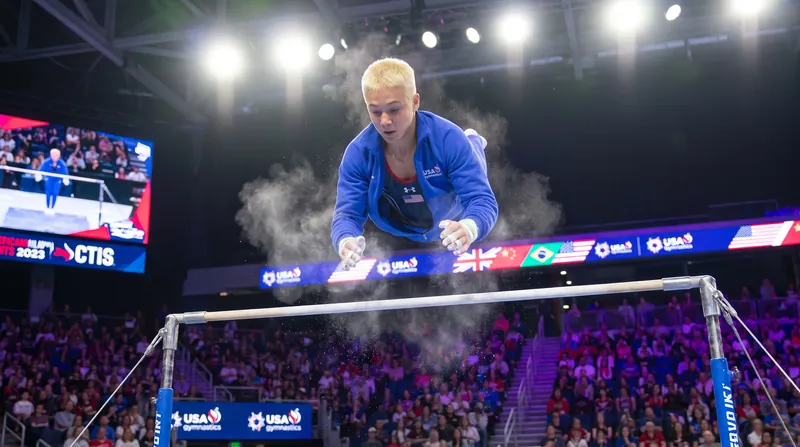
Global Men's Floor Exercise Standings: Eldrew Yulo Surges as Sharamkou Holds the Lead
5 sources

Preview
2026 World Artistic Gymnastics Championships Preview: The High-Stakes Race to Rotterdam Begins
5 sources
Comments
Every angle. Every day.
Get Sports stories with full source coverage and perspective breakdowns, free every day.