
Global Netball Injury Report: Austin and Brown Face Lengthy Rehab as Gordon Completes Rapid Firebirds Comeback
Severe lower-limb injuries have sidelined key netball stars across Australia, the UK, and New Zealand, though Maddy Gordon's rapid five-week return offers a bright spot for the sport.

Share this story
The physical toll of elite global netball is reshaping domestic leagues across Australia, the United Kingdom, and New Zealand this season. While several franchises are grappling with sudden, season-ending blows to key players, others are celebrating remarkable rehabilitation milestones that underscore the resilience of the sport's top athletes.
In Australia's Suncorp Super Netball (SSN), GIANTS Netball suffered a significant setback with shooting recruit Lucy Austin fracturing her right foot during a training session. Subsequent scans confirmed the severity of the damage, prompting urgent consultations with both club and national medical staff to determine the best course of action.[1]
Austin will undergo surgery to repair the fracture and is expected to be sidelined for 12 weeks, effectively ending her 2026 SSN campaign after just four games and dashing her hopes for a Commonwealth Games call-up. GIANTS Head Coach Nerida Stewart expressed deep disappointment for the committed goaler, emphasizing that the club will wrap their arms around her during the extensive rehabilitation process while they search for a replacement player.[1]
Conversely, the Queensland Firebirds are celebrating a major medical victory. Midcourter Maddy Gordon, who moved from New Zealand's Central Pulse to the SSN this season, suffered a hamstring tendon tear in the opening round. Initially facing an 8-to-12-week recovery window, Gordon opted to remain in Australia and attack her rehabilitation head-on rather than returning home for a break.
Gordon's dedication paid massive dividends, allowing her to return to the court in just five weeks. The rapid comeback required her to quickly adapt to the heightened physicality of the Australian league mid-season, a challenge she met by backing her established skill set and trusting the intense physical therapy that accelerated her healing timeline.
In the United Kingdom, the Netball Super League (NSL) has seen the NIC Leeds Rhinos severely depleted by lower-limb injuries. Vitality Roses international Jaz Brown suffered a devastating Achilles injury during a Round 3 clash against Nottingham Forest. Scans confirmed the need for surgery and a lengthy rehabilitation period, ruling her out for both the remainder of the NSL season and the upcoming Commonwealth Games in Glasgow.[2]
The Rhinos' injury woes compounded when Cassie Howard was ruled out for the 2026 season after MRI scans revealed a grade 3 stress response in her shin. Rhinos coach Lauren Palmer acknowledged the tough setbacks but praised both players for fully embracing off-court leadership roles. To fill the void, the franchise has elevated NXT Gen players like Maia Bausor and Sasha Howard, testing the depth of their developmental pipeline.[3]
New Zealand's ANZ Premiership has not escaped the injury wave. The Stars lost defender Lili Tokaduadua to an ACL rupture during a Round 2 matchup against the Southern Steel. Tokaduadua will undergo reconstructive surgery and begin the long road toward a 2027 return, prompting the Stars to bring in veteran Leana de Bruin to provide immediate experience and leadership in the defensive circle.
The prevalence of these severe lower-body injuries aligns with broader statistical trends in the sport. According to the Australian Institute of Health and Welfare (AIHW), hip and lower limb injuries accounted for 800 hospitalizations among netball players in the 2024–25 period, making it the most frequently injured body region by a wide margin.[4]
Soft-tissue damage, including ligament ruptures and tendon tears, makes up nearly half of all severe netball injuries, driven by the sport's demands for sudden deceleration, pivoting, and high-impact landings on rigid indoor surfaces. As the global netball calendar grows increasingly congested, the focus on load management and advanced rehabilitation protocols has never been more critical for franchise success.[4]
For the athletes sidelined, the mental challenge often rivals the physical one. Players like Brown and Austin have publicly emphasized their determination to use the recovery period to grow mentally and return stronger for the 2027 season. Meanwhile, Gordon's successful and rapid return serves as a beacon of hope for those currently navigating the grueling early stages of post-operative rehab.[1]
Key points
- GIANTS Netball shooter Lucy Austin will miss 12 weeks after fracturing her right foot at training.
- Firebirds midcourter Maddy Gordon defied an 8-to-12-week prognosis, returning from a hamstring tear in just five weeks.
- Leeds Rhinos lost Jaz Brown to an Achilles rupture and Cassie Howard to a severe shin stress response.
- Stars defender Lili Tokaduadua suffered a season-ending ACL rupture in the ANZ Premiership.
- Lower-limb and soft-tissue injuries remain the leading cause of netball-related hospitalizations globally.
How we got here
March 2026
Jaz Brown suffers a season-ending Achilles injury during a Netball Super League match.
April 2026
Lucy Austin fractures her right foot at GIANTS training, requiring surgery.
April 2026
Lili Tokaduadua ruptures her ACL during an ANZ Premiership game for the Stars.
June 2026
Maddy Gordon completes a rapid five-week return to the court following a hamstring tendon tear.
- Franchise Management & Coaches
- Focuses on roster depth, finding replacement players, and supporting injured athletes through their recovery.
- Medical & Rehabilitation Staff
- Prioritizes accurate diagnosis, safe recovery timelines, and long-term athlete health over immediate on-court needs.
- Players & Teammates
- Emphasizes the mental resilience required during rehab and the determination to return stronger to the sport.
Perspectives this story doesn't cover
- Lower-tier players unexpectedly thrust into starting roles
- Fans and supporters adjusting expectations for the season
Sources
Source coverage
4 outlets
3 viewpoints surfaced




- [1]Fox SportsPlayers & Teammates
Lucy Austin season over, fractured foot
Read on Fox Sports → - [2]Sky SportsPlayers & Teammates
Premier League pre-season: Where will each team be going and who will they play?
Read on Sky Sports → - [3]Leeds RhinosFranchise Management & Coaches
Cassie Howard ruled out for the season
Read on Leeds Rhinos → - [4]Australian Institute of Health and WelfareMedical & Rehabilitation Staff
Common injuries and causes of sports injury hospitalisations from netball, Australia, 2024–25
Read on Australian Institute of Health and Welfare →
More in Sports
See all →Injury
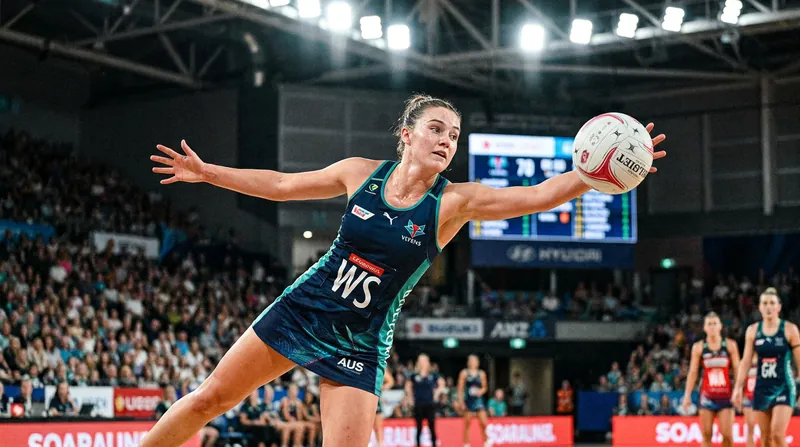
Global Netball Injury Report: How Replacement Players Are Seizing Their Moments on the World Stage
7 sources
Injury
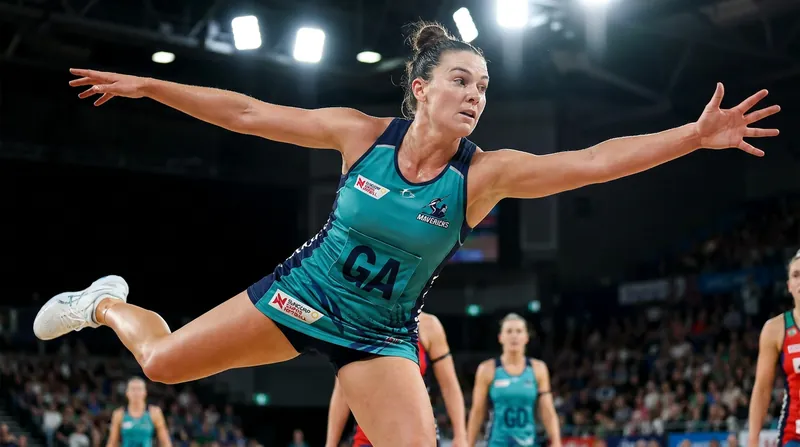
Global Netball Injury Report: Glasgow's Triumphant Fever Homecoming and Housby's Commonwealth Games Heartbreak
2 sources
Injury
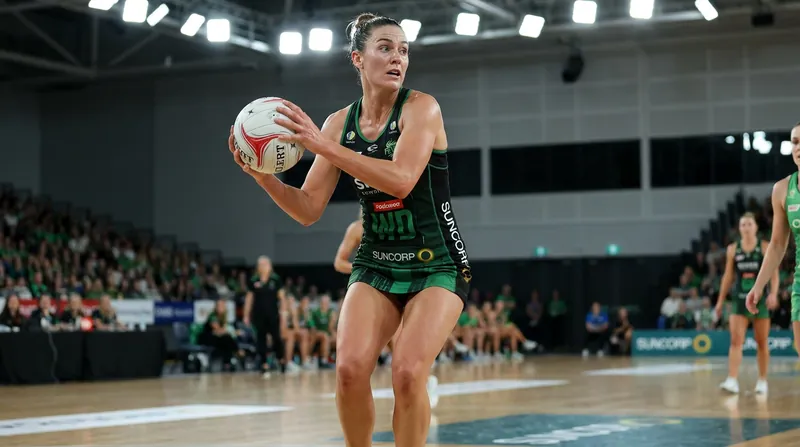
Global Netball Injury Report: Veve's Commonwealth Games Honour and Ridley's Resilience Highlight Latest Returns
2 sources

Injury
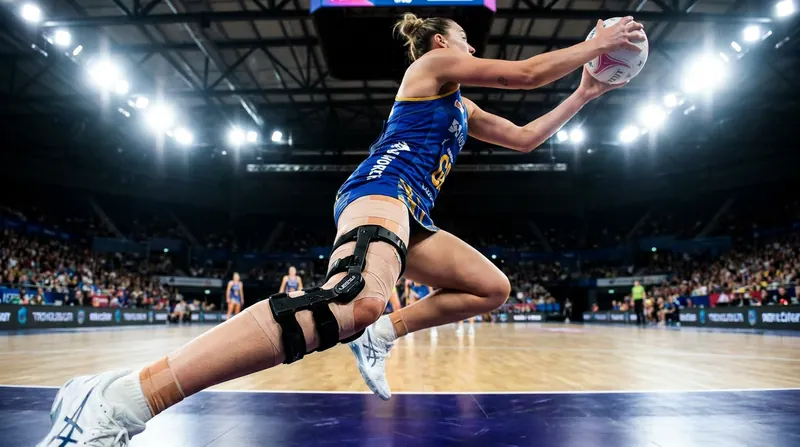
Global Netball Injury Report: Babia's Groundbreaking ACL Return and Durant's Farewell Headline Latest Updates
2 sources
Comments
Every angle. Every day.
Get Sports stories with full source coverage and perspective breakdowns, free every day.