
Germany Warns US Against Election Interference Over State Department Grants to European Right-Wing Groups
German Chancellor Friedrich Merz has condemned a new US State Department initiative offering millions in grants to MAGA-aligned European organizations. The diplomatic clash highlights growing transatlantic tensions over political interference and digital regulation.
Share this story
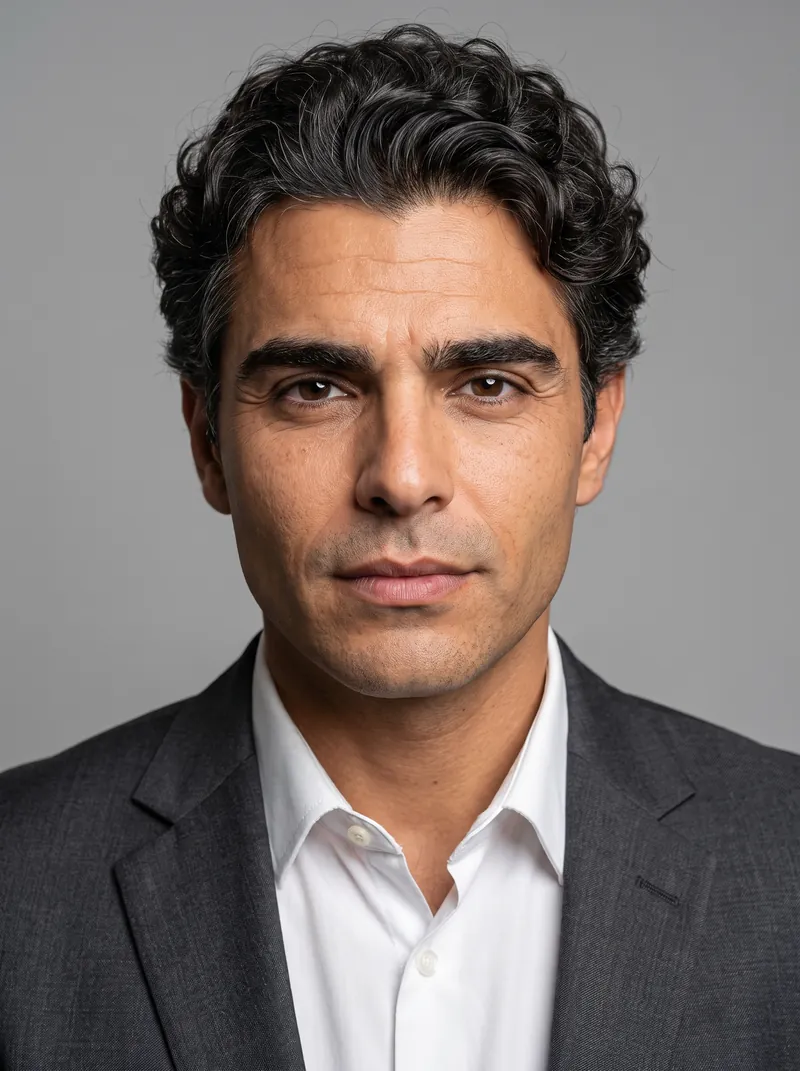
German Chancellor Friedrich Merz has issued a stark public warning to the United States, demanding that Washington halt what he describes as blatant election interference. The diplomatic rupture follows the US State Department's rollout of a highly unusual grant program designed to fund European political and civil society groups that align with the "Make America Great Again" (MAGA) movement.
With German state elections looming, Merz's government views the financial pipeline not as routine diplomatic outreach, but as a direct attempt to tip the scales in favor of right-wing populist parties like the Alternative for Germany (AfD).[1][7]
The controversy centers on a newly published State Department initiative offering individual grants ranging from $1 million to $3 million. According to the official application guidelines, the funds are earmarked for European charities, think tanks, educational institutions, and non-governmental organizations. The stated objective is to help these groups address challenges related to "national sovereignty, migration, censorship, and lawfare." The language mirrors the domestic political rhetoric of the Trump administration, explicitly calling for projects that align with a "shared political philosophy" and a "common Western civilizational heritage."[1][2]
For decades, the United States has funded civil society programs abroad, typically focusing on democracy promotion, human rights, and independent journalism in developing nations or authoritarian regimes. Directing such funds toward allied Western European democracies to support a specific partisan ideology represents a profound shift in American statecraft. European leaders, accustomed to viewing the US as a stabilizing partner, are now grappling with an administration that openly seeks to cultivate resistance against the continent's established political center and the institutional authority of the European Union.[4][6]
To understand the mechanics of the grant program, it is essential to decode the specific terminology used by the State Department. When the initiative targets "censorship," it is primarily taking aim at Europe's sweeping digital regulations, most notably the Digital Services Act (DSA). The DSA requires large technology platforms to aggressively police hate speech and disinformation. The US administration, heavily influenced by tech billionaires, views these regulations as fundamentally anti-American and a threat to free expression, framing the EU's enforcement actions as bureaucratic overreach.[5][6]
Similarly, the program's focus on "lawfare" and "national sovereignty" speaks directly to the grievances of European nationalist movements. "Lawfare" has become a catch-all term used by populist leaders to describe legal challenges or judicial scrutiny of their policies, which they argue are politically motivated. By funding organizations that combat these perceived threats, the US is effectively subsidizing the legal and public relations strategies of right-wing factions across the continent, from Reform UK in Britain to Fidesz in Hungary and the AfD in Germany.[2][4]
The ideological foundation for this funding push was laid out in the administration's recent National Security Strategy. The document warned that Europe faces a risk of "civilizational erasure" driven by mass migration, declining birth rates, and the centralization of power in Brussels.
By framing the transatlantic relationship through this civilizational lens, US officials argue they are not interfering, but rather rescuing Europe from a trajectory of decline. The grants are officially tied to a funding pot celebrating the upcoming 250th anniversary of US independence, framed as an export of fundamental American values.[3][4]
In Berlin, however, the initiative is being treated as a hostile act. Germany possesses strict campaign finance laws that explicitly prohibit political parties from accepting donations from outside the European Union. While the US grants are ostensibly directed at NGOs and think tanks rather than direct party coffers, German officials fear these organizations will act as proxy campaign vehicles. Merz highlighted this legal boundary, warning that any attempt to funnel resources to right-wing networks ahead of the September state elections would be met with fierce resistance.[1][7]
The anxiety in Germany is compounded by the increasingly close ties between American conservative figures and the AfD. High-profile US officials and influential tech executives have publicly praised the German far-right party, criticizing the country's mainstream political establishment for maintaining a "firewall" that excludes the AfD from governing coalitions. For Merz's Christian Democratic Union, which is currently navigating a fragile political landscape, the prospect of a well-funded, US-backed opposition network represents a severe structural threat.[6][7]
The diplomatic fallout extends well beyond Berlin. In Brussels, European Commission officials are viewing the State Department grants as part of a broader economic and political offensive. The US and the EU are already clashing over tariffs, defense spending, and the sovereignty of Greenland. The realization that Washington is now actively financing Euroskeptic movements has deepened the Atlantic divide. Some European policymakers argue that the US is employing the very tactics of foreign interference that it has spent years condemning when utilized by adversaries like Russia or China.[3][5]
Despite the ambitious scope of the State Department's plan, its practical execution remains uncertain. European think tanks and civil society organizations operate in a highly regulated environment, and accepting millions of dollars from a foreign government to pursue a partisan agenda carries significant legal and reputational risks.
Furthermore, while $3 million grants are substantial in the non-profit sector, they may not be enough to fundamentally alter the political dynamics of a market comprising 450 million people, especially given the widespread unpopularity of the current US administration among the broader European public.[2][4]
Nevertheless, the symbolic impact of the grants is already reverberating. For European nationalist groups, the promise of US funding provides a powerful stamp of legitimacy. It signals that they are no longer isolated fringe movements, but part of a coordinated, transatlantic alliance backed by the resources of the world's most powerful government. This validation alone could embolden right-wing factions to adopt more aggressive postures against domestic rivals and EU institutions.[3][4]
As the September elections in Germany approach, the standoff over the State Department grants will serve as a critical stress test for the Western alliance. Chancellor Merz has made it clear that he prioritizes European unity and independence, suggesting that the continent must rapidly develop the capacity to define its own destiny outside of Washington's orbit. If the US proceeds with disbursing the funds, it risks transforming its most vital democratic allies into geopolitical adversaries, fundamentally rewriting the rules of transatlantic engagement.[1][7]
A major unresolved question is how European governments will retaliate if the State Department begins cutting checks. Legal experts suggest that the EU could introduce emergency legislation to block or heavily tax foreign political donations routed through non-profits, effectively neutralizing the US strategy. Alternatively, European nations might leverage their regulatory power to impose even stricter penalties on American technology firms, escalating the very "censorship" battle the grants were designed to combat. The potential for a tit-for-tat escalation threatens to paralyze cross-border cooperation on critical issues like trade and security.[4][5]
Ultimately, the grant program lays bare a profound contradiction in contemporary US foreign policy. By attempting to export its domestic culture wars, Washington is alienating the centrist governments it relies upon to maintain global stability. Whether this strategy succeeds in building a durable transatlantic populist alliance or merely accelerates Europe's drive for strategic autonomy remains to be seen. For now, the traditional pillars of the US-European partnership are being systematically dismantled, replaced by a volatile ideological contest funded directly by the American taxpayer.[3][7]
Key points
- The US State Department launched a grant program offering up to $3 million to European NGOs aligned with MAGA political philosophy.
- The funds aim to address issues the US defines as 'censorship,' 'lawfare,' and threats to 'national sovereignty' in Europe.
- German Chancellor Friedrich Merz condemned the initiative as blatant election interference ahead of upcoming state elections.
- Germany's strict campaign finance laws prohibit foreign donations to political parties, but the US grants target civil society groups.
What we don’t know
- It remains unclear which specific European organizations will successfully apply for and receive the State Department grants.
- We do not know if the European Union will introduce emergency legislation to block or tax these foreign political donations.
- It is uncertain how this diplomatic rift will impact broader US-European cooperation on trade, defense, and technology regulation.
How we got here
2024 - 2025
The US administration publishes its National Security Strategy, warning of Europe's 'civilizational erasure' and calling for resistance to EU regulations.
February 2026
Reports emerge that the US State Department is exploring funding for MAGA-aligned think tanks in Europe, sparking initial diplomatic concerns.
July 14, 2026
The State Department officially posts applications for $1 million to $3 million grants targeting European NGOs to address 'censorship' and 'lawfare'.
July 15, 2026
German Chancellor Friedrich Merz publicly warns the US against election interference, citing the upcoming German state elections.
- European Sovereignty Advocates
- Emphasize the threat of foreign interference and the need to protect European democratic institutions and digital regulations.
- Geopolitical & Trade Analysts
- Focus on the US administration's strategic shift to export its political values and challenge European regulatory authority.
- US Policy Observers
- Focus on the State Department's ideological goals and free speech framing.
Perspectives this story doesn't cover
- European Tech Regulators
- Non-partisan Election Watchdogs
Sources
Source coverage
7 outlets
3 viewpoints surfaced







- [1]The GuardianEuropean Sovereignty Advocates
Germany warns against election interference as US offers funding to Maga-aligned causes in Europe
Read on The Guardian → - [2]Financial TimesGeopolitical & Trade Analysts
US state department offers grants to Maga-aligned European groups
- [3]EUaliveUS Policy Observers
U.S. pushes 'American values' in Europe: State Department funding for MAGA-aligned groups sparks debate
- [4]GZERO MediaGeopolitical & Trade Analysts
US government set to fund MAGA-aligned parties and think tanks in Europe
- [5]Tech Policy PressGeopolitical & Trade Analysts
Assessing European demand for weaker digital regulation
- [6]The Washington PostUS Policy Observers
State Department concerned by increasing censorship by E.U. bureaucrats
- [7]The NationEuropean Sovereignty Advocates
Friedrich Merz takes strong stance against election interference by Trump and Musk

More in News & Politics
See all →Cuba Policy
US Military Prepares Contingency Plans for Cuba Following Raúl Castro Indictment
7 sources
Peninsula Security
North Korea Fires Ballistic Missile Ahead of US-South Korea Joint Military Drills
6 sources

Maritime Law
Iran and Oman Advance Proposal to Impose Maritime Fees on Strait of Hormuz Shipping
4 sources

Caspian Sea
Ukraine Strikes Iranian Cargo Ship and Russian Warship in Caspian Sea
7 sources

Comments
Every angle. Every day.
Get News & Politics stories with full source coverage and perspective breakdowns, free every day.