
Final Rio Berths on the Line as SSL Gold Cup European Qualifiers Heat Up in Switzerland
National sailing teams from across Europe are battling on Lake Neuchâtel for the final qualification spots in the 2026 SSL Gold Cup Grand Final in Rio de Janeiro.
By Omar Haddad

Share this story
The tension on Lake Neuchâtel is palpable this week as the final European qualification window for the 2026 SSL Gold Cup closes. Nestled at the SSL Training Center in Grandson, Switzerland, national sailing teams are fighting through the European Qualifiers II. For the crews on the water, the math is simple and brutal: finish in the top two of your group, or watch your World Cup dreams evaporate.[1]
The prize awaiting the successful qualifiers is a ticket to Rio de Janeiro this November for the Grand Final of what has been dubbed the "Football World Cup in Sailing." The SSL Gold Cup strips away the traditional financial arms race of grand prix yachting by putting every national team on identical SSL 47 monohulls. With the boats provided by the organizers, the racing becomes a pure test of tactical acumen, crew mechanics, and national pride.[1][2]
Currently, the spotlight in Switzerland is fixed on Groups F and G, where the margins for error are razor-thin. Group F features a compelling mix of established and resilient programs, including Portugal, Finland, Bulgaria, and Ukraine. The Bulgarian team, known as "The Lions," has explicitly embraced the underdog narrative, aiming to prove that smaller nations can topple traditional maritime powers when the equipment is equalized.[1]
The inclusion of Team Ukraine in Group F has added an emotional weight to the proceedings. Despite the immense logistical and personal challenges of mounting a campaign, their presence on the starting line underscores the unifying power of the national-team format. Their crew has quickly adapted to the demanding SSL 47, pushing the more established Portuguese and Finnish teams in every race.[1]
Meanwhile, Group G sees a fierce Mediterranean rivalry playing out, with Greece and Turkey headlining the bracket. The Greek squad has brought heavy artillery to the Swiss lake, led by Olympic medalist Emilios Papathanasiou and featuring a roster packed with seasoned international competitors. The pressure in these four-boat groups is identical to a FIFA World Cup group stage—every tack and gybe carries massive points implications.
The global scale of the 2026 cycle is unprecedented for a one-design keelboat event. A total of 66 nations entered the qualification pathway, aiming for one of the 40 berths in the Rio Grand Final. Twenty-nine of those spots were already locked up by the top-tier countries in the SSL Nations Ranking—including heavyweights like Great Britain, Australia, and the United States. The remaining 11 spots are the lifeblood of these regional qualifiers.[1][2]
The format's ability to engage non-traditional sailing audiences has caught the attention of the sport's highest governing bodies. World Sailing recently granted the 2026 SSL Gold Cup "Special Event" status, a designation reserved for the most significant competitions on the global calendar. Organizers are projecting a global audience of up to 10 million viewers for the knockout stages, drawn by the easily understandable nation-versus-nation stakes.[2]
For the teams that survive the Swiss qualifiers, the focus will immediately shift to the Southern Hemisphere. The Grand Final will run from November 18 to December 13, operating out of Marina da Glória—the iconic venue of the Rio 2016 Olympic sailing events. The Brazilian Sailing Confederation (CBVela) and local authorities have leaned heavily into the event, viewing it as a major sporting and economic catalyst for Guanabara Bay.[3]
The transition from the flat, fresh waters of Lake Neuchâtel to the complex tidal currents and ocean swells of Rio will require a massive strategic pivot. The established powerhouses waiting in the wings, who have bypassed the qualification pressure, will be watching closely to see which battle-tested teams emerge from Switzerland.
As the final races conclude this week, the complete 40-nation roster for Rio will finally be set. In a format where a single bad race in the knockout rounds sends a team packing, the momentum and cohesion gained under fire on the Swiss lakes could prove to be the ultimate difference-maker in November.[1]
Key points
- The final European Qualifiers for the 2026 SSL Gold Cup are underway on Lake Neuchâtel, Switzerland.
- Only the top two teams from each group will advance to the Grand Final in Rio de Janeiro.
- The competition uses identical SSL 47 yachts, neutralizing the financial advantages of wealthier nations.
- The 40-team Grand Final will take place at Marina da Glória from November 18 to December 13, 2026.
How we got here
2022-2023
The inaugural SSL Gold Cup is held, concluding with Hungary claiming the first-ever title.
August 2025
Rio de Janeiro is officially announced as the host city for the 2026 Grand Final.
December 2025
The Asian Qualifiers conclude in Thailand, with the Philippines and Oman securing the first regional tickets.
July 2026
The final European Qualifiers take place in Switzerland to determine the last remaining spots.
November 2026
The 40-team Grand Final will commence on the waters of Guanabara Bay in Brazil.
- Emerging Sailing Nations
- Value the one-design format as a financial equalizer that rewards pure skill.
- Established Powerhouses
- Rely on deep talent pools to navigate the high-pressure knockout stages.
- Event Organizers
- Focus on growing sailing's global audience through a recognizable, nation-based format.
Perspectives this story doesn't cover
- Traditional America's Cup syndicates whose design advantages are neutralized
- Sponsors of individual professional sailors who lose visibility in a national-team format
Sources
Source coverage
3 outlets
3 viewpoints surfaced



- [1]World of SailorsEmerging Sailing Nations
European Qualifiers 2 - SSL Gold Cup 2026
Read on World of Sailors → - [2]Sail-WorldEstablished Powerhouses
SSL Gold Cup 2026 Qualifiers take shape
Read on Sail-World → - [3]Visit RioEvent Organizers
Rio de Janeiro to Host 2026 SSL Gold Cup Final
Read on Visit Rio →
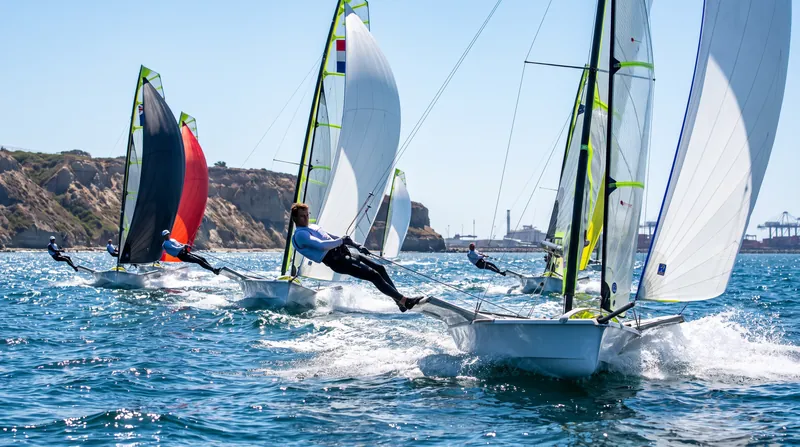
More in Sports
See all →Injury
Dave Wade Completes Remarkable Injury Recovery With Bronze at Fireball World Championship
5 sources
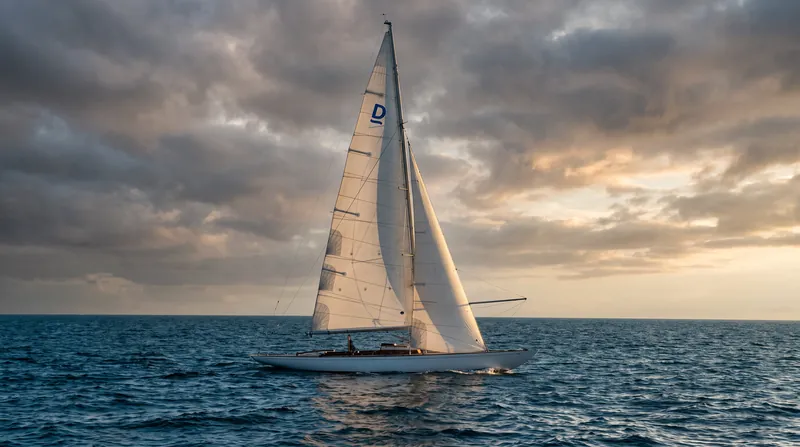
Standings
Italian TP52 'Vudu' Overtakes King Felipe's 'Hispaniola' as Copa del Rey MAPFRE Enters Final Stages
6 sources

Injury
Sailing Injury Report: Key Athletes Navigate Recoveries Across SailGP, IMOCA, and Olympic Classes
5 sources
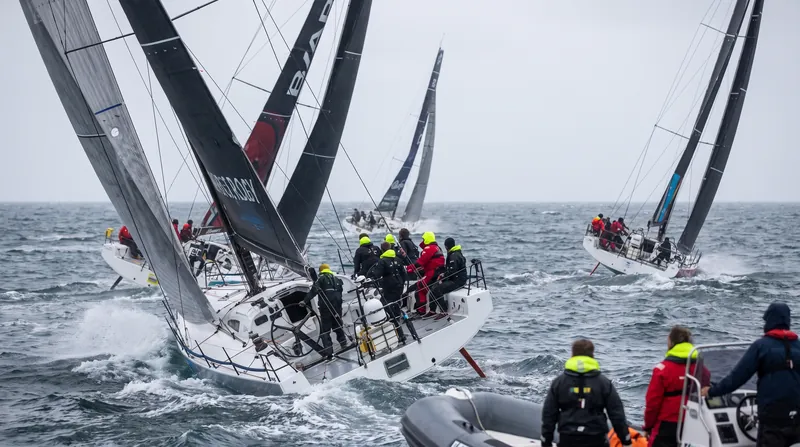
Standings
Sam Goodchild Leads IMOCA Globe Series Standings as Fleet Prepares for Transatlantic Sprint
6 sources
Comments
Every angle. Every day.
Get Sports stories with full source coverage and perspective breakdowns, free every day.