
FIFPRO Report Reveals Nearly Half of Female Footballers Consider Early Retirement Over Pay and Stress
A global survey of 800 players by the international players' union highlights a stark divide between the sport's top tier and the precarious financial and mental health conditions facing the majority.
By Xia Wu

Share this story
The global players' union FIFPRO dropped its 2026 Global Employment Report on October 12, revealing a critical retention crisis: 49 percent of professional female footballers are actively considering leaving the sport earlier than planned. The 800-player survey exposes a stark reality where the game's elite commercial boom masks precarious conditions for the vast majority of the workforce.[2]
Financial instability and psychological strain are driving the exodus. Among the athletes contemplating early retirement, 59 percent cited severe financial pressures, while 46 percent pointed directly to psychological stress. The numbers underscore how the sport's rapid revenue growth has largely failed to trickle down to the locker rooms that sustain it.[3]
"The women's football industry has come a long way," FIFPRO Director of Women's Football Alex Culvin stated. "But for 95 percent of players, the rest of the industry, there is a hell of a long way to go."[3]
The report, titled "Working Conditions in Women's Football," highlights a glaring lack of basic employment protections. Only 56 percent of the surveyed players hold a written employment contract, and a mere 13 percent receive any form of club pension. Furthermore, 47 percent reported that their clubs operate without sufficient support staff.[2][3]
"The professionalisation of women's football is accelerating in some parts of the world and revenues are increasing, however, the progress and benefits are not evenly distributed," Culvin noted. "Away from the best resourced clubs, there is a recurring theme of precarity and fragile conditions."
Wage disparities present a particularly stark picture across regional lines. While the inflation-adjusted average monthly club wage has tripled since 2017 to $2,601, the median salary sits substantially lower at $1,669. In 10 Eastern European nations analyzed by the union, average salaries for professional players remain below the national minimum wage.[3]
Contract security has seen marginal gains over the past decade, though the baseline remains dangerously low. The average contract length has risen from 12 months in 2017 to 19 months in 2026, providing slightly more runway for players. Concurrently, the proportion of athletes utilizing agents to negotiate their deals has climbed sharply from 14 percent to 41 percent.[3]
Mental health emerged as a critical vulnerability alongside the financial shortfalls. The study found that 57 percent of all surveyed players have experienced mental health difficulties during their careers. Alarmingly, half of those athletes reported receiving absolutely no psychological support or intervention from their clubs.[1][2]
Players indicated that the sport's rapid commercial growth has introduced intense new pressures, including increased physical workloads and exposure to social media abuse. However, clubs have largely failed to implement the necessary safeguarding frameworks to help athletes navigate these modern professional demands.[1]
The union is now pushing for enforceable minimum standards to be written into national-level contracts. FIFPRO's demands include mandatory psychological support, guaranteed healthcare, and baseline facility standards. Currently, only eight of the 30 national women's leagues analyzed operate under a collective bargaining agreement with players.[2]
Despite the systemic challenges, the report did capture one significant area of structural improvement. Following the implementation of FIFA's mandatory maternity regulations in 2021, the percentage of players considering leaving the sport specifically to start a family has plummeted from 47 percent in 2017 to just 19 percent today.
The focus now shifts to domestic federations and league operators to implement the union's proposed baseline protections. Without binding minimum standards, FIFPRO warns that the women's game risks losing a generation of talent to the sheer economic and psychological friction of staying on the pitch.[2]
Key points
- FIFPRO's 2026 Global Employment Report surveyed 800 players, finding 49 percent are considering leaving the sport prematurely.
- Financial pressures and psychological stress were cited as the primary reasons for early retirement among professional female footballers.
- While average wages have tripled since 2017, the median monthly salary remains low at $1,669, with significant regional disparities.
- The union is calling for enforceable minimum standards, including mandatory psychological support and guaranteed healthcare in player contracts.
How we got here
2017
FIFPRO publishes its previous global study on working conditions in women's football.
2021
FIFA implements mandatory maternity regulations, significantly reducing the number of players leaving to start families.
Oct 12, 2026
FIFPRO releases the 2026 Global Employment Report, revealing widespread financial and psychological strain among players.
- Player Union Advocates
- Argue that the rapid commercial growth of women's football must be matched by enforceable minimum employment standards and psychological support.
- League and Club Operators
- Face the challenge of balancing accelerated commercialization with the immediate costs of implementing comprehensive support staffs and higher baseline wages.
Perspectives this story doesn't cover
- Club owners managing smaller budgets
- Domestic federation officials
Sources
Source coverage
3 outlets
2 viewpoints surfaced



- [1]bdnews24.comPlayer Union Advocates
Financial and mental health issues pushing women towards early retirement
Read on bdnews24.com → - [2]Dave.SportPlayer Union Advocates
Nearly half of women footballers surveyed considering early retirement
Read on Dave.Sport → - [3]Channel AfricaPlayer Union Advocates
Financial, mental health issues pushing women towards early retirement
Read on Channel Africa →
More in Sports
See all →Manager Contracts
Sarina Wiegman Extends England Contract Through 2029 European Championship
5 sources

Sports Medicine
The Q-Angle, Notch Size, and Hormonal Factors Driving the Threefold Higher ACL Injury Rate in Female Footballers
9 sources
Front Office Move
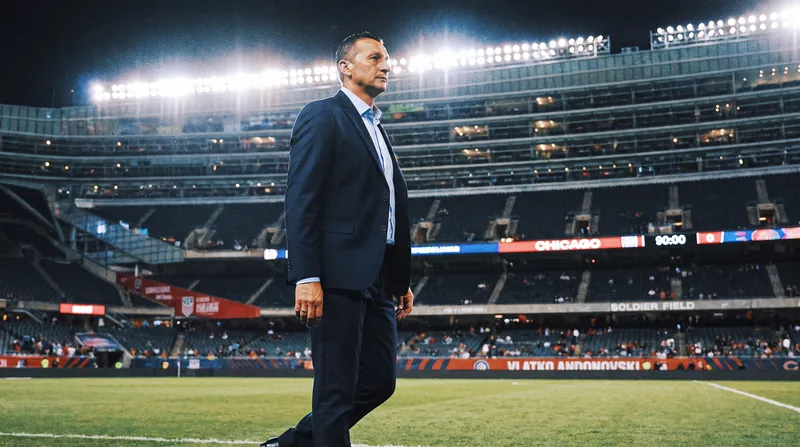
Vlatko Andonovski Named Chief Soccer Officer of the Chicago Stars
7 sources
Player Safety
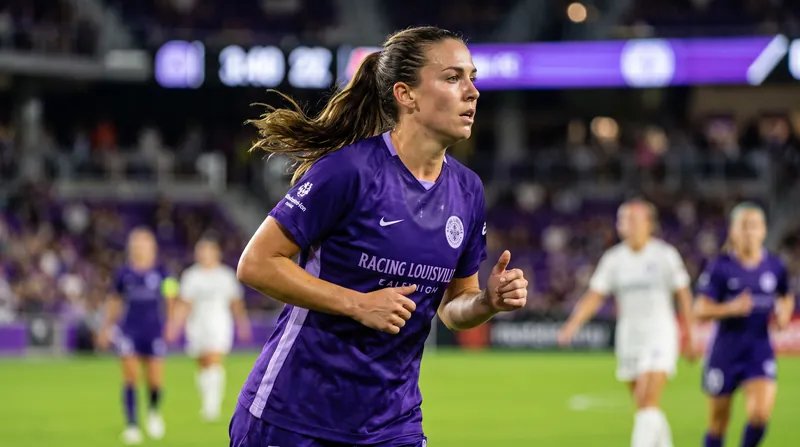
Racing Louisville's Savannah DeMelo Sues Team Doctors Over On-Field Cardiac Arrest
6 sources
Comments
Every angle. Every day.
Get Sports stories with full source coverage and perspective breakdowns, free every day.