
Duane 'Keffe D' Davis Found Guilty of Orchestrating Tupac Shakur's 1996 Murder
A Nevada jury has convicted former gang leader Duane Davis for his role in the 1996 drive-by shooting of Tupac Shakur, bringing legal closure to one of music's most infamous unsolved cases.
By Joao Marques
Share this story
For anyone who grew up listening to the poetic, turbulent verses of 1990s hip-hop, the unresolved death of its brightest star has always felt like an open wound—a ghost story that the culture simply accepted as permanent. But ghost stories, it turns out, sometimes end with a jury foreperson reading a verdict form in a sterile, fluorescent-lit room. After thirty years of documentaries, podcasts, and street-corner speculation, the legal system has finally provided an answer to the question of who killed Tupac Shakur.
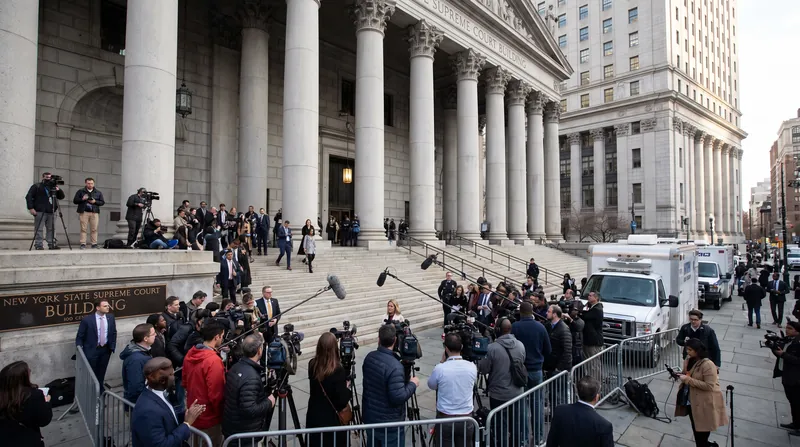
On Monday, a Nevada jury found 63-year-old Duane "Keffe D" Davis guilty of orchestrating the 1996 drive-by shooting that claimed the life of the 25-year-old rap icon. Davis, a former leader of the South Side Compton Crips, stood quietly as the verdict was delivered in a Las Vegas courtroom, bringing a sudden, bureaucratic end to a saga that has dominated American music lore for a generation.[1][2][3]
The conviction did not hinge on Davis pulling the trigger—authorities have long believed his deceased nephew, Orlando Anderson, was the actual shooter. Instead, prosecutors successfully argued that Davis was the "on-ground, on-site commander" who procured the firearm, gathered the crew, and directed the white Cadillac that pulled alongside Shakur's BMW near the Las Vegas Strip.[1][3]
In a twist of profound irony, the state's star witness was effectively Davis himself. For years, operating under the assumption that he was shielded by a proffer agreement from a separate federal task force, Davis had openly boasted about his involvement in the shooting across multiple interviews, documentaries, and even a published memoir. He treated his proximity to the infamous murder as a morbid badge of honor, a monetization strategy that ultimately handed Las Vegas prosecutors the exact roadmap they needed to secure an indictment in 2023.[2][3]
The trial itself was a surreal collision of 1990s gangland history and modern courtroom procedure. Witnesses recounted the chaotic aftermath of a Mike Tyson heavyweight fight at the MGM Grand, detailing the casino-floor brawl between Shakur's entourage and Anderson that served as the catalyst for the fatal retaliation hours later. It was a vivid reminder of a bygone era when the lines between the entertainment industry and street violence were lethally porous.[2]
Davis's defense team had attempted to write off his years of public confessions as mere posturing—the exaggerated bravado of an aging man trying to cash in on the true-crime industrial complex. They argued that the state lacked physical evidence tying him to the weapon or the vehicle, relying entirely on the unreliable narratives of a man trying to sell books and secure television appearances.[1][2]
The jury, however, found the sheer volume and consistency of his past admissions impossible to ignore. Prosecutors successfully painted a picture of a man who believed he had outsmarted the system, only to talk his way into a life sentence decades after the trail had supposedly gone cold.[3]
The verdict closes the book on the most scrutinized unsolved murder in music history, though it cannot undo the profound cultural loss of Shakur's unrealized potential. Davis now faces the prospect of spending the rest of his life in a Nevada state prison, awaiting a sentencing hearing that will officially conclude a thirty-year wait for accountability. For the family of Tupac Shakur, and for a hip-hop community that has mourned him for decades, the myth has finally given way to the law.[1][3]
Viewpoints in depth
Prosecutors and Law Enforcement
Justice delayed is not justice denied, and hubris can be a prosecutor's best asset.
For law enforcement, the conviction represents a triumph of patience and opportunism. Prosecutors capitalized on Davis's belief that he was untouchable, turning his own monetization of the tragedy against him. They maintained that while the physical evidence from 1996 had degraded or gone missing, Davis's detailed, repeated, and public admissions provided a clearer picture of the crime's orchestration than any forensic report could have offered.
Defense and Skeptics
A conviction built on storytelling rather than hard evidence sets a dangerous precedent.
Davis's defense team, along with some legal skeptics, argued that the trial was an exercise in prosecuting a ghost. They contended that Davis was an aging man who exaggerated his proximity to a famous event to secure book deals and documentary payouts. By relying almost entirely on these boastful narratives rather than physical evidence tying him to the weapon or the vehicle, the defense argued the state failed to meet the burden of proof required for a murder conviction.
Hip-Hop Historians
A necessary legal conclusion that cannot undo a generational cultural loss.
For cultural observers and hip-hop historians, the verdict is a bittersweet milestone. While it brings a definitive legal end to the mystery of who killed Tupac Shakur, it underscores the senselessness of the violence that robbed the world of one of its most prolific artists at age 25. The conviction demystifies the event, stripping away the conspiracy theories and leaving only the tragic reality of a gang retaliation that permanently altered the trajectory of American music.
Key points
- A Nevada jury convicted Duane "Keffe D" Davis of orchestrating the 1996 murder of rap icon Tupac Shakur.
- Prosecutors argued Davis was the "on-site commander" who provided the gun and directed the fatal drive-by shooting.
- The conviction relied heavily on Davis's own public confessions in interviews and a memoir over the past decade.
- The verdict brings legal closure to one of the most infamous unsolved mysteries in music history.
How we got here
Sep 1996
Tupac Shakur is fatally shot in a drive-by on the Las Vegas Strip after a casino brawl.
1998
Orlando Anderson, the suspected shooter and Davis's nephew, is killed in an unrelated gang shooting.
2018
Duane Davis publicly admits his role in the shooting in a documentary, believing he has immunity.
2019
Davis publishes a memoir detailing his involvement as the "on-site commander" of the attack.
Sep 2023
Las Vegas police arrest Davis, citing his public statements as the basis for the indictment.
Aug 2026
A Nevada jury finds Davis guilty of orchestrating the murder.
- Law Enforcement
- Emphasizes that justice delayed is not justice denied, highlighting how Davis's own public confessions provided the necessary evidence to close the case.
- Defense Counsel
- Argues that the conviction relies too heavily on the boastful, uncorroborated storytelling of an aging man seeking fame, rather than hard forensic evidence.
- Cultural Observers
- Views the verdict as a necessary but anticlimactic conclusion to a tragedy that fundamentally altered the trajectory of American music.
Perspectives this story doesn't cover
- Tupac Shakur's surviving family members
- Former Las Vegas police investigators from the original 1996 case
Sources
Source coverage
3 outlets
3 viewpoints surfaced



- [1]CBS NewsLaw Enforcement
Guilty verdict in Tupac Shakur's 1996 murder as jury convicts Duane Davis of orchestrating shooting
Read on CBS News → - [2]Los Angeles TimesDefense Counsel
Ex-Compton gang leader found guilty in murder of Tupac Shakur
Read on Los Angeles Times → - [3]TIMECultural Observers
Duane 'Keffe D' Davis Found Guilty of Tupac Shakur's Murder
Read on TIME →
More in Entertainment
See all →Music Royalties
The Survey Method, the Census Method, and the Sample Rate: How PROs Distribute Performance Royalties
2 sources

Test Screenings
How Hollywood Test Screenings Actually Work: The Mechanics of the Four-Quadrant System and the 'Definite Recommend' Score
3 sources

Artist Health
Billy Joel Undergoes Brain Surgery for Neurological Condition, Confirms Tour Will Continue
7 sources

Music Copyright
The 50/50 Split: How Music Publishing Rights Differ from Master Recording Rights
5 sources

Comments
Every angle. Every day.
Get Entertainment stories with full source coverage and perspective breakdowns, free every day.