
David Betlehem and Moesha Johnson Crowned 2026 Open Water Swimming World Cup Champions
Hungary's David Betlehem and Australia's Moesha Johnson secured the overall 2026 World Aquatics Open Water Swimming World Cup titles following the final leg in Setubal, Portugal. Johnson completed a historic undefeated season, while European men dominated the final standings.
By Ryder James
Share this story
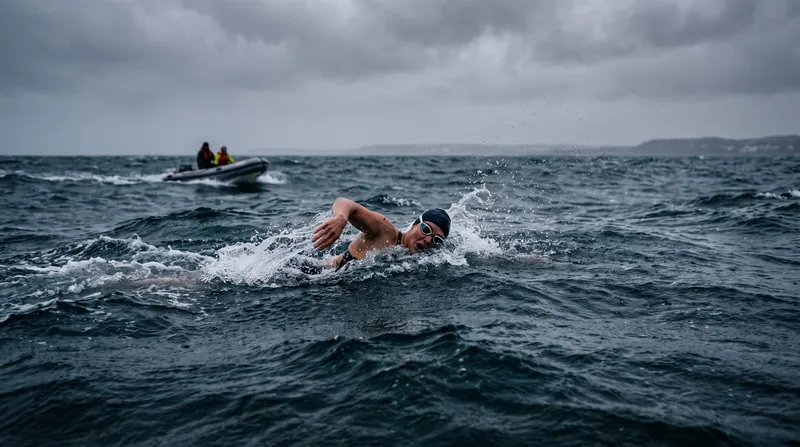
The 2026 World Aquatics Open Water Swimming World Cup has officially drawn to a close, crowning Hungary's David Betlehem and Australia's Moesha Johnson as the season's ultimate endurance champions. The grueling four-stop global circuit culminated over the weekend in the choppy Atlantic swells of Setubal, Portugal, finalizing a standings leaderboard that highlighted both unprecedented individual dominance and deep regional rivalries.[1]
The women's circuit belonged entirely to Moesha Johnson, who authored one of the most remarkable seasons in recent open water history. The Australian distance specialist completed a flawless clean sweep of the World Cup series, winning all four 10km marathon races she entered. From the warm Red Sea in Egypt to the unpredictable currents of the Mediterranean and Atlantic, Johnson's ability to adapt to wildly different aquatic environments cemented her status as the sport's premier tactician.[1]
On the men's side, the overall championship was secured by Hungary's David Betlehem, who entered the final weekend in Setubal protecting a narrow points lead. Knowing exactly what he needed to do to clinch the title, Betlehem swam a highly calculated 10km race, avoiding early skirmishes and holding his nerve in the lead pack. His fourth-place finish in the final marathon was more than enough to mathematically secure the overall 2026 men's World Cup crown.[1]
Betlehem's victory sat atop a men's leaderboard utterly dominated by European athletes. France's veteran tactician Marc-Antoine Olivier, who boasts 23 career World Cup medals, secured second place in the overall standings, while his 21-year-old compatriot Sacha Velly took third. The French duo's consistency across the four stops underscored the immense depth of Europe's domestic open water programs, which routinely produce the world's top marathon swimmers.[1]
The final weekend in Portugal also featured the explosive 3km Knockout Sprint, providing a fast-paced contrast to the marathon events. Germany's Oliver Klemet, returning to peak form after an early-season injury, dictated the pace from the outset and pulled clear in the decisive final 500 meters to claim gold. Italy's Gregorio Paltrinieri took silver, while Olivier added a sprint bronze to his weekend haul.[1]
Beyond the prestige of the title, the World Cup standings carry significant financial stakes. By topping the overall leaderboards, Betlehem and Johnson each earned $50,000 from the $360,000 total prize pool distributed by World Aquatics. The governing body's prize structure requires athletes to compete in at least three stops, including the mandatory final leg, to ensure the world's best consistently face off throughout the spring rather than selectively peaking.[2]
The 2026 tour was widely praised for its diverse and challenging venues. Athletes opened the season in March in Somabay, Egypt, before transitioning to back-to-back Mediterranean stops in Ibiza, Spain, and Golfo Aranci, Italy. The decision to conclude the series in Setubal—a historic venue that has hosted the World Cup 16 times—provided a fittingly rigorous finale, testing the swimmers with colder water temperatures and heavier ocean swells.
With the World Cup trophies now awarded, the final standings serve as the ultimate form guide for the remainder of the 2026 aquatics calendar. For the dominant European men, the grueling spring circuit acts as a high-stakes rehearsal for the upcoming European Aquatics Championships. Meanwhile, Johnson's undefeated run sends a clear message to the rest of the world that the road to global distance gold currently runs through Australia.[1]
The numbers
The essentials
- Hungary's David Betlehem won the overall men's World Cup title after a consistent four-stop campaign.
- Australia's Moesha Johnson completed a historic clean sweep, winning all four women's 10km races in 2026.
- European swimmers dominated the men's standings, with France's Marc-Antoine Olivier and Sacha Velly taking second and third overall.
- Germany's Oliver Klemet won the men's 3km Knockout Sprint at the final stop in Setubal.
- The overall champions each earned $50,000 in prize money from World Aquatics.
Timeline
March 2026
The World Cup season opens in Somabay, Egypt, with athletes navigating the warm waters of the Red Sea.
April 2026
Stop 2 takes place in Ibiza, Spain, marking the start of the European leg in the Mediterranean.
May 2026
Stop 3 in Golfo Aranci, Italy, sees France's Sacha Velly claim his first-ever 10km World Cup victory.
June 2026
The circuit concludes in the choppy Atlantic waters of Setubal, Portugal, finalizing the overall standings.
- European Aquatics Focus
- Highlights the overwhelming dominance of European men across the entire 2026 circuit.
- Global & Australian View
- Focuses on Moesha Johnson's unprecedented clean sweep and adaptability across diverse conditions.
- Governing Body & Format
- Emphasizes the success of the four-stop global tour and the incentive structure of the prize pool.
Perspectives this story doesn't cover
- Athletes who missed out on prize money due to injury
Sources
Source coverage
2 outlets
3 viewpoints surfaced


- [1]European AquaticsEuropean Aquatics Focus
Brilliant Betlehem takes Open Water Swimming World Cup crown as Europeans take lion's share of medals in Setubal
Read on European Aquatics → - [2]FINA Official DocumentsGoverning Body & Format
Open Water Swimming World Cup 2026 Rules & Regulations
Read on FINA Official Documents →
More in Sports
See all →Recap
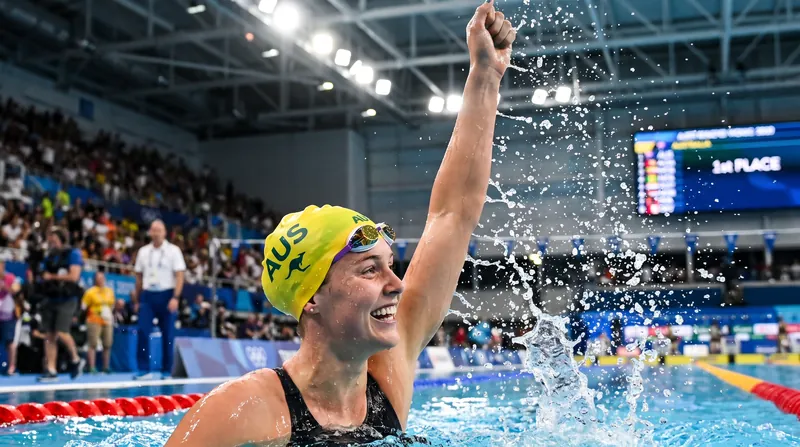
Indiana Dominates Inaugural College Swimming League Match 1 Behind Alex Shackell's MVP Performance
3 sources
Power ranking
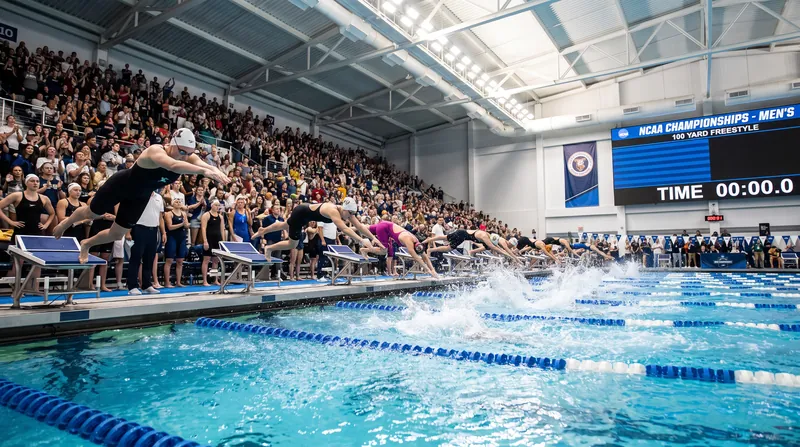
Global Men's 200 Freestyle Power Rankings: Zhang Zhanshuo Resets the Board With Historic 1:43.49
2 sources
Storyline
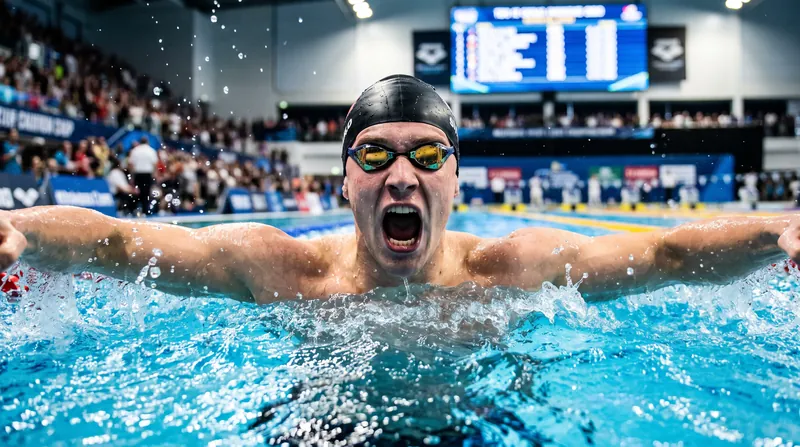
British Relay Team Smashes English Channel Record, Falls Three Minutes Short of 1990 World Mark
2 sources
Fluid Dynamics
The 3-8mm Spacing: How Invisible Water Vortices Maximize Hand Propulsion in Swimming
7 sources
Comments
Every angle. Every day.
Get Sports stories with full source coverage and perspective breakdowns, free every day.