
College Swimming League Finalizes Inaugural 12-Team Lineup Based on 2026 NCAA Standings
The newly formed College Swimming League has officially selected its 12 founding member universities for the inaugural fall 2026 season, drawing exclusively from the top 25 of the latest NCAA standings.
By Xia Wu

Share this story
The final standings of the 2026 NCAA Swimming and Diving Championships have officially dictated the landscape of the sport's newest frontier. The College Swimming League (CSL) has finalized its 12-team lineup for its inaugural fall 2026 season, selecting exclusively from programs that finished in the top 25 on both the men's and women's sides.
The announcement marks a seismic shift in the collegiate swimming calendar, replacing traditional early-season dual meets with a high-stakes, broadcast-ready spectacle. By drawing its founding members directly from the upper echelon of the national standings, the CSL has ensured that its debut season will feature the fastest and most competitive rosters in the country.[1]
Founded by Robert Kent and Kyle Sockwell, and backed by the International Swimming League (ISL), the CSL aims to revolutionize the fall collegiate season. The league's primary objective is to transform college swimming from a niche, campus-centric activity into a commercially viable, highly visible television product.
Kent, the former general manager of the ISL's Toronto Titans, brings professional operational expertise to the NCAA ranks, hoping to bridge the gap between collegiate athletics and the professional swimming circuit. The CSL is built on a dual foundation of athletic excellence and commercial sustainability, promising to elevate the sport for universities, athletes, and fans alike.[1][3]
The 12 founding members represent a powerhouse collection of ACC, SEC, and Big Ten programs. The finalized roster includes Virginia, Indiana, Tennessee, California, Stanford, Michigan, NC State, Louisville, Ohio State, Georgia, Alabama, and Auburn. The selection criteria heavily favored programs with balanced excellence; all 12 institutions saw both their men's and women's teams finish in the top 25 at the 2026 NCAA Championships.
The women's field is particularly dominant, boasting an average NCAA finish of 8.75, while the men's teams average a 10.75 finish. This concentration of elite talent guarantees that every CSL match will feature Olympic-caliber racing.
The Virginia Cavaliers, fresh off their staggering sixth consecutive NCAA women's team title, were the first program announced and serve as the league's marquee attraction. Stanford, the 2026 NCAA women's runner-up, quickly followed suit, alongside the Indiana men, who placed third nationally.
The inclusion of these blue-blood programs lends immediate credibility to the CSL. Virginia head coach Todd DeSorbo's roster, packed with international medalists and American record holders, sets the exact standard of excellence the league was built to showcase, ensuring that the inaugural season will command the attention of the broader swimming community.[2]
However, the standings-based selection process also highlighted several glaring absences from the inaugural lineup. The top two men's teams from the 2026 NCAA Championships—the Texas Longhorns and the Florida Gators—are not among the founding 12. Furthermore, the entire Big 12 conference, which includes recent powerhouse Arizona State, is entirely unrepresented.
Analysts have noted that the Big 12 historically lags behind the ACC, SEC, and Big Ten in overall conference revenue, which may have influenced the league's geographic and financial footprint. The absence of the nation's top two men's programs leaves a notable void, but also provides obvious targets for future league expansion.
To maximize entertainment value, the CSL has adopted a fast-paced, condensed format heavily inspired by the ISL. The inaugural season will consist of eight total matches—six in the regular season and two in the postseason. Each match will feature four teams competing in a rapid-fire, 15-event program designed to fit perfectly within a standard television broadcast window. The event order includes a mix of traditional strokes, relays, and individual medleys, stripping away the downtime that often plagues traditional college dual meets and keeping the focus squarely on high-octane racing.[3]
In a significant departure from standard NCAA competition, team rosters for CSL matches will be strictly capped at 14 men and 14 women per university. This roster limit is much smaller than an average college dual-meet squad, forcing coaches to make strategic decisions about versatility and event coverage.
Swimmers will likely be asked to tackle multiple events with minimal rest, testing their endurance and placing a premium on athletes who can excel across different strokes and distances. This constraint is expected to create intense, unpredictable matchups where depth and strategic entries dictate the final score.
Crucially for the participating universities, the CSL is fully funding the endeavor, removing the financial burden typically associated with elite out-of-conference competition. The league expects to cover all travel and lodging expenses for the 12 teams, a massive incentive in an era of tightening athletic department budgets. Furthermore, times swum at CSL matches will officially count toward NCAA Championship qualification, and the matches themselves will satisfy the NCAA's mandatory dual-meet requirements. This alignment ensures that programs do not have to sacrifice their postseason aspirations to participate in the new league.[1]
Coaches across the country have universally praised the initiative, viewing it as a necessary evolution for the sport. Michigan head coach Matt Bowe called the CSL "exactly the kind of innovation our sport needs," emphasizing that swimming must continue to evolve to showcase student-athletes on a larger stage.
Similarly, NC State's Braden Holloway noted that the league brings "fresh energy and a new platform," while Stanford's coaching staff highlighted the innovative format as a challenging and fun experience for their swimmers. The buy-in from these elite coaches underscores a collective desire to push college swimming into the modern sports entertainment landscape.[1][2]
As the swimming world looks toward the fall of 2026, the College Swimming League stands poised to permanently alter the collegiate calendar. By leveraging the final NCAA standings to curate an elite roster of founding teams, the CSL has manufactured a high-stakes competitive environment from day one.
If successful, the league will not only generate unprecedented revenue and visibility for college swimming but also establish a clear, professionalized pathway for athletes transitioning to the International Swimming League. The inaugural season promises to be a spectacular test of whether college swimming can finally capture the mainstream commercial success its athletes deserve.[1][3]
Key points
- The College Swimming League (CSL) launches in fall 2026 with 12 founding teams.
- All 12 selected programs finished in the top 25 at the 2026 NCAA Championships.
- The league features a fast-paced format with four-team matches and 14-swimmer rosters.
- The CSL covers all travel and lodging costs for participating universities.
- Matches will count toward official NCAA Championship qualification times.
- Notable absences include the #1 Texas men, #2 Florida men, and all Big 12 programs.
How we got here
December 2025
The College Swimming League is officially announced with backing from the ISL.
March 2026
The NCAA Swimming and Diving Championships conclude, setting the final standings used for CSL team selection.
May 2026
Virginia is announced as the first founding member, followed by a steady rollout of top-tier programs.
June 2026
The CSL finalizes its 12-team inaugural lineup, confirming a roster of ACC, SEC, and Big Ten powerhouses.
Fall 2026
The inaugural CSL season is scheduled to begin.
- CSL Leadership
- Focuses on commercializing the sport and creating a broadcast-ready, financially sustainable product.
- Participating Coaches
- Views the league as a necessary innovation to energize student-athletes and elevate the sport's profile.
- Swimming Analysts
- Highlights the competitive strength of the selected teams while noting the glaring absence of certain top-ranked programs.
Perspectives this story doesn't cover
- Athletes from non-participating universities
- NCAA administrators
Sources
Source coverage
3 outlets
3 viewpoints surfaced



- [1]Swimming World MagazineCSL Leadership
College Swimming League (CSL) Will Launch in 2026, Aims to Revolutionize College Swimming
Read on Swimming World Magazine → - [2]Stanford AthleticsParticipating Coaches
Stanford Accepts Invitation to College Swimming League
Read on Stanford Athletics → - [3]College Swimming League OfficialCSL Leadership
College Swimming League: A brand new, dynamic league poised to revolutionize college swimming
More in Sports
See all →Standings
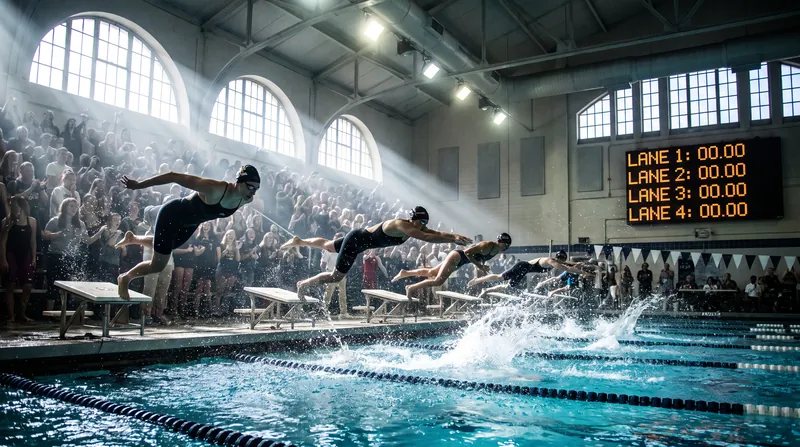
Lani Pallister Dethrones Katie Ledecky Atop 2026 World Rankings in Historic 800m Freestyle Shift
6 sources
Power ranking
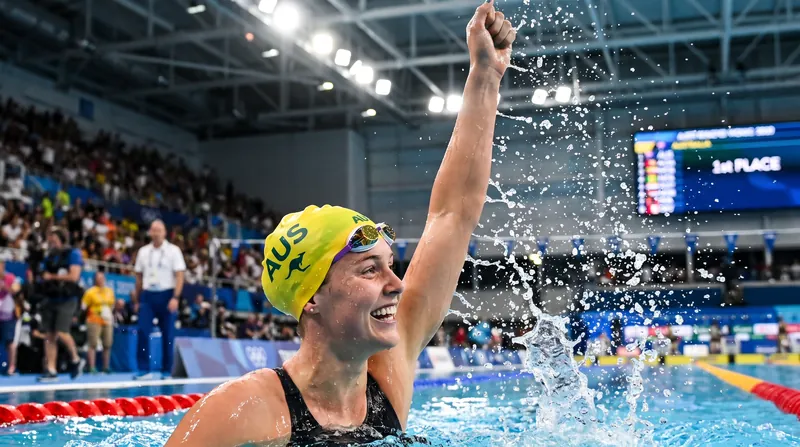
Global Men's 200 Freestyle Power Rankings: Zhang Zhanshuo Resets the Board With Historic 1:43.49
2 sources
Storyline
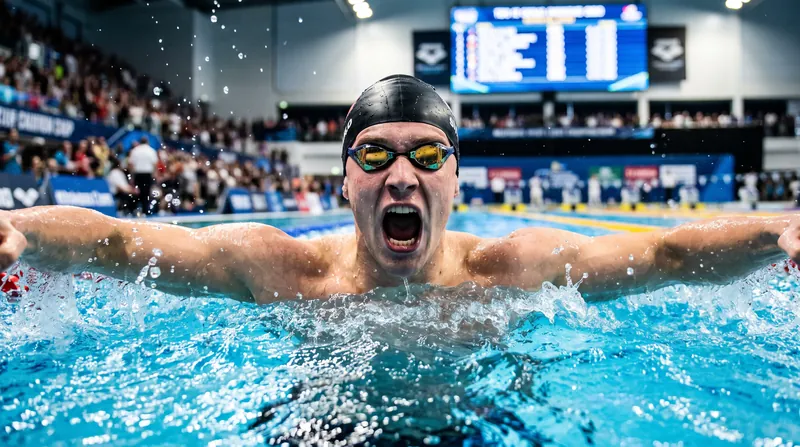
British Relay Team Smashes English Channel Record, Falls Three Minutes Short of 1990 World Mark
2 sources
Fluid Dynamics
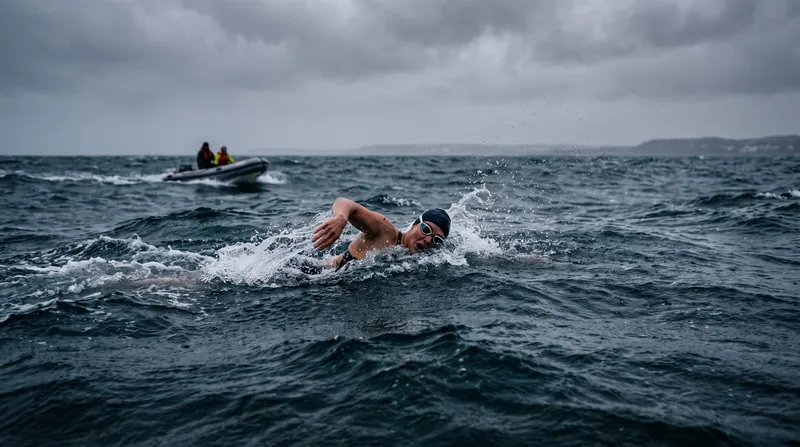
The 3-8mm Spacing: How Invisible Water Vortices Maximize Hand Propulsion in Swimming
7 sources
Comments
Every angle. Every day.
Get Sports stories with full source coverage and perspective breakdowns, free every day.