
China and North Korea Formally Open New Yalu River Bridge After 12-Year Delay
Commercial trucks crossed the four-lane border bridge between Dandong and Sinuiju on Thursday, ending a decade-long infrastructure stalemate. The crossing shifts heavy freight away from an aging 1930s span, though monitors warn the expanded capacity could complicate sanctions enforcement.
By Anaya Sharma

A border crossing requires two functioning ends, a condition that the New Yalu River Bridge failed to meet for 12 years. While China completed its side of the 3,026-meter span in October 2014, the North Korean approach terminated in unpaved dirt, constrained by diplomatic friction and pandemic isolation.[1][4]
Construction on the massive project began in December 2010, with Beijing funding the infrastructure. While Chinese contractors finished their portion on schedule, the bridge sat as a bridge to nowhere over the Yalu River, dropping off abruptly into North Korean farmland.[3]
On Thursday, that physical gap finally closed. Commercial trucks adorned with national flags rolled across the four-lane highway connecting Dandong, China, to Sinuiju, North Korea. The ceremony formally opened the largest land trade route between the two nations after more than a decade of delays.[1][4]
Until this week, the logistical burden of the bilateral relationship rested almost entirely on the Sino-Korean Friendship Bridge. Built in 1937, that aging single-lane structure can only accommodate traffic in one direction at a time, creating a persistent bottleneck for cross-border commerce.[4]
The older Friendship Bridge currently handles roughly 70 percent of all official trade between Beijing and Pyongyang. The new dual-carriageway is designed to relieve that pressure, shifting heavy freight away from the city center and into a dedicated, modernized customs plaza.[1][4]
The older bridge also carries a railway line alongside its single vehicle lane. Train journeys between the East Asian neighbors only restarted in March 2026 after a six-year halt caused by North Korea's strict COVID-19 border closures, highlighting the fragility of cross-border logistics.[1][4]
Shifting the logistical burden
The expanded capacity is designed to process thousands of vehicles daily, a massive upgrade over the legacy infrastructure. Regional analysts note that the modern crossing will be particularly crucial for processing high-volume shipments of heavy machinery and construction materials.[1][4]
However, the transition comes with immediate financial friction for local merchants. Chinese traders are currently rushing cargo over the old bridge to avoid the steep toll fees expected on the new route, according to Daily NK.[5]
Freight operators report that customs duties on the New Yalu River Bridge will significantly undercut profit margins for small-scale agricultural and consumer goods. This has created a temporary traffic surge on the 1937 span as businesses attempt to front-load their shipments before regulations tighten.[5]
Beyond local commerce, the opening signals a structural deepening of ties between Beijing and Pyongyang. In a taped address for Thursday's opening ceremony, Chinese Premier Li Qiang described the bridge as a "landmark in Chinese-North Korean friendship."[3]
Li added that the infrastructure would "expand personnel exchanges and tighten the bond between the two peoples." The rhetoric underscores China's position as North Korea's primary economic lifeline, accounting for roughly 95 percent of its total official trade.[3][4]
China remains North Korea's largest trading partner, supplying the vast majority of its imported goods. The shipments primarily consist of soybean oil, rubber tires, and synthetic fabrics, which are essential for maintaining North Korea's domestic consumer markets and agricultural sector.[1][4]
Navigating international sanctions
The activation of the bridge coincides with a broader diplomatic alignment as both nations face tightening Western pressure. The United Nations Security Council continues to prohibit the export of North Korean coal, iron, and textiles, while strictly capping fuel imports.[1]
Western monitors argue that increased physical capacity complicates the enforcement of those mandates. A four-lane highway allows for rapid, high-volume transit that is inherently harder to inspect than the single-lane bottleneck it replaces, raising concerns about illicit cargo.[1]
Yet some analysts suggest the formalized route might actually improve oversight. "The new bridge could facilitate trade that violates U.N. sanctions, but traffic across it could be more transparent and subject to customs than cross-border smuggling," said Leif-Eric Easley, a professor at Ewha University in Seoul.[1]
The regional economic impact
For Pyongyang, the operational bridge represents a critical victory after years of pandemic-induced border closures. The North Korean economy contracted sharply between 2020 and 2023, making the resumption of overland trade an existential priority for the isolated state.[4]
Satellite imagery from earlier this month confirmed that Pyongyang finally completed the connecting road network and customs plazas in Sinuiju. The construction required significant capital, which analysts suspect was heavily subsidized by Beijing to stabilize its neighbor's economy.[4]
On the Chinese side, the city of Dandong has long anchored its economic development plans to the new crossing. Local real estate developers built entire commercial districts near the bridgehead a decade ago, only to watch them sit empty as the project stalled.[3]
Municipal authorities now expect a revitalization of the area. Commercial property inquiries have reportedly spiked this month as logistics firms secure warehouse space near the new customs terminal, preparing to handle the anticipated surge in bulk goods.[5]
Balancing regional alliances
The opening also follows a recent shift in Pyongyang's regional alliances. Just last month, North Korea inaugurated its first road bridge linking it to Russia, a move that observers say likely accelerated Beijing's timeline for the Yalu River crossing.[1][4]
While North Korea's trade with Russia largely involves military supplies, exchanges with China focus heavily on the civilian economy. Chinese officials maintain that the bridge will primarily serve to enhance the living standards and economic stability of the border region.[1][3]
Despite the infrastructure upgrade, passenger travel remains restricted. North Korea has not yet resumed issuing tourism visas to Chinese citizens, who once made up the bulk of its overseas visitors and provided a crucial source of foreign currency before the pandemic.[1][3]
The immediate test will be the daily volume of heavy freight once the initial rush on the old bridge subsides. If the new toll structure proves too prohibitive for routine commerce, the intended logistical shift could stall before it fully materializes.[5]
The immediate test will be the daily volume of heavy freight once the initial rush on the old bridge subsides.
Key points
- Commercial trucks began crossing the four-lane New Yalu River Bridge on Thursday, ending a 12-year delay in activating the infrastructure.
- The new crossing is designed to relieve the aging Sino-Korean Friendship Bridge, which currently handles 70 percent of official bilateral trade.
- Chinese traders are temporarily rushing cargo over the old bridge to avoid the steep customs tolls expected on the new route.
- Western monitors warn that the expanded four-lane capacity will make it significantly harder to inspect cargo for violations of United Nations sanctions.
Open questions
- It remains unclear exactly what toll structure North Korea will implement for freight operators using the new crossing.
- The daily volume of heavy machinery and construction materials that will be permitted across the bridge has not been publicly disclosed.
- There is no official timeline for when passenger travel or tourism visas will be reinstated for the Dandong-Sinuiju route.
Timeline
Dec 2010
Construction begins on the New Yalu River Bridge, funded entirely by Beijing.
Oct 2014
China completes its side of the 3,026-meter span, but North Korea leaves the connecting roads unpaved.
Mar 2026
Train journeys resume across the older Sino-Korean Friendship Bridge after a six-year pandemic halt.
Oct 2026
The New Yalu River Bridge formally opens to commercial truck traffic.
- Regional Commerce Advocates
- Focus on the economic necessity of the bridge for local traders and North Korea's civilian economy.
- Sanctions Monitors
- Warn that the expanded four-lane capacity could facilitate the evasion of United Nations mandates.
- Diplomatic Observers
- View the infrastructure as a geopolitical tool for Beijing to stabilize Pyongyang and counter Western influence.
Perspectives this story doesn't cover
- Local Dandong residents
- North Korean border merchants
Sources
Source coverage
5 outlets
3 viewpoints surfaced





- [1]AP NewsSanctions Monitors
New China-North Korea bridge opens after more than a decade of delay
Read on AP News → - [2]Al JazeeraDiplomatic Observers
China and North Korea open new border bridge amid deepening ties
Read on Al Jazeera → - [3]South China Morning PostRegional Commerce Advocates
China keen to strengthen North Korea trade ties with New Yalu River Bridge opening
Read on South China Morning Post → - [4]CNNSanctions Monitors
China-North Korea bridge opens after yearslong delay
Read on CNN → - [5]Daily NKRegional Commerce Advocates
Chinese traders flood the old Sino-Korean Friendship Bridge with cargo, fearing steep tolls on the soon-to-open New Yalu River Bridge
Read on Daily NK →

More in World
See all →Maritime Law
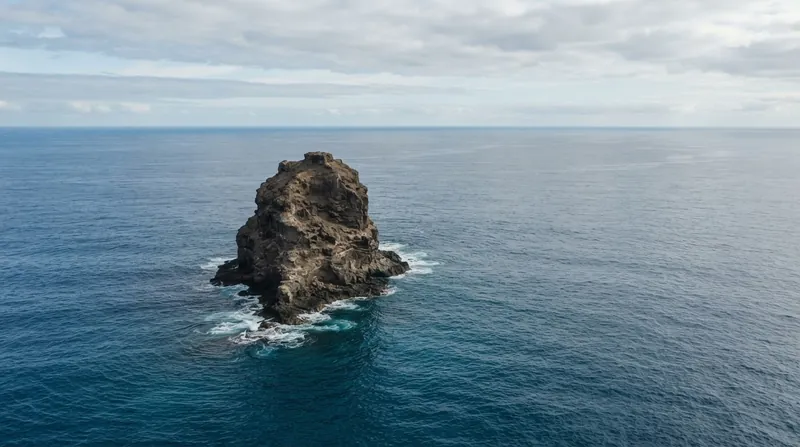
Natural Capacity Over External Resupply: Why UNCLOS Article 121(3) Denies 200-Nautical-Mile Economic Zones to Barren Rocks
10 sources
Border Security
South Korea Blames North Korean Mines for DMZ Blast That Injured Three Officers
6 sources

Indo-Pacific Security
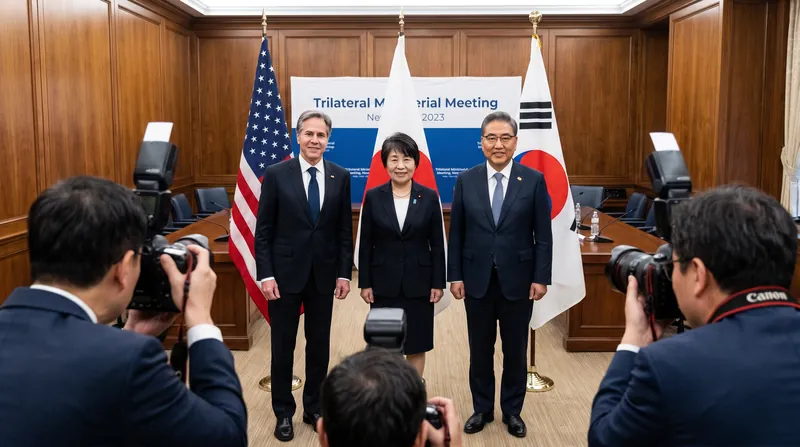
US, Japan, and South Korea Launch Economic-Security Pact to Counter Coercion and Coordinate on Taiwan
3 sources
Hukou System
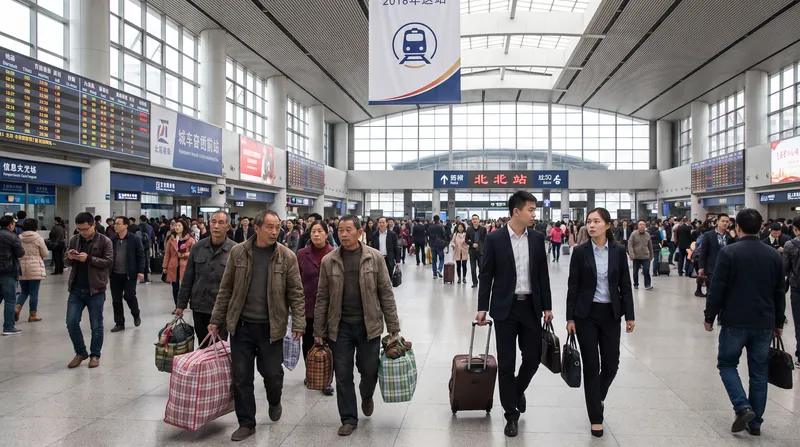
The Agricultural vs. Non-Agricultural Registration and the Three-Tiered System: How the Hukou System Structures Social Mobility in China
9 sources
Comments
Every angle. Every day.
Get World stories with full source coverage and perspective breakdowns, free every day.