
Brazil's Supreme Court Upholds Laws Undermining the Amazon Soy Moratorium
Brazil's highest court has affirmed the constitutionality of the Amazon Soy Moratorium while simultaneously upholding state laws that strip tax incentives from participating companies. The ruling effectively dismantles a landmark voluntary agreement credited with drastically reducing deforestation over the past two decades.

Share this story
On August 12, 2026, Brazil's Supreme Federal Court delivered a ruling that simultaneously validated and effectively dismantled one of the world's most successful voluntary environmental agreements. In a complex 6-3 decision, the court affirmed the constitutionality of the Amazon Soy Moratorium, a two-decade-old pact among major grain traders to boycott soybeans grown on recently deforested land.[1]
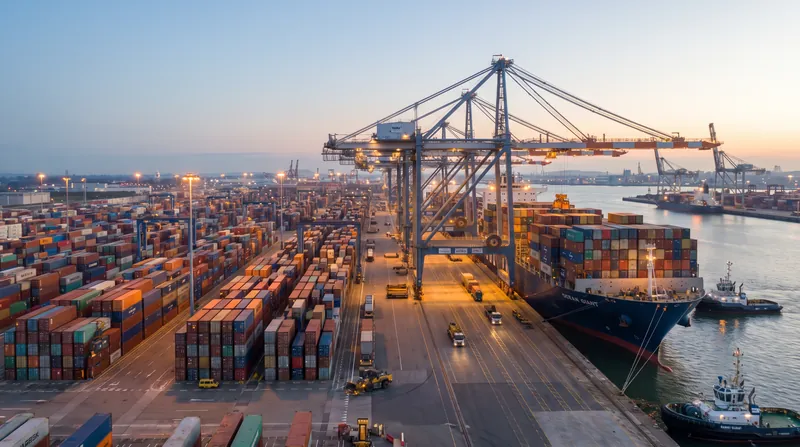
The justices rejected arguments from agricultural producer groups that the coordinated refusal to purchase non-compliant soy amounted to illegal cartel behavior. By recognizing the moratorium as a lawful private market initiative, the court shielded international trading companies—including ADM, Cargill, and Cofco—from billions of reais in potential compensation claims sought by farmers.[1][5]
However, in the same judgment, the court upheld state-level legislation in Mato Grosso and Rondônia that strips vital tax incentives and public land grants from any company participating in the moratorium. This dual ruling clears the legal fog surrounding the agreement while cementing the economic penalties that had already driven major signatories to abandon it earlier in the year.[1][2]
To understand the collapse of the moratorium, it is necessary to examine its origins. Launched in 2006 under intense pressure from environmental organizations and international buyers, the Amazon Soy Moratorium was a voluntary, multi-sectoral commitment. Participating companies pledged not to purchase or finance soybeans cultivated on land within the Amazon biome that was cleared after July 2008.[3][4]
The mechanism relied on a zero-deforestation standard that was strictly enforced through satellite monitoring and collective auditing. When the agreement was first implemented, nearly one-third of annual soy expansion in the region was occurring at the expense of native forests. Within years, deforestation directly linked to new soy fields plummeted to nearly zero.[3][5]
The friction that ultimately fractured the agreement stemmed from a fundamental discrepancy between the moratorium's zero-deforestation mandate and Brazil's domestic environmental laws. Under the 2012 Brazilian Forest Code, landowners in the Legal Amazon are required to preserve 80 percent of their native vegetation, but they are legally permitted to clear the remaining 20 percent for agricultural use.[1]
Soybean producers and agricultural associations long argued that the moratorium unfairly penalized farmers who were operating entirely within the bounds of Brazilian law. They contended that the voluntary pact functioned as an extralegal barrier to trade, effectively locking law-abiding producers out of the international market by imposing standards stricter than those mandated by the federal government.[1]
This resentment culminated in a coordinated legislative pushback at the state level. In 2024 and 2025, top soy-producing states, led by Mato Grosso—which accounts for the largest share of Brazil's soy output—passed laws designed to penalize companies adhering to the pact. These laws explicitly revoked state tax benefits for any firm participating in environmental agreements that exceeded federal requirements.[1][5]
The economic calculus for grain traders shifted immediately. Operating in a highly competitive, low-margin commodity market, companies could not afford to forfeit state fiscal incentives while their non-participating competitors retained them. The tax penalties transformed the moratorium from a reputational asset into a severe financial liability.[2]
Consequently, in January 2026, the majority of major international grain traders formally withdrew from the Amazon Soy Moratorium. The withdrawal dismantled the collective monitoring and enforcement apparatus that had made the pact effective, rendering the agreement commercially dead months before the Supreme Court issued its final ruling on the matter.[1]
The environmental stakes of this collapse are substantial. A comprehensive analysis titled "The Rise and Fall of the Amazon Soy Moratorium," published in the journal Science in July 2026, quantified the pact's historical success and projected the consequences of its absence. The researchers found that the moratorium had reduced deforestation in areas vulnerable to soy expansion by 35 percent during its first decade, without hindering agricultural productivity.[4]
With the collective agreement now dissolved, the Science study estimates that at least 1.4 million hectares of additional deforestation will occur in the Brazilian Amazon over the next decade. This projected forest loss represents a 17 percent increase over historic deforestation rates in the region and is expected to release approximately 745 million tonnes of carbon emissions—roughly equivalent to the annual output of Canada.[3][4][5]
The study also highlighted the risk of escalating land speculation. Researchers identified 9.1 million hectares of forest on private properties that are highly suitable for soybean cultivation and could be legally cleared under the Forest Code. Furthermore, up to 28.7 million hectares of undesignated public forests are now considered more vulnerable to illegal conversion, particularly near expanding infrastructure corridors.[4]
Environmental advocates and researchers warn that the Supreme Court's validation of the state laws creates a dangerous precedent. By allowing state governments to financially penalize companies for adopting ambitious environmental standards, the ruling may discourage future voluntary zero-deforestation commitments across other commodity sectors, such as beef and leather.[2][3]
The demise of the industry-wide moratorium does not entirely eliminate deforestation screening, but it fundamentally alters the mechanism. Compliance is now shifting from a collective, centralized agreement to fragmented, individual buyer contracts. European and Asian buyers who previously relied on the moratorium as a free, built-in screening layer must now enforce their own traceability standards.[2]
This shift aligns with emerging international trade frameworks, most notably the European Union Deforestation Regulation (EUDR). The EUDR restricts the importation of commodities originating from land deforested after December 2020. While less stringent than the moratorium's 2008 cutoff date, the EUDR and similar corporate pledges will now serve as the primary barriers against deforestation in the Brazilian soy supply chain.[4]
Key points
- Brazil's Supreme Court ruled the Amazon Soy Moratorium is constitutional but upheld state laws that penalize participating companies.
- Major grain traders had already withdrawn from the pact in January 2026 due to the loss of state tax incentives.
- The moratorium successfully reduced deforestation in vulnerable areas by 35 percent during its first decade.
- A July 2026 Science study projects the pact's collapse will drive 1.4 million hectares of new deforestation over the next decade.
What we don’t know
- How effectively individual buyer contracts and international regulations like the EUDR will replace the centralized enforcement of the moratorium.
- Whether other Brazilian states will pass similar laws penalizing companies for voluntary environmental commitments in other sectors, such as beef and leather.
- How the projected increase in deforestation will impact Brazil's official climate targets and its diplomatic relations ahead of the COP30 climate summit in 2025.
How we got here
July 2006
The Amazon Soy Moratorium is launched as a voluntary pact among major grain traders.
July 2008
The cutoff date established by the moratorium; soy grown on land deforested after this date cannot be purchased by signatories.
2012
Brazil passes a revised Forest Code, allowing landowners in the Amazon to legally clear up to 20 percent of their property.
2024-2025
Top soy-producing states, including Mato Grosso, pass laws revoking tax benefits for companies participating in the moratorium.
January 2026
Major international grain traders formally withdraw from the pact due to the state-level tax penalties.
July 2026
A study in the journal Science projects 1.4 million hectares of new deforestation due to the pact's collapse.
August 12, 2026
Brazil's Supreme Court rules the moratorium is constitutional but upholds the state laws that penalize participating companies.
- Environmental Advocates & Researchers
- Conservationists warn that dismantling the pact removes the most effective barrier against Amazon deforestation.
- Commodity Traders & Supply Chain Analysts
- International grain traders seek legal certainty and a level playing field in a highly competitive market.
- Agricultural Producers & State Governments
- Farmers and state officials argue the moratorium was an extralegal barrier that punished law-abiding businesses.
Perspectives this story doesn't cover
- Indigenous Communities in the Amazon
- European Union Trade Regulators
Sources
Source coverage
5 outlets
3 viewpoints surfaced





- [1]Courthouse News ServiceAgricultural Producers & State Governments
Brazil's Supreme Court upholds state laws penalizing Amazon Soy Moratorium participants
Read on Courthouse News Service → - [2]ESG MinuteCommodity Traders & Supply Chain Analysts
Brazil's Top Court Upholds Soy Moratorium, But Allows States to Punish Signers
Read on ESG Minute → - [3]BusinessGreenEnvironmental Advocates & Researchers
WWF warns end of Amazon Soy Moratorium could fuel 1.4 million hectares of deforestation
Read on BusinessGreen → - [4]WWF InternationalEnvironmental Advocates & Researchers
End of Amazon Soy Moratorium estimated to cause 1.4 million hectares of deforestation over next decade, finds new research
Read on WWF International → - [5]The Times of IndiaAgricultural Producers & State Governments
Amazon soy pact collapse could drive 1.4 million hectares of deforestation in Brazil by 2036, new study finds
Read on The Times of India →
More in Environment
See all →Ozone Recovery
Montreal Protocol Chemical Phase-Out Puts Ozone Layer on Track for 2066 Recovery
5 sources

Climate Modeling
The 2.5-Degree Threshold: How the Paris Agreement's Temperature Goal Maps Long-Term Climate Risk
6 sources

Ecological Theory
The Competition-Colonization Trade-Off: How Intermediate Disturbance Maximizes Ecosystem Diversity
7 sources

Ozone Chemistry
The Catalytic Chlorine Cycle: How a Single Chlorine Atom Destroys 100,000 Ozone Molecules
7 sources

Comments
Every angle. Every day.
Get Environment stories with full source coverage and perspective breakdowns, free every day.