
Athletics Injury Report: Tejas Shirse Completes 'Mission Miracle' Comeback to Secure Commonwealth Games Berth
Indian 110m hurdles national record holder Tejas Shirse has officially qualified for the 2026 Commonwealth Games, capping off a grueling rehabilitation from a career-threatening ankle injury.
By Ryder James

Share this story
Indian track and field has received a major, uplifting boost ahead of the 2026 Commonwealth Games, as national record holder Tejas Shirse officially secured his qualification in the 110-meter hurdles.
Clocking a blistering 13.27 seconds in his return race, Shirse not only reaffirmed his status as India's premier sprint hurdler but also established himself as a formidable medal contender on the continental stage. The performance sent a wave of optimism through the national camp, proving that one of their brightest stars had successfully navigated the darkest period of his athletic career.[1][2]
The qualification marks the triumphant culmination of what Shirse has aptly dubbed his 'Mission Miracle'—a grueling, months-long rehabilitation from a severe, career-threatening ankle injury that sidelined him during a critical window of the athletic calendar.
For a sprint hurdler, the ankle joint is the literal foundation of their success; it must absorb immense ground reaction forces while instantly generating the explosive upward propulsion required to clear 42-inch barriers at maximum velocity. Severe injuries to this joint are notoriously difficult to return from, as any lingering hesitation or loss of micro-stability can completely derail a hurdler's rhythm and speed.[1][4]
Shirse's recovery protocol was a masterclass in modern sports medicine, involving intensive daily physiotherapy, targeted biomechanical adjustments, and a carefully phased return to the track. Rather than rushing back to competition at the first sign of pain relief, his medical and coaching teams prioritized long-term structural integrity. They ensured that his takeoff and landing mechanics were fully restored and symmetrical before he was permitted to resume full-speed hurdle clearance. This patient, science-backed approach minimized the risk of reinjury and allowed Shirse to rebuild his explosive power from the ground up.[2][4]
The psychological toll of long-term injuries often derails elite athletes just as much as the physical damage, but Shirse utilized the extensive downtime to fortify his mental approach to the sport. 'When I did get injured, I always knew I'd come back stronger,' Shirse remarked following his spectacular qualifying race.
'Since my childhood, I've developed a winning mentality and my only aim is to be the best hurdler in the world.' That unwavering self-belief became the cornerstone of his daily rehabilitation, turning a potentially career-ending setback into a period of intense personal growth.[1]
He credited the enforced break with giving him the rare opportunity to step back and address underlying weaknesses that are often ignored during the relentless churn of the competitive season. 'The injury gave me time to focus on the things I wasn't doing previously, and I started inculcating them in my training and daily routine,' he explained.
By refining his nutrition, sleep hygiene, and mental visualization techniques, Shirse transformed his recovery period into a comprehensive athletic overhaul. 'Now all I aim to do is to perform consistently and make our country proud,' he added.[1]
Shirse is not the only Indian track and field athlete turning a major injury setback into a triumphant summer return this season. Astik, a rising 400-meter sprinter hailing from Odisha, recently returned to the track after suffering a severe right ankle fracture during training that kept him completely out of action for six agonizing months. His injury coincided with a period of severe family illness and financial hardship, compounding the immense pressure on the young athlete as he fought to save his promising career.
Despite the lingering physical pain and the heavy emotional burden, Astik managed to lower his personal best to an impressive 46.21 seconds at the Federation Cup immediately upon his return, showcasing the deep resilience permeating the Indian athletics camp this summer. 'The competition is very tough.
Even after returning from a six-month injury break, I know I have to improve further,' Astik noted, acknowledging that while the return itself was a victory, the ultimate goal remains international success. His performance, alongside Shirse's, has become a rallying point for the national team.
The successful, high-level rehabilitation of these athletes underscores a broader, highly positive shift in the landscape of Indian athletics. Advanced sports science, dedicated physiotherapists, and structured recovery programs are becoming increasingly accessible to domestic competitors, replacing the outdated methods of the past. Historically, severe lower-limb injuries often spelled the premature end of an Indian track athlete's international career due to a lack of specialized, sport-specific care. Today, athletes like Shirse are proving that with the right medical infrastructure, a devastating injury is merely a pause, not an ending.[3][4]
With the Commonwealth Games track and field program rapidly approaching, the Athletics Federation of India is finalizing a squad that seamlessly blends established, healthy veterans with these deeply inspiring comeback stories. Shirse's 13.27-second performance comfortably met the federation's stringent qualifying standards, instantly elevating him to the upper echelon of the Commonwealth rankings. His return provides a massive strategic boost to the national team, filling a crucial gap in the sprint hurdles discipline where India has historically struggled to consistently medal on the global stage.[2][3]
As the final weeks of intense preparation commence, Shirse's focus officially shifts from rehabilitation milestones to championship peaking. The grueling hours spent in the physio room have paid off, and he now has the opportunity to test his rebuilt ankle against the best hurdlers in the Commonwealth. If his explosive qualifying run is any indication of his current trajectory, the inspiring saga of 'Mission Miracle' may ultimately conclude with Shirse standing proudly on the podium in Glasgow, a testament to the power of modern recovery and unbreakable athletic will.[1]
The essentials
- Indian 110m hurdler Tejas Shirse qualified for the 2026 Commonwealth Games with a time of 13.27 seconds.
- The qualification completes his 'Mission Miracle' comeback from a severe, career-threatening ankle injury.
- Shirse used the extensive rehabilitation period to refine his daily routine and mental approach to the sport.
- Fellow Indian athlete Astik also successfully returned from a six-month ankle fracture to clock personal bests.
- The successful returns highlight significant advancements in sports medicine and rehabilitation within Indian athletics.
Timeline
Late 2025
Tejas Shirse sustains a severe, career-threatening ankle injury, halting his competitive season.
Early 2026
Commences intensive rehabilitation, focusing on joint stability and biomechanical adjustments.
April 2026
Resumes full-speed hurdle clearance in training as his structural integrity improves.
July 2026
Clocks 13.27 seconds to officially secure his berth for the 2026 Commonwealth Games.
- Athlete & Medical Camp
- Focuses on the rigorous rehabilitation and mental resilience required to return.
- National Federation & Selectors
- Views the returns as a validation of improved sports science and a boost to medal hopes.
- Neutral Athletics Analysts
- Maintains cautious optimism, noting the challenge of multi-round championship racing.
Perspectives this story doesn't cover
- Competitors in the Commonwealth Games 110m hurdles field
Sources
Source coverage
4 outlets
3 viewpoints surfaced



- [1]Republic WorldAthlete & Medical Camp
Tejas Shirse Makes Remarkable Comeback From Injury, Secures Commonwealth Games Berth
Read on Republic World → - [2]SportFitAthlete & Medical Camp
Tejas Shirse's 'Mission Miracle' Ends in Commonwealth Games Qualification
Read on SportFit → - [3]Olympics.comNational Federation & Selectors
Indian athletics squad takes shape for 2026 Commonwealth Games
Read on Olympics.com → - [4]British Journal of Sports MedicineAthlete & Medical Camp
Monitoring an athlete's performance-state after they return to sport
Read on British Journal of Sports Medicine →
More in Sports
See all →Injury
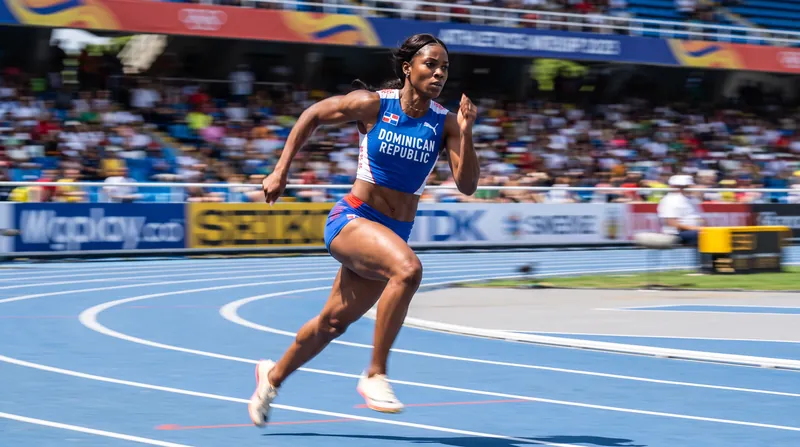
Athletics Injury Report: Duplantis Cleared After London Scare as Hodgkinson and Furlani Mount Diamond League Comebacks
5 sources
Standings
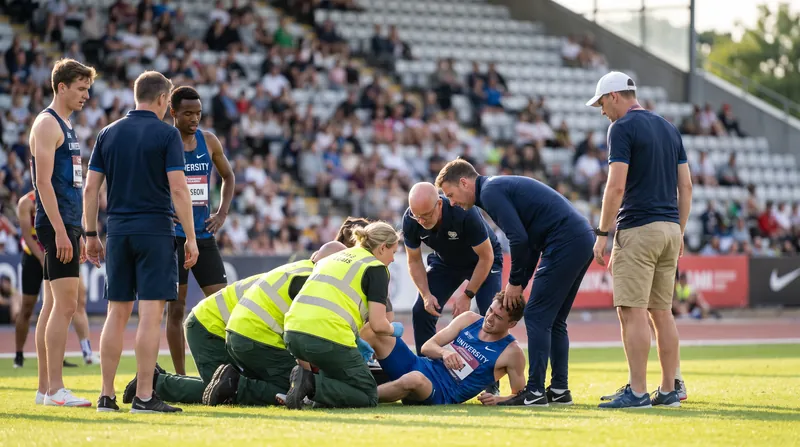
Yared Nuguse Clings to Narrow Lead Over Phenom Cameron Myers in Diamond League 1500m Standings
6 sources
Injury
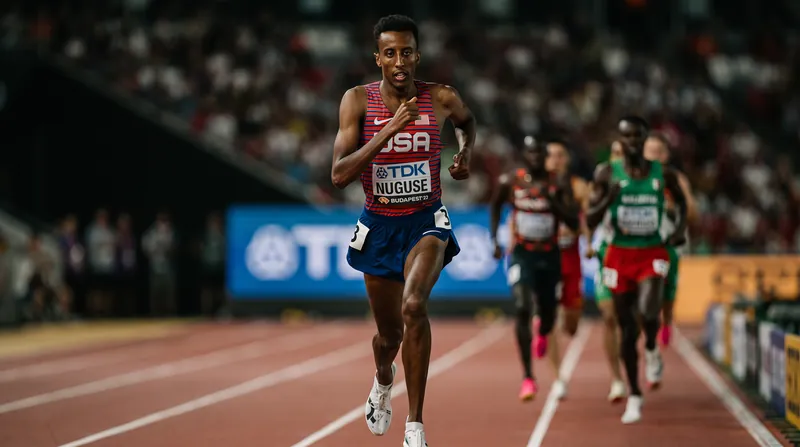
Athletics Injury Report: Kennedy Soars in Diamond League Return as Chopra and Kerr Target Late-Season Comebacks
6 sources
Standings
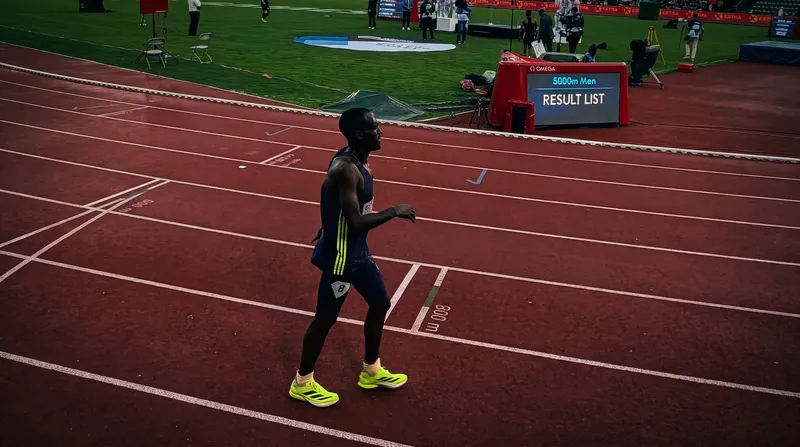
Jacory Patterson and Busang Kebinatshipi Clinch Diamond League 400m Final Spots as Heavyweights Give Chase
3 sources
Comments
Every angle. Every day.
Get Sports stories with full source coverage and perspective breakdowns, free every day.