
Athletics Injury Report: Tebogo Returns to Diamond League as Ingebrigtsen and Bishop Near Comebacks
Track and field stars Letsile Tebogo and Evan Bishop are making highly anticipated returns to competition following significant injury layoffs, while Olympic champion Jakob Ingebrigtsen accelerates his Achilles rehabilitation.
By Jackson Reed

Share this story
As the 2026 outdoor track and field season enters its crucial mid-summer stretch, the sport's biggest names are navigating the delicate balance between aggressive rehabilitation and elite competition. In a discipline where victory is decided by hundredths of a second and millimeters of biomechanical precision, injuries can instantly derail years of preparation. Yet, modern sports medicine is enabling remarkable mid-season comebacks.[4]
Headlining the wave of returns is Botswanan sprint sensation Letsile Tebogo, who is set to resume his Wanda Diamond League campaign at the Prefontaine Classic in Eugene, Oregon. The Olympic champion has been largely absent from the global circuit since May, when a recurring injury forced him to withdraw from the 200-meter event at the Morocco Diamond League.[2][5]
Tebogo's camp is treating the Eugene meet as a critical, albeit cautious, fitness test. Coach Kebonyemodisa Mosimanyane emphasized that the sprinter is still actively managing the injury, noting that the primary goal is to get the body going again and gradually build momentum with caution. Despite the measured approach, Tebogo will face a blistering field that includes American Olympic silver medalist Kenneth Bednarek.[2]
Before his setback, Tebogo had demonstrated formidable early-season form, clocking a 20.10-second victory at the Doha Diamond League. His return to the track is a major storyline for the sprint world, as he looks to re-establish his dominance with only two months remaining until the World Athletics Championships.[2]
In the distance events, Norwegian Olympic champion Jakob Ingebrigtsen is defying traditional recovery timelines following a surgical procedure on his left Achilles. Ingebrigtsen went under the knife in February to address chronic inflammation in the tendon's sheath, an issue that had plagued his winter training block and threatened his entire 2026 campaign.[1]
Remarkably, Ingebrigtsen was back on the trails in his hometown of Sandnes, Norway, just 23 days post-operation. He explained to his fans that his Achilles tendon was absolutely fine and had been for many months, noting that the localized nature of the sheath surgery allowed for a highly accelerated rehabilitation window.[1]
The 25-year-old distance star recently completed an eight-kilometer training run with high school students in California, signaling his readiness to handle sustained mileage. Ingebrigtsen is now targeting a late-summer return to the Diamond League circuit, with his sights firmly set on defending his titles at the European Championships in Birmingham this August.[1]
On the American domestic front, distance runner Evan Bishop is scripting a gritty comeback story ahead of the USATF Outdoor Championships. Bishop's senior collegiate season was upended last fall when he suffered a fractured sacrum just a week before the NCAA cross-country championships—a devastating blow for an athlete poised for a top-ten national finish.[3]
The bone injury forced Bishop into a grueling and uncertain rehabilitation process. He recalled taking calculated risks to get back to fitness so he could have a chance for one more shot in the outdoor season. His aggressive return-to-run program paid off spectacularly when he clocked a sub-28-minute 10,000-meter race at Stanford off just four weeks of structured workouts.[3]
Now competing professionally as part of Bandit Running's Unsponsored Project, Bishop enters the U.S. Championships as the sixth-fastest American over 10,000 meters this year. His journey from a broken sacrum to the national starting line underscores the intense psychological resilience required to survive the sport's physical attrition.[3]
While Tebogo, Ingebrigtsen, and Bishop celebrate their returns, other athletes are just beginning the arduous journey of recovery. The track world witnessed a heartbreaking moment in June when South Carolina's JaMeesia Ford, the defending NCAA 200-meter champion, suffered a severe lower-body injury during the NCAA Outdoor Championships at Hayward Field.
Ford pulled up abruptly midway through her preliminary heat, crumbling to the track in tears before being escorted away in a wheelchair. The injury abruptly ended her championship defense and sidelined one of the most anticipated sprint talents in the American collegiate system, serving as a stark reminder of the sport's inherent physical fragility.
To combat the high attrition rate among elite runners, governing bodies like World Athletics continue to invest in comprehensive injury prevention studies. By tracking biomechanical loads and recovery protocols, the sport hopes to reduce the frequency of catastrophic tendon and bone injuries.[4]
For now, fans and analysts alike will eagerly watch the starting lines in Eugene, Birmingham, and beyond. The successful reintegration of stars like Tebogo and Ingebrigtsen not only elevates the competitive ceiling of the Diamond League but also provides a blueprint for resilience in the face of athletic adversity.[1][2][5]
Key points
- Letsile Tebogo returns to the Diamond League in Eugene after nursing a recurring injury since May.
- Jakob Ingebrigtsen is back to running just 23 days after undergoing surgery on his Achilles sheath.
- Distance runner Evan Bishop enters the USATF Championships following an aggressive recovery from a fractured sacrum.
- Defending NCAA 200m champion JaMeesia Ford is recovering after a heartbreaking mid-race injury in June.
How we got here
Fall 2025
Evan Bishop suffers a fractured sacrum right before the NCAA championships.
February 2026
Jakob Ingebrigtsen undergoes surgery on his left Achilles sheath.
May 2026
Letsile Tebogo pulls out of the Morocco Diamond League with a recurring injury.
June 2026
JaMeesia Ford suffers a severe lower-body injury at the NCAA Outdoor Championships.
July 2026
Tebogo and Bishop return to elite competition at the Prefontaine Classic and USATF Championships, respectively.
- Athlete Camps
- Focus on cautious, progressive returns to peak fitness without risking re-injury.
- Medical & Rehab Specialists
- Emphasize the importance of structured rehabilitation timelines, especially for tendon and bone injuries.
- Fans and Analysts
- Eagerly anticipate the return of star power to the Diamond League and national championships.
Perspectives this story doesn't cover
- Shoe sponsors managing athlete contracts during injury downtime
- Meet directors dealing with star athlete withdrawals
Sources
Source coverage
5 outlets
3 viewpoints surfaced




- [1]Olympics.comMedical & Rehab Specialists
Olympic champion Jakob Ingebrigtsen returns to training: 'Best is yet to come'
Read on Olympics.com → - [2]Mmegi OnlineAthlete Camps
Tebogo resumes Diamond League action
- [3]Citius MagAthlete Camps
Evan Bishop On Overcoming Injuries, Eligibility, Betting On Himself, And His Next Chapter
- [4]World AthleticsMedical & Rehab Specialists
IAAF Injury Prevention Project continues
- [5]Diamond LeagueFans and Analysts
Wanda Diamond League 2026 Calendar
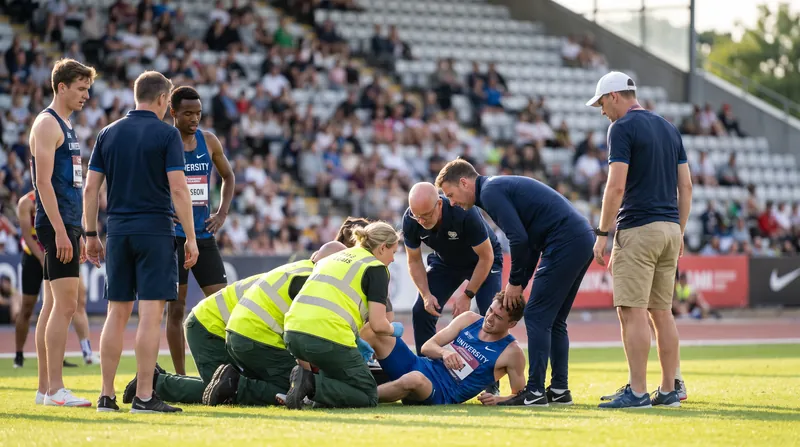
More in Sports
See all →Standings
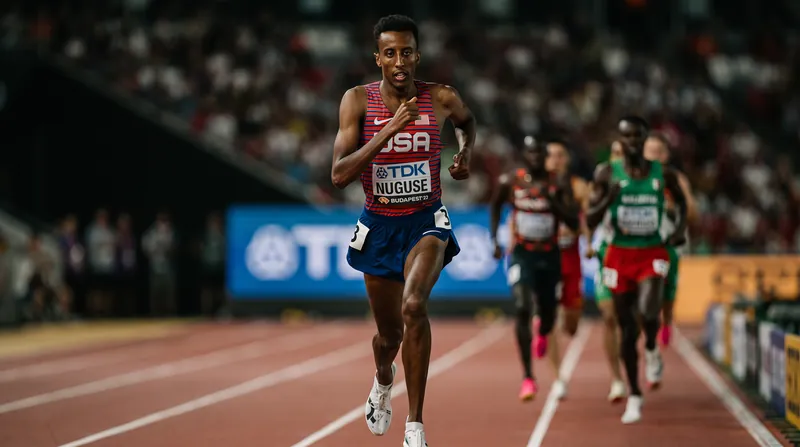
Yared Nuguse Clings to Narrow Lead Over Phenom Cameron Myers in Diamond League 1500m Standings
6 sources
Injury
Athletics Injury Report: Kennedy Soars in Diamond League Return as Chopra and Kerr Target Late-Season Comebacks
6 sources
Standings
Jacory Patterson and Busang Kebinatshipi Clinch Diamond League 400m Final Spots as Heavyweights Give Chase
3 sources
Preview
Silesia Diamond League Preview: Stacked Women's 100m and Ingebrigtsen's Return Headline Crucial Polish Meet
6 sources

Comments
Every angle. Every day.
Get Sports stories with full source coverage and perspective breakdowns, free every day.