
Athletics Injury Report: Kennedy's Record Return, Alekna's Miracle Recovery, and Kipyegon's Status
As the 2026 Diamond League season heats up, track and field's biggest stars are demonstrating remarkable resilience, highlighted by Nina Kennedy's record-breaking pole vault return and Mykolas Alekna's miraculous discus comeback.
By Omar Haddad

Share this story
The mid-summer stretch of the 2026 track and field season is delivering world-class times and distances, but the defining narrative of the circuit is being written in the rehabilitation room. A wave of high-profile injuries has tested the sport's biggest names, turning the current Diamond League schedule into a showcase of resilience, advanced sports medicine, and gritty comebacks.
The most triumphant update comes from the pole vault runway, where Australian Olympic champion Nina Kennedy has officially completed her long road back to the top. After battling a severe leg injury that forced a grueling 15-month hiatus from the sport, Kennedy delivered a historic performance at the Monaco Diamond League this weekend.[1]
Kennedy cleared a staggering 4.95 meters, breaking the Oceania Area Record, the Australian national record, and her own personal best. The mark stands as the highest women's pole vault clearance in five years. Reflecting on a career frequently interrupted by physical setbacks, Kennedy credited her sheer persistence, noting that through seven years of struggles, she simply kept showing up.[1]
In the throwing events, the recovery of Lithuanian discus world record holder Mykolas Alekna is being openly described by coaches as a "sports miracle." In March 2026, while training at the University of Oregon, Alekna suffered a complete tear of his left pectoral tendon. For a thrower, a torn pec is a catastrophic event that typically requires a minimum of five to six months of rehabilitation.[2]
Alekna's team immediately enlisted Dr. James Voos, head physician for the Cleveland Browns, to perform the surgical repair. Following the operation, Alekna returned to Lithuania to work with a coach whose training center specializes in injury rehab. For weeks, Alekna trained with his arm in a brace, meticulously strengthening the surrounding muscles before slowly reintroducing rudimentary throwing techniques.[2]
The accelerated timeline defied all medical expectations. By mid-June, Alekna was back in competition. He emphatically proved his fitness at the Prefontaine Classic in Eugene, unleashing a 71.06-meter throw to secure a dramatic late-round victory over a stacked field, confirming his chest was fully healed and his explosive power remained intact.[2]
The javelin runway has also seen its share of high-profile comebacks. Indian Olympic champion Neeraj Chopra recently made a promising return to competition at the Doha Diamond League following an eight-month injury layoff. While he finished just off the podium in fourth place with an 85.69-meter throw, the performance comfortably secured his qualification for the upcoming Commonwealth Games and proved his back injury is firmly behind him.
While Kennedy, Alekna, and Chopra celebrate their successful returns, other reigning Olympic champions are currently gritting their teeth through active, mid-season recoveries. Kenyan distance legend Faith Kipyegon, the three-time Olympic 1500m gold medalist, has been managing a severe hamstring issue that first flared up around the Shanghai Diamond League in May.[3]
The lingering injury has temporarily halted Kipyegon's aura of invincibility, snapping a historic five-year unbeaten streak in the 1500m and the mile. She finished third in the mile at the Prefontaine Classic and followed it up with a fourth-place finish in the 3000m at Monaco, clocking 8:24.21 behind Agnes Jebet Ngetich's blistering world-leading pace.
Despite the rare consecutive defeats, Kipyegon is maintaining a positive outlook as she manages the hamstring. Acknowledging that she is on the road to recovery but not yet at 100 percent, she emphasized that competing with the best in the world requires near-perfect health, but expressed deep gratitude simply to be back running on the track.[3]
On the sprint and middle-distance side, British 800m star Keely Hodgkinson is redefining physical toughness. Just days before the Eugene Diamond League, Hodgkinson suffered a severe fall during a training cooldown, sustaining deep cuts, swelling, and deep bruising to both knees. According to the athlete, she was entirely unable to walk just four days prior to the race.
Refusing to scratch from the meet, a heavily strapped and visibly battered Hodgkinson lined up in Eugene and clocked a staggering 1:56.73, finishing a narrow second to Lilian Odira. Her ability to nearly win a Diamond League race on compromised legs has rallied fans, and she is now focused on healing her knees ahead of a highly anticipated appearance at the London Diamond League on July 18.
Meanwhile, the women's 800m field remains without American prodigy Athing Mu, who continues a cautious, long-term rehabilitation from a 2024 hamstring tear. Rather than rushing back to the track at less than full capacity, Mu's camp has opted for patience, prioritizing a complete structural recovery to ensure she can eventually return to world-record-chasing form.
These contrasting injury timelines highlight the complex calculus of modern track and field. Strength and conditioning specialists note that the transition from clinical rehab to full performance is the most delicate phase of recovery, requiring a highly individualized approach to rebuild both tissue strength and athletic confidence.[4][5]
These contrasting injury timelines highlight the complex calculus of modern track and field.
Key points
- Australian pole vaulter Nina Kennedy shattered the Oceania Area Record with a 4.95m jump after a 15-month injury hiatus.
- Discus thrower Mykolas Alekna made a miraculous return to competition just three months after tearing his pectoral tendon.
- Kenyan distance star Faith Kipyegon is actively managing a severe hamstring injury that recently snapped her five-year unbeaten streak.
- British 800m runner Keely Hodgkinson finished second at the Eugene Diamond League despite severe knee injuries sustained in a training fall.
- Indian javelin thrower Neeraj Chopra secured a Commonwealth Games spot following an eight-month recovery from a back injury.
How we got here
March 2026
Mykolas Alekna suffers a complete pectoral tear during training at the University of Oregon.
May 2026
Faith Kipyegon begins battling a severe hamstring injury around the Shanghai Diamond League.
June 2026
Alekna makes a miraculous return to competition, throwing 71.06m at the Prefontaine Classic.
Early July 2026
Keely Hodgkinson suffers severe knee injuries in a training fall just days before the Eugene Diamond League.
July 11, 2026
Nina Kennedy shatters the Oceania pole vault record in Monaco, capping a return from a 15-month injury hiatus.
- Rehabilitating Athletes
- Athletes focused on the mental resilience required to push through pain or return from long layoffs.
- Sports Medicine & Coaching
- Medical and training staff managing recovery timelines, surgical interventions, and return-to-play protocols.
- Track & Field Analysts
- Observers tracking how these injuries and subsequent returns reshape the competitive landscape and record books.
Perspectives this story doesn't cover
- The athletes' sponsors and shoe brands navigating reduced visibility during injury layoffs.
- Meet directors who must market Diamond League events when marquee stars withdraw.
Sources
Source coverage
5 outlets
3 viewpoints surfaced





- [1]Fox Sports AustraliaRehabilitating Athletes
‘A long time coming’: Olympic champ shatters Aussie record in ‘amazing’ comeback from injury
Read on Fox Sports Australia → - [2]Track & Field NewsSports Medicine & Coaching
Alekna’s Rebound “Something Of A Sports Miracle”
Read on Track & Field News → - [3]Eastleigh VoiceRehabilitating Athletes
Kipyegon admits she's not fully recovered from hamstring injury ahead of Monaco Diamond League
Read on Eastleigh Voice → - [4]International Journal of Strength and ConditioningSports Medicine & Coaching
The Role of the Strength and Conditioning Coach in Return-from-Injury Care
Read on International Journal of Strength and Conditioning → - [5]UPMC Sports MedicineSports Medicine & Coaching
Return to Play Programs for Athletes
Read on UPMC Sports Medicine →
More in Sports
See all →Standings
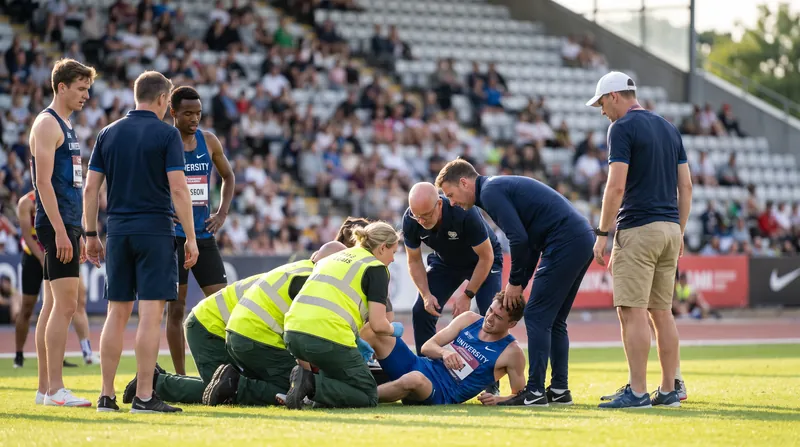
Yared Nuguse Clings to Narrow Lead Over Phenom Cameron Myers in Diamond League 1500m Standings
6 sources
Injury
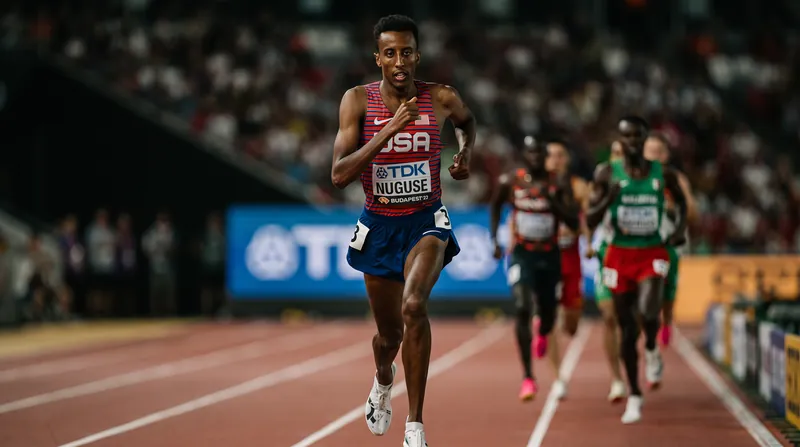
Athletics Injury Report: Kennedy Soars in Diamond League Return as Chopra and Kerr Target Late-Season Comebacks
6 sources
Standings
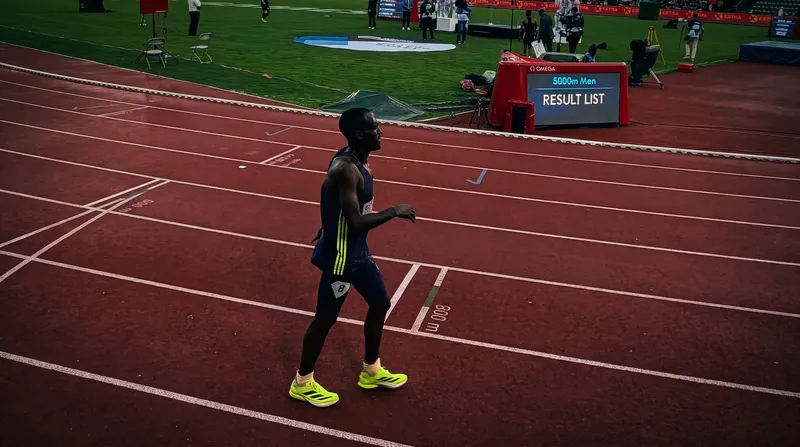
Jacory Patterson and Busang Kebinatshipi Clinch Diamond League 400m Final Spots as Heavyweights Give Chase
3 sources
Preview
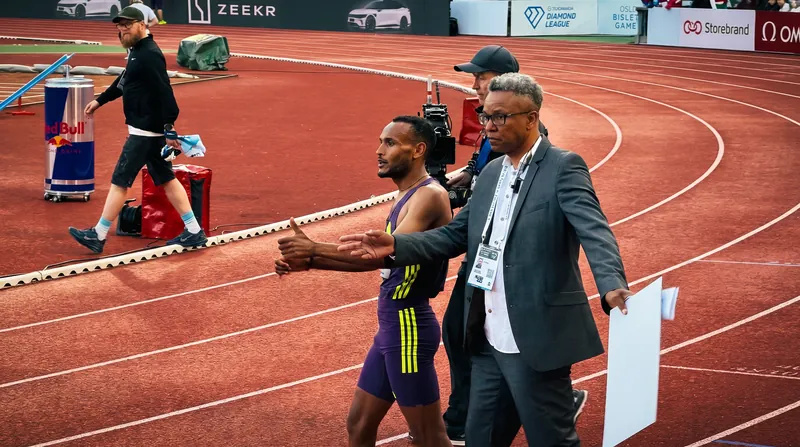
Silesia Diamond League Preview: Stacked Women's 100m and Ingebrigtsen's Return Headline Crucial Polish Meet
6 sources
Comments
Every angle. Every day.
Get Sports stories with full source coverage and perspective breakdowns, free every day.