
USA Claims Historic First Overall World Rowing Cup Title as Focus Shifts to Amsterdam Championships
The United States rowing team secured its first-ever overall World Rowing Cup victory following a dramatic finale in Lucerne, setting the stage for a highly anticipated 2026 World Championships in the Netherlands.
By Ryder James

Share this story
The 2026 World Rowing Cup season concluded on Sunday with a historic milestone on the pristine waters of Lake Rotsee in Lucerne, Switzerland. For the first time in the competition's history, the United States captured the overall World Rowing Cup title.
The American squad secured the season-long trophy by accumulating the highest aggregate points across the three-part international regatta series, marking a monumental achievement for a national program that has steadily rebuilt its depth over the past Olympic cycle. The victory in Lucerne cemented their status as the most consistent federation of the spring season.[1]
The United States built their unprecedented overall victory through dominant performances in the middle of the calendar. At World Cup II in Plovdiv, Bulgaria, the Americans surged to the top of the medal table, claiming six golds and five silvers.
They carried that momentum into the Lucerne finale, where key boats—including the mixed double sculls duo of Cedar Cunningham and Sophia Vitas—delivered crucial podium finishes. The strategic decision to double-up athletes in multiple events paid dividends, allowing the USA to maximize their points haul and edge out traditional European powerhouses in the final standings.[4]
While the United States took home the overall season crown, Great Britain delivered an absolute masterclass at the Lucerne finale. The British squad topped the weekend's specific medal standings, securing a staggering six golds, one silver, and one bronze. Following an intense training block after the earlier regattas, the British crews arrived in Switzerland with refined rhythm and explosive power. Their performance served as a stark warning to the rest of the world that Great Britain is peaking at exactly the right moment ahead of the summer's ultimate test.[1][2]
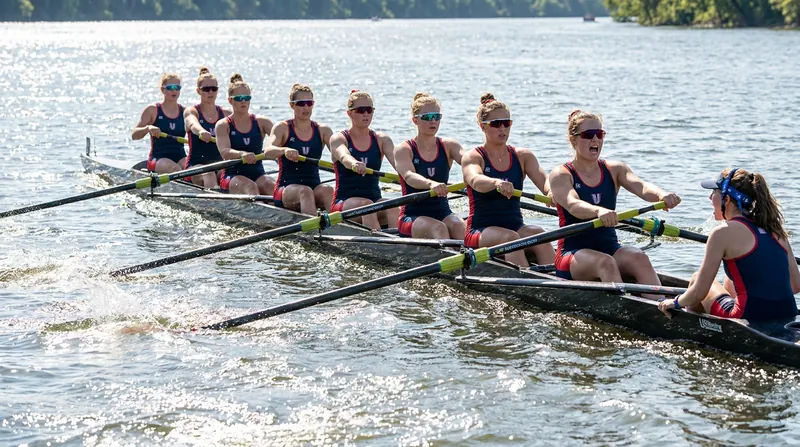
A major highlight of the British performance was their commanding victory in the women's eights. The crew stormed out of the starting blocks and led through every 500-meter marker, establishing a significant open-water advantage by the 1500-meter mark. They successfully fended off a late, desperate charge from Australia—the winners of World Cup I—to secure the gold. The United States women's eight, featuring athletes who had already raced in smaller boats earlier in the day, showed remarkable endurance to push through the field and claim the bronze medal.[1][2]
The men's eights provided arguably the most thrilling and tightly contested finish of the entire weekend. The reigning world champion Netherlands crew, who had previously won World Cup I in Seville, secured the 2026 event trophy by holding off a fierce sprint from Great Britain.
The Dutch established a slight lead by the 500-meter mark and held the field at bay through the middle thousand. In the closing meters, the British eight unleashed a massive sprint, but the Dutch had done just enough early on, crossing the finish line a mere 0.24 seconds ahead of their rivals.[1]
Beyond the traditional powerhouses, the Lucerne regatta witnessed stunning breakthroughs from emerging rowing nations. Belgium’s Aaron Andries and Tibo Vyvey shocked the field to win gold in the men's double sculls. After winning a surprise silver in Seville, the Belgian duo proved it was no fluke, storming past the Serbian world silver medallists in the final quarter of the race to claim Belgium's first World Cup gold medal in recent memory. The victory instantly elevates them from dark horses to genuine medal threats for the upcoming championships.[1]
Earlier in the season at Plovdiv, Uzbekistan's Shakhboz Kholmurzaev became the undisputed breakout star of the circuit. The 30-year-old veteran sculled a brave, full-blooded race to secure bronze in the men's single sculls against a stacked field of Olympic and European medalists. Incredibly, Kholmurzaev skipped his own medal ceremony, subbing in a teammate to collect his bronze, so he could immediately return to the water. Minutes later, he won a silver medal in the mixed double sculls alongside Anna Aksenova, cementing his status as a fan favorite.
Another major storyline heading into the championship season is the dramatic resurgence of Croatia's Sinkovic brothers. Martin and Valent Sinkovic, the legendary three-time Olympic champions, suffered a highly uncharacteristic 13th-place finish at World Cup I in Seville. However, they completely reversed their fortunes in Plovdiv, demolishing the men's double sculls field and setting a blistering new World Cup Best Time of 6:00.97. Their return to peak form adds another layer of intense competition to an already crowded men's sculling landscape.
With the World Cup season now officially complete, the global rowing community turns its full, undivided attention to the 2026 World Rowing Championships. Scheduled to take place from August 24 to 30, the championships will be hosted in Amsterdam, Netherlands.
The event represents the pinnacle of the non-Olympic rowing calendar, where world titles are crowned across 21 different boat classes, including Olympic, International, and Para-rowing categories. Federations will use the next two months to fine-tune their lineups, seeking the perfect combination of power and technique required to conquer the Dutch waters.[1][5]
The championships will be held at the historic Bosbaan, an artificial rowing lake situated in the lush Amsterdamse Bos. The venue, which previously hosted the World Championships in 1977 and 2014, holds a revered place in Dutch sporting heritage. Over the past year, the Bosbaan has undergone extensive renovations and sustainability upgrades to prepare for the massive influx of international athletes, support staff, and thousands of spectators expected to line the banks this August.[5]
National federations are already finalizing their rosters and making ruthless selection decisions for the ultimate test. New Zealand recently announced a formidable 23-rower squad, heavily featuring athletes from the dominant Waikato Rowing Club. The Kiwi selection reveals a program built on calculated ambition, with deliberate overlap in the women's sweep squads to build rhythm across multiple boat classes. Their arrival in Europe will inject fresh Southern Hemisphere speed into the established European and North American hierarchies.[3]
National federations are already finalizing their rosters and making ruthless selection decisions for the ultimate test.
As crews retreat to their respective national training centers for the final, grueling block of summer preparation, the margins between standing on the podium and missing the final entirely remain razor-thin. The historic parity seen across the 2026 World Cup series—from the USA's unprecedented overall title to Belgium's breakthrough and Great Britain's late-season surge—guarantees that the Amsterdam championships will be one of the most fiercely contested and unpredictable regattas in modern rowing history.[1][3]
The essentials
- The United States captured its first-ever overall World Rowing Cup title after accumulating the most points across the three-regatta series.
- Great Britain dominated the final regatta in Lucerne, securing six gold medals to signal their peak form.
- The Netherlands men's eight won the World Cup event trophy by edging out Great Britain by just 0.24 seconds.
- The global rowing community now shifts its focus to the 2026 World Rowing Championships, scheduled for August in Amsterdam.
Timeline
May 2026
The Netherlands dominates World Rowing Cup I in Seville, taking the early points lead.
June 14, 2026
The United States tops the medal table at World Rowing Cup II in Plovdiv, surging in the overall standings.
June 28, 2026
Great Britain wins six golds at the Lucerne finale, but the USA secures enough points to claim their first-ever overall World Cup title.
August 24, 2026
The 2026 World Rowing Championships are scheduled to begin at the Bosbaan in Amsterdam.
- US Rowing Program
- Celebrating a historic milestone and the validation of their squad-building strategy.
- European Powerhouses
- Focusing on peaking specifically for the World Championships rather than the overall Cup.
- Emerging Contenders
- Capitalizing on the parity to secure historic medals and disrupt the established hierarchy.
Perspectives this story doesn't cover
- Host Nation Organizers
- Para-Rowing Competitors
Sources
Source coverage
5 outlets
3 viewpoints surfaced





- [1]World RowingEuropean Powerhouses
USA wins overall World Rowing Cup; Great Britain tops Lucerne medals
Read on World Rowing → - [2]British RowingEuropean Powerhouses
Six crews into A Finals as World Rowing Cup III gets underway
Read on British Rowing → - [3]Boating New ZealandEmerging Contenders
New Zealand Rowing Team - 2026 World Rowing Championships
Read on Boating New Zealand → - [4]Rowing NewsUS Rowing Program
U.S. Wins Six Gold, Five Silver Medals At Plovdiv World Rowing Cup
Read on Rowing News → - [5]WikipediaEmerging Contenders
2026 World Rowing Championships
Read on Wikipedia →
More in Sports
See all →Injury
Reigning World Champion Emma Twigg Sidelined by Injury, Withdraws from New Zealand's US Beach Sprint Tour
6 sources
Standings
The Lightweight Men's Double Sculls Championship Picture: Asian Nations Surge as Olympic Transition Reshapes the Field
6 sources
Standings
The Championship Picture at RowFest 2026: International Challengers Set the Pace as Masters Racing Looms
8 sources
Injury
Rowing Injury Report: Lauren Miller Completes 18-Month Spinal Rehab to Rejoin USRowing Squad Ahead of Amsterdam
2 sources
Comments
Every angle. Every day.
Get Sports stories with full source coverage and perspective breakdowns, free every day.