
The 2,4,6-Trichloroanisole (TCA) Threshold: How 4 Parts Per Trillion Creates 'Cork Taint' in Wine
A microscopic fungal defense mechanism produces a chemical compound so potent that just four parts per trillion can suppress human olfactory receptors and ruin a bottle of wine.
By Baran Demir

Share this story
In short
- Cork taint is caused by 2,4,6-Trichloroanisole (TCA), a chemical compound produced by fungi interacting with environmental chlorophenols.
- TCA is detectable by the human nose at concentrations as low as 4 parts per trillion.
- The compound actively suppresses olfactory receptors, causing tainted wines to smell muted or like damp cardboard.
In May 2024, the Northwest Wine Report published the results of a year-long sensory analysis of over 1,250 wines, revealing a stubborn reality for the beverage industry: 2.6% of all bottles sealed with natural cork were contaminated by a moldy, fruit-suppressing fault. That figure, closely mirroring the Cork Quality Council's long-standing 3% average, translates to roughly 900 million ruined bottles globally each year.
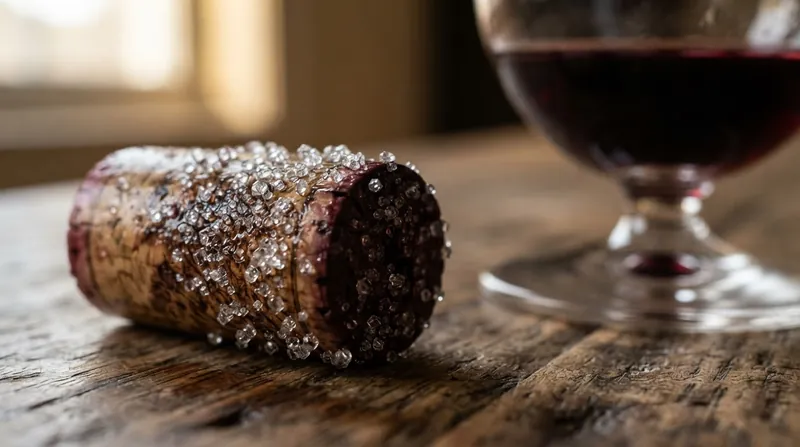
The culprit is not the cork itself, but a microscopic chemical compound called 2,4,6-Trichloroanisole, or TCA. At concentrations as low as four parts per trillion—equivalent to a single teaspoon diluted across two thousand Olympic swimming pools—TCA possesses the power to completely rewrite a wine's aromatic profile, turning a vibrant Cabernet Sauvignon into a glass that smells unmistakably of wet newspaper and damp basement.[2]
The sensory experience of a corked wine is jarring precisely because it replaces the anticipated pleasure of fruit and terroir with the scent of decay. As the editors at Wine Enthusiast describe the encounter: "Ever sit down, pour yourself a glass of wine and have it smell reminiscent of a wet newspaper or moldy basement?"
The fault is universal, striking $9 supermarket blends and $120 Napa Valley flagship releases with equal indifference. The average retail price of a TCA-tainted bottle sampled from Washington state in 2023 was $43, proving that prestige offers no absolute immunity against the chemistry of the cork oak bark.[1]
The biological origin of this fault begins in the forests of the Mediterranean, where the cork oak (Quercus suber) is harvested. The bark naturally hosts a diverse microbiome, including common fungi such as Aspergillus, Penicillium, and Trichoderma. In their natural state, these fungi are harmless to the wine. The problem arises when they encounter halophenols—specifically chlorophenols—which are toxic to the microorganisms. Historically, these chlorinated compounds were ubiquitous in the environment, introduced through pesticides used in the forests or chlorine-based bleach used to sanitize winery equipment and cork-boiling baths.[5]
When the fungi detect these toxic chlorophenols, they deploy a chemical defense mechanism known as O-methylation. This biochemical process alters the molecular structure of the toxin, rendering it harmless to the fungus but creating 2,4,6-Trichloroanisole as a byproduct. The fungi survive, but they leave behind a highly volatile compound that easily migrates from the cork matrix into the liquid wine once the bottle is sealed.[4]
What makes TCA so devastating to the wine industry is its extreme potency. According to ETS Labs, a leading analytical facility in California, "Haloanisoles are ranked among the most powerful odor compounds, with odor thresholds in the low part-per-trillion range." For the average human palate, the sensory detection threshold for TCA in white wine hovers around 4 nanograms per liter (ng/L). In heavier red wines, where robust tannins and oak aromas provide a thicker sensory mask, the threshold might stretch to 5 or 6 ng/L.[3]
However, TCA does not merely add a bad smell to the glass; it actively sabotages the drinker's biology. A landmark 2013 study by researchers at Osaka University demonstrated that TCA inhibits cyclic nucleotide-gated channels in human olfactory receptor cells. In plain terms, the compound temporarily paralyzes the nose's ability to perceive the wine's natural aromas. This explains why a lightly tainted wine might not smell overtly moldy, but will instead present as muted, flat, and entirely stripped of its fruit character.[4]
Human sensitivity to this olfactory suppression varies wildly. Some highly trained sensory analysts can detect TCA at concentrations as low as 1 to 2 parts per trillion. Others possess a genetic blind spot, failing to recognize the fault even at 200 times that concentration. This variance creates friction in restaurant dining rooms, where a sommelier might instantly identify a 3 ng/L taint that the guest cannot perceive, or conversely, where a sensitive guest rejects a bottle that the staff believes is perfectly sound.[3]
The economic scale of this chemical interaction is staggering. The global wine industry produces approximately 30 billion bottles sealed with natural cork annually. When applying the baseline 3% contamination rate observed by the Cork Quality Council, the math dictates that nearly one billion bottles are compromised every vintage. While the industry frequently cites a $1 billion annual loss based on wholesale replacement costs, the destruction of retail value is vastly higher.[1][2]
The threat of TCA extends beyond the individual cork. Because the compound is highly volatile and easily aerosolized, it can infect an entire production facility—a phenomenon known as systemic TCA. If a winery uses chlorine-based sanitizers on wooden pallets, structural beams, or even cardboard packaging, resident fungi can generate TCA that permeates the cellar air.[5]
Once airborne, systemic TCA seeks out lipid-rich and porous materials. It readily absorbs into rubber transfer hoses, silicone gaskets, and oak aging barrels. When pristine wine passes through an infected hose, it strips the TCA from the rubber, tainting the entire batch. This systemic vector explains why even wines sealed with aluminum screwcaps or glass stoppers occasionally present with classic cork taint.[5]
The identification of TCA as the primary culprit in 1981 by Swiss scientist Hans Tanner triggered a massive defensive mobilization within the cork industry. Major producers in Portugal and Spain invested hundreds of millions of euros to eradicate chlorophenols from their supply chains. The use of chlorine bleach in cork processing was universally banned, replaced by hydrogen peroxide washes that do not leave halophenol precursors behind.[4]
Analytical testing also evolved to catch the compound before it reaches the bottling line. In the late 1990s, ETS Labs partnered with the Cork Quality Council to develop the "Releasable TCA" test, which uses gas chromatography-mass spectrometry (GC-MS) to screen batches of corks. Today, premium cork suppliers run individual stoppers through rapid GC-MS sniffers, guaranteeing non-detectable TCA levels for their highest-tier products.[3]
Despite these advancements, the persistence of a 2% to 3% failure rate in standard natural corks has driven a massive shift toward alternative closures. Micro-agglomerated technical corks, such as those produced by DIAM, have captured significant market share. These closures are manufactured by grinding natural cork into granules and treating them with supercritical carbon dioxide—the same process used to decaffeinate coffee—which strips away TCA and other volatile off-flavors before the granules are bound back together.[6]
Yet, the traditional, single-piece natural cork retains its dominance in the premium wine sector. Winemakers value its elasticity, its sustainability as a renewable resource, and its proven track record for long-term aging. The microscopic oxygen transmission rate of a high-quality natural cork remains the gold standard for allowing structured red wines to evolve over decades in the cellar.[6]
For the consumer, navigating the reality of TCA requires trust in one's own palate and a willingness to act. A wine that smells of damp cardboard or lacks the vibrant fruit promised by its vintage is likely compromised. Because the fault originates in the packaging rather than the winemaking, returning a corked bottle at a restaurant or retail shop is a standard and expected practice, ensuring that a microscopic fungal defense mechanism does not ruin the evening's investment.[1]
Key terms
- 2,4,6-Trichloroanisole (TCA)
- A highly potent chemical compound created by fungi that causes the musty, damp-cardboard aromas known as cork taint.
- O-methylation
- The biochemical process by which fungi convert toxic chlorophenols into TCA as a defense mechanism.
- Haloanisoles
- A family of volatile chemical compounds, including TCA, responsible for musty and moldy off-flavors in food and beverages.
- Olfactory signal transduction
- The biological process by which odor molecules bind to receptors in the nose and send sensory signals to the brain.
- Systemic TCA
- Contamination that occurs when TCA infects a winery's infrastructure, such as wooden beams or rubber hoses, tainting the wine before it ever reaches a bottle.
Reader questions
Can you get sick from drinking corked wine?
No. While 2,4,6-Trichloroanisole (TCA) smells unpleasant and ruins the wine's flavor profile, it is completely harmless to human health.
Does a corked wine mean there are pieces of cork floating in it?
No. 'Corked' refers specifically to chemical contamination by TCA, not the physical crumbling or breaking of the cork material into the liquid.
Can you use corked wine for cooking?
It is highly discouraged. The musty, damp-cardboard aromas of TCA do not cook off with heat; instead, they concentrate and can taint the entire dish.
Are screwcap wines immune to cork taint?
Mostly, but not entirely. While screwcaps eliminate the cork as a source, a wine can still become tainted if the winery's barrels, wooden pallets, or rubber hoses are infected with systemic TCA.
Where opinion splits
Natural Cork Advocates
Proponents of traditional closures who emphasize recent quality improvements and oxygen transfer benefits.
Suppliers and traditionalist winemakers argue that natural cork remains the superior closure for aging premium wines. They point to the material's unique cellular structure, which allows a microscopic, controlled ingress of oxygen over decades—a mechanism essential for the polymerization of tannins and the development of complex tertiary flavors. This camp highlights that the cork industry has invested hundreds of millions of dollars in TCA-eradication technologies, such as gas chromatography screening and supercritical carbon dioxide washing, driving the contamination rate down from historical highs of 7% to near 1% in top-tier suppliers.
Alternative Closure Adopters
Winemakers and critics who prioritize absolute consistency and fault eradication over tradition.
For producers focused on preserving pristine fruit aromatics and guaranteeing a uniform consumer experience, any non-zero TCA failure rate is unacceptable. This camp champions screwcaps, glass stoppers, and micro-agglomerated technical corks (like DIAM) that have been chemically stripped of haloanisoles. They argue that the romanticism of pulling a natural cork is outweighed by the reality of ruining three out of every hundred bottles, stressing that TCA's olfactory-suppressing effects often cause consumers to quietly blame the winemaker for a 'dull' wine rather than recognizing the closure fault.
- Natural Cork Producers
- Advocates for traditional closures who emphasize recent technological investments to eliminate TCA.
- Sensory Analysts & Critics
- Professionals focused on the exact measurement and consumer impact of wine faults.
- Oenological Researchers
- Scientists studying the chemical pathways and detection methods of haloanisoles.
Perspectives this story doesn't cover
- Restaurant Sommeliers
- Supermarket Wine Buyers
Sources
Source coverage
6 outlets
3 viewpoints surfaced






- [1]Wine EnthusiastSensory Analysts & Critics
Cork Taint in Wine: What It Is and How to Identify It
Read on Wine Enthusiast → - [2]Northwest Wine ReportSensory Analysts & Critics
Cork taint remains stubbornly high, around 3%
Read on Northwest Wine Report → - [3]ETS LabsOenological Researchers
Analyzing levels of haloanisoles and sensory thresholds
Read on ETS Labs → - [4]MaxapressOenological Researchers
Cork taint of wines: the formation, analysis, and control of 2,4,6- trichloroanisole
Read on Maxapress → - [5]Classic Oak ProductsNatural Cork Producers
What is Cork Taint?
Read on Classic Oak Products → - [6]Factlen Editorial TeamOenological Researchers
Synthesis by Factlen editorial team
Read on Factlen Editorial Team →
More in Food & Drink
See all →Wine Chemistry
How Oenococcus oeni Bacteria Convert Tart Malic Acid into Buttery Diacetyl During Winemaking
5 sources
Wine Chemistry
Why Sulfites in Wine Do Not Cause Headaches and How Winemakers Use Them
9 sources
Wine Chemistry
Why Uncorking a Wine Bottle to Let It Breathe Fails to Aerate the Wine Inside
4 sources
Wine Chemistry
Why Chilling Wine Precipitates the Harmless Potassium Bitartrate Crystals Mistaken for Broken Glass
3 sources
Comments
Every angle. Every day.
Get Food & Drink stories with full source coverage and perspective breakdowns, free every day.