
Sebaceous Filaments Function as Normal Conduits for Sebum Flow That Naturally Refill Within Weeks
While often mistaken for blackheads, sebaceous filaments are functional, tube-like structures that channel oil to the skin's surface. Because they are a natural part of pore anatomy, physical extraction is futile, as the body automatically refills them within a month.
By Jun Zhao

Share this story
In short
- Sebaceous filaments are normal, tube-like structures that channel oil to the skin's surface, not a form of acne.
- Physical extraction is biologically futile because the body automatically refills the emptied pore within 30 days.
- Unlike blackheads, which are dark and raised blockages, sebaceous filaments sit flat and appear as uniform gray or tan dots.
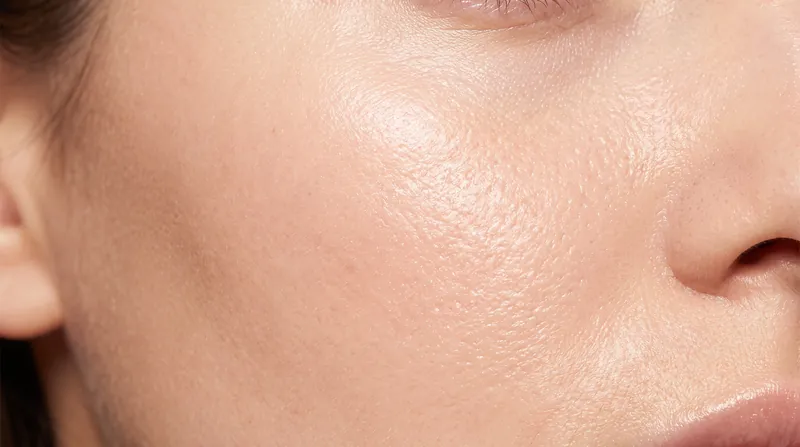
Skincare influencers and pore-strip manufacturers routinely point to the tiny, uniform gray dots across a person's nose and chin as "blackheads" that demand immediate physical extraction. The clinical evidence contradicts this entirely. Those dots are sebaceous filaments, which are normal, functional structures that line healthy pores.[1]
Rather than being a sign of congestion or poor hygiene, these filaments serve a critical biological purpose. They act as microscopic wicks, channeling sebum from the sebaceous glands deep within the dermis up to the skin's surface. Without them, the skin could not maintain its protective moisture barrier.[3]
Because they are a functional part of the skin's anatomy, attempting to remove them is biologically futile. If a person squeezes a sebaceous filament or removes it with an adhesive strip, the body recognizes the emptied pore as a deficit. The gland simply produces more oil, refilling the channel completely within 30 days.[1][2]
The Anatomy of a Healthy Pore
To understand why sebaceous filaments exist, one must look at the pilosebaceous unit. This structure consists of a hair follicle and its attached sebaceous gland, which produces the oily substance known as sebum. Every pore on the human face is the opening of one of these units.[2]
Inside the follicle, a soft column forms from a mixture of sebum, naturally shed dead skin cells, and normal skin bacteria. This column is the sebaceous filament. It lines the walls of the pore, creating a smooth pathway for oil to flow continuously upward.
"Sebaceous filaments are tube-like structures in the walls of your pores," explains Dr. Dendy Engelman, a board-certified dermatologist. She notes that while people often recognize them as tiny dark dots, they are simply guiding excess oil and cellular debris out of the hair follicle.
The visibility of these filaments depends heavily on genetics and natural oil production. People with naturally oily skin or larger pores will always have more prominent sebaceous filaments. The oil inside the pore catches the light and makes the structure more apparent, especially on the nose and forehead.
Age also plays a significant role in how these structures appear. During puberty, androgen hormones like testosterone surge, stimulating the sebaceous glands to produce significantly more oil. Later in life, as skin loses elasticity in a person's 40s and 50s, pores can widen, making the filaments inside them more obvious.[1][3]
Why Extraction Fails Biologically
The skincare industry has built a massive market around the physical extraction of these dots, popularizing adhesive strips, vacuum tools, and metal extraction loops. However, dermatologists universally advise against using physical force to clear sebaceous filaments. The satisfaction of seeing a waxy thread emerge is entirely temporary.[1]
Because the sebaceous gland never stops producing oil, an emptied follicle immediately begins to refill. Clinical observations show that a fully extracted sebaceous filament will return to its original state within 30 days. The body is biologically programmed to restore this pathway to maintain surface hydration.[1][3]
Physical extraction carries significant risks that outweigh any fleeting cosmetic benefit. Applying intense pressure with fingernails or metal tools damages the delicate epithelial cells lining the follicle wall. This trauma can stretch the pore permanently, making it appear larger over time.[1]
Adhesive pore strips present their own set of complications. While they do remove the top layer of the sebaceous filament, the forceful ripping motion can break superficial capillaries on the thin skin of the nose. The strip also removes the surrounding healthy skin cells, compromising the local moisture barrier.[1][3]
Furthermore, aggressive extraction triggers an inflammatory response. When the skin detects trauma and sudden moisture loss, the sebaceous glands often overcompensate by ramping up oil production. This compensatory mechanism means that over-cleansing or squeezing can actually make the filaments refill faster and appear more prominent.[3]
Distinguishing Filaments From Blackheads
The confusion between sebaceous filaments and blackheads drives much of the misguided extraction. While they can look similar to the untrained eye, they represent entirely different physiological states. A sebaceous filament is a healthy, open channel; a blackhead is a pathological blockage.[2]
In medical terminology, a blackhead is an open comedone, classifying it as a mild form of acne. It forms when the mixture of sebum and dead skin cells stops flowing and creates a hard plug that completely obstructs the pore opening.[2]
The color difference provides the most reliable visual clue. Sebaceous filaments are typically light gray, tan, or slightly yellowish. Blackheads, conversely, are distinctly dark brown or black. This dark color is not dirt, but rather the result of the sebum and melanin oxidizing upon exposure to the air.
Pattern and texture also differentiate the two structures. Sebaceous filaments appear as a uniform, even field of dots across oil-dense areas like the nose and chin, and they sit flat against the skin. Blackheads tend to appear randomly, are fewer in number, and often feel slightly raised or rough to the touch.[1][2]
"Unlike acne, sebaceous filaments are not clogged pores," notes the Schweiger Dermatology Group. They emphasize that while blackheads require targeted acne treatments to dissolve the oxidized plug, sebaceous filaments are a normal part of the skin's oil regulation system that should be managed rather than eradicated.
The Role of Sebum in Skin Defense
To appreciate why the body defends its sebaceous filaments, one must understand the value of sebum. This complex mixture of triglycerides, fatty acids, and cholesterol is not an enemy to be scrubbed away. It is the skin's primary defense mechanism against environmental stressors.[3]
As sebum flows up the filament and spills onto the skin's surface, it mixes with sweat to form the acid mantle. This slightly acidic film, typically hovering around a pH of 4.5 to 5.5, creates an inhospitable environment for harmful pathogens while supporting beneficial skin flora.[3]
Sebum also provides crucial waterproofing for the stratum corneum, the outermost layer of the epidermis. By sealing in moisture, it prevents transepidermal water loss, keeping the skin supple and resilient. Stripping this oil away leaves the skin vulnerable to micro-tears and irritation.[1][3]
When harsh cleansers or excessive exfoliation strip the acid mantle, the skin enters a state of dehydration. The sebaceous glands detect this vulnerability and immediately increase their output to repair the barrier. This creates a frustrating cycle where attempts to dry out the skin only result in heavier oil production.[1]
Therefore, the goal of any skincare routine should never be the complete elimination of sebum. A healthy complexion relies on the continuous, unobstructed flow of oil that sebaceous filaments provide. Managing their appearance requires working with this biological process rather than fighting it.[2][3]
Managing Visibility Without Damage
While sebaceous filaments cannot be permanently removed, dermatologists recommend specific chemical approaches to minimize their visibility safely. The most effective strategy involves using oil-soluble chemical exfoliants that can penetrate the pore and dissolve excess sebum without causing physical trauma.[1]
Salicylic acid, a beta-hydroxy acid (BHA), serves as the gold standard for this purpose. Because it is lipophilic, it can travel down into the sebaceous filament and break apart the dead skin cells and excess oil that make the structure look dark and prominent.[1]
Topical retinoids offer another evidence-based management tool. By accelerating cellular turnover, retinoids prevent dead skin cells from accumulating inside the follicle lining. This keeps the sebum flowing smoothly and prevents the filament from becoming overly congested and visible.[3]
Consistent, gentle cleansing is far more effective than aggressive scrubbing. Washing the face twice daily with a mild, non-stripping cleanser removes the surface oil that has already completed its journey up the filament. This prevents the oil from pooling and oxidizing without triggering a compensatory surge in production.[1][3]
Hydration remains a counterintuitive but essential step for oily skin. Applying a lightweight, non-comedogenic moisturizer signals to the sebaceous glands that the skin barrier is intact. This downregulates sebum production, which naturally reduces the volume of oil traveling through the filaments.[1][3]
The Psychological Toll of Pore Scrutiny
Much of the anxiety surrounding sebaceous filaments stems from modern viewing habits rather than actual dermatological issues. Magnification mirrors and high-resolution smartphone cameras allow people to scrutinize their skin at a proximity that no human eye would naturally achieve.
At a normal conversational distance, the uniform gray dots of sebaceous filaments are entirely invisible to others. The hyper-fixation on achieving "poreless" skin is chasing a biological impossibility, as pores are essential structural components of the human body.[2]
At a normal conversational distance, the uniform gray dots of sebaceous filaments are entirely invisible to others.
Dermatologists increasingly find themselves counseling patients to step away from the mirror. The pursuit of perfectly clear pores often leads to a cycle of over-exfoliation, barrier damage, and heightened skin sensitivity that causes far more visible harm than the filaments ever did.[1]
Accepting sebaceous filaments requires a shift in perspective. They are not flaws to be extracted, but rather evidence of a functioning, hydrated, and protected skin barrier. Leaving them alone is often the most effective skincare decision a person can make.[3]
Definitions
- Sebaceous filament
- A normal, tube-like collection of sebum and dead skin cells that lines a pore and channels oil to the skin's surface.
- Sebum
- The natural oil produced by sebaceous glands that moisturizes and protects the skin.
- Open comedone
- The medical term for a blackhead, which is a pore completely blocked by a plug of oxidized oil and dead skin.
- Pilosebaceous unit
- The anatomical structure consisting of a hair follicle and its attached sebaceous gland.
- Acid mantle
- The slightly acidic protective film on the skin's surface formed by the mixture of sebum and sweat.
Questions & answers
Are sebaceous filaments a type of acne?
No. Sebaceous filaments are a normal and essential part of healthy skin function that everyone has. Blackheads, on the other hand, are a mild form of acne caused by a complete blockage of the pore.
Can I permanently shrink my pores?
Pore size is determined by genetics and age. While keeping them clear of excess oil and debris can make them look smaller, their physical size cannot be permanently reduced by any topical product.
Do pore strips actually work?
Pore strips temporarily remove the top layer of sebaceous filaments, but the pores will refill within 30 days. Furthermore, the adhesive can damage the skin barrier and break superficial capillaries.
Why do my sebaceous filaments look darker on some days?
Increased oil production or slight oxidation of the sebum at the surface can make the filaments appear more prominent, especially if the skin is dehydrated and overcompensating by producing more oil.
Analysis by camp
Dermatological Consensus
Sebaceous filaments are normal anatomy and should be managed gently with chemical exfoliants rather than physical extraction.
Clinical dermatologists view sebaceous filaments not as a condition to be cured, but as a biological reality to be managed. Because the pilosebaceous unit is designed to continuously produce and excrete sebum, attempting to halt this process through physical extraction is seen as both futile and damaging. The medical consensus strongly favors chemical management—specifically the use of lipophilic beta-hydroxy acids like salicylic acid—which can dissolve excess sebum within the pore without causing the micro-trauma associated with squeezing or adhesive strips.
Skincare Marketing
Often frames normal pore texture as "blackheads" to sell pore strips, extraction tools, and harsh scrubs.
The consumer skincare industry has historically capitalized on the visual similarity between sebaceous filaments and blackheads. By labeling normal pore texture as a flaw or a sign of congestion, brands have created a lucrative market for immediate-gratification products like pore strips and vacuum tools. These products provide the temporary satisfaction of seeing extracted material, but they fail to address the biological reality that the pore will refill within weeks, ensuring repeat customers at the expense of long-term skin barrier health.
Consumer Perception
Driven by magnification mirrors and social media filters, leading to anxiety over normal skin texture.
Modern viewing habits have fundamentally altered how people perceive their own skin. The widespread use of magnification mirrors and high-resolution, filtered social media images has created an unrealistic expectation of "poreless" skin. This hyper-scrutiny leads consumers to mistake the normal, functional gray dots of sebaceous filaments for pathological blackheads, often prompting aggressive and counterproductive extraction routines that ultimately damage the skin barrier and increase oil production.
- Clinical Dermatology
- Focuses on the biological function of pores and advocates for gentle, non-destructive management of sebum.
- Cosmetic Chemistry
- Emphasizes the use of specific ingredients like BHA and retinoids to dissolve excess sebum without physical trauma.
- Consumer Skincare Market
- Often misidentifies normal texture as blackheads to promote immediate-gratification physical extraction tools.
Perspectives this story doesn't cover
- Estheticians performing manual extractions
- Manufacturers of pore strips and vacuum tools
Sources
Source coverage
3 outlets
3 viewpoints surfaced



- [1]Cleveland ClinicClinical Dermatology
Sebaceous Filaments: What They Are and How to Manage Them
Read on Cleveland Clinic → - [2]Wikipedia
Sebaceous filament
Read on Wikipedia → - [3]Factlen Editorial TeamCosmetic Chemistry
Synthesis by Factlen editorial team
Read on Factlen Editorial Team →
More in Health
See all →Sjögren's Disease
Amgen's Dazodalibep Meets Primary Endpoint in Phase 3 Trial for Sjögren's Disease
5 sources

Cancer Vaccines
Moderna's Personalized mRNA Cancer Vaccine Secures 'Practice-Changing' ESMO Symposium Slot
4 sources

Sunscreen Tech
Neutrogena Launches First Mass-Market Sunscreens With Bemitrizinol, The First New FDA-Approved UV Filter in 25 Years
5 sources

Enzyme Mechanisms
How Tyrosinase Catalyzes the Rate-Limiting Step in Melanin Synthesis and the Multi-Targeted Inhibition Strategies for Hyperpigmentation
8 sources
Comments
Every angle. Every day.
Get Health stories with full source coverage and perspective breakdowns, free every day.