
Offshore Injury Report: Sauer Faces Shoulder Surgery as Fleet Recovers from Grueling Season
Following a punishing 2025-2026 offshore racing calendar, several key sailors are focusing on rehabilitation and surgery. Christian Sauer prepares for shoulder surgery after the McIntyre Mini Globe Race, while Deb Steele recovers from fractured ribs sustained during the Sydney Hobart.
By Omar Haddad

Share this story
As the 2025-2026 offshore sailing season transitions into a brief mid-year lull, the focus for many top-tier competitors has shifted from weather routing and sail trim to physical rehabilitation and surgery. The ocean is an uncompromising arena, and the sheer physical toll of navigating steep seas, violent squalls, and sleep deprivation inevitably leaves its mark on the human body.
For several key figures in the offshore community, this summer is defined by the quiet, grueling work of recovery. Their stories of injury and endurance highlight not only the extreme demands of the sport but also the remarkable resilience required to survive it and eventually return to the water.[2]
Nowhere was this physical endurance more heavily tested than in the McIntyre Mini Globe Race, a punishing 24,000-nautical-mile solo circumnavigation conducted in diminutive 19-foot Class Globe 5.80 yachts. The fleet recently concluded their epic journey at the National Sailing Academy in Antigua, but the final Atlantic leg from Recife, Brazil, proved to be a brutal test of attrition.
The so-called "sting in the tail" of the race battered the small wooden boats and their exhausted skippers, turning the final sprint into a desperate battle for physical survival against squalls and massive mats of sargassum seaweed.
Among the most remarkable stories of perseverance to emerge from the Mini Globe Race is that of Christian Sauer aboard his yacht ARGO. Sauer had been quietly battling a severe shoulder injury since the fleet departed Panama months earlier. The constant, repetitive motions of grinding winches, hoisting sails, and bracing against the violent pitching of a 19-foot hull exacerbated the damage, leaving him in significant pain as he navigated the final thousands of miles toward the Caribbean.
Despite the debilitating nature of the injury, Sauer refused to abandon the race. Relying on sheer grit, careful energy management, and a deep reservoir of mental toughness, he persevered through the Atlantic leg to successfully cross the finish line in Antigua.
However, the prolonged strain has taken a permanent toll; medical evaluations have confirmed that Sauer now requires comprehensive shoulder surgery to repair the accumulated damage. His focus has entirely shifted to a structured surgical recovery, with hopes of eventually returning to the offshore circuit once his mobility is fully restored.[2]
Sauer was not the only Mini Globe Race competitor forced to navigate severe physical trauma while entirely alone at sea. Dan Turner, skippering Immortal Game, suffered a catastrophic pulled back muscle during the same unforgiving Atlantic ascent.
The injury was so severe that Turner was rendered almost entirely immobile, forcing him to retreat to his bunk for three agonizing days while the ocean raged outside his small cabin. In a solo race where constant deck work is usually mandatory, such an injury could easily have spelled the end of his campaign.
Remarkably, Turner managed to keep Immortal Game moving despite his physical incapacitation. Aided by favorable ocean currents and a meticulously balanced sail plan set before the injury worsened, he still managed to log impressive 145-nautical-mile days while confined below deck. Turner's ability to adapt his strategy to accommodate his broken body is a testament to the unique problem-solving skills demanded by solo offshore racing, where calling for immediate medical evacuation is often impossible or highly dangerous.[2]
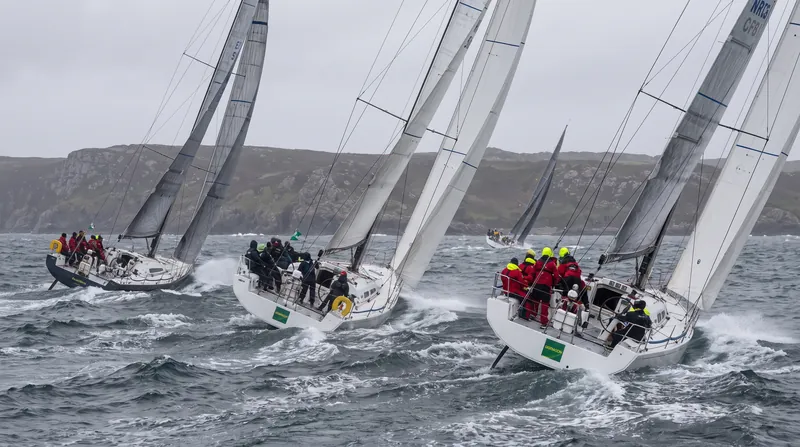
While solo sailors often have no choice but to push through the pain, the dynamic shifts significantly in fully crewed offshore events, where the safety of the individual can be weighed against the capabilities of the team. This contrast was starkly illustrated during the notoriously punishing Rolex Sydney Hobart Yacht Race, an event famous for breaking both boats and bodies across the treacherous Bass Strait.[1]
Aboard the New Zealand-flagged entry Vixen Racing, the crew encountered steep, aggressive seas that placed the yacht and its sailors under sustained, violent pressure. During the chaotic offshore conditions, crew member Deb Steele—a highly experienced two-time Sydney Hobart participant—suffered a heavy impact on deck. The collision resulted in fractured ribs, a severely painful injury that immediately compromised her ability to safely maneuver around the pitching vessel or brace against the relentless motion of the ocean.[1]
Faced with a seriously injured crew member and deteriorating weather conditions, Vixen Racing skipper Sharon Ferris-Choat made a decisive and widely praised leadership call. Prioritizing Steele's immediate health and the overall safety of the crew above their competitive ambitions, Ferris-Choat officially retired the yacht from the race. The difficult decision was executed when the boat was approximately 48 nautical miles east of Montague Island, allowing the team to safely alter course and seek urgent medical attention ashore.[1][2]
The retirement of Vixen Racing serves as a textbook example of sound seamanship under extreme pressure. Safety officials and maritime experts consistently highlight that continuing to race with a severely injured crew member not only endangers the patient but also places an unsustainable burden on the remaining crew, who must compensate for the lost hands while navigating hazardous waters. Steele's ongoing recovery from her fractured ribs is a direct result of the team's willingness to put human life ahead of the finish line.[1][2]
As these athletes navigate the slow, often frustrating process of physical rehabilitation, their experiences provide a sobering counter-narrative to the glamorous imagery often associated with ocean racing. Whether it is Christian Sauer preparing for the operating table, Dan Turner resting his battered spine, or Deb Steele healing from fractured ribs, the reality of the sport is deeply intertwined with physical vulnerability. The ocean does not compromise, and it demands a toll from everyone who dares to cross it.[2]
Yet, it is precisely this vulnerability that makes their eventual returns to the water so compelling. The offshore sailing community is defined by its resilience, and the current wave of midseason surgeries and rehab programs is merely the precursor to the next starting gun. For these injured sailors, the focus is no longer on the races they have finished, but on rebuilding the strength required to cast off the bowlines once again.[2]
The essentials
- Christian Sauer is preparing for shoulder surgery after battling through the McIntyre Mini Globe Race with a severe injury.
- Dan Turner managed to log 145-mile days in the Mini Globe Race despite being confined to his bunk with a pulled back muscle.
- Vixen Racing retired from the Sydney Hobart race to prioritize the safety of Deb Steele, who suffered fractured ribs.
- The midseason break is allowing several key offshore competitors to focus on rehabilitation and surgical recovery.
Timeline
Dec 2025
Vixen Racing retires from the Rolex Sydney Hobart Yacht Race after Deb Steele sustains fractured ribs in heavy seas.
Feb 2026
The McIntyre Mini Globe Race fleet departs Recife, Brazil, for the final grueling leg to Antigua.
Mar 2026
Christian Sauer and Dan Turner battle through severe shoulder and back injuries to complete the final Atlantic leg.
July 2026
Sailors utilize the midseason break to undergo necessary surgeries and focus on physical rehabilitation.
- Endurance Competitors
- Sailors who view pushing through physical pain as an inherent part of offshore racing.
- Safety Advocates
- Officials and teams prioritizing immediate retirement and medical evacuation when serious injuries occur.
Perspectives this story doesn't cover
- Sports Physiotherapists
- Onboard Medics
Sources
Source coverage
2 outlets
2 viewpoints surfaced


- [1]Boating New ZealandSafety Advocates
Deb Steele of Vixen Racing injured in heavy seas during Sydney to Hobart
Read on Boating New Zealand → - [2]Factlen Editorial TeamSafety Advocates
Synthesis by Factlen editorial team
Read on Factlen Editorial Team →
More in Sports
See all →Standings
Callisto and Jelvis Lead Standings as Cowes Week Celebrates 200th Anniversary in Classic Solent Conditions
6 sources
Injury
SailGP Fleet Heals: France Reunites Full Crew as Black Foils Press Forward After Auckland Crash
6 sources
SSL Gold Cup
Ukraine and Portugal Secure Final Slots at SSL Gold Cup Finals in Thrilling European Qualifiers
6 sources
Standings
Spain's Los Gallos Claim Back-to-Back SailGP Victories, Narrowing Australia's Championship Lead
3 sources
Comments
Every angle. Every day.
Get Sports stories with full source coverage and perspective breakdowns, free every day.