
Japan, France, and the US Locked in Historic Three-Way Battle for World Climbing Team Title
As the 2026 World Climbing Series enters its July stretch, Japan holds a narrow lead over France and the United States in the National Team Rankings. The tight three-way race highlights a season defined by breakout performances and shifting global dominance.
Share this story
The 2026 World Climbing Series has delivered a relentless barrage of individual brilliance, but as the midseason dust settles, the most compelling storyline has become the fiercely contested National Team Ranking. As the international circuit heads toward its crucial July stretch in Europe, Japan, France, and the United States find themselves locked in a historic, high-stakes three-way battle for the overall team title.
This tight race represents a significant departure from previous seasons, transforming what is traditionally an individual pursuit into a thrilling collective chess match where every semi-final run carries massive implications for the global standings.
According to the latest Continuously Updated World Rankings (CUWR) released by World Climbing, Japan currently holds the top spot with a formidable 10,200 points. However, their traditional cushion has completely evaporated.
France is breathing down their necks in second place with 9,946.3 points, while the United States sits in a very close third, surging rapidly on the back of a spectacular June campaign. The narrow margins separating the top three nations highlight a season defined by breakout performances, shifting global power dynamics, and the increasing importance of fielding a deeply versatile roster.
The National Team Ranking serves as the ultimate barometer of a country's developmental depth and structural health. The scoring system aggregates the points of each nation's three highest-ranked male and female athletes across all three competitive disciplines: Boulder, Lead, and Speed. In previous Olympic cycles, Japan's overwhelming, generational dominance in the Boulder discipline often turned the team race into a mere procession by mid-summer. This year, however, the landscape has fundamentally shifted as rival nations have successfully cultivated elite talent capable of matching the Japanese juggernaut hold for hold.[4]
Japan's current lead is largely built on the incredibly broad shoulders of their teenage phenoms, who continue to redefine the upper limits of the sport. Sorato Anraku has been virtually untouchable on the men's side, extending an astonishing winning streak to five consecutive Boulder golds and cementing his status as the premier technical climber on the planet.
Meanwhile, Neo Suzuki's recent countback victory in the Men's Lead final in Innsbruck provided a massive, timely points injection just as the season transitioned from the short, powerful Boulder problems to the endurance-testing roped discipline.[2]
France, sitting less than 300 points behind the leaders, has relied on remarkable consistency and a deep, battle-tested roster to stay firmly in the hunt. Zélia Avezou set an aggressive tone early in the season with a commanding Boulder victory in Keqiao, China, and the French squad has consistently placed multiple athletes in semi-finals and finals across both genders ever since.
Their balanced, methodical attack in both Boulder and Lead makes them a persistent, high-scoring threat at every single tour stop, allowing them to quietly accumulate points while other nations experience peaks and valleys.[3]
The United States, however, might possess the highest overall ceiling of the three contenders, driven by a roster that is peaking at exactly the right moment. The American surge has been heavily powered by teenage sensation Annie Sanders, who captured a historic Boulder and Lead double-gold in Prague before winning again in front of a massive crowd in Innsbruck.
Her sheer dominance, combined with veteran Colin Duffy's silver-medal return to form in Madrid, has kept Team USA firmly in the title hunt and proven that the Americans can go toe-to-toe with anyone on the technical walls.[1]
Where the United States and France could ultimately overtake Japan is in the highly specialized Speed discipline. Emma Hunt recently showcased the American firepower by setting a new Pan American record with a blistering 6.08-second gold-medal run in Madrid, while the US men's speed squad remains one of the deepest in the world.
With the Chamonix World Cup looming on July 10-12—an event featuring both Lead and Speed competitions—the Americans and the French have a distinct mathematical advantage in the vertical sprint, an area where Japan has traditionally fielded fewer top-tier contenders.[1][3]
The team dynamic adds a fascinating layer of strategy to what is traditionally an intensely individual sport, a sentiment frequently echoed by World Climbing analysts. When an athlete narrowly misses a podium but still fights their way to a fifth or sixth-place finish, those ranking points are absolutely vital for the national aggregate. This dynamic keeps every single semi-final run highly consequential for the overall standings, forcing athletes to push through fatigue and skin tears not just for personal glory, but for the collective success of their federation.[4]
As the tour moves through its grueling European leg, the pressure on all three federations will only mount. Japan must defend its narrow, precarious margin without the benefit of a dominant Speed roster, relying entirely on Anraku, Suzuki, and their deep Boulder squad to outscore the field through sheer technical perfection. France will look to capitalize on favorable travel schedules and raucous home-continent crowds to push them over the top, while the USA aims to leverage its unmatched three-discipline versatility to slowly chip away at the deficit.[1][2]
For climbing fans around the world, this three-way race offers a thrilling, season-long narrative that will stretch all the way to the grand finale in Santiago, Chile, this October. If France or the United States can successfully close the gap and hoist the trophy, it would mark a monumental changing of the guard in international competition climbing, signaling that the path to global supremacy now requires absolute mastery across every single facet of the sport.[4]
The essentials
- Japan currently leads the 2026 National Team Rankings with 10,200 points.
- France is in second place with 9,946.3 points, with the USA closely trailing in third.
- The ranking aggregates points from each country's top three male and female athletes across all disciplines.
- Japan's lead is heavily reliant on Boulder and Lead dominance from stars like Sorato Anraku.
- The USA and France hold a distinct advantage in the Speed discipline, setting up a dramatic summer stretch.
Timeline
May 2026
The season opens in China, with Japan and France taking early leads in the Boulder discipline.
June 2026
Annie Sanders wins double-gold in Prague, launching the USA back into the top tier of the team race.
June 21, 2026
The Innsbruck World Cup concludes, solidifying the tight three-way race at the top of the standings.
July 10, 2026
The Chamonix World Cup begins, offering crucial Lead and Speed points.
October 2026
The season will conclude in Santiago, Chile, where the team champion will be crowned.
- Team Japan Supporters
- Confident that Japan's unmatched technical mastery and depth in Boulder and Lead will secure another overall title.
- Team USA Advocates
- Argue that the United States' balanced attack across all three disciplines, especially Speed, makes them the favorites to overtake the leaders.
- Neutral Analysts
- Emphasize that the rise of American and French climbers has created the most competitive and unpredictable team race in recent history.
Perspectives this story doesn't cover
- Athletes from mid-ranked nations whose individual successes are overshadowed by the team race
- Coaches managing the strategic deployment of athletes to maximize team points
Sources
Source coverage
4 outlets
3 viewpoints surfaced




- [1]USA ClimbingTeam USA Advocates
Emma Hunt Sets Pan American Record, Colin Duffy Earns Silver at World Climbing Series Comunidad de Madrid
Read on USA Climbing → - [2]World Climbing NewsTeam Japan Supporters
ANRAKU EXTENDS WINNING STREAK WITH FIFTH CONSECUTIVE BOULDER GOLD
Read on World Climbing News → - [3]Olympics.comNeutral Analysts
World Climbing Series 2026: Full schedule and climbers to watch
Read on Olympics.com → - [4]WikipediaNeutral Analysts
2026 World Climbing Series
Read on Wikipedia →
More in Sports
See all →Injury
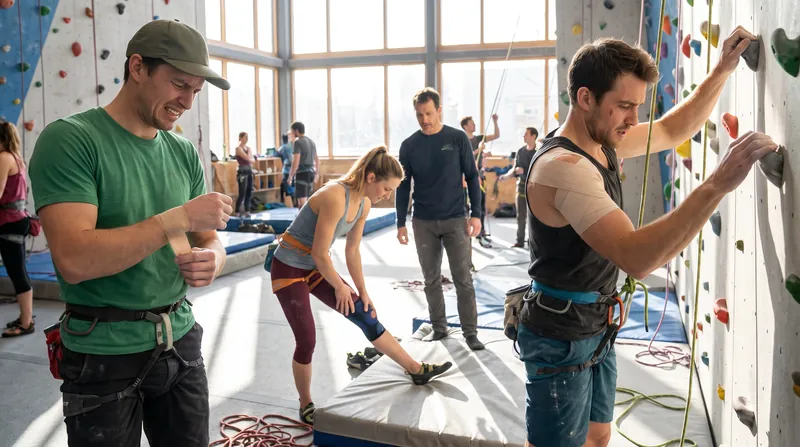
2026 Sport Climbing Injury Report: Milne, Richardson, and Dörffel Navigate the Grueling Return to the Wall
7 sources
Standings
The Race for the Podium: Oceania Mackenzie and Oriane Bertone Disrupt the Women's Combined Standings
6 sources
Standings
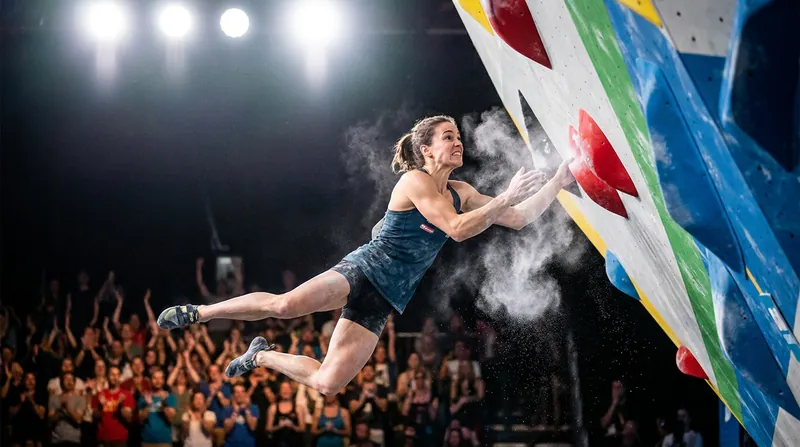
Colin Duffy and Dohyun Lee Seize Control of Men's Combined Standings as Toby Roberts Extends Injury Hiatus
2 sources
Standings
Experience Meets Evolution: Avezou, Ondra, and Mori Surge in 2026 World Climbing Standings
3 sources
Comments
Every angle. Every day.
Get Sports stories with full source coverage and perspective breakdowns, free every day.