
IFSC Introduces Sport-Specific Concussion Protocols and Empowers Medical Delegates in 2026
The International Federation of Sport Climbing has rolled out new SCAT 6-aligned concussion guidelines and granted Medical Delegates the authority to pull injured athletes from competition.
By Meera Iyer

Share this story
For decades, sport climbing injuries were largely confined to the hands and forearms—blown A2 finger pulleys, inflamed tendons, and strained shoulders. But as the sport has evolved into a highly dynamic, parkour-inspired spectacle, the injury profile has fundamentally shifted.
In response to the increasing frequency of uncontrolled falls and awkward landings, the International Federation of Sport Climbing (IFSC) has officially implemented a sport-specific concussion policy for the 2026 season. The new protocols mark a significant departure from climbing’s traditional "tape it up and try again" culture, introducing rigorous medical oversight to the competition mats.[1][2]
At the core of the new safety framework is the adoption of the SCAT 6 (Sports Concussion Assessment Tool), a globally recognized diagnostic standard developed by the Concussion in Sport Group and utilized by organizations like FIFA and the IOC.
While concussions are less prevalent in climbing than in high-impact contact sports, the IFSC Medical and Anti-Doping Commission recognized the critical need for objective testing. When a climber takes a severe or uncontrolled fall onto the bouldering mats, medical staff can now deploy the SCAT 6 to evaluate memory, cognitive recall, and neurological function, removing the guesswork from head injury assessments.[1][2]
Perhaps the most consequential change in the 2026 regulations is the empowerment of the IFSC Medical Delegate. Under the updated rules, the Medical Delegate has the unilateral authority to decide whether an injured climber may continue competing. Working in consultation with the event's Competition Doctor and team medical staff, the Delegate's mandate is strictly to safeguard the athlete's health. Crucially, the regulations explicitly state that the potential outcome of the competition must never influence this decision, effectively stripping coaches and adrenaline-fueled athletes of the ability to override medical advice.[2]
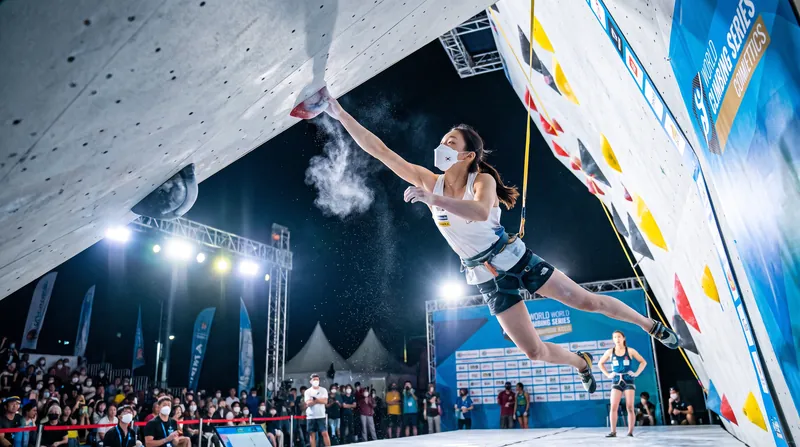
This regulatory overhaul is a direct response to the changing biomechanics of modern competition climbing. Route setters have increasingly favored "electric" coordination moves, multi-panel lateral jumps, and volume-heavy slabs that force athletes into precarious bodily positions. While these spectacular sequences draw massive crowds and broadcast ratings, they also increase the likelihood of missing a hold and falling unpredictably. Unlike traditional vertical climbing where falls are generally controlled, dynamic bouldering often results in inverted drops, spinning falls, or high-impact collisions with the safety mats.[4][6]
Recent epidemiological data underscores the urgency of these protocols. A comprehensive 10-year analysis of climbing injuries revealed that falls are now the leading mechanism of injury, accounting for nearly 59 percent of all climbing-related trauma. Furthermore, lower extremity injuries—such as knee ligament tears, ankle sprains, and fractures—now make up over half of all climbing injuries, surpassing the historically dominant upper-extremity finger and shoulder issues. The sheer force of landing from a 4.5-meter bouldering wall, especially when rotational momentum is involved, places immense stress on the human body.[3][5]
The cultural impact of the Medical Delegate's veto power cannot be overstated. Historically, competition climbing has celebrated athletes who gut out severe injuries for the sake of the podium. Crowds have routinely cheered climbers who limp to the wall or climb with visibly compromised joints, praising their grit and determination. The new IFSC framework fundamentally challenges this narrative, prioritizing long-term athlete welfare over momentary competitive glory. By placing the final decision in the hands of an independent medical professional, the federation is protecting athletes from their own competitive drive.[4][6]
The development of these guidelines was spearheaded by the IFSC Medical Committee, which collaborated with leading experts in sports medicine to adapt best practices from other Olympic disciplines. The committee tailored the SCAT 6 protocols specifically to the nuances of sport climbing. This includes establishing clear "return to sport" timelines that dictate how and when an athlete can resume training after sustaining a head impact, ensuring that the brain has fully healed before being subjected to further stress.[1][2]
As the 2026 World Cup season progresses toward the World Championships in Seoul and looks ahead to the LA28 Olympics, these medical protocols represent a maturation of the sport. Climbing is no longer a fringe outdoor pursuit; it is a premier Olympic event with professional athletes whose careers span decades. By institutionalizing concussion testing and empowering Medical Delegates, the IFSC is ensuring that the sport’s rapid growth—and its increasingly spectacular route setting—does not come at the unacceptable cost of its athletes' long-term health.[1][2][6]
The essentials
- The IFSC has implemented new SCAT 6 concussion protocols for the 2026 sport climbing season.
- Medical Delegates now have unilateral authority to pull injured athletes from competition.
- The policy shift addresses the rise in fall-related injuries caused by dynamic, parkour-style route setting.
- Falls now account for nearly 59 percent of all climbing-related trauma.
- The new rules prioritize long-term athlete health over the traditional 'climb through the pain' culture.
Timeline
2021
Sport climbing makes its Olympic debut in Tokyo, accelerating the sport's professionalization.
October 2022
The 6th International Conference on Concussion in Sport is held in Berlin, developing the SCAT 6 tool.
August 2024
The Paris Olympics feature highly dynamic bouldering routes, highlighting the physical toll on athletes.
2026 Season
The IFSC officially implements SCAT 6 concussion protocols and grants veto power to Medical Delegates.
- Medical & Safety Officials
- Prioritize long-term brain and joint health over immediate competition results, advocating for objective SCAT 6 testing.
- Competitive Athletes
- Appreciate the safety net but face the emotional challenge of being pulled from a final round they trained years for.
- Route Setters & Organizers
- Tasked with balancing spectacular, crowd-pleasing dynamic movements with the physical safety of the athletes landing on the mats.
Perspectives this story doesn't cover
- Local gym owners adapting to new safety standards
- Insurance providers for professional athletes
Sources
Source coverage
6 outlets
3 viewpoints surfaced






- [1]World ClimbingMedical & Safety Officials
Concussion Policy and Return to Sport Guidelines
- [2]International Federation of Sport ClimbingMedical & Safety Officials
Event Regulations and Medical Delegate Rules
- [3]National Institutes of HealthMedical & Safety Officials
Rock Climbing-Related Injuries: A 10-Year Analysis
- [4]Climbing MagazineRoute Setters & Organizers
Accidents in North American Climbing: The Role of Human Error
- [5]ResearchGateMedical & Safety Officials
Lower Extremity Injuries in Sport Climbing
- [6]Gripped MagazineCompetitive Athletes
Natalia Grossman to Make Comp Climbing Return
More in Sports
See all →Injury
Brazil's Anja Köhler Caps Off Foot Injury Comeback with Silver at Pan America Series
4 sources

Standings
Jianguo Long and Shouhong Chu Command the 2026 Men's Speed Standings as the Four-Lane Era Heats Up
6 sources
Injury
Brooke Raboutou Finds Joy in Chamonix Return Following Career-Threatening Labrum Tear
7 sources
Standings
Putra Tri Ramadani's Historic Surge Reshapes the 2026 Men's Lead Standings
7 sources
Comments
Every angle. Every day.
Get Sports stories with full source coverage and perspective breakdowns, free every day.