
State Laws Override HOA Mandates to Protect Homeowners' Native Landscaping
A grassroots push to replace water-intensive turfgrass with native habitats is transforming American yards. As homeowners clash with neighborhood associations over aesthetic rules, a growing number of states are passing laws to protect ecological landscaping.
By Kavya Nair

Share this story
In short
- The Homegrown National Park movement aims to restore biodiversity by converting 15 percent of American lawns into native plant habitats.
- Turfgrass covers roughly 40 million acres in the U.S., consuming massive amounts of water while providing virtually no ecological value.
- Homeowners Associations frequently ban native landscaping and xeriscaping in favor of uniform grass lawns, leading to costly legal disputes.
A habitat larger than 10 Yellowstones can be created if just 15 percent of American homeowners replace their turfgrass with native plants. That is the mathematical foundation of the Homegrown National Park movement, an initiative currently tracking 187,000 acres of private land converted from conventional lawns to ecological sanctuaries.
The actionable takeaway for property owners is straightforward: swapping water-intensive grass for regionally native shrubs and flowers cuts maintenance costs, eliminates synthetic fertilizer use, and immediately rebuilds local food webs. Founded by entomologist Doug Tallamy, the project asks residents to pull weeds, press native seeds into the soil, and log their yard on a national map.[1][2]
The United States currently cultivates roughly 40 million acres of turfgrass, making it the largest irrigated crop in the country. This vast monoculture requires immense inputs—billions of gallons of water daily, synthetic fertilizers, and fossil-fuel-powered mowing—while yielding almost zero ecological value.
Turfgrass provides no nectar for pollinators, no host leaves for caterpillars, and no seeds for birds. It is a biological desert. When native habitats are stripped out and replaced with ornamental lawns, the local ecosystem quietly fails, driving the steep declines in insect and bird populations recorded over the last fifty years.[2]
Reversing this decline does not require returning suburbs to untouched wilderness; it requires planting 'keystone' species. Research demonstrates that just 14 percent of native plants support 90 percent of butterfly and moth caterpillars. Native oak trees, for example, are ecological powerhouses that sustain hundreds of insect species throughout the year, which in turn feed breeding songbirds. By utilizing databases like the National Wildlife Federation’s Native Plant Finder, residents can identify the specific high-yield plants adapted to their exact zip code, ensuring their landscaping budget buys the maximum biological impact.[6]
The regenerative capacity of these plants is rapid and measurable. On his own 10-acre property in rural Pennsylvania, Tallamy documented the return of over 1,380 moth species after clearing invasive vegetation and restoring native flora. Luna moths, an increasingly rare emerald-green species, reached record numbers on the property.
"If 10 to 20 percent of landowners planted native plants," Tallamy notes, "this would add up to a habitat larger than 10 Yellowstones." This quiet transformation proved that conservation does not require pristine, untouched wilderness. It can happen in degraded residential spaces, provided the right botanical foundation is restored.[1]
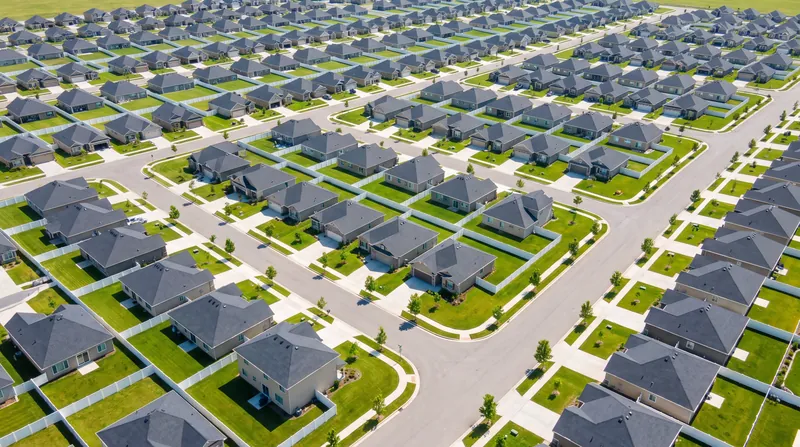
But this ecological transition routinely collides with the aesthetic mandates of Homeowners Associations (HOAs). HOAs govern roughly two-thirds of newly built U.S. homes and approximately one-third of the existing housing stock. Traditional HOA covenants strictly enforce visual uniformity, often requiring wall-to-wall turfgrass and explicitly banning xeriscaping, unmanaged wildflower beds, or vegetable gardens. For residents attempting to rewild their properties, these rules trigger a direct legal conflict between private ecological action and neighborhood contract law.[4]
Homeowners who violate these aesthetic standards face escalating fines, forced replanting orders, and protracted legal battles. In Maryland, one couple spent more than a decade fighting their HOA over a native pollinator garden they had cultivated to support local birds. The association demanded they rip out the native flowering plants and replace them with a conventional grass lawn. While the homeowners eventually saved most of their garden, the dispute highlighted the immense financial and emotional friction residents face when their sustainability goals violate neighborhood bylaws.[4]
To protect residents from these penalties, a growing coalition of states has passed legislation voiding HOA bans on low-impact landscaping. Texas Property Code §202.007 explicitly prohibits associations from enforcing rules against drought-resistant landscaping or water-conserving natural turf. Under this statute, any neighborhood covenant that mandates water-intensive grass over native alternatives is legally void, regardless of when the HOA was established.[3]
Maryland followed suit in 2021, directly inspired by the high-profile disputes within its borders. The state enacted Real Property Section 11-111.4, which shields pollinator gardens, rain gardens, and xeriscaping from HOA interference. The law formally declares that HOA mandates requiring turfgrass constitute an 'unreasonable limitation' on property rights. California, Colorado, Nevada, and Florida have enacted similar protections, shifting the legal balance of power away from neighborhood boards and toward individual property owners seeking to reduce their environmental footprint.[4][5]
However, these state laws do not grant homeowners a blank check to abandon yard maintenance entirely. HOAs retain the legal authority to enforce basic tidiness, plant height limits, and weed control. A native garden that is unmanaged and encroaches on sidewalks can still incur fines. The legal distinction hinges on intentionality: states protect planned, maintained low-impact landscaping, not neglect. Homeowners must still submit design plans to their architectural review committees, but those committees can no longer reject the plans solely because they utilize native plants instead of turfgrass.[3][5]
Executing this transition successfully requires strategic design to maintain neighborhood harmony. Landscape architects recommend the 'cues to care' approach for native gardens in suburban settings. By adding defined borders, maintaining clear sightlines, and integrating hardscape pathways, homeowners signal that the yard is a cultivated landscape. Grouping plants by species rather than scattering them randomly also creates a deliberate, structured aesthetic that satisfies neighborhood expectations while delivering the water savings and biodiversity benefits of a wilder yard.[2][4]
Beyond the ecological benefits, the financial math heavily favors native landscaping. Once established, native plants require virtually no supplemental watering, drastically reducing summer utility bills. They evolved to survive local weather extremes and resist endemic pests, eliminating the need for synthetic fertilizers and chemical pesticides. For municipalities, widespread adoption of native landscaping reduces the strain on municipal water supplies during droughts and mitigates stormwater runoff, as the deep root systems of native prairie plants absorb significantly more rainwater than the shallow roots of turfgrass.[2]
Beyond the ecological benefits, the financial math heavily favors native landscaping.
The speed at which this decentralized habitat expands now depends on state legislatures rather than individual gardeners. With 52,000 participants already registered on the Homegrown National Park map, the movement has proven the demand for residential rewilding.
The next verifiable checkpoint will be the 2027 legislative sessions in states like Virginia and New York, where advocates are currently drafting bills modeled on the Maryland and Texas statutes. If those bills pass, millions more homeowners will gain the legal cover to tear up their turfgrass; if they fail, the transition will remain bottlenecked by the aesthetic preferences of local neighborhood boards.[1][4]
Definitions
- Keystone Species
- A plant species that has a disproportionately large impact on its local ecosystem, often supporting hundreds of different insect and pollinator species.
- Xeriscaping
- A landscaping method designed specifically for arid and semiarid climates that utilizes water-conserving techniques and drought-tolerant plants.
- Turfgrass
- A variety of grass cultivated specifically to form a dense, uniform lawn, typically requiring significant water, fertilizer, and mowing to maintain.
- Cues to Care
- Design elements like defined borders, pathways, and fencing used in native landscaping to signal that a wild-looking garden is intentionally maintained.
Questions & answers
Can my HOA legally force me to plant a grass lawn?
It depends on your state. In states like Texas, Maryland, California, and Colorado, state laws explicitly prohibit HOAs from banning drought-tolerant landscaping or native plants. In states without these protections, HOA covenants are legally binding contracts that can mandate turfgrass.
Do native plant gardens attract pests like ticks and mice?
A properly maintained native garden does not inherently attract more pests than a traditional landscape. While they do attract more wildlife, keeping the garden structured and maintaining clear borders prevents it from becoming a harbor for unwanted rodents.
Are native plants more expensive than traditional landscaping?
The initial cost of purchasing native perennials or shrubs can be similar to or slightly higher than traditional ornamentals. However, the long-term costs are significantly lower because native plants do not require ongoing irrigation, synthetic fertilizers, or weekly mowing.
How do I know which plants are native to my area?
Resources like the National Wildlife Federation's Native Plant Finder allow users to enter their zip code to generate a list of keystone native plants specifically adapted to their local ecosystem.
Analysis by camp
The Ecological Imperative
Conservationists argue that private yards are the last remaining frontier for saving terrestrial biodiversity.
With natural habitats fragmented by development and agriculture, ecologists view the 40 million acres of American lawns as a massive, untapped conservation opportunity. Advocates argue that traditional conservation—fencing off remote wilderness areas—is no longer mathematically sufficient to stop the collapse of insect and bird populations. By transitioning private yards to native keystone plants, homeowners can instantly rebuild the base of the food web, providing nectar for pollinators and caterpillars for breeding birds. To this camp, maintaining a sterile, chemical-dependent grass lawn during a biodiversity crisis is an ecological liability.
The Aesthetic Defense
Homeowners Associations maintain that strict landscaping rules protect property values and neighborhood cohesion.
For HOA boards and traditional landscaping advocates, the push for 'wild' yards threatens the visual harmony that draws buyers to planned communities. They argue that without strict enforcement, native gardens easily degrade into neglected weed patches that harbor ticks, rodents, and invasive species. From this perspective, turfgrass mandates are not anti-environment; they are a necessary baseline for community standards. When residents unilaterally replace their lawns with tall grasses and wildflowers, traditionalists argue it violates the aesthetic contract every homeowner agreed to upon purchasing the property.
The Property Rights Override
State legislatures are increasingly viewing HOA landscaping bans as an overreach into private property rights.
A growing legal movement approaches the lawn debate not just as an environmental issue, but as a property rights conflict. Lawmakers in states like Texas and Maryland argue that private neighborhood associations should not have the authority to force homeowners to waste municipal water or apply synthetic chemicals to their land. By passing statutes that explicitly void HOA bans on xeriscaping and native plants, these states are reasserting the right of the individual to manage their property sustainably, effectively stripping HOAs of their ultimate veto power over residential landscaping.
- Native Plant Advocates
- Argue that residential yards must be transitioned from sterile lawns to functional ecosystems to reverse biodiversity collapse.
- HOA Boards & Traditionalists
- Value neighborhood aesthetic uniformity and argue that unmanaged native gardens look messy, lower property values, and attract pests.
- Property Rights Advocates
- Focus on the legal right of homeowners to landscape their own land without interference from private neighborhood associations.
Perspectives this story doesn't cover
- Landscaping Industry Professionals
- Municipal Water Managers
Sources
Source coverage
6 outlets
3 viewpoints surfaced






- [1]Reasons to Be CheerfulNative Plant Advocates
The 'National Park' That Stretches From Coast to Coast
Read on Reasons to Be Cheerful → - [2]Homegrown National ParkNative Plant Advocates
Homegrown National Park: Restoring Biodiversity One Yard at a Time
- [3]Texas Constitution and StatutesProperty Rights Advocates
Property Code Chapter 202. Construction and Enforcement of Restrictive Covenants
Read on Texas Constitution and Statutes → - [4]Factlen Editorial Team
Synthesis by Factlen editorial team
Read on Factlen Editorial Team → - [5]Maryland General AssemblyProperty Rights Advocates
Maryland Real Property Section 11-111.4: Low-Impact Landscaping
Read on Maryland General Assembly → - [6]National Wildlife FederationNative Plant Advocates
Native Plant Finder

More in Community
See all →Contact Theory
The Four Conditions That Must Be Met for Intergroup Contact to Reduce Prejudice
8 sources

Cognitive Bias
The Cognitive Gap Between Perceived and Actual Understanding
7 sources

Group Psychology
The Two Psychological Mechanisms That Drive Group Polarization in Reader Debates
6 sources

Property Law
The 'Declaration of Covenants, Conditions, and Restrictions' That Legally Governs a Common Interest Community
1 sources
Comments
Every angle. Every day.
Get Community stories with full source coverage and perspective breakdowns, free every day.