
Hackers Steal $90 Million in Hardware Exploit Targeting Ledger Wallets
A sophisticated supply-chain attack on Ledger hardware wallets has drained over $90 million from users. Attackers intercepted devices sold by a Southeast Asian reseller and installed microscopic cellular implants to capture recovery phrases during setup.

Share this story
A sophisticated hardware exploit targeting Ledger cryptocurrency wallets has drained over $90 million from users, exposing a critical vulnerability in the cold-storage supply chain. The thefts, which began emptying accounts on October 9, 2026, trace back to devices that were physically tampered with before they reached customers. The breach explicitly shifts the threat landscape from software bugs to physical hardware interception.[1][2][4]
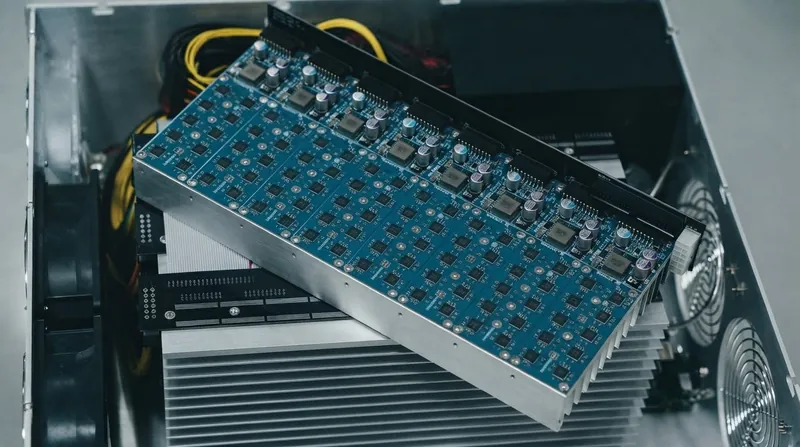
Attackers intercepted genuine Ledger devices and soldered a microscopic circuit board beneath the OLED screen, occupying the space where the display's protective padding normally sits. This rogue component contains a microcontroller, an antenna, and an eSIM card capable of cellular transmission. The operation required significant funding, coordination, and physical access to the inventory before it was shipped to end users.[2][4]
When a user initializes the wallet, the device generates and displays a 24-word recovery phrase. The hidden implant reads this phrase directly off the display hardware and transmits it to the attackers over an LTE cellular connection. With the recovery phrase in hand, the attackers can rebuild the wallet on their own devices and empty the funds at their convenience, without ever touching the victim's hardware again.[1][3]
Bypassing the Secure Element
Because the malicious hardware only monitors the screen and does not interact with the wallet's cryptographic Secure Element, the tampered devices successfully pass Ledger's official authenticity checks during setup. Forensic analysis of a compromised unit purchased in Malaysia revealed that the devices arrived in intact shrink wrap. The modification is virtually undetectable unless the user physically dismantles the casing to inspect the internal circuitry.[1][4]
Ledger has confirmed the attack and isolated the confirmed drains to devices sold by CryptoBilis, an authorized reseller based in Malaysia that served the Southeast Asian market. The Paris-based manufacturer instructed the vendor to halt all shipments. "If you bought a Ledger signer from CryptoBilis and have not set it up, do not set it up and contact Ledger Support," the company advised in its official statement.[2][3]
On-chain forensics tracked the stolen assets across at least six blockchain networks, with total losses exceeding $90 million drained from more than 315 individual wallets. The theft was heavily concentrated on the Tron network, which accounted for roughly $70.5 million of the drained funds, while Bitcoin and Ethereum made up the majority of the remainder. Attackers reportedly routed portions of the stolen cryptocurrency through mixing services to obscure the trail.[3][4]
In response to the breach, stablecoin issuer Tether intervened by freezing approximately $10 million in USDT linked to the attackers' addresses. While this action recovered a fraction of the stolen value, the decentralized nature of the other affected networks meant that the vast majority of the $90 million could not be clawed back. The incident highlights the stark finality of hardware wallet compromises once the recovery phrase is exposed.[4]
Retailers Halt Hardware Sales
The fallout has extended beyond Southeast Asia, prompting concerns about the broader retail network. Following unverified reports of similar tampering in Europe, major electronics retailers began pulling Ledger products from their physical stores and online platforms. Ledger stated it is actively reviewing reports of implants in other locations but maintains that all confirmed thefts to date involve the CryptoBilis supply chain.[2]
The scale of the theft has prompted other hardware wallet manufacturers to reassess their distribution networks. Competitors such as Trezor and OneKey have publicly announced reviews of their authorized reseller programs, with OneKey terminating its relationship with CryptoBilis entirely. The incident underscores the inherent risk of relying on third-party distributors to handle sensitive cryptographic hardware.[1][3]
The exploit appears to have been active in the wild months before the mass drains occurred in October. Security researchers reported finding a similar cellular implant in a Ledger Nano X purchased from a Thai marketplace, notifying the company of the vulnerability in March 2026. Reports indicate that Ledger had received warnings about tampered devices as early as December 2025, raising questions from the crypto community about why a public alert was not issued sooner.[1][2]
The panic surrounding the hardware exploit has already spawned secondary attacks targeting anxious investors. Blockchain security firms reported that scammers are sending widespread phishing emails disguised as an emergency Ledger firmware update. The emails claim to offer a patch against the Malaysian spyware threat, directing users to a fraudulent verification portal that prompts them to type in their 24-word recovery phrase.[3]
A Turbulent Year for Cold Storage
The Ledger exploit represents the latest chapter in a turbulent year for cold storage providers. Over the summer, a software flaw in devices manufactured by Coinkite exposed serious vulnerabilities, resulting in the theft of an estimated $130 million worth of Bitcoin. Shortly after, Trezor encountered a data breach through a shipping provider that exposed the personal information of roughly 67,000 customers, further eroding trust in the hardware wallet ecosystem.[2]
The breach forces the cryptocurrency industry to confront the limits of self-custody security. While offline cold storage effectively protects cryptographic keys from remote software hacks, it cannot defend against physical interception during transit. The incident demonstrates that users must trust not only the device's encryption but the physical integrity of the entire supply chain from the factory floor to their front door.[1][4]
Key points
- Attackers drained over $90 million by intercepting Ledger hardware wallets and soldering microscopic cellular implants beneath the device screens.
- The hidden hardware captured 24-word recovery phrases during setup and transmitted them to attackers via LTE networks.
- Because the implants did not interact with the cryptographic Secure Element, the tampered devices passed Ledger's official authenticity checks.
- Ledger has isolated the confirmed thefts to Malaysian reseller CryptoBilis, prompting competitors to review their own distribution networks.
What we don’t know
- Whether the supply-chain compromise extends beyond CryptoBilis to other authorized resellers or regions.
- The exact point in the distribution network where the physical implants were soldered into the devices.
- Whether Ledger will compensate users who lost funds after purchasing from an officially listed reseller.
How we got here
March 2026
A security researcher notifies Ledger after discovering a cellular implant in a Nano X wallet purchased from a Thai marketplace.
October 9, 2026
Users begin reporting drained wallets, prompting on-chain forensics to trace the thefts to devices sold by Malaysian reseller CryptoBilis.
October 13, 2026
Ledger publicly confirms the hardware implant attack, halts sales through CryptoBilis, and advises recent buyers not to initialize their devices.
October 17, 2026
Security firms warn that scammers are exploiting the incident by sending fake firmware update emails to steal recovery phrases.
- Security Researchers
- Cybersecurity experts emphasize that the attack exposes a fundamental flaw in the cold-storage supply chain.
- Hardware Wallet Manufacturers
- Ledger and its competitors focus on isolating the breach to specific third-party distributors while defending their core encryption.
- Affected Crypto Community
- Cryptocurrency investors express frustration over delayed warnings and the failure of official authenticity checks.
Perspectives this story doesn't cover
- Supply chain logistics providers
- Cellular network operators
Sources
Source coverage
4 outlets
3 viewpoints surfaced




- [1]Business StandardSecurity Researchers
Crypto devices built to foil hackers may have come with spies inside
Read on Business Standard → - [2]Investing.comHardware Wallet Manufacturers
Ledger crypto wallets compromised in hardware attack linked to $90M theft
Read on Investing.com → - [3]24/7 Wall St.Affected Crypto Community
About $90 Million Was Drained Through Tampered Ledger Wallets. How to Check If Yours Is Safe
Read on 24/7 Wall St. → - [4]Crypto BriefingSecurity Researchers
Criminals steal an estimated $90M in crypto using tampered hardware wallets
Read on Crypto Briefing →
More in Finance
See all →Wallet Cryptography
Infinite Keys From Twelve Words: How HD Wallets Eliminated Cryptographic Backups
7 sources
Regulatory Policy
FinCEN Withdraws Proposed $10,000 Reporting Rules for Self-Hosted Crypto Wallets and Mixers
5 sources

Impermanent Loss
Why the Constant Product Formula Extracts Impermanent Loss from Liquidity Providers
2 sources

Institutional Crypto
US Spot Bitcoin ETFs Record $2.39 Billion Weekly Inflow, Flipping 2026 Flow Positive
6 sources

Comments
Every angle. Every day.
Get Finance stories with full source coverage and perspective breakdowns, free every day.