
Grand Egyptian Museum Fully Opens, Uniting Tutankhamun's Entire Treasure for the First Time
After decades of delays, the $1.2 billion Grand Egyptian Museum has fully opened in Giza, displaying all 5,398 artifacts from King Tutankhamun's tomb together for the first time since 1922.
By Tara Reddy

Share this story
After more than two decades of construction, political uprisings, and global pandemics, the Grand Egyptian Museum (GEM) has officially opened its doors in full. Located just a stone's throw from the Pyramids of Giza, the $1.2 billion complex is now the largest archaeological museum on Earth dedicated to a single civilization.
The crown jewel of this historic opening is the complete, unified display of King Tutankhamun's treasures. For the first time since British archaeologist Howard Carter unsealed tomb KV62 in 1922, all 5,398 artifacts buried with the boy king have been brought together under one roof.
For the past century, the collection was fractured. The iconic golden death mask and a selection of premium items were housed in the cramped, un-air-conditioned Egyptian Museum in Cairo's Tahrir Square, while thousands of other pieces—chariots, walking sticks, board games, and sandals—languished in storage or secondary displays.[1]
The new mechanism of display fundamentally changes how the artifacts are understood. Spread across 7,000 square meters of dedicated gallery space, the exhibition is arranged chronologically according to Carter's original excavation sequence. Visitors virtually walk through the tomb's antechamber, annexe, burial chamber, and treasury exactly as they were discovered.[1]
Conservation and climate control represent a massive technological leap. At the old museum, artifacts were subjected to fluctuating Cairo temperatures and ambient humidity. At the GEM, each of the 5,398 objects is housed in custom-built, climate-controlled cases with fiber-optic lighting designed to prevent degradation of delicate organic materials like wood, leather, and linen.
The famous 11-kilogram solid gold death mask now sits behind 40-millimeter bulletproof glass at the gallery's entrance. The nested golden coffins, previously difficult to view from all angles, are displayed in freestanding cases that allow 360-degree inspection of their intricate lapis lazuli and carnelian inlays.
Beyond Tutankhamun, the sheer scale of the GEM is staggering. The 5.4 million-square-foot facility houses over 100,000 artifacts spanning 7,000 years of Egyptian history. The entrance is guarded by a 36-foot-tall, 82-ton granite statue of Ramses II, which was moved to the site in 2006 and had the museum built around it.
The architectural design utilizes the site's natural topography. A massive grand staircase acts as a chronological spine, carrying visitors upward past colossal statues until they reach a panoramic floor-to-ceiling window framing the Great Pyramids.[1]
The opening carries massive economic stakes for Egypt. Tourism accounts for up to 15% of the nation's economic output, and the sector has suffered through years of regional instability. The government projects the GEM will draw 8 million visitors annually, serving as the anchor for an ambitious national goal to double total tourism to 30 million visitors by 2028.
To support this influx, the surrounding infrastructure has been entirely overhauled. A new metro line connects central Cairo directly to the Giza plateau, and the newly expanded Sphinx International Airport offers direct flights to the site, allowing tourists to bypass Cairo's notorious traffic entirely.[1]
The state-of-the-art facility also arms Egypt with a powerful new argument in the ongoing debate over cultural repatriation. For decades, Western institutions have argued that Egypt lacked the facilities to safely house and conserve its most precious heritage.
With the GEM's opening, that argument has effectively evaporated. The complex includes one of the world's largest and most advanced archaeological conservation centers, where hundreds of specialists have spent the last decade painstakingly restoring artifacts before they went on display.
Despite the comprehensive nature of the Tutankhamun exhibit, one crucial element remains absent: the pharaoh himself. Tutankhamun's mummy has not been moved to the GEM and remains in a climate-controlled glass case inside his original tomb in the Valley of the Kings in Luxor, honoring a long-standing policy to leave royal remains in their resting places when possible.[1]
As visitors pour into the sprawling alabaster and glass complex, the GEM represents more than just a repository for ancient gold. It is a modern monument designed to rival the ancient wonders it sits beside, reclaiming Egypt's narrative and presenting its history on its own terms for the first time in the modern era.
Viewpoints in depth
Egyptian Antiquities & Tourism Officials
Viewing the museum as a catalyst for economic revival and national pride.
Government officials and tourism operators emphasize the GEM's role as an economic engine. By creating a world-class, multi-day destination right next to the Pyramids, they aim to extend the average tourist's stay in Cairo. Officials argue that the $1.2 billion investment will quickly pay dividends by helping the country reach its target of 30 million annual visitors by 2028, providing crucial foreign currency reserves.
Global Egyptologists & Conservators
Celebrating the unprecedented academic and preservation capabilities of the new facility.
For researchers, the true value of the GEM lies in its conservation center and the contextual display of the artifacts. Egyptologists praise the decision to display the Tutankhamun collection according to Howard Carter's excavation layout, which allows scholars and the public to understand the ritual logic of the burial rather than just viewing isolated golden masterpieces. The climate-controlled cases are seen as a vital intervention that will save thousands of fragile organic artifacts from decay.
Cultural Repatriation Advocates
Framing the state-of-the-art museum as the ultimate counterargument to Western retention of Egyptian artifacts.
Heritage advocates argue that the GEM dismantles the long-standing Western defense against repatriation—namely, that Egypt lacked the infrastructure to safely house its own antiquities. With a facility that arguably surpasses the technological capabilities of the British Museum or the Louvre, advocates are renewing aggressive campaigns for the return of the Rosetta Stone, the Dendera Zodiac, and the Nefertiti Bust, asserting that these items belong in the definitive museum of Egyptian civilization.
Key points
- The Grand Egyptian Museum (GEM) has fully opened in Giza after more than 20 years of planning and construction.
- For the first time since 1922, all 5,398 artifacts from King Tutankhamun's tomb are displayed together in one place.
- The $1.2 billion, 5.4 million-square-foot facility houses over 100,000 artifacts and features state-of-the-art climate control and conservation labs.
- Egypt hopes the museum will serve as a major economic catalyst, helping the country reach its goal of 30 million annual tourists by 2028.
What we don’t know
- Whether the opening of the GEM will successfully convince Western museums, such as the British Museum, to repatriate contested artifacts like the Rosetta Stone.
- How the massive influx of projected visitors will impact the long-term preservation of the surrounding Giza plateau infrastructure.
How we got here
1922
Howard Carter discovers the nearly intact tomb of King Tutankhamun in the Valley of the Kings.
1992
The Egyptian government announces plans for a massive new museum to replace the overcrowded Tahrir Square facility.
2005
Construction officially begins on the Giza plateau site.
2006
The 82-ton statue of Ramses II is moved to the site, becoming the first artifact installed before the museum is built around it.
2011–2014
Construction stalls due to the Egyptian Revolution and subsequent political and economic instability.
2024
The museum begins a soft opening phase, allowing limited access to the Grand Hall and grand staircase.
Nov 2025
The GEM fully opens to the public, unveiling the complete Tutankhamun collection for the first time.
- Egyptian Government & Tourism Sector
- Focuses on the economic windfall and the modernization of Egypt's tourism infrastructure.
- Archaeologists & Conservators
- Values the unprecedented preservation technology and the chronological, context-rich display of the artifacts.
- Cultural Repatriation Advocates
- Views the state-of-the-art facility as the definitive argument for Western museums to return stolen Egyptian heritage.
Perspectives this story doesn't cover
- Local Giza Residents
- Independent Tour Guides
Sources
Source coverage
1 outlets
3 viewpoints surfaced

- [1]Al-AhramEgyptian Government & Tourism Sector
GEM inaugurates Tutankhamun galleries, marking full opening
Read on Al-Ahram →
More in Culture
See all →Timekeeping History
How a Mathematical Remainder in Ancient Astrology Dictated the Sequence of the Days of the Week
3 sources
Writing Systems
How Greek Scribes Built Written Vowels Out of Leftover Phoenician Consonants
5 sources
English Orthography
Caxton's Printing Press Standardized Middle English Spelling Decades Before the Great Vowel Shift Reshaped Spoken Vowels
5 sources
Roman Archaeology
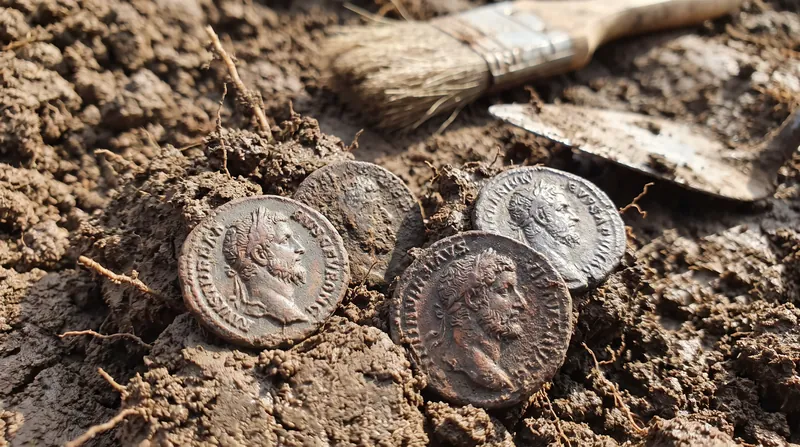
Amateur Archaeologist Unearths Germany's Largest Hadrian-Era Roman Coin Hoard
5 sources
Comments
Every angle. Every day.
Get Culture stories with full source coverage and perspective breakdowns, free every day.