
Global Handball Injury Desk: Simonet Retires Following EHF Finals Setback as Milosavljević and Kos Eye Summer Returns
As the 2026/27 pre-season begins, Montpellier legend Diego Simonet announces his retirement following a late-season injury, while Serbian duo Marko Milosavljević and Miloš Kos prepare for their long-awaited returns to the court.
Share this story
The July summer break offers a critical reset for global handball clubs, shifting the collective focus from grueling match schedules to rehabilitation, recovery, and roster evaluation. Across the sport's top leagues, the off-season serves as a vital window for medical staffs to assess the physical toll of a relentless calendar year. For several high-profile players, the dawn of the 2026/27 pre-season marks the end of long, isolated medical layoffs and the beginning of a fresh campaign.
The physical demands of modern handball—characterized by high-speed collisions, sudden directional changes, and repetitive overhead throwing—make injury management one of the most decisive factors in a club's ultimate success. As teams reconvene for summer training camps, the return of key personnel from the surgical table often feels as impactful as a blockbuster transfer signing, instantly altering the tactical possibilities for the upcoming season.
However, for one of the sport's most beloved and creative playmakers, the summer brings a graceful exit rather than a triumphant return to the court. Montpellier Handball's 36-year-old centre-back Diego Simonet has officially called time on his illustrious 13-year career in France following a frustrating late-season injury. Simonet, widely regarded as one of the finest Argentine players in the history of the sport, suffered a debilitating knee setback just prior to the Winamax EHF Finals in Hamburg this past May.
The timing of the injury was particularly cruel, robbing the veteran of the chance to fully participate in what was meant to be his final international highlight on the European stage. While Simonet managed to push through the pain for brief, symbolic minutes in the semi-final against THW Kiel, his body ultimately forced him to watch the subsequent bronze medal match against SG Flensburg-Handewitt from the stands.[1]
Rather than embarking on another arduous rehabilitation process at this advanced stage of his career, the Argentine legend chose to retire on his own terms, prioritizing his long-term health and personal life. "I will have a little break now, because it was a lot I gave for handball," Simonet stated in his farewell address, noting his desire to focus on his family after dedicating over a decade to the grueling European circuit.
Simonet leaves behind a remarkable legacy at Montpellier, having been the creative engine behind some of the club's most successful campaigns. Looking ahead, he expressed a strong desire to eventually transition into a developmental role, potentially helping to grow youth handball in the Americas. His departure underscores the difficult decisions aging athletes face when weighing the grueling demands of post-surgical rehab against the desire to transition smoothly into life after professional sports.[1]
While Simonet steps away from the professional game, several international stars are finally stepping back onto the court after navigating their own grueling recovery periods. In Switzerland, Kriens-Luzern is eagerly welcoming back Serbian left-back Marko Milosavljević, who was forced to miss the entire first half of the 2026 calendar year. Milosavljević underwent major shoulder surgery in late 2025 after attempting to manage a persistent structural issue conservatively.
The shoulder joint is notoriously difficult to rehabilitate in handball due to the extreme rotational forces required for elite-level shooting and passing. The operation unfortunately ruled the dynamic scorer out of the EHF EURO 2026 in Denmark, dealing a significant blow to the Serbian national team's ambitions. However, his dedicated adherence to a strict six-month rehabilitation program has paid off, and he is now fully cleared for the upcoming Swiss league pre-season.[2]
His national team counterpart, Miloš Kos, is experiencing a similar physical resurgence in Germany. The HC Erlangen left-back saw his 2025/26 campaign heavily disrupted by a severe ankle injury that completely derailed his rhythm and, like Milosavljević, cost him his spot at the European Championship. Ankle ligament damage is a persistent threat in handball, often resulting from awkward landings in crowded defensive zones.
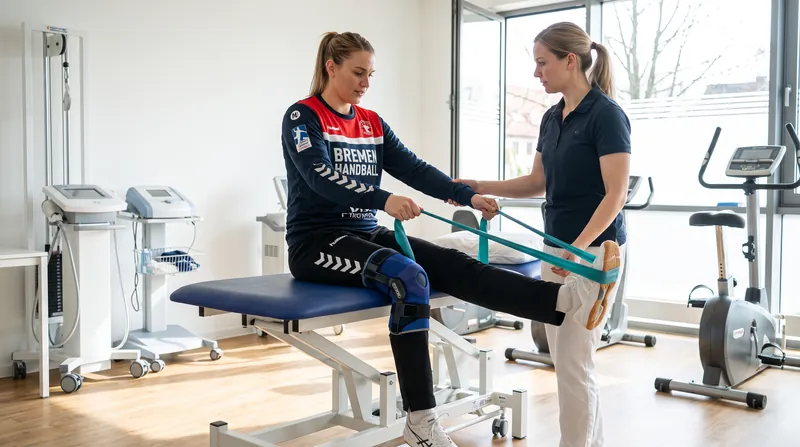
For Kos, the injury required months of specialized physiotherapy, proprioceptive training, and strength conditioning to restore the joint's stability and explosive power. After a frustrating period of restricted movement, Kos has finally overcome the lingering ankle instability and is back in full training. His return provides Erlangen with a massive offensive boost in the backcourt as they prepare for the relentless pace and physicality of the upcoming Bundesliga season.[2]
Positive medical updates are also emerging from clubs outside of the traditional European powerhouses. In Egypt, Al Ahly has received excellent news from their medical department regarding a key offensive piece ahead of their summer tournament schedule. First-team doctor Ahmed Gaballah confirmed this week that forward Hamza Abdelkarim has fully recovered from a painful foot bruise sustained in a recent domestic clash against Arab Contractors.
Foot contusions, while often less structurally severe than ligament tears, can be incredibly debilitating for handball players who rely on rapid acceleration and hard planting to generate shot power. Abdelkarim passed his final medical evaluations with flying colors and has officially resumed full team training at Mokhtar El Tetch Stadium. His medical clearance is perfectly timed, allowing him to feature in the highly anticipated Egypt Capital Cup against Pharco this weekend.[3]
Meanwhile, in Denmark, Aalborg Håndbold is reaping the long-term benefits of patience and conservative medical management. Veteran goalkeeper Niklas Landin, who underwent meniscus surgery on his knee last August, is entering the 2026/27 pre-season completely unhindered. Meniscus repairs in older athletes require careful load management to prevent chronic swelling and cartilage degradation.
Having successfully navigated the latter stages of his recovery last season, the legendary shot-stopper is now fully fit and ready to anchor the Danish champions' defense once again. Landin's sustained health is a testament to Aalborg's world-class medical staff, who prioritized a phased return to play rather than rushing him back into the crease. His presence provides invaluable leadership and stability between the posts as Aalborg looks to mount another deep run in the EHF Champions League.
As elite players continue to battle the immense physical toll of the modern game, federations and medical professionals are taking proactive steps to protect athlete welfare on a systemic level. This July, Olympic Handball Ireland and the Scottish Handball Association launched a pioneering joint injury surveillance project to systematically track injury data via a new digital platform.
The initiative aims to identify specific injury trends, mechanisms, and frequencies across different levels of the sport. By replacing outdated paper reporting with real-time digital tracking, sports scientists hope to develop better preventative protocols to keep the next generation of stars on the court. These administrative efforts are increasingly backed by emerging sports science, which is painting a clearer picture of the direct correlation between schedule density and catastrophic joint failures.
The push for better injury surveillance is strongly supported by recent clinical findings regarding player workload. A comprehensive study published in the British Medical Journal highlighted the severe impact of match congestion, revealing that playing two or more youth handball matches within a 72-hour window increases the risk of knee injuries by a staggering 71%.
This data provides empirical backing for the load-management strategies, advanced recovery protocols, and rotational depth currently being adopted by top-tier clubs worldwide. As the global handball calendar continues to expand with expanded club tournaments and frequent international windows, the margin for error in physical preparation is shrinking. The successful returns of players like Milosavljević, Kos, and Landin—coupled with the preventative measures now being instituted—signal a growing recognition that managing player health is the ultimate competitive advantage.
Key points
- Montpellier's Diego Simonet has retired after 13 years following a late-season knee injury.
- Serbian left-back Marko Milosavljević is cleared for pre-season after a six-month shoulder rehab.
- HC Erlangen's Miloš Kos has returned to full training after overcoming a severe ankle injury.
- Al Ahly forward Hamza Abdelkarim has fully recovered from a foot bruise ahead of the Egypt Capital Cup.
- A BMJ study reveals that playing multiple matches within 72 hours spikes knee injury risk by 71%.
How we got here
August 2025
Niklas Landin undergoes meniscus surgery, beginning a carefully managed recovery process.
Late 2025
Marko Milosavljević undergoes shoulder surgery, ruling him out of the EHF EURO 2026.
May 2026
Diego Simonet suffers a late-season knee injury just before the Winamax EHF Finals.
July 2026
Simonet officially retires, while Milosavljević, Kos, and Abdelkarim are cleared for pre-season training.
- Player Welfare Advocates
- Argue that expanding match calendars directly cause the high rates of catastrophic joint injuries, necessitating strict load management and surveillance.
- Club Medical Staffs
- Focus on executing conservative, phased rehabilitation programs to ensure players return without chronic reinjury risks.
- Fans and Analysts
- Celebrate the successful returns of key stars while mourning the injury-forced retirements of generational talents.
Perspectives this story doesn't cover
- Coaching staffs balancing tactical needs with medical restrictions
- League schedulers managing the crowded international calendar
Sources
Source coverage
3 outlets
3 viewpoints surfaced



- [1]European Handball FederationFans and Analysts
Diego Simonet: My next goal is to be a good father
Read on European Handball Federation → - [2]Handball PlanetClub Medical Staffs
Milos Kos to miss EHF EURO 2026 as Milosavljevic undergoes surgery
Read on Handball Planet → - [3]Al Ahly OfficialClub Medical Staffs
Hamza Abdelkarim fit for matches after recovering from injury
Read on Al Ahly Official →
More in Sports
See all →Injury
Global Handball Injury Desk: Simić’s Triumphant Return and Gilme’s Non-Surgical Comeback Highlight a Summer of Resilience
6 sources
Standings
Las Vegas Mega Event Standings: Füchse Berlin and Győri ETO Surge in Race for Inaugural US Crown
3 sources
Injury
Handball Medical Report: Pytlick's Triumphant Return and the Evolving Science of Court Rehab
7 sources
Standings
Race for the 2026/27 Opel Handball-Bundesliga Crown Begins as Magdeburg Defends Title
6 sources

Comments
Every angle. Every day.
Get Sports stories with full source coverage and perspective breakdowns, free every day.